
Event QR Code Generator for Registration, Tickets & RSVP
Create event QR codes for registration pages, tickets, RSVPs, schedules, maps, check-ins, and attendee info. Use them on flyers, signs, invitations, badges, and event booths too today.
Free QR code generator
Create a QR code online
Generate QR codes for websites, email, phone numbers, vCards, Wi-Fi, plain text, forms, PDF files, and campaign links. Customize colors, add a logo or frame, then download a print-ready PNG or SVG.
Choose QR code type
Website QR code, Email QR code, Phone QR code, vCard QR code, Wi-Fi QR code, Text QR code, SMS, WhatsApp, event, and download links.
Add your content
Enter your website URL, contact details, message, phone number, location, or file destination before generating the QR code.
Customize and download
Adjust QR colors, error correction, logo, frame, size, and margin. Generate QR Code, Download PNG, Download SVG, or Save and track scans.
Event action path
Use event QR codes to move attendees from print to the exact event action
An event QR code can point to registration, ticket pages, RSVP forms, schedules, check-in pages, venue maps, speaker materials, sponsor pages, livestreams, feedback forms, photo galleries, attendee information, session downloads, or post-event replays. It is useful on posters, flyers, badges, invitations, table signs, stage screens, booth materials, printed programs, wristbands, welcome boards, and venue signage. The QR code should match what the attendee needs at that part of the event journey.
This is broader than a calendar event QR code. A calendar QR helps someone save a date. An event QR code should take them to the action or information they need right now: sign up, check in, find the room, open the agenda, download slides, ask a question, join a community, get directions, or leave feedback after the session. One event can use several QR codes because each placement has a different job.
For events, dynamic QR codes are especially practical because details change. A room moves, a speaker cancels, a form closes, a ticketing page changes, or the event shifts from pre-registration to live check-in to post-event replay. The printed QR image can stay the same while the destination follows the event lifecycle.
Event action moments
Use an event QR code when attendees need the next step without searching
Event QRAn event QR should connect posters, tickets, badges, programs, table signs, session slides, and venue signage to registration, RSVP, agenda, map, materials, feedback, or follow-up.

Move people from interest to attendance
Use event QR codes on invitations, posters, booth signs, venue screens, badges, tickets, and handouts when the scanner should register, RSVP, check in, or save event details.
The CTA should name the action: register, RSVP, open agenda, check in, or save the date.
Give attendees practical help during the event
The same event can need different QR destinations: entrance check-in, agenda at the lobby, room map in hallways, slides in sessions, sponsor offers at booths, and feedback after the talk.
One event often needs several QR moments.
Keep event details editable until the last minute
Dynamic QR protects printed materials when speakers, rooms, streaming links, registration pages, parking notes, schedule changes, or follow-up resources move before or after the event.
Events are living workflows.An event QR should match the attendee moment
Someone scanning at the entrance needs a different destination than someone in a session or leaving the venue. The page should explain the action that belongs to that moment.
Use separate codes by placement when registration, agenda, maps, materials, sponsors, and feedback need different destinations or reporting.Before the event
Open RSVP, registration, calendar, ticketing, agenda, speaker details, or venue information.
During the event
Open check-in, maps, session slides, room changes, sponsor pages, Wi-Fi, or attendee resources.
After the event
Open feedback, certificates, recordings, downloads, community links, or follow-up offers.
Operational control
Use dynamic QR when event details may change after signs and materials are printed.
Events, conferences, and weddings
Give attendees the right event action at the moment they scan
Attendee flowEvent QR codes work best when each placement has a clear job: registration before arrival, check-in at the entrance, agenda during the event, materials in the session, and feedback after the experience.

Register or RSVP before arrival
Put registration QR codes on invitations, posters, email printouts, partner flyers, and social handouts so interested people can commit immediately.
Check in without slowing the entrance
Use entrance signs, badges, tickets, or desk cards to open check-in, ticket lookup, waiver, or attendee confirmation pages.
Open the agenda while people move
Place agenda QR codes on programs, lobby signs, badges, and room doors so attendees can check times and changes without searching email.

Share materials inside the session
Use session slides, table cards, and handouts to open speaker bios, downloads, worksheets, sponsor offers, or resource pages.

Collect feedback after the moment
Put feedback QR codes near exits, closing slides, receipts, follow-up cards, or certificates while the experience is still fresh.
The attendee should know exactly what the scan opens
Use specific CTA copy such as register now, open agenda, check in, download slides, view map, or send feedback.
Separate event codes when reporting matters
Use different dynamic QR codes for posters, badges, room signs, sponsor booths, handouts, and follow-up cards when the team needs to compare placements.
Match each QR code to the event flow
Event placement
Place event QR codes where the attendee can act immediately
PlacementThe best event QR placement is tied to a real pause: reading a poster, checking in, waiting in a lobby, sitting in a session, visiting a booth, or leaving after the event.
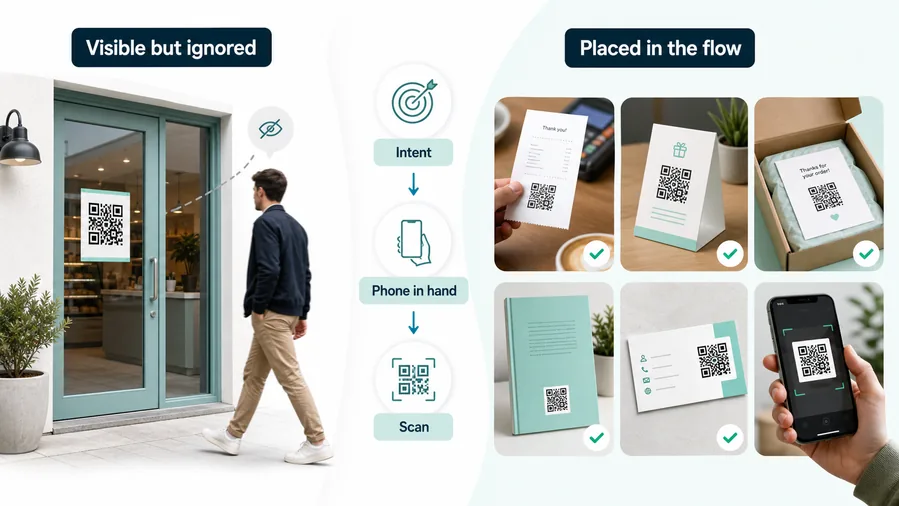
A visible event QR can still be too vague
A QR code on a crowded poster or random wall may be visible but not useful if attendees do not know what it opens.
Event placement should be judged by the action people can take in that exact spot.
Put the code at the event decision point
Use registration QR before arrival, check-in QR at the entrance, agenda QR in the lobby, resource QR in sessions, and feedback QR after the experience.
The CTA should match the physical moment and avoid making attendees guess.
What is the attendee doing now?
Deciding to register, arriving, navigating, waiting, attending a session, visiting a booth, or leaving.
What should happen next?
RSVP, check in, open agenda, find a room, download slides, join community, claim offer, or leave feedback.
Is the phone naturally available?
Registration desks, lobby signs, tables, badges, and seated sessions usually work better than fast-moving doorway moments.
Is the CTA obvious in two seconds?
Say view agenda, scan to check in, get slides, open venue map, or send feedback.
Invitation or poster
Open registration, RSVP, calendar save, venue details, or ticket purchase.
Registration desk
Open check-in, ticket lookup, badge confirmation, waiver, or attendee profile.
Badge or ticket
Give attendees agenda, map, Wi-Fi, contact exchange, or session details they can revisit.
Lobby sign
Help people find rooms, schedules, maps, updates, sponsor areas, and help desks.
Session slide
Open slides, speaker bio, worksheets, links, recordings, or Q&A form.
Booth card
Open sponsor offer, demo booking, giveaway form, product page, or follow-up request.
Table card
Route guests to agenda, networking, feedback, donation, menu, or local event resources.
Exit sign or follow-up card
Collect feedback, certificates, recordings, community joins, and next-event interest.
Event QR placement should reduce attendee effort
Keep each QR close to the action it enables so the scan feels like part of the event, not an extra chore.
After-print control
Use dynamic QR when event details can change after materials are printed
DynamicEvent schedules, speakers, rooms, registration links, maps, sponsor pages, streaming URLs, and follow-up resources often change after posters, tickets, badges, and handouts are already out.
A fixed event link can become stale before the doors open
A static QR is fine for final event data, but it cannot follow a changed room, new agenda, moved registration page, updated speaker bio, or replaced livestream link.
Printed event materials are often produced early, while logistics keep moving until the last minute.
Editable QR keeps event materials useful
Dynamic QR lets the printed code stay stable while the destination changes from registration to check-in, agenda, materials, feedback, or follow-up.
It also supports separate scan reporting for posters, badges, booths, sessions, and follow-up materials.
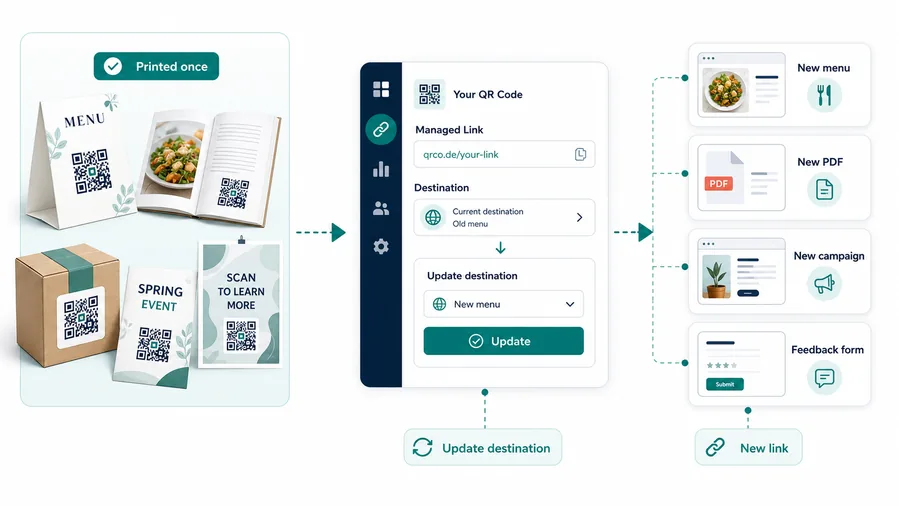
Registration and RSVP
Update signup pages, capacity notes, ticket links, waitlists, and attendee instructions.
Agenda and venue changes
Keep room maps, schedules, speaker pages, and livestream links current during the event.
Session resources
Replace slides, recordings, worksheets, sponsor files, and speaker materials after sessions.
Feedback and follow-up
Move codes from live event actions to feedback, certificates, community links, or next-event pages.
Use dynamic when event materials go live before details are final
If printed assets may outlive the first event link, keep the destination editable and name each placement clearly.
Separate placements
One event often needs several QR codes, not one universal code everywhere
A poster QR should usually drive registration or the event landing page. A badge QR might open a profile, lead form, sponsor offer, networking page, or attendee contact action. A door sign should help with check-in, room details, or session changes. A printed program should open the live schedule. A booth sign can open a product page, giveaway, demo booking, or lead capture form. A final slide should send people to feedback, replay, slides, or follow-up materials.
That split is not overcomplication; it is better user experience. People scanning before the event have different needs from people scanning during a session or after they leave. If every QR code opens the same generic homepage, attendees have to hunt for the next step. If each code names the action clearly, the scan feels natural and useful.
Using separate dynamic QR codes per placement also makes the event easier to measure. You can see whether posters, badges, programs, screens, or booth signs actually generated scans, then use that evidence to improve the next event instead of guessing which print assets mattered. The scan data becomes part of the event debrief, not an afterthought.