Meetup QR Code Generator for Event Pages, RSVP & Groups
Create meetup QR codes for event pages, RSVP forms, venue maps, group pages, schedules, speaker links, community updates, posters, and flyers. Help people join from printed promos.
Free QR code generator
Create a QR code online
Generate QR codes for websites, email, phone numbers, vCards, Wi-Fi, plain text, forms, PDF files, and campaign links. Customize colors, add a logo or frame, then download a print-ready PNG or SVG.
Choose QR code type
Website QR code, Email QR code, Phone QR code, vCard QR code, Wi-Fi QR code, Text QR code, SMS, WhatsApp, event, and download links.
Add your content
Enter your website URL, contact details, message, phone number, location, or file destination before generating the QR code.
Customize and download
Adjust QR colors, error correction, logo, frame, size, and margin. Generate QR Code, Download PNG, Download SVG, or Save and track scans.
Community event link
Help people join the meetup while the idea is still fresh
A meetup QR code is useful when someone discovers a local event offline and needs a fast path to the details. It can open an event page, RSVP form, group page, venue map, schedule, speaker link, community update, waitlist, or follow-up page. Community organizers, coworking spaces, local groups, libraries, founders, speakers, venues, and hobby communities can use it on posters, flyers, counter signs, slides, and handouts.
The biggest benefit is timing. People may notice a meetup poster while getting coffee, walking through a coworking space, leaving a talk, or talking with a friend. If they need to type a URL later, many will not. A QR code lets them save the event, RSVP, join the group, or open the map in the moment when the event feels relevant.
QR Code Lab creates URL QR codes and can help with dynamic destinations and scan analytics. It does not manage RSVP lists, send reminders, run a meetup platform, collect payments, or moderate community pages. The linked event platform, form, or community page handles the actual membership and event workflow.
Events, conferences, and weddings
Use Meetup QR codes to move people from interest to attendance
Attendee flowA Meetup QR code should open the exact meetup, group, RSVP, schedule, venue note, community page, or follow-up action instead of making people search the platform by name.

Open the exact Meetup event from print
Use QR codes on flyers, posters, coworking signs, conference handouts, community boards, and partner materials so interested people can see date, topic, location, and RSVP details immediately.
Help newcomers understand the group
If the scan opens a group page, make sure the destination explains who the meetup is for, what happens at events, and how someone should join or RSVP.

Support arrival and venue instructions
Use separate destinations for entry notes, room number, parking, building access, livestream, schedule changes, and host contact when those details matter on event day.

Keep the relationship alive after the meetup
After the event, redirect scans to slides, recording, community chat, feedback, next event, newsletter, or group membership instead of an expired RSVP page.

Speaker materials and feedback
After a session, attendees can scan a slide, poster, handout, or table sign to open slides, PDFs, worksheets, links, speaker profile, Q&A, or feedback form. The attendee gets the materials; the organizer gets a clean follow-up action.
Potential attendees should know they found the right event
The first screen should confirm the meetup topic, date, group, venue, and RSVP action so the scan feels connected to the printed invitation.
Organizers need fewer lost RSVPs and repeated directions
A focused Meetup QR reduces platform search friction and gives organizers one destination to update when event details change.
Match the QR to the meetup funnel
Meetup placement
Place Meetup QR codes where people are already deciding to join
PlacementMeetup QR placement should support the moment someone discovers a topic, considers attendance, arrives at the venue, or wants to stay connected after the event.
The code points to a broad group without the event context
A generic group page can work for community discovery, but a flyer for one meetup usually needs the exact event or RSVP path.
When scanners have to search after scanning, the printed QR has not removed much friction.
The QR matches the meetup stage
Use event pages on promotion, venue details on arrival signs, and follow-up resources after the event.
The caption should say whether the scan opens RSVP, group details, schedule, location notes, or next meetup.
Is the scanner discovering or arriving?
Promotion, RSVP, arrival, and follow-up need different destinations.
Does the print name the topic and date?
Put the QR near the meetup title, date, location, and action.
Will event details change?
Use dynamic QR for room changes, capacity, livestream, waitlist, or post-event links.
Should this link to the event or group?
Use the exact event for RSVP; use the group page for ongoing community discovery.
Flyer or poster
Best for RSVP, event details, topic, date, speaker, and venue information.
Coworking or community board
Useful for group discovery, upcoming events, and membership.
Venue entrance or room sign
Open arrival instructions, room number, access notes, parking, and host contact.
Post-event handout
Send attendees to slides, chat, feedback, next meetup, and community links.
Poster or event sign
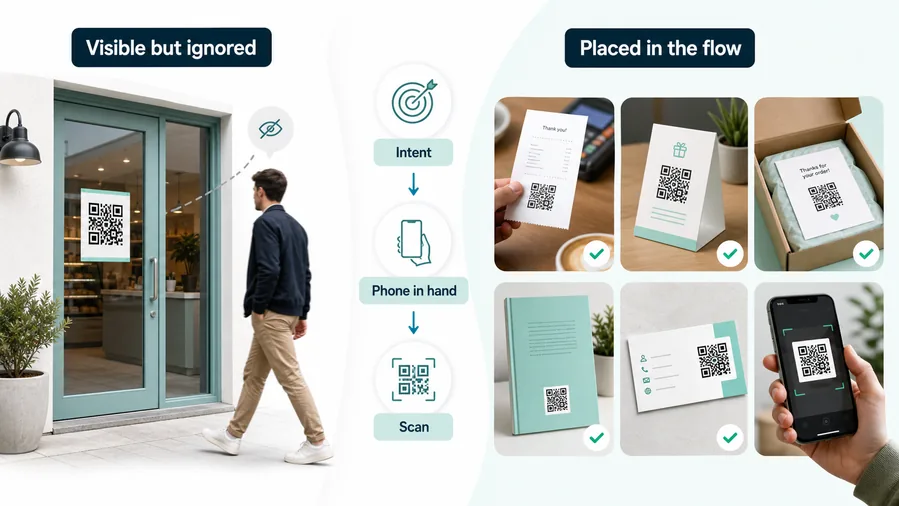
Best where people pause: registration line, booth, waiting area, seat back, schedule board, or exit path. Weak when people only pass at speed.
Business card
Useful after a conversation because the person already knows why they might save a contact, open a portfolio, book a call, or follow up.
Window sign
Good for after-hours menus, booking, pickup instructions, or quick offers. Avoid complex actions when the person is outside and just walking by.
Cover or front label
Use it only when the promise is immediate and clear. Otherwise the better scan moment is often inside the material or after the first interaction.
Meetup QR placement should reduce the leap from interest to attendance
Put the QR where people already understand the topic, then send them to the next action for that stage.
Meetup update control
Use dynamic QR when Meetup details can change after flyers go out
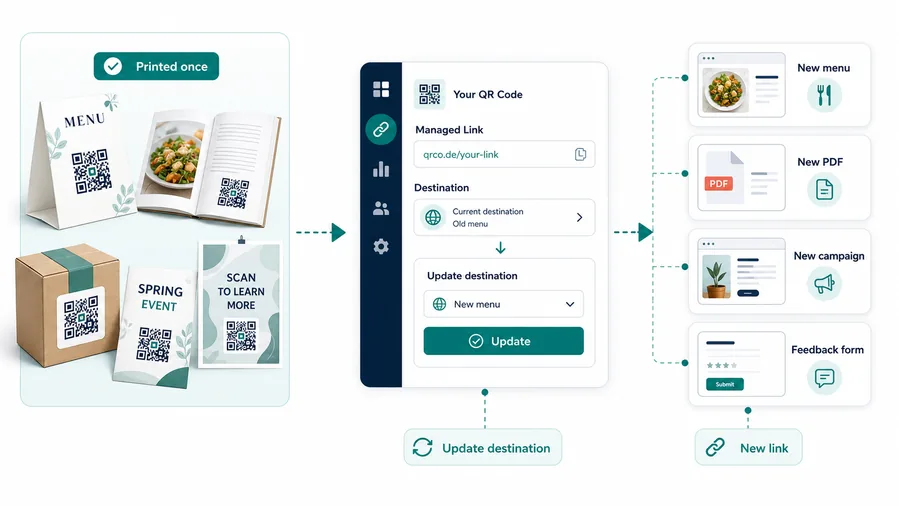
DynamicMeetups often change room, capacity, speaker, livestream, waitlist, or follow-up resources after print is already shared. Dynamic QR keeps flyers, posters, and venue signs useful.
Old meetup flyers can send people to stale event details
A static event link is fine while the event details are final, but community events often shift rooms, speakers, times, capacity, or RSVP status.
Printed flyers and community board posts can keep circulating after those details change.
The same QR can follow the meetup lifecycle
Dynamic QR lets the organizer update the destination from promotion to RSVP, arrival notes, livestream, recap, next event, or group membership.
That helps small teams keep printed promotion useful without reprinting every sign.
RSVP and capacity changes
Move scans to waitlist, closed RSVP, new date, overflow room, or next meetup.
Venue and arrival notes
Update room number, parking, building access, host contact, and last-minute instructions.
Hybrid and livestream links
Route remote attendees to the current stream, chat, recording, or community channel.
Post-event resources
Redirect to slides, recap, feedback, community chat, newsletter, and upcoming events.
Use dynamic QR when the meetup is still moving
If event details may change while print is already distributed, keep the QR destination editable.
Local community flow
Put the QR where people can act before the meetup disappears from memory
Good meetup placements include coffee shop flyers, coworking desks, venue doors, community boards, library displays, speaker slides, sponsor tables, university halls, local business counters, stickers, and printed agendas. The CTA should be simple: RSVP, join the group, view the map, save the date, see speakers, or get updates. A clear promise matters because people may only glance at the print for a few seconds.
Use different QR codes for different locations if the meetup depends on local promotion. A poster at the venue, a flyer at a partner cafe, and a slide after a talk can all open the same event page while still being measured separately in QR Code Lab. Dynamic QR codes help when the event ends, registration closes, the room changes, or you want the same printed sign to point to the next meetup later. Analytics can show where real community interest starts, even though RSVP and attendee records stay in your event platform.
Keep the destination light on mobile. People may scan while standing in a hallway or cafe, so the page should quickly show date, place, topic, and the action to join or RSVP.