Event RSVP QR Code Generator for Guest Replies & Updates
Create event RSVP QR codes for invitations, response forms, attendance counts, meal choices, guest details, reminders, and updates. Use them for parties, seminars, schools, and local events.
Free QR code generator
Create a QR code online
Generate QR codes for websites, email, phone numbers, vCards, Wi-Fi, plain text, forms, PDF files, and campaign links. Customize colors, add a logo or frame, then download a print-ready PNG or SVG.
Choose QR code type
Website QR code, Email QR code, Phone QR code, vCard QR code, Wi-Fi QR code, Text QR code, SMS, WhatsApp, event, and download links.
Add your content
Enter your website URL, contact details, message, phone number, location, or file destination before generating the QR code.
Customize and download
Adjust QR colors, error correction, logo, frame, size, and margin. Generate QR Code, Download PNG, Download SVG, or Save and track scans.
Guest reply path
Make replying easier than texting the organizer
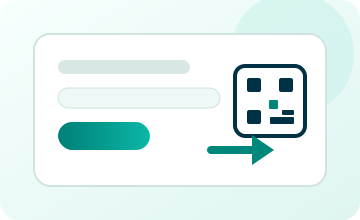
An event RSVP QR code can open a response form, RSVP page, attendance count form, meal choice form, guest details page, reminder page, or event update page. It is useful for parties, seminars, school events, nonprofit events, community events, venue events, workshops, and business gatherings where the host needs a clean answer from guests.
The goal is not only to get a yes or no. A good RSVP path can collect how many people are coming, whether someone needs a meal choice, what name should be on a badge, or whether the guest needs updates. That saves the organizer from scattered texts, missed messages, and manual copy-paste into a guest list.
QR Code Lab creates URL QR codes and can make the printed invitation easier to use. It does not store replies, manage guest lists, collect meal choices, send reminders, or operate event software. The linked form or page handles guest responses. Use the QR code to remove typing and guide people to the right reply page.
Keep the RSVP page short and mobile friendly. Guests may scan while holding an invitation, standing near a poster, or checking a reminder card, so the response should be quick to finish.
Events, conferences, and weddings
Use RSVP QR codes when the real job is a clear guest reply
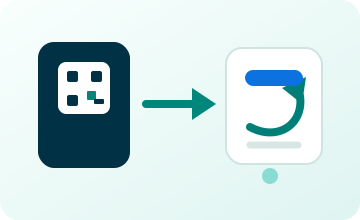
Attendee flowAn RSVP QR code should move a guest from an invitation, poster, table card, or reminder into a simple response path: yes, no, maybe, guest count, meal choice, deadline, and any details the host needs before the event.

Open the exact RSVP form
Send guests directly to the reply page for this event, not to a broad website or organizer profile. The first screen should confirm the event name, date, host, and response deadline so the guest knows the scan matched the invitation.

Collect only the details the host will use
Keep the form focused on attendance, guest count, meal choice, accessibility notes, contact details, or message to the host. Long forms reduce replies, especially when people scan from a printed invitation on a phone.

Make the deadline visible before people postpone
Use the QR destination to repeat the RSVP deadline, event date, venue, and what happens after submission. A clear confirmation screen prevents duplicate replies and follow-up questions.

Route late replies without confusing guests
When the RSVP deadline passes, change the destination to a closed message, waitlist, contact path, or final event details instead of leaving old invitations pointed at a dead form.

Speaker materials and feedback
After a session, attendees can scan a slide, poster, handout, or table sign to open slides, PDFs, worksheets, links, speaker profile, Q&A, or feedback form. The attendee gets the materials; the organizer gets a clean follow-up action.
Guests should understand the reply in seconds
The scan should answer the quiet question behind every RSVP: am I replying to the right event, what information is needed, and will the host know my answer was received?
Hosts need cleaner replies, not more manual follow-up
A focused RSVP QR reduces typed URLs, missed messages, duplicate spreadsheets, and reminder work because every printed invitation points to the same response workflow.
Put the RSVP QR beside the invitation decision
RSVP placement
Place the RSVP QR where the guest is already deciding
PlacementRSVP scans work best when the QR sits next to the event name, date, deadline, and promise of what the guest will submit. The placement should remove typing at the exact moment someone is ready to answer.
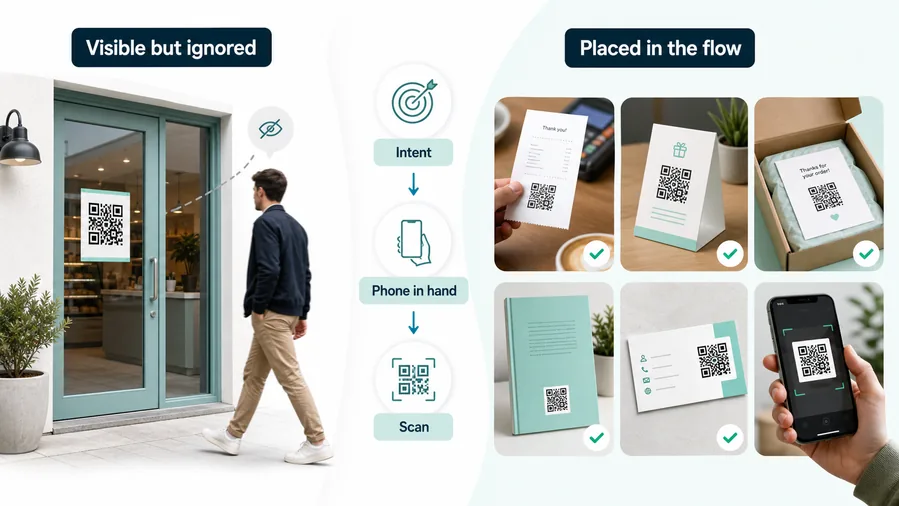
The code appears without the RSVP context
A bare QR code on a poster corner or invitation back can look decorative rather than useful, especially when the guest does not know whether it opens RSVP, directions, tickets, or a website.
If the printed copy does not name the response action, many people will postpone the scan until later and forget.
The code sits beside the reply request
Put the QR near the RSVP line, deadline, guest-count note, meal-choice prompt, or reminder message so the value is obvious before the phone comes out.
Use a short caption such as “RSVP by Friday” or “Confirm guests and meal choice” to set the expectation before the scan.
What answer is needed?
Name whether the scan collects attendance, guest count, meal choice, waitlist interest, or changed plans.
Is the deadline clear?
Place the QR close to the date and response deadline so people understand the urgency.
Will guests know the reply was received?
Use a confirmation screen or message after submission to prevent duplicate responses.
What happens after the deadline?
Use a dynamic destination if old invitations may continue circulating after replies close.
Printed invitation
Best for private events where every guest should reply from the card in hand.
Reminder card or email printout
Useful when the host needs late replies, changed plans, or meal selections.
Event poster
Works for public RSVP, interest lists, community events, and limited-capacity sessions.
Welcome table
Use for last-minute confirmation, guest help, updates, or check-in support.
Poster or event sign
Best where people pause: registration line, booth, waiting area, seat back, schedule board, or exit path. Weak when people only pass at speed.
Business card
Useful after a conversation because the person already knows why they might save a contact, open a portfolio, book a call, or follow up.
Window sign
Good for after-hours menus, booking, pickup instructions, or quick offers. Avoid complex actions when the person is outside and just walking by.
Cover or front label
Use it only when the promise is immediate and clear. Otherwise the better scan moment is often inside the material or after the first interaction.
RSVP QR placement should make replying feel immediate
Keep the code close to the ask, keep the form short, and make the confirmation clear enough that the host gets usable responses.
Guest reply UX
Make the RSVP scan feel lighter than sending a message later
Scan UXThe RSVP destination should be fast, mobile-friendly, and specific enough that a guest can finish the reply while the invitation is still in front of them.
The guest sees the right event immediately
Event name, date, host, RSVP deadlineThe first screen should confirm that the scan opened the correct invitation. If guests have to inspect a generic page, the reply starts to feel risky or annoying.
Put the event name, date, host, and deadline above the form so the decision feels connected to the printed card.
The form asks only what the host needs
Yes/no, guest count, meal choice, notesA short RSVP form earns more replies than a long registration flow. Ask for attendance, names, guest count, meal choice, and one note field only when those details matter.
Use clear button labels and avoid extra steps that force guests to create an account just to answer an invitation.
Closed replies still need a useful landing page
Deadline passed, waitlist, contact host, event detailsIf the RSVP period closes, the QR should not lead to a broken form. Change the page to a closed message, waitlist, contact option, or final event information.
That keeps old invitations helpful without making the host manage confusing late submissions.
Does the form fit one phone screen?
The main reply action should be visible without forcing guests to hunt through a long page.
Does the confirmation reduce follow-up?
After submission, show that the RSVP was received and explain any next step.
Does the link still make sense after the deadline?
Plan a closed, waitlist, or contact destination before printed invitations leave your control.
A good RSVP QR reduces hesitation
The scan should turn the printed ask into a quick answer, not into another task the guest saves for later.
Invitation response
Put the RSVP QR where guests can answer before they forget
Use RSVP QR codes on invitations, reminder cards, posters, classroom handouts, nonprofit mailers, party flyers, venue cards, community announcements, table cards, and printed schedules. The CTA should be plain: RSVP here, reply now, choose meal, confirm attendance, or get updates. If the action is simple, guests are more likely to complete it.
Think about the timing. A QR on the invitation should lead to the response form. A QR on a reminder card can lead to final details. A QR at the venue can lead to updates or check-in. Keeping each printed piece focused makes the scan feel helpful instead of confusing.
Dynamic QR codes help when the RSVP form closes, reminders change, or the page switches to event updates. Scan analytics show interest by printed placement, while actual replies, counts, and guest details stay in the linked form or event platform.
If many people scan but few reply, review the form itself. It may ask too much, load slowly, or hide the submit button. The QR can reveal where the drop-off may start.