Event Schedule QR Code Generator for Agendas & Live Updates
Create event schedule QR codes for agendas, session lists, timelines, speaker pages, venue maps, updates, and attendee handouts. Use them on programs, badges, posters, and slides.
Free QR code generator
Create a QR code online
Generate QR codes for websites, email, phone numbers, vCards, Wi-Fi, plain text, forms, PDF files, and campaign links. Customize colors, add a logo or frame, then download a print-ready PNG or SVG.
Choose QR code type
Website QR code, Email QR code, Phone QR code, vCard QR code, Wi-Fi QR code, Text QR code, SMS, WhatsApp, event, and download links.
Add your content
Enter your website URL, contact details, message, phone number, location, or file destination before generating the QR code.
Customize and download
Adjust QR colors, error correction, logo, frame, size, and margin. Generate QR Code, Download PNG, Download SVG, or Save and track scans.
Agenda access
Keep printed programs simple while the live schedule stays current
An event schedule QR code can open an agenda, session list, timeline, speaker page, venue map, update page, event app, or attendee handout. It is useful for organizers, conferences, schools, venues, nonprofits, festivals, workshops, and community teams that need people to find the current schedule without reprinting every change.
Schedules change. Rooms move, speakers swap, timing shifts, and maps get updated late. A printed program can still be useful, but it does not need to carry every detail. A QR code can send attendees to the live version, where updates, speaker notes, location details, and downloadable materials can stay current.
QR Code Lab creates the QR code and can track scans by placement. It does not manage schedules, host event apps, send notifications, or update attendees by itself. The destination should be your current agenda or event information page. The QR code simply makes that page easy to reach from print.
This is especially useful when attendees keep checking the schedule throughout the day. A stable printed code can point to the latest version even when rooms, times, or links change.
Events, conferences, and weddings
Use schedule QR codes when the agenda may be checked more than once
Attendee flowAn event schedule QR code should open the current agenda, room list, session details, speaker notes, map, livestream link, or update page without making attendees rely on a printed timetable that may change.

Open the current agenda from printed materials
Put schedule QR codes on badges, programs, lobby signs, venue maps, table tents, and attendee packets so people can check times and rooms without digging through email or asking staff.
Help attendees choose the next session
A useful schedule page shows session names, times, rooms, speaker names, track labels, and short descriptions. The scan should help someone decide where to go next.
Keep room and timing changes visible
When a session moves, runs late, changes speaker, or adds a livestream, a dynamic schedule destination can update the agenda while printed programs stay accurate enough to use.
Support post-session resources
After sessions end, the same schedule QR can route attendees to slides, recordings, speaker bios, surveys, certificates, sponsor resources, or follow-up links.
Speaker materials and feedback
After a session, attendees can scan a slide, poster, handout, or table sign to open slides, PDFs, worksheets, links, speaker profile, Q&A, or feedback form. The attendee gets the materials; the organizer gets a clean follow-up action.
Attendees need the next useful agenda detail
The scan should answer what starts next, where it happens, who is speaking, and whether anything changed since the printed program was produced.
Organizers need fewer repeated schedule questions
A clear schedule QR keeps late changes, room moves, and follow-up resources in one mobile destination that staff can point to consistently.
Put schedule QR codes where people pause to choose
Agenda placement
Place schedule QR codes where attendees decide what to do next
PlacementSchedule QR placement should support the natural pause points in an event: arrival, hallway decisions, session changes, breaks, and post-session follow-up.
Printed schedules age quickly during live events
A printed agenda is useful, but it cannot show room changes, speaker substitutions, delays, livestream links, or newly added resources.
If attendees rely only on the paper version, staff often become the update system.
The QR opens the current schedule at decision points
Use schedule QR codes where attendees pause before choosing a room, session, track, or activity.
The mobile page can carry updated times, maps, session descriptions, speaker notes, and resource links while the printed piece stays uncluttered.
Where do attendees choose the next session?
Place schedule QR codes near lobbies, hallway junctions, badges, programs, and session doors.
What could change during the day?
Room, time, speaker, livestream, capacity, and resource links should be easy to update.
Does the printed CTA name the agenda?
Use copy like “Scan for current schedule” instead of a bare QR with no promise.
Will the page work in a crowded venue?
Keep the schedule fast, readable, and useful even when mobile connection is weak.
Badge or lanyard
Strong for quick access to the agenda, map, and room changes throughout the day.
Lobby or hallway sign
Best where attendees pause before choosing a session, track, or room.
Session door
Use for speaker bio, slides, feedback, capacity notes, and next-session details.
Printed program
Keeps the paper layout clean while the QR carries updates, filters, and resources.
Poster or event sign
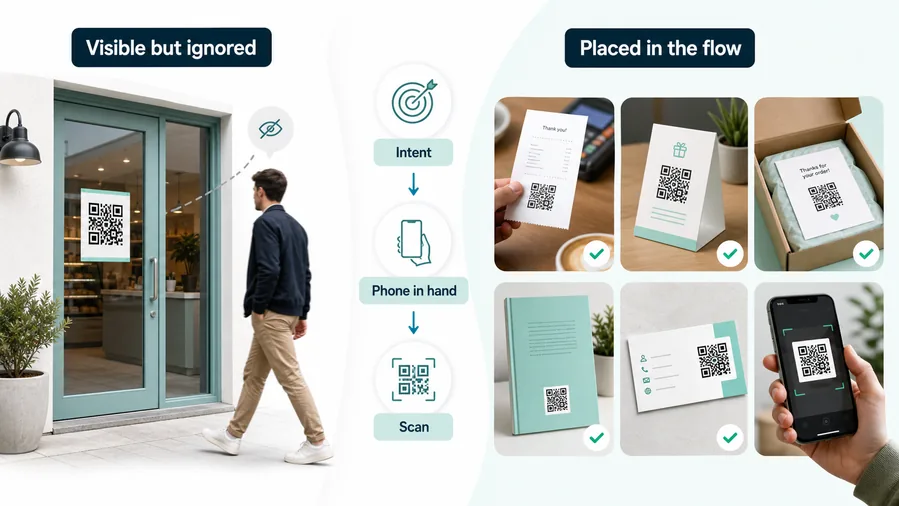
Best where people pause: registration line, booth, waiting area, seat back, schedule board, or exit path. Weak when people only pass at speed.
Business card
Useful after a conversation because the person already knows why they might save a contact, open a portfolio, book a call, or follow up.
Window sign
Good for after-hours menus, booking, pickup instructions, or quick offers. Avoid complex actions when the person is outside and just walking by.
Cover or front label
Use it only when the promise is immediate and clear. Otherwise the better scan moment is often inside the material or after the first interaction.
Schedule QR placement should reduce agenda uncertainty
Put the scan where people are already choosing their next move, then send them to the current version of the schedule.
Live agenda control
Use dynamic QR when the event schedule can change after print
DynamicSchedules are living documents. Dynamic QR protects printed programs, badges, and signs when times, rooms, speakers, tracks, livestreams, or session resources change.
A static schedule link can become stale before the event ends
Events change quickly: rooms fill, speakers swap, sessions run late, and links are added after print.
If the QR points to a fixed or outdated page, attendees may still need staff to explain what changed.
The printed QR can keep opening the current agenda
Dynamic QR lets the team update the destination while programs, badges, lobby signs, and door signs remain in use.
That matters most when the schedule is printed early but the real agenda is finalized close to the event.
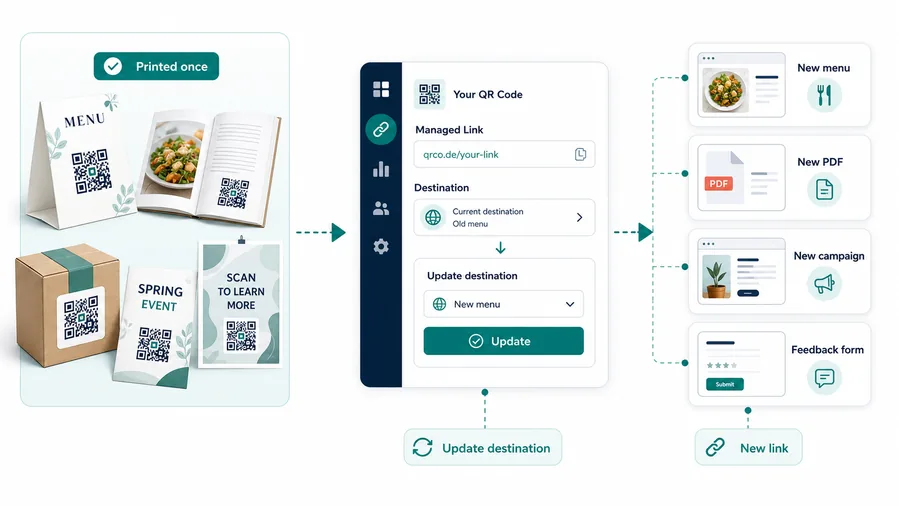
Room and time changes
Update session rooms, start times, delays, overflow rooms, and capacity notes without reprinting.
Speaker and track updates
Keep bios, replacements, session descriptions, and track pages current.
Livestream and hybrid links
Route remote or overflow attendees to the right stream, recording, or chat path.
Post-session resources
Move the same QR toward slides, recordings, surveys, certificates, and sponsor resources after sessions end.
Use dynamic when the agenda is still moving
If schedule accuracy matters after printing, keep the QR destination editable and make the current agenda easy to find.
Program placement
Place schedule QR codes where attendees plan their next move
Use schedule QR codes on printed programs, badges, room signs, registration desks, venue maps, banners, classroom handouts, lobby signs, sponsor materials, help desks, and table cards. The CTA should say open agenda, view sessions, see map, check updates, or download handouts. People should know the scan is about planning their next step.
The best placement is near a decision point. A lobby sign can help someone choose a room. A badge code can help throughout the day. A room sign can open session details. A printed program can stay clean while the QR points to the full schedule.
Dynamic QR is ideal for agendas because room assignments, times, speakers, and maps can change late. Scan analytics can show which signs and printed programs attendees actually use, which helps improve layout and signage for the next event.
Use plain labels. Open agenda is clearer than scan me when people are trying to decide where to go next. The code should feel like help, not a puzzle, especially in a crowded hallway.