QR Code for Real Estate Agents - Listings, Leads & Cards
Create QR codes for real estate agents with listings, lead forms, business cards, yard signs, open houses, virtual tours, reviews, booking pages, contacts, and local ads.
Free QR code generator
Create a QR code online
Generate QR codes for websites, email, phone numbers, vCards, Wi-Fi, plain text, forms, PDF files, and campaign links. Customize colors, add a logo or frame, then download a print-ready PNG or SVG.
Choose QR code type
Website QR code, Email QR code, Phone QR code, vCard QR code, Wi-Fi QR code, Text QR code, SMS, WhatsApp, event, and download links.
Add your content
Enter your website URL, contact details, message, phone number, location, or file destination before generating the QR code.
Customize and download
Adjust QR colors, error correction, logo, frame, size, and margin. Generate QR Code, Download PNG, Download SVG, or Save and track scans.
Agent workflow
Use QR codes as part of the agent’s follow-up system, not just as listing decoration
QR codes for real estate agents can open listings, lead forms, business cards, yard sign pages, open house forms, virtual tours, review pages, contact pages, mortgage resources, neighborhood guides, buyer packets, seller guides, appointment links, and market update pages. They are useful for individual agents, brokers, teams, and realtors who need printed materials to create measurable next steps.
This page is agent-workflow focused. A property listing QR code usually points to one listing. A real estate agent QR strategy can include personal branding, contact capture, open house follow-up, review generation, listing promotion, buyer education, and seller education. The key is to match the QR destination to the moment: yard sign, postcard, business card, open house table, or listing brochure.
QR Code Lab creates and tracks the QR codes. It does not host listings, manage leads, run a CRM, verify property data, send follow-up, qualify buyers, or handle real estate transactions. The destination should be the system, page, or form you already trust.
Used well, QR codes help agents learn which physical materials create interest. They also reduce typing and make it easier for buyers or sellers to save the right next step while attention is still fresh.
Property lead moments
Use real estate QR codes to move property interest into the right lead action
Real estate QRA real estate QR should help buyers, sellers, renters, and open-house visitors move from a physical listing moment to photos, tour, brochure, map, agent contact, lead form, or booking path.

Turn signs and flyers into property-specific next steps
Use QR codes on yard signs, window cards, open-house sheets, brochures, mailers, business cards, rider signs, and listing packets when people should reach the exact property or agent action quickly.
The CTA should say view listing, book showing, download brochure, see tour, or contact agent.
Match the destination to the property moment
A yard sign may need listing and showing request, an open house may need feedback and follow-up, a postcard may need home valuation, and a seller packet may need agent proof.
Property QR works when the scan saves typing and preserves context.
Keep listings and lead paths editable after print
Dynamic QR helps when a listing goes pending, price changes, photos update, open-house dates move, forms change, or the print should route to a new property campaign later.
Printed signs and mailers often outlive the first listing status.A real estate QR should turn curiosity into a qualified conversation
The scanner may be standing outside a property, holding a flyer, comparing agents, or walking through an open house. The destination should answer the immediate property question and give a clear follow-up path.
Use separate QR codes for signs, flyers, mailers, open houses, postcards, and agent cards when reporting matters.Listing context
Open photos, tour, floor plan, price, features, map, disclosures, brochure, or neighborhood details.
Lead action
Offer book showing, call agent, ask a question, request valuation, download packet, or save contact.
Open-house flow
Use QR codes for sign-in, feedback, property details, follow-up, and agent contact.
Editable status
Use dynamic QR when price, availability, photos, forms, or campaign pages may change.
Real estate lead flow
Turn local property attention into a specific agent workflow
Lead flowReal estate QR codes work best when each placement has one clear job: listing view, showing request, open-house sign-in, seller valuation, agent contact, or neighborhood information.

Open the exact property from the sign or flyer
Send scanners to photos, tour, details, floor plan, map, disclosures, brochure, and showing request for the property they are standing near.
Let interested buyers request the next step
Use showing request, call, SMS, calendar, or contact form paths when the lead is ready to talk to the agent.

Make check-in and follow-up easier
Use QR codes for sign-in, property details, feedback, mortgage notes, offer instructions, and post-visit follow-up.

Use postcards and flyers for valuation intent
Route homeowners to valuation request, seller guide, market report, consultation booking, or agent proof.

Connect cards and packets to proof
Open agent bio, recent sales, testimonials, service area, listing presentation, contact, and booking paths.

Add local context around the property
Show schools, commute, amenities, maps, local guide, nearby listings, and area notes when location is part of the decision.
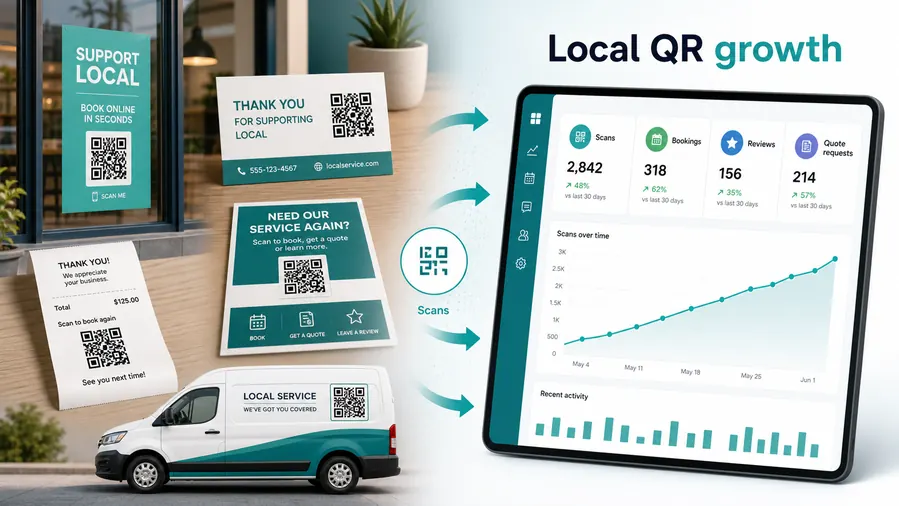
Property scans start from a high-intent local moment
The person has seen a sign, flyer, postcard, open-house room, or agent card. The QR should answer the property question before attention moves on.
Separate placements make follow-up easier to understand
Dynamic QR codes help compare scans from yard signs, flyers, open houses, mailers, business cards, and listing packets without changing the visitor experience.
Place the code where the lead action is clear
Property placement
Place real estate QR codes where the property question already exists
PlacementReal estate QR placement should follow the lead moment: yard sign, flyer, open house, mailer, listing packet, agent card, window display, or neighborhood guide.
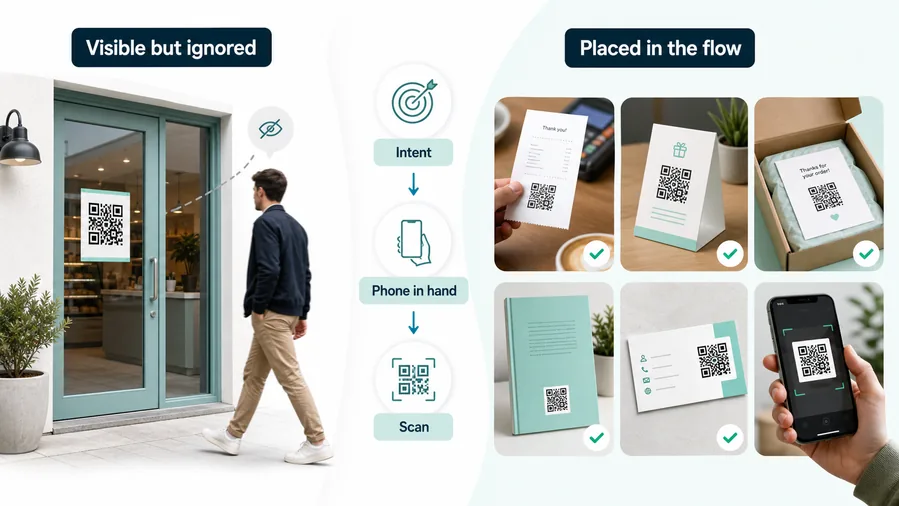
A QR is weak when it points to a generic agent homepage
A buyer scanning from a property sign expects that property, not a broad website they must search.
A seller scanning a postcard expects valuation or proof, not a generic contact page.
Put the QR beside the property or service promise
Use listing-specific QR codes for properties and campaign-specific QR codes for seller outreach, open houses, and agent brand materials.
The CTA should name the next step before the scan.
What lead moment is happening?
Drive-by interest, open house, listing comparison, seller mailer, agent meeting, window browsing, or neighborhood research.
What should the scanner do next?
View listing, see tour, book showing, call agent, request valuation, download brochure, or save contact.
Does the destination match the property?
Confirm address, photos, price, status, agent, map, and form match the printed material.
Will listing status change?
Use dynamic QR when price, status, photos, showing forms, or campaign pages may change.
Yard sign
Open listing details, tour, map, showing request, and agent contact for the property in front of the buyer.
Open-house sign-in
Collect visitor details, feedback, brochure access, mortgage notes, and follow-up preferences.
Property flyer
Connect printed highlights to full photos, floor plan, disclosures, neighborhood guide, and tour.
Seller postcard
Route homeowners to valuation, market report, seller guide, or consultation booking.
Agent business card
Open profile, recent sales, testimonials, contact, calendar, and service area.
Window display
Let passersby view current listing status, price, tour, and similar properties after hours.
Listing packet
Attach disclosures, inspection notes, school info, map, and offer instructions.
Neighborhood guide
Open local amenities, commute, schools, attractions, and nearby listings.
Real estate QR placement should preserve property context
Use the code where it can turn curiosity into a qualified lead or useful property answer.
After-print control
Use dynamic QR when listings, prices, forms, and open-house details change
DynamicReal estate print often stays visible while listing status, price, photos, open-house dates, showing forms, and lead destinations change.
A fixed listing link can age before the sign comes down
Static QR works while a listing URL and status are final, but real estate pages change quickly.
A stale QR can send buyers to old prices, sold listings, expired open-house dates, or moved forms.
Editable routing keeps signs and flyers useful
Dynamic QR lets the same printed sign, flyer, postcard, or card open the current listing, showing request, valuation page, or fallback campaign.
It also helps compare scan interest by sign, flyer, open house, mailer, neighborhood, or agent material.
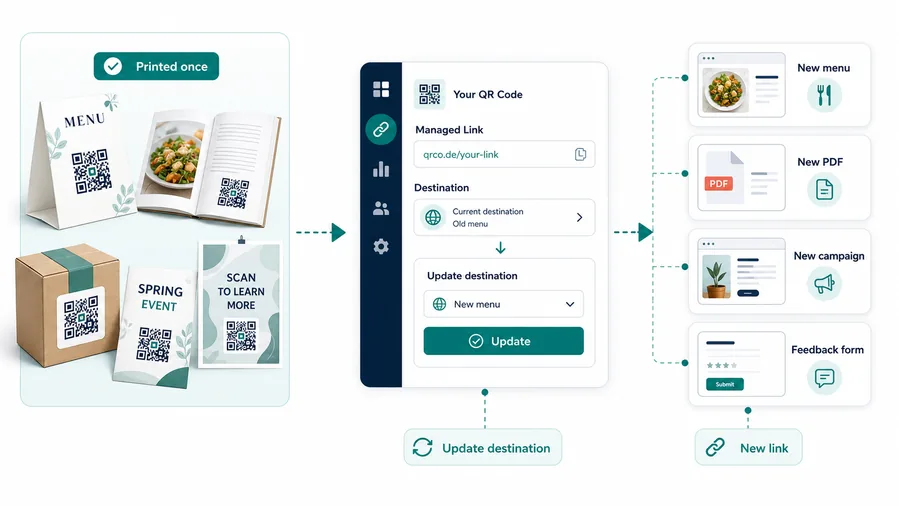
Listings and signs
Update price, status, photos, virtual tour, showing form, and fallback pages without replacing every sign.
Open houses
Move from registration to feedback, follow-up, offer instructions, or similar listings after the event.
Seller campaigns
Rotate valuation pages, market reports, consultation booking, and local proof for mailers and postcards.
Agent materials
Keep business cards, brochures, listing packets, and window displays connected to current contact and proof.
Use dynamic when property print has a changing destination
If the listing, form, date, or campaign may change before the material disappears, keep the QR editable.
Personal marketing
Use different QR destinations for different buyer and seller moments
Use QR codes on business cards, yard signs, open house signs, listing brochures, postcards, window displays, buyer guides, seller packets, social print pieces, review request cards, presentation folders, market report mailers, and neighborhood flyers. A card may open vCard contact details; a yard sign may open a listing; an open house sign may open sign-in; a seller packet may open a valuation request.
Do not make one code carry every job. Buyers may need photos, tours, maps, or showing requests. Sellers may need proof of marketing, reviews, or a home value page. Past clients may need a review link or referral page. A clear QR path helps each audience act without digging through a general website.
Dynamic QR codes let agents adjust destinations as campaigns change. A listing may sell, a review link may change, or a postcard campaign may need a new landing page. Scan analytics can show which placements create attention, but actual leads, appointments, and deals still belong in the agent’s CRM or contact workflow.
Real estate scan UX
Make the real estate scan confirm the property and lead action immediately
Scan UXA buyer or seller scanning from print should know they reached the right property, agent, or campaign before filling a form or calling.
Use property-specific pages for signs and flyers
Photos, tour, map, showing requestA property-specific destination works when the QR appears on a sign, flyer, brochure, window card, or listing packet.
The first screen should confirm address, status, price context, photos, and the next action.
Use forms when the scanner is ready for follow-up
Showing, valuation, question, seller consultLead forms should be short and clearly tied to the property or campaign that created the scan.
Ask only for the information needed to route the next step.
Use an agent hub for cards and broad brand materials
Profile, recent sales, booking, contactAgent cards, listing presentations, and referral materials may need proof, contact, calendar, listings, and service area in one mobile path.
Keep the main action obvious so scanners are not forced through a generic website.
Does the first screen match the printed property?
Confirm address, price/status context, photos, agent, and CTA match the sign, flyer, or packet.
Is the lead path short enough?
Showing requests, valuation forms, and contact pages should be fast on mobile and clearly explain what happens next.
Can the destination handle status changes?
Use dynamic QR when listings may go pending, sold, price-changed, or rerouted to similar properties.
The scan should move property interest into a clear conversation
Choose the destination that answers the immediate property question and makes follow-up easy.