Seminar QR Code Generator for Registration & Slides
Create seminar QR codes for registration pages, agendas, slide decks, feedback forms, speaker bios, handouts, certificates, and follow-up links. Use them on slides, posters, handouts, and badges.
Free QR code generator
Create a QR code online
Generate QR codes for websites, email, phone numbers, vCards, Wi-Fi, plain text, forms, PDF files, and campaign links. Customize colors, add a logo or frame, then download a print-ready PNG or SVG.
Choose QR code type
Website QR code, Email QR code, Phone QR code, vCard QR code, Wi-Fi QR code, Text QR code, SMS, WhatsApp, event, and download links.
Add your content
Enter your website URL, contact details, message, phone number, location, or file destination before generating the QR code.
Customize and download
Adjust QR colors, error correction, logo, frame, size, and margin. Generate QR Code, Download PNG, Download SVG, or Save and track scans.
Seminar attendee path
Help attendees open registration, slides, agendas, feedback, and follow-up
A seminar QR code is useful when attendees should reach the right digital resource from a poster, badge, agenda, handout, slide, certificate, table sign, or follow-up card. It can open registration pages, agendas, slide decks, speaker bios, handouts, feedback forms, certificate pages, contact forms, and post-event resources.
Seminars often move through several moments. Before the session, the QR code can open registration or the agenda. During the seminar, it can open slides, handouts, polls, or speaker notes. After the session, it can open feedback, certificates, recordings, or follow-up links. QR Code Lab helps create dynamic QR codes so organizers can update destinations as the event moves from promotion to delivery to follow-up.
QR Code Lab creates URL QR codes and scan analytics. It does not run registration, host slides by itself, collect feedback, issue certificates, or replace event software. Your registration tool, file host, form system, LMS, event platform, or website handles the actual seminar workflow. This lets organizers improve access to materials without rebuilding the systems they already use.
Seminar learning path
Seminar learning path event, wedding, venue, and attendee teams with registration, RSVPs, ticket pages, schedules, maps, guest details, and follow-up
Seminar QRUse QR codes to move event, wedding, venue, and attendee teams from invitations, banners, badges, programs, table cards, venue signs, and attendee handouts to registration, RSVPs, ticket pages, schedules, maps, guest details, and follow-up without making guests search or type a long URL.

Give attendees the next session action
Use QR codes on registration desks, room signs, badges, printed agendas, and handouts to open the exact seminar action people need at that moment.
The printed CTA should name the action, not just say scan me.
Keep resources organized after the talk
Slides, worksheets, speaker links, certificate forms, recordings, and feedback should sit behind a focused mobile page instead of a long URL in the deck.
Use dynamic QR when event details may change after print.
Use follow-up while attention is still warm
After the session, route attendees to feedback, slides, recordings, office hours, newsletter, next seminar, or certificate completion while the topic is still fresh.
The QR should support the real workflow after printing, not freeze an old link.A seminar QR should keep the learning path coherent
Attendees should never wonder whether the scan opens registration, agenda, slides, feedback, certificate, or follow-up. Each placement should match one useful seminar moment.
Use clear CTAs tied to the event moment.Clear action
Register, check in, view agenda, download slides, ask questions, or leave feedback.
Right audience
Separate attendee, speaker, organizer, sponsor, and follow-up paths when needed.
Current information
Keep room changes, files, recordings, certificates, and follow-up links editable.
Trust signals
Show school, event name, date, location, owner, and contact path on the first screen.
Events, conferences, and weddings
Give seminar attendees the next action at each stage of the session
Attendee flowSeminar QR codes should guide attendees from registration to room navigation, materials, questions, feedback, certificates, and follow-up.

Open registration and check-in
Use entrance signs, badges, and confirmation emails to open check-in, registration lookup, badge pickup, or attendee status.

Show agenda and room context
Room signs and printed agendas should open current session times, rooms, speaker notes, venue map, and late changes.

Deliver slides and learning materials
Handouts and final slides can open decks, worksheets, resource lists, speaker links, recordings, and certificate requirements.

Capture questions and feedback
Use table cards and closing slides for live questions, post-session feedback, session ratings, office hours, and follow-up requests.

Continue the relationship after the event
After the seminar, route attendees to recordings, certificates, newsletters, next sessions, community links, or consultation requests.
The attendee should know why this QR is on this material
Name the action beside the code: check in, view agenda, download slides, ask a question, get certificate, or leave feedback.
Organizers need fewer repeated questions during the session
Dynamic QR helps when rooms, slides, recordings, feedback forms, and follow-up links change during or after the seminar.
Match seminar QR placement to the event stage
Schools, classrooms, workbooks, and textbooks
Connect seminar materials to resources attendees can use after the session
Learning accessA seminar QR code is useful when a printed agenda, badge, handout, or closing slide should open the matching resource without email digging.

Attach slides to the session
Send attendees from handouts and room signs to the correct slide deck, worksheet, resource list, or speaker notes.

Release recordings and follow-up files
Use post-session QR paths for recordings, replay links, transcripts, certificate instructions, and extra reading.

Collect questions and feedback
Open question forms, feedback, polls, office-hour signup, or consultation requests while the session is still fresh.

Support certificates and attendance proof
Route attendees to certificate forms, attendance confirmation, continuing-education notes, and completion requirements.

Guide sponsor or exhibitor follow-up
Use booth cards and sponsor handouts for product pages, demos, meeting booking, downloads, and lead forms.

Segment tracks and rooms
Use separate QR paths for keynote, workshop, breakout, lab, sponsor, and networking materials when content differs.

Create a resource hub only when it helps
A hub is useful when attendees need several resources, but the first buttons should still match the session and handout.

Keep future sessions easy to find
After the seminar, send attendees to next sessions, newsletter, community, feedback, and related learning paths.
Attendees should land on the resource tied to the session
The QR should remove email digging and open the exact slide, file, form, or follow-up connected to the seminar material.
Organizers can update resources after the room empties
Dynamic QR helps when recordings, slides, certificates, feedback forms, and next-session links change after the event.
Put seminar resources beside the learning moment
Seminar placement
Place seminar QR codes where attendees are ready for the next session action
PlacementSeminar QR placement should match registration, room navigation, handouts, slides, feedback, certificates, and follow-up.
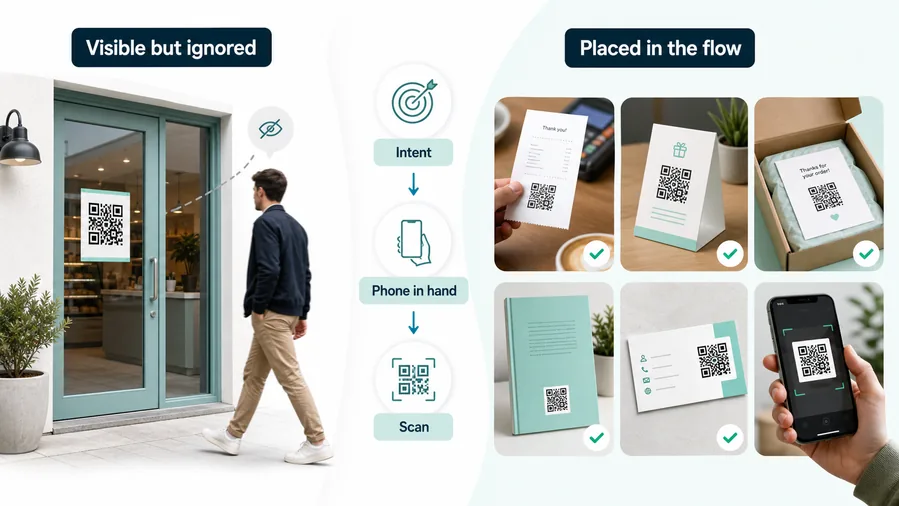
A seminar QR without a session job becomes noise
A code on every slide or wall can be visible but useless if attendees do not know whether it opens slides, questions, check-in, or feedback.
Placement should be judged by the action people are ready to take in that moment.
Put each code beside the next seminar step
Use entrance QR for check-in, room signs for agenda, handouts for resources, and closing slides for feedback and certificates.
The first screen should confirm the exact action promised by the printed material.
What just happened?
Registration, session start, breakout, handout, closing, certificate, or follow-up.
What should happen next?
Check in, view agenda, download slides, ask question, leave feedback, get certificate.
Is the owner clear?
The page should show the school, department, club, organizer, event name, deadline, and contact path when relevant.
Will details change?
Use dynamic QR for room changes, resources, recordings, certificates, and follow-up links.
Registration desk
Open check-in, badge lookup, agenda, and attendee help.
Badge
Support networking, profile, agenda, room map, and follow-up.
Room sign
Open session details, slides, questions, speaker info, and resources.
Printed agenda
Link schedule changes, speaker links, sponsor pages, and session resources.
Handout
Open slides, worksheets, recordings, reading list, and certificate path.
Closing slide
Ask for feedback, certificate completion, next session, and follow-up.
Sponsor booth
Open demos, contact forms, product resources, and meeting booking.
Follow-up email printout
Send attendees to recordings, resources, community, and next seminars.
Seminar QR placement should reduce event-day friction
Keep the QR where the next action is obvious and the destination can answer the practical question immediately.
Seminar scan reporting
Use seminar scan data to compare materials, not to overclaim attendance
AnalyticsTracking is useful when separate seminar QR codes help compare registration signs, room posters, handouts, slides, sponsor cards, and follow-up materials.
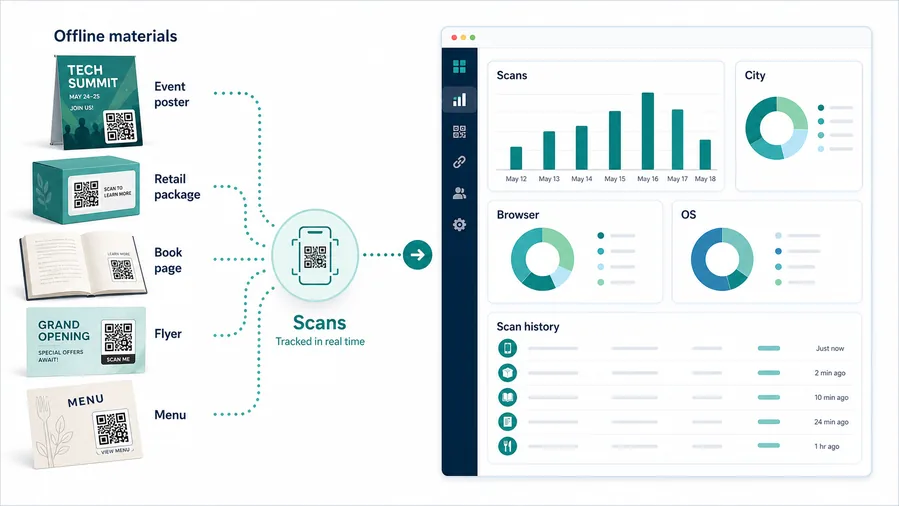
All seminar scans collapse into one total
A single QR can show overall interest, but it cannot explain whether people scanned from registration, a room sign, a handout, or the closing slide.
That makes it harder to improve event materials and follow-up.
Each seminar placement becomes a signal
Separate dynamic QR codes let organizers compare agenda scans, slide downloads, feedback forms, sponsor interest, and certificate follow-through.
Scan data shows engagement with materials, not guaranteed session attendance or learning outcome.
Scan volume
Review how many scans each seminar QR placement received during and after the event.
Time and device
See whether scans happened at registration, during sessions, after closing, or during follow-up.
Broad location
Use approximate location carefully to spot event, region, or remote-attendee patterns.
Code comparison
Compare badges, room signs, handouts, slides, sponsor cards, and feedback links side by side.
Registration flow
Compare check-in signs, confirmation emails, badges, and entrance materials.
Resource downloads
See which sessions drove scans for slides, worksheets, recordings, and speaker links.
Feedback collection
Review scan activity for session ratings, questions, surveys, and certificate forms.
Sponsor and follow-up interest
Compare sponsor booth cards, demo links, consultation requests, and next-session pages.
Name seminar QR codes by placement before launch
Analytics only help when code names match real materials, rooms, sessions, and follow-up paths.
Before, during, after
Match each seminar QR code to the attendee moment
Useful placements include event posters, badges, agendas, table cards, presentation slides, printed handouts, certificate cards, feedback signs, and follow-up emails that are printed or shared as PDFs. CTAs should say register, open agenda, download slides, ask a question, complete feedback, get certificate, or view recording. The label should tell attendees exactly what they get.
Dynamic QR codes are practical because seminar materials change. A registration code can later point to event check-in, then feedback or recordings. Scan analytics can compare posters, badges, slides, and handouts, showing which touchpoints attendees actually use. That is helpful when planning the next seminar.
Keep pages mobile friendly. Attendees may scan from a seat while listening, so the page should load quickly and show the promised resource first. QR Code Lab manages the printed access point and scan counts, while your event tools handle registration, files, certificates, and responses. If the session has several resources, use a simple landing page with clear buttons for slides, questions, feedback, and follow-up. This prevents attendees from losing the thread during the talk.