Eventbrite QR Code Generator for Event Pages & Tickets Online
Create Eventbrite QR codes for event pages, registration links, ticket pages, RSVP pages, attendee instructions, and printed promotions. Use them on flyers, posters, badges, and signs.
Free QR code generator
Create a QR code online
Generate QR codes for websites, email, phone numbers, vCards, Wi-Fi, plain text, forms, PDF files, and campaign links. Customize colors, add a logo or frame, then download a print-ready PNG or SVG.
Choose QR code type
Website QR code, Email QR code, Phone QR code, vCard QR code, Wi-Fi QR code, Text QR code, SMS, WhatsApp, event, and download links.
Add your content
Enter your website URL, contact details, message, phone number, location, or file destination before generating the QR code.
Customize and download
Adjust QR colors, error correction, logo, frame, size, and margin. Generate QR Code, Download PNG, Download SVG, or Save and track scans.
Event platform link
Open the official Eventbrite page from posters, flyers, and venue signs
An Eventbrite QR code can point to an Eventbrite event page, registration link, ticket page, RSVP page, attendee instructions, waitlist page, or related event URL. It is useful for organizers who promote events through posters, flyers, venue signs, invitations, programs, community boards, sponsor materials, and social print pieces.
QR Code Lab creates a QR code that opens the Eventbrite URL you provide. It is not an official Eventbrite integration, payment processor, ticket validation system, or attendee database. Eventbrite controls registration, ticketing, event visibility, payments, emails, and attendee interactions. The QR code is the bridge from physical promotion to that official event page.
Use the QR code to reduce typing and make printed promotion measurable. The printed CTA should match the real destination: register, get tickets, RSVP, join waitlist, or view event details. If the Eventbrite link changes, a dynamic QR code can help protect the printed material from becoming outdated. That matters when posters and flyers are already in circulation and people may scan them days later.
Events, conferences, and weddings
Use Eventbrite QR codes to send people to the exact event action
Attendee flowAn Eventbrite QR code should open the event page, tickets, registration, schedule, check-in instructions, waitlist, or post-event follow-up without making people search by event name.

Promote the event from printed materials
Use QR codes on posters, flyers, table cards, sponsor packets, counter signs, and street-team materials so interested people can open the Eventbrite listing while the event is still in front of them.

Move attendees from interest to registration
The destination should show the event name, date, venue, ticket status, price, and registration action quickly. A broad organizer profile is weaker than the exact event page.

Support check-in and arrival details
Use separate codes for ticket lookup, parking notes, venue entrance, badge pickup, accessibility details, or last-minute updates when those actions differ from ticket sales.

Keep follow-up alive after the event
After the event, redirect printed scans to photos, recordings, feedback, next-event registration, sponsor offers, or organizer updates instead of an expired ticket page.

Speaker materials and feedback
After a session, attendees can scan a slide, poster, handout, or table sign to open slides, PDFs, worksheets, links, speaker profile, Q&A, or feedback form. The attendee gets the materials; the organizer gets a clean follow-up action.
Scanners should land on the event they just saw
The first screen should confirm the event name, date, and next action. People scanning a flyer should not have to search Eventbrite manually.
Organizers need a destination that can move with the campaign
Ticket status, rooms, waitlists, livestreams, and follow-up pages can change after print. Dynamic QR keeps promotion materials useful.
Match the code to the event material
Eventbrite placement
Place Eventbrite QR codes where event interest is already present
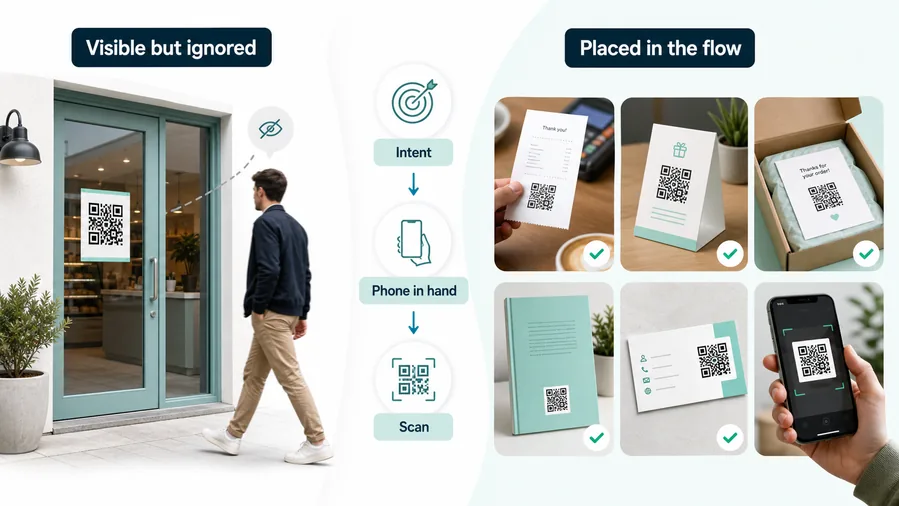
PlacementEventbrite QR placement should match the event funnel: promotion before registration, arrival help at the venue, and follow-up after the event.
The code points to a generic organizer page
A person scanning a specific event poster expects the exact listing, not a profile page with several events.
When the destination is too broad, ticket intent leaks away.
The QR opens the event action for that material
Use ticket links on promotion, check-in help at the venue, and feedback or next-event links after the event.
The printed caption should tell people whether they are registering, checking in, or following up.
Is this before, during, or after the event?
Promotion, arrival, session support, and follow-up need different destinations.
Does the print name the event clearly?
The QR should sit near event name, date, venue, and primary action.
Can the destination change after tickets close?
Use dynamic QR if old flyers may keep circulating after registration ends.
Do partner materials need their own code?
Separate codes help compare sponsors, venues, flyers, and street-team placements.
Poster or flyer
Best for ticket sales, registration, event details, calendar save, and venue information.
Partner or sponsor material
Use for co-promoted event links, offer pages, lead forms, and tracked campaign traffic.
Registration sign
Open ticket lookup, check-in instructions, badge pickup, Wi-Fi, and venue map.
Exit or thank-you card
Send attendees to photos, recordings, feedback, next event, and organizer updates.
Poster or event sign
Best where people pause: registration line, booth, waiting area, seat back, schedule board, or exit path. Weak when people only pass at speed.
Business card
Useful after a conversation because the person already knows why they might save a contact, open a portfolio, book a call, or follow up.
Window sign
Good for after-hours menus, booking, pickup instructions, or quick offers. Avoid complex actions when the person is outside and just walking by.
Cover or front label
Use it only when the promise is immediate and clear. Otherwise the better scan moment is often inside the material or after the first interaction.
Eventbrite QR placement should preserve event intent
Use the QR where people are already ready to register, arrive, or follow up, then send them to that exact action.
Ticket campaign control
Use dynamic QR when Eventbrite event details can change after printing
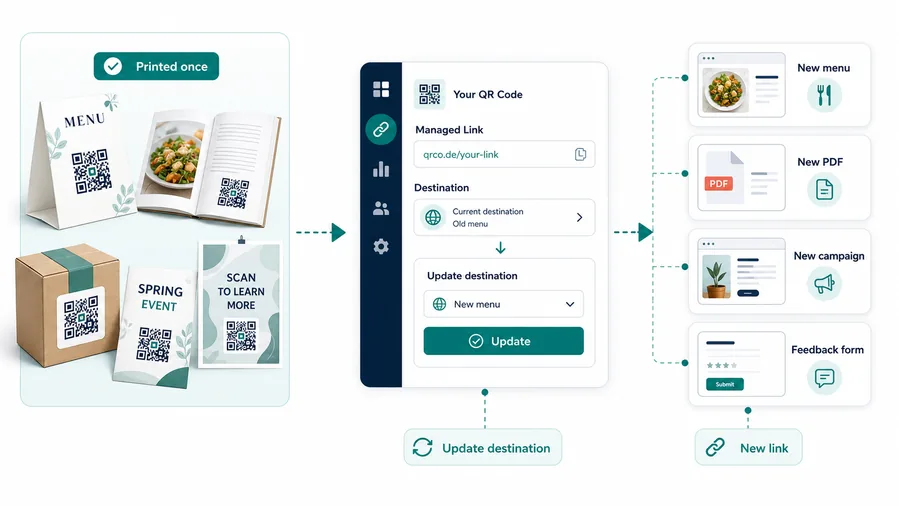
DynamicEvent pages move through phases: early bird, general admission, waitlist, sold out, check-in, post-event resources, and next-event promotion. Dynamic QR keeps printed materials useful across those phases.
Old flyers keep opening a closed ticket page
Static QR can work for a permanent event URL, but printed promotion often outlives ticket sales.
When registration closes, rooms change, or follow-up begins, old print can keep sending people to a dead or confusing page.
The same printed QR can follow the event lifecycle
Dynamic QR lets the organizer update the destination while posters, flyers, signs, and partner cards stay in circulation.
That helps before the event, at check-in, and after the event when traffic should move to resources or the next date.
Ticket phase changes
Move scans from early bird to general admission, waitlist, sold-out notice, or next-event registration.
Arrival updates
Update parking, entrance, room, badge pickup, weather, livestream, or accessibility details.
Partner and sponsor links
Change sponsor offers, exhibitor pages, lead forms, and co-promotion destinations.
Post-event follow-up
Redirect to photos, recordings, surveys, certificates, and upcoming events.
Use dynamic when event print must survive the ticket window
Eventbrite QR materials should keep helping people even after the original registration page changes state.
Promotion tracking
Use QR tracking to compare event promotion placements
Use Eventbrite QR codes on posters, flyers, table cards, venue signs, invitation cards, community boards, sponsor materials, booth signs, printed emails, campus boards, check-in desk signage, and local partner displays. Keep the CTA tied to the Eventbrite action so people know whether they are registering, buying tickets, or just reading details.
Separate QR codes can make promotion easier to understand. A coffee shop poster, a partner flyer, a venue sign, and a campus board may all send people to the same Eventbrite page, but each placement can have its own trackable code. That lets you compare which physical materials actually pushed people toward the event.
Dynamic QR helps if the event URL changes, a waitlist replaces registration, tickets sell out, or post-event information becomes more important. QR Code Lab scan analytics show interest by placement; Eventbrite remains the source for registrations, tickets, payments, and attendee records. Use both views to understand promotion and attendance separately. That keeps the marketing report honest and useful, and it prevents one busy poster from being mistaken for confirmed attendance.
Event link trust
Keep Eventbrite QR codes clear about the event and organizer
TrustEventbrite QR codes should make the event name, organizer, ticket status, and next step recognizable before people register or share information.

A generic event link can create wrong-event signups
Use event-specific destinations and printed context so scanners know they reached the correct listing.
Watch for similar-looking domains, long URLs, login or verify keywords, and pages asking for credentials after an unexpected scan.
Old ticket links can keep circulating
Redirect closed events to waitlist, next event, or post-event resources instead of leaving stale print in market.
A trustworthy QR should not make the final destination mysterious, especially on posters, labels, menus, parking signs, or event materials.
Registration data needs proper handling
Keep attendee details, payment, refunds, and ticket support inside the approved event platform and organizer process.
Before paying, check the domain, HTTPS, amount, recipient, and whether the destination matches the place or brand that printed the QR.Review the event page before printing
Scan final posters, flyers, and signs to confirm event name, date, ticket state, organizer, and mobile layout.
The current detailed report is a static URL analysis. It helps reveal the encoded content and basic URL risk signals, but it does not guarantee that a destination is safe and does not replace browser, antivirus, payment, or bank security checks.Decoded content
See the raw value inside the QR before opening it.
Content type
Recognize URL, Wi-Fi, mailto, phone, SMS, vCard, or plain text.
URL risk signals
Review HTTPS, shorteners, IP addresses, long URLs, encoded characters, query parameters, and sensitive keywords.
Destination report
For URL codes, view final URL fields, static redirect report fields, domain fields, TLS placeholders, page metadata fields, and risk reasons.
Give each event QR code an owner
Someone should know when to update ticket links, waitlists, check-in pages, and post-event follow-up.