Event Registration QR Code Generator for Signups & Tickets
Create event registration QR codes for signup forms, ticket pages, RSVP pages, attendee details, waitlists, and campaign tracking. Add them to posters, flyers, invites, and venue signs.
Free QR code generator
Create a QR code online
Generate QR codes for websites, email, phone numbers, vCards, Wi-Fi, plain text, forms, PDF files, and campaign links. Customize colors, add a logo or frame, then download a print-ready PNG or SVG.
Choose QR code type
Website QR code, Email QR code, Phone QR code, vCard QR code, Wi-Fi QR code, Text QR code, SMS, WhatsApp, event, and download links.
Add your content
Enter your website URL, contact details, message, phone number, location, or file destination before generating the QR code.
Customize and download
Adjust QR colors, error correction, logo, frame, size, and margin. Generate QR Code, Download PNG, Download SVG, or Save and track scans.
Signup path
Turn offline event interest into a clear registration step
An event registration QR code can open a signup form, ticket page, RSVP page, attendee details form, waitlist, event landing page, or registration platform. It is useful for organizers, venues, schools, nonprofits, local groups, marketers, and agencies that promote events through flyers, posters, invitations, counters, and other printed materials.
The value is directness. If a poster says register, the scan should open the registration path, not a homepage where people have to search for the event. Every extra step loses some interested people. A clear QR code lets someone see the event, decide, and start the signup while the printed message is still in front of them.
QR Code Lab creates URL QR codes and can help with dynamic destinations and scan analytics. It does not collect registrations, store attendee details, process payments, validate tickets, or operate event software. The linked form or event platform handles registration. QR Code Lab helps the printed promotion reach that destination and show whether people scanned it.
For larger campaigns, create separate codes for key placements. A campus poster, partner flyer, lobby sign, and sponsor table may all promote the same event, but they should not be measured as one vague source.
Registration path
Use event registration QR codes to turn interest into a completed signup
RegistrationAn event registration QR code should open the exact signup path for the event: attendee form, ticket page, RSVP, waitlist, waiver, payment step, or calendar save.

Make registration the first action after the scan
Use QR codes on posters, flyers, invitations, partner materials, table cards, and slides so interested people can register while the event is top of mind.
The destination should not make them search for the correct event.
Show date, place, and commitment clearly
The first screen should confirm the event name, date, venue or online link, cost, capacity, deadline, and what information the form will ask for.
Registration trust starts before the form fields.
Handle capacity and changes after printing
Events can sell out, move rooms, change times, or open waitlists. Dynamic QR helps printed registration materials point to the current signup state.
Old posters should not keep promising closed registration.Registration QR should remove the gap between interest and signup
The page should confirm the event and put the registration button first. Secondary details are useful, but they should not bury the form or ticket action.
Use separate codes for channels or partners when you need to compare registration sources.Promotion
Open registration from posters, invitations, sponsor cards, and flyers.
Capacity
Show sold-out, waitlist, deadline, ticket tier, or remaining-seat information clearly.
Preparation
Collect dietary needs, accessibility requests, waiver details, or session choices when needed.
Follow-up
Move expired signup traffic to next-event interest, recordings, or organizer updates.
Events, conferences, and weddings
Give registrants enough context to finish the form confidently
Attendee flowEvent registration QR codes work when they answer the main questions before the form: what is this event, when is it, where is it, what does it cost, and what happens after signup.

Open the exact registration form
Send scanners to the event-specific form, ticket page, RSVP, or waitlist, not a broad events calendar where they must find the listing again.

Collect only what the event needs
Ask for attendee name, contact, ticket type, session choice, accessibility needs, meal notes, waiver, or payment only when those details are part of the event process.

Set expectations after signup
Tell registrants whether they will receive email confirmation, ticket, calendar invite, location details, reminder, or check-in instructions.

Route full or expired events gracefully
When registration closes, send scanners to waitlist, next event, recordings, newsletter, or a clear closed-registration message.

Speaker materials and feedback
After a session, attendees can scan a slide, poster, handout, or table sign to open slides, PDFs, worksheets, links, speaker profile, Q&A, or feedback form. The attendee gets the materials; the organizer gets a clean follow-up action.
The registrant should know the commitment before the form
Show date, location, price, deadline, refund or cancellation notes, and confirmation expectations before asking for details.
Organizers need clean registration data
A focused QR path reduces duplicate signups, wrong-event submissions, missing meal notes, and people arriving without confirmation.
Match the QR to the registration channel
Signup placement
Place event registration QR codes where people can decide and sign up
PlacementRegistration QR placement should give people enough context and time to complete the signup: posters, invitations, partner flyers, counter signs, classroom boards, or event preview tables.
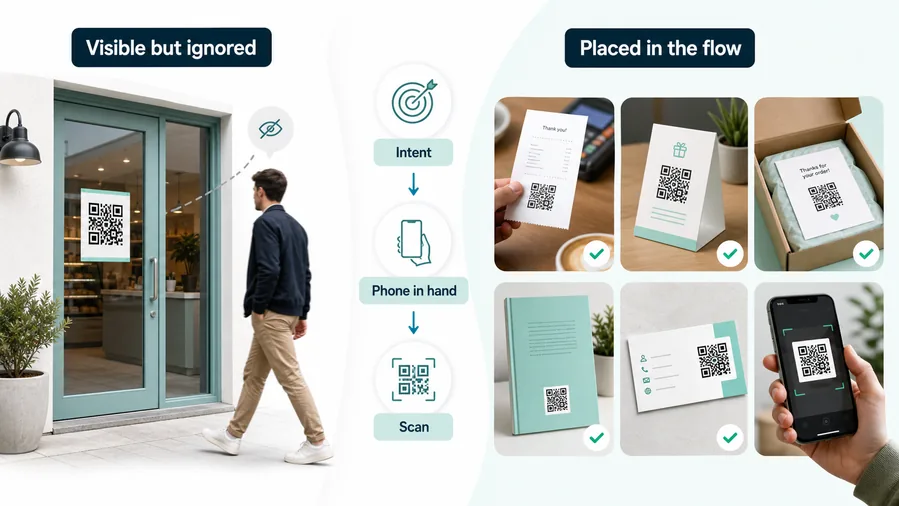
The QR appears without enough event detail nearby
If the printed piece lacks date, venue, deadline, or event promise, people may scan but not complete registration.
The QR should be supported by enough copy to make the decision easier.
The QR sits beside the registration decision
Place it where the event name, value, date, venue, and deadline are already visible.
The destination can then focus on completing signup rather than re-explaining everything from scratch.
Can the person decide from the print?
Date, place, price, audience, and deadline should be clear before scanning.
Does the QR open the exact event?
Avoid event calendars or organizer homepages when one specific registration is promised.
Will registration status change?
Use dynamic QR for capacity limits, waitlists, deadlines, and schedule changes.
Do channels need comparison?
Use separate codes for partners, posters, invitations, classrooms, and sponsor materials when reporting matters.
Poster or flyer
Best for public event signup, deadline, ticket link, calendar save, and venue details.
Invitation
Use for RSVP, guest count, meal choice, accessibility notes, and confirmation details.
Partner or sponsor card
Track co-promoted registrations, offer context, and referral sources.
On-site sign
Open walk-in registration, waitlist, waiver, and check-in preparation.
Poster or event sign
Best where people pause: registration line, booth, waiting area, seat back, schedule board, or exit path. Weak when people only pass at speed.
Business card
Useful after a conversation because the person already knows why they might save a contact, open a portfolio, book a call, or follow up.
Window sign
Good for after-hours menus, booking, pickup instructions, or quick offers. Avoid complex actions when the person is outside and just walking by.
Cover or front label
Use it only when the promise is immediate and clear. Otherwise the better scan moment is often inside the material or after the first interaction.
Registration QR placement should turn attention into a finished signup
Put the code where people have enough context to act, then make the form direct and trustworthy.
Registration status
Use dynamic QR when registration status can change after print
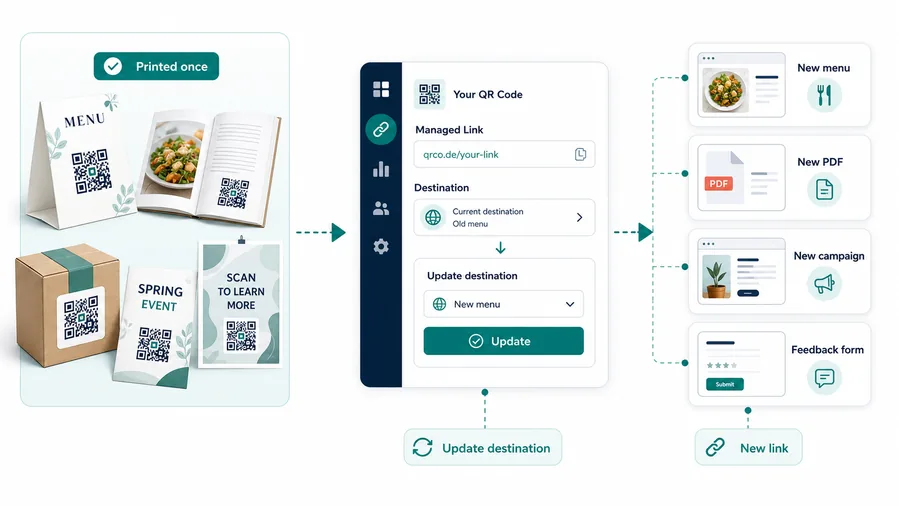
DynamicRegistration pages change when tickets sell out, deadlines pass, rooms move, forms close, waitlists open, or a new event becomes the better destination.
Printed registration materials keep promising a closed form
Static QR can work for a permanent signup page, but many events have deadlines, capacity, tiers, and changing details.
Old posters can keep sending people to a closed or incorrect registration page.
The same printed QR can open the current signup state
Dynamic QR lets organizers update the destination while invitations, flyers, posters, and partner cards remain in circulation.
That keeps scans useful before registration, after capacity fills, and after the event ends.
Capacity and waitlist
Move full events to waitlist, overflow, livestream, or next-date registration.
Deadline changes
Update early bird, standard pricing, late registration, and closed-registration messaging.
Venue and schedule updates
Correct room, time, parking, access, or online link details after printing.
Post-event routing
Send expired registration traffic to recordings, photos, feedback, newsletter, or next-event interest.
Use dynamic when registration print may outlive the first form state
Editable destinations keep event promotion useful even after signup details change.
Signup placement
Put registration QR codes where people are deciding whether to attend
Use registration QR codes on flyers, posters, invitations, venue signs, school notices, nonprofit handouts, community boards, sponsor materials, checkout counters, lobby signs, and printed programs. The CTA should say register, save your seat, join waitlist, get tickets, or sign up here. Clear wording tells people what happens before they scan.
Placement matters. A code near event details helps people act while they are comparing date, time, price, and location. A code at a booth or counter can catch people who are already asking questions. A code buried in small footer text may be technically present but practically invisible.
Dynamic QR helps when registration closes, a waitlist opens, tickets sell out, or the destination changes from signup to event details. Scan analytics can compare promotion channels before the event, while completed registrations remain in your event or form platform.
Name each QR code clearly in QR Code Lab so the report is easy to read later. Good names make it obvious which poster, flyer, desk sign, or partner location created the scan.