Hotel Review QR Code Generator for Guest Feedback & Surveys
Create hotel review QR codes for Google reviews, guest feedback forms, post-stay surveys, room cards, front desks, receipts, and follow-up emails. Make the feedback path easy.
Free QR code generator
Create a QR code online
Generate QR codes for websites, email, phone numbers, vCards, Wi-Fi, plain text, forms, PDF files, and campaign links. Customize colors, add a logo or frame, then download a print-ready PNG or SVG.
Choose QR code type
Website QR code, Email QR code, Phone QR code, vCard QR code, Wi-Fi QR code, Text QR code, SMS, WhatsApp, event, and download links.
Add your content
Enter your website URL, contact details, message, phone number, location, or file destination before generating the QR code.
Customize and download
Adjust QR colors, error correction, logo, frame, size, and margin. Generate QR Code, Download PNG, Download SVG, or Save and track scans.
Guest feedback path
Separate public hotel reviews from private guest help
A hotel review QR code can open a Google review link, guest feedback form, post-stay survey, room feedback page, front desk issue form, or follow-up page. It is useful for hotels, inns, guest houses, boutique hotels, hostels, resorts, and property managers who want guests to have a clear feedback path.
The key is separating the moment. During the stay, a guest with a problem needs help, not a public review page. After checkout, a happy guest may be ready to leave a public review. Using different QR destinations for in-stay feedback and post-stay reviews makes the experience more respectful and more useful for staff.
QR Code Lab creates QR codes that point to review or feedback destinations. It does not manage reputation, collect responses, gate reviews, create fake reviews, or incentivize positive-only feedback. Keep public reviews, private feedback, and service recovery clearly labeled so guests understand what will happen after scanning.
This separation also protects the guest experience. A guest who needs towels, quiet, or a repair should reach the hotel team quickly, while a guest leaving happy can choose a public review path.
Hotel review moment
Ask for hotel reviews after the guest experience is complete
ReviewsA hotel review QR code should invite a fair public review after the stay while keeping unresolved service issues, billing questions, room problems, and staff feedback on a private path.
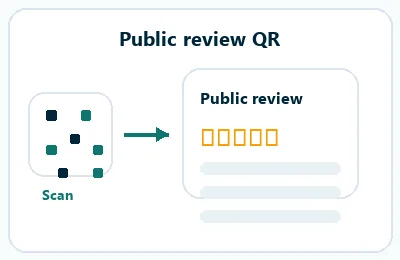
Send satisfied guests to the correct review page
Use the QR code at checkout, on thank-you cards, folios, lobby signs, or post-stay materials when the guest has completed enough of the stay to judge the experience.
Checkout cards, room follow-up notes, post-stay emails printed at desk, reception cards, and concierge handouts. Do not ask for a public rating while an unresolved room, billing, noise, or service issue still needs staff attention.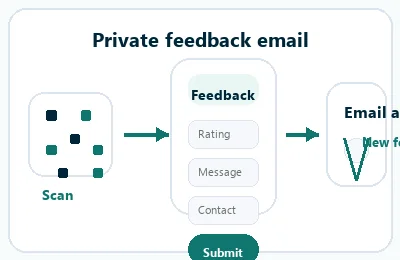
Give unhappy guests a direct hotel contact path
If something went wrong, the QR journey should make it easy to contact the front desk, manager, guest relations, or support team before pushing the guest toward a public review.
Room cards, lobby signs, checkout desks, service recovery cards, and post-stay feedback forms. A review QR should not hide support options or make complaints feel unwelcome.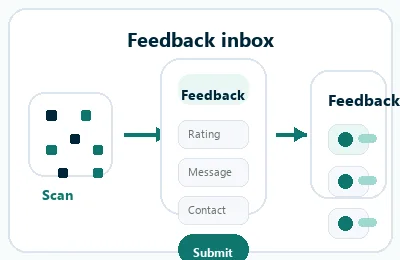
Tell guests that the QR opens a review request
The printed caption should say “Review your stay” or “Review us on Google” so the guest knows the scan is public-facing before they open it.
Any hotel review card, counter sign, room insert, receipt, or thank-you note. Avoid vague scan prompts that make the destination feel like a survey, coupon, or booking page.A hotel review QR should feel like a respectful follow-up
Use it to make a fair review easier, not to block complaints or pressure guests while service issues are unresolved.
Hotel review placement
Place hotel review QR codes where guests are ready to reflect
PlacementHotel review placement works best near checkout, thank-you moments, folios, post-stay cards, and service completion points, not before the guest has experienced the stay.
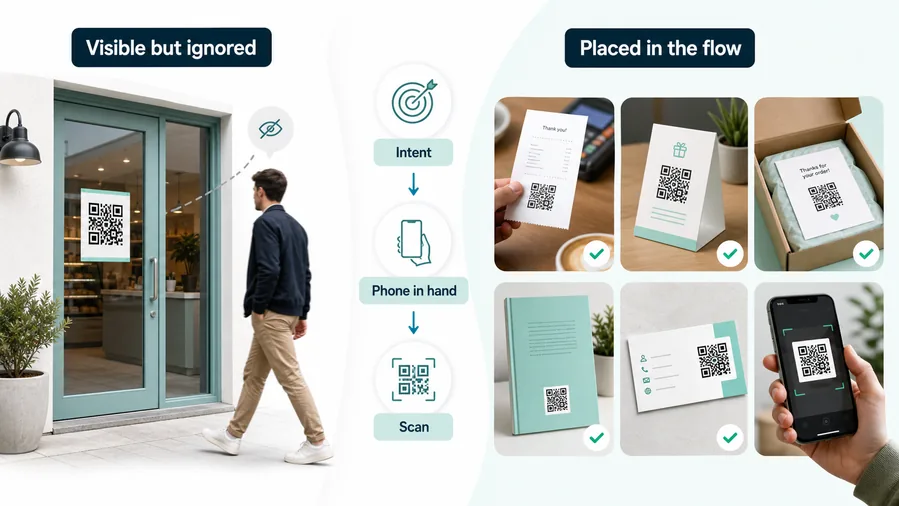
The review ask appears before the stay is complete
A QR code in the room can be useful for feedback or support, but it may be too early for a public review if the guest has not finished the stay.
Guests with unresolved issues need help first, not a rating request.
The QR appears after the hotel has delivered the experience
Checkout cards, thank-you notes, folios, lobby counters, and post-stay follow-up match the review moment better.
Use room cards for service requests or private feedback, then reserve public review asks for the end of the stay.
Has the guest completed the stay?
Public review asks fit checkout and post-stay moments better than arrival or early room placement.
Is a private issue path visible?
Room problems, billing questions, and service issues should have a direct hotel contact option.
Does the caption name the review site?
Say whether the scan opens Google, Tripadvisor, Booking, or a private hotel survey.
Is this location-specific?
Hotels with multiple properties should send guests to the correct listing or review destination.
Checkout card
Best for guests who have completed the stay and can leave a fair public review.
Folio or receipt
Useful when the review ask follows payment, invoice, or final service confirmation.
Room card
Better for private feedback, front desk contact, maintenance, housekeeping, or service recovery.
Lobby counter sign
Works when staff can invite happy guests to review after checkout or a resolved service moment.
Poster or event sign
Best where people pause: registration line, booth, waiting area, seat back, schedule board, or exit path. Weak when people only pass at speed.
Business card
Useful after a conversation because the person already knows why they might save a contact, open a portfolio, book a call, or follow up.
Window sign
Good for after-hours menus, booking, pickup instructions, or quick offers. Avoid complex actions when the person is outside and just walking by.
Cover or front label
Use it only when the promise is immediate and clear. Otherwise the better scan moment is often inside the material or after the first interaction.
Hotel review QR placement should respect the stay journey
Ask after value is delivered, and keep support visible for anything that still needs the hotel team.
Guest review UX
Make the hotel review scan clear without replacing guest support
Scan UXA hotel review QR should quickly confirm the property, review destination, and public nature of the ask while giving guests another route for unresolved problems.
The scan opens the right property listing
Google, Tripadvisor, Booking, property-specific pageThe destination should match the hotel location the guest actually visited. Multi-property groups should avoid sending everyone to a generic brand page.
The first screen should make the review action obvious so guests understand they are leaving public feedback.
Support issues need a direct route
Front desk, manager, guest relations, service recoveryA guest with a billing issue, room problem, noise complaint, or missed service needs a contact path before a public review prompt.
Keep that path visible on the printed card or on the destination page so the review ask feels fair.
The review request should arrive at the right time
Checkout, thank-you card, post-stay noteReview scans work best when the guest has completed the stay and the experience is still fresh.
If the QR is used earlier in the room, frame it as feedback or assistance rather than a public rating request.
Does the link open the correct hotel listing?
Test the QR for the exact property, not only the hotel brand.
Is the public review ask explicit?
Use clear wording such as “Review your stay on Google” or the review platform name.
Can guests get help instead?
Make front desk, manager, or guest relations support easy to find for unresolved issues.
A hotel review QR should build trust before asking for it
Make the destination clear, ask at the right moment, and keep private service recovery available.
Hospitality timing
Use different QR codes for in-stay issues and post-stay reviews
Use review QR codes on room cards, front desk signs, receipts, post-stay cards, elevator notices, checkout counters, thank-you notes, and follow-up materials. For in-room issue reporting, use a private feedback or support form instead of pushing guests directly to a public review page. The guest should feel helped, not managed.
A public review CTA can be simple: share your stay, leave a Google review, or review your visit. A private feedback CTA should sound different: report a room issue, request follow-up, or tell us what went wrong. The distinction matters because guests scan for different reasons at different moments.
Dynamic QR codes help if review links, survey pages, or feedback forms change. Scan analytics can show where guests begin the feedback path, while the destination platform stores the actual review or response. That helps the hotel improve placement without mixing scans with review scores.
Use official hotel branding near the code. Guests are more likely to trust a review or feedback QR when it clearly belongs to the property and not to an unknown third party.