Event Check-In QR Code Generator for Fast Entry & Badges
Create event check-in QR codes for attendee forms, badge pickup pages, registration desks, venue entry instructions, and event apps. Use them on emails, signs, badges, and posters.
Free QR code generator
Create a QR code online
Generate QR codes for websites, email, phone numbers, vCards, Wi-Fi, plain text, forms, PDF files, and campaign links. Customize colors, add a logo or frame, then download a print-ready PNG or SVG.
Choose QR code type
Website QR code, Email QR code, Phone QR code, vCard QR code, Wi-Fi QR code, Text QR code, SMS, WhatsApp, event, and download links.
Add your content
Enter your website URL, contact details, message, phone number, location, or file destination before generating the QR code.
Customize and download
Adjust QR colors, error correction, logo, frame, size, and margin. Generate QR Code, Download PNG, Download SVG, or Save and track scans.
Arrival check-in
Help attendees find the right check-in step before the line gets messy
An event check-in QR code can open a check-in page, attendee form, badge pickup instructions, registration desk page, event app, venue entry instructions, health or safety note, queue guide, or help page. It is useful for organizers, venues, conferences, schools, nonprofits, agencies, and teams managing arrivals.
The job of this QR code is to reduce confusion at the door. Attendees may be holding a bag, looking for the right desk, searching email, or trying to understand whether they need a ticket, badge, form, or app. A clear QR sign can send them to the right instruction before staff have to answer the same question again and again.
QR Code Lab creates the QR destination and can help measure scan interest. It does not validate tickets, manage attendee databases, perform access control, issue badges, or run event apps. The linked destination should handle the real check-in or instructions, while the QR code makes that destination easier to reach from print. That keeps entry guidance simple and honest.
Events, conferences, and weddings
Use event check-in QR codes to move arrivals through the door faster
Attendee flowAn event check-in QR code should open ticket lookup, badge pickup, arrival form, waiver, room assignment, or attendee instructions without forcing staff to repeat the same steps.

Start check-in before the desk
Place QR codes near the line, entrance, confirmation email printout, or lobby sign so attendees can prepare ticket details before they reach staff.

Match the code to the attendee group
VIPs, speakers, vendors, volunteers, general attendees, and walk-ins may need different check-in paths. Separate destinations reduce confusion at the desk.

Show the next instruction after submission
After scanning or submitting details, tell attendees whether to show the screen, pick up a badge, join another line, sign a waiver, or go to a room.

Keep late changes visible
Use editable destinations when entrances, badge desks, room assignments, waivers, or event schedules may change on event day.

Speaker materials and feedback
After a session, attendees can scan a slide, poster, handout, or table sign to open slides, PDFs, worksheets, links, speaker profile, Q&A, or feedback form. The attendee gets the materials; the organizer gets a clean follow-up action.
Attendees need confidence at the doorway
The page should name the event, check-in location, and next step so people do not stop the line to ask what the QR means.
Staff need fewer repeated arrival questions
A focused check-in QR helps attendees prepare the right details before reaching staff and reduces bottlenecks at the desk.
Place check-in QR codes before the bottleneck
Arrival placement
Place event check-in QR codes where attendees can prepare without blocking the line
PlacementCheck-in QR placement should give attendees space to scan, read, and prepare before they reach the staff handoff point.
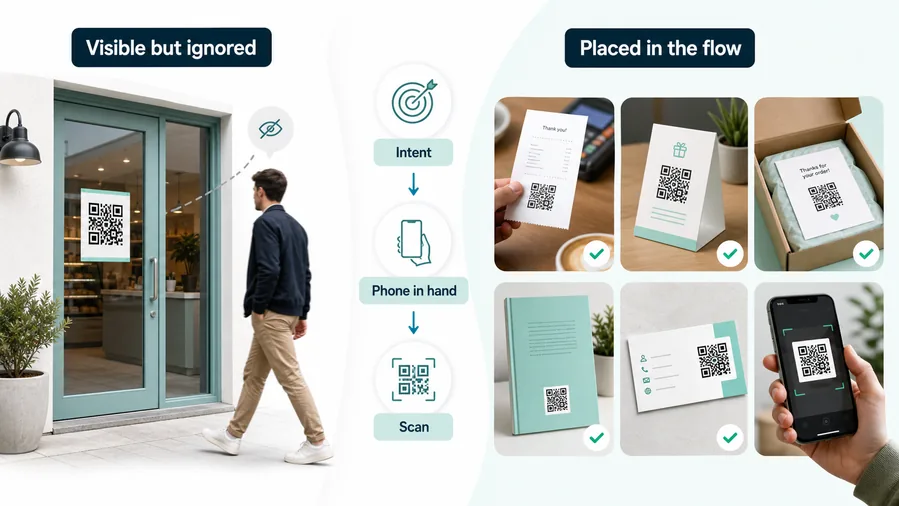
The code appears only when the attendee reaches staff
If the QR is at the front of the line, it may slow the exact bottleneck it was meant to fix.
Attendees need to scan earlier while they are waiting or before they approach the desk.
The code starts check-in while attendees are already paused
Use queue signs, lobby posters, confirmation emails, stanchions, and pre-desk cards so attendees can prepare ticket or form details ahead of time.
Keep the printed instruction short and specific.
Can attendees scan without stopping traffic?
Place the QR before the desk, not only at the handoff point.
Does the QR match attendee type?
Use separate paths when VIPs, speakers, vendors, volunteers, or walk-ins have different check-in steps.
Is the confirmation useful to staff?
The final screen should show what staff need: name, ticket, badge status, or next step.
Is there a no-phone path?
Keep staff assistance visible for accessibility, battery, camera, or connection issues.
Queue sign
Best for ticket lookup, arrival form, waiver, and badge preparation before the desk.
Registration desk
Use as a backup for walk-ins, help requests, and staff-directed forms.
Badge pickup table
Open room assignments, schedule, maps, and attendee-specific instructions.
Speaker or volunteer area
Route role-specific check-in, materials, schedules, and staff contacts.
Poster or event sign
Best where people pause: registration line, booth, waiting area, seat back, schedule board, or exit path. Weak when people only pass at speed.
Business card
Useful after a conversation because the person already knows why they might save a contact, open a portfolio, book a call, or follow up.
Window sign
Good for after-hours menus, booking, pickup instructions, or quick offers. Avoid complex actions when the person is outside and just walking by.
Cover or front label
Use it only when the promise is immediate and clear. Otherwise the better scan moment is often inside the material or after the first interaction.
Check-in QR placement should make the line move cleaner
Put the scan before the bottleneck and make the confirmation screen useful for both attendee and staff.
Arrival UX
Make the event check-in scan fast enough for the doorway
Scan UXEvent arrivals happen under pressure. The check-in page should load quickly, name the event, ask only for necessary details, and tell the attendee what to do next.
The page names the event immediately
event name, venue, date, attendee typeAttendees should know they scanned the correct check-in code before entering any details.
Use clear event branding and avoid generic forms that could belong to any event.
The form asks only for check-in details
ticket, name, email, waiver, badge typeKeep the flow short enough to finish while standing in line. Optional profile or marketing fields can wait until after entry.
If check-in depends on ticket lookup, make that field obvious.
The confirmation tells the attendee where to go
show screen, pick up badge, join line, go to roomA useful confirmation screen reduces staff questions and tells attendees the next physical step.
If staff need to verify the screen, make the status readable at a glance.
Does it load on venue Wi-Fi and mobile data?
Check-in pages need to work under crowded network conditions.
Can the form be completed in under a minute?
Long intake at the door creates lines.
Is staff fallback visible?
Keep a help desk or manual check-in path for attendees who cannot scan.
Event check-in QR succeeds when it shortens the handoff
Use it to prepare attendees before staff interaction, not to add another slow step at the desk.
Entry flow
Keep the check-in path obvious, short, and close to the entry point
Use check-in QR codes on entry signs, registration desks, badge pickup counters, queue signs, venue doors, confirmation printouts, staff handouts, help desks, parking-to-entry signs, and lobby boards. The CTA should say check in, pick up badge, open attendee form, read entry instructions, or get help. Do not make attendees guess whether the code is for tickets, maps, or support.
Place the QR code before the point of friction. If people only see it after they reach the desk, it may not reduce the line. A sign near the queue, lobby, or badge pickup area can help attendees prepare while they are already waiting. Keep the destination mobile friendly and short because arrivals are often rushed.
Dynamic QR codes are useful when desk locations, forms, apps, maps, or venue instructions change. Scan analytics can show whether the printed check-in path is being used, while actual check-in completion remains in your event system. If scans are low, the sign may be too late, too small, or unclear.
Entry trust
Keep event check-in QR codes clear about identity and access
TrustA check-in QR can prepare an attendee, but ticket validation, identity checks, badges, waivers, and permissions still need the event’s approved process.

A scan can be mistaken for entry approval
Do not imply that opening the QR page is enough to enter. Confirmation should say whether staff review, ticket check, or badge pickup is still required.
Watch for similar-looking domains, long URLs, login or verify keywords, and pages asking for credentials after an unexpected scan.
Forms can collect unnecessary attendee data
Ask only for details needed for check-in, waiver, badge, or support. Keep sensitive data inside the proper registration system.
A trustworthy QR should not make the final destination mysterious, especially on posters, labels, menus, parking signs, or event materials.
Public signs can be copied or replaced
Use branded pages, controlled placement, and staff checks for check-in QR signs near entrances.
Before paying, check the domain, HTTPS, amount, recipient, and whether the destination matches the place or brand that printed the QR.Review the check-in path before doors open
Scan from final queue signs, desk cards, badges, and confirmation materials to verify event name, form routing, and staff instructions.
The current detailed report is a static URL analysis. It helps reveal the encoded content and basic URL risk signals, but it does not guarantee that a destination is safe and does not replace browser, antivirus, payment, or bank security checks.Decoded content
See the raw value inside the QR before opening it.
Content type
Recognize URL, Wi-Fi, mailto, phone, SMS, vCard, or plain text.
URL risk signals
Review HTTPS, shorteners, IP addresses, long URLs, encoded characters, query parameters, and sensitive keywords.
Destination report
For URL codes, view final URL fields, static redirect report fields, domain fields, TLS placeholders, page metadata fields, and risk reasons.
Treat check-in QR codes as operations tools
Someone should own the destination, staff instructions, fallback process, and post-event cleanup.