Rental Property QR Code - Listings, Applications & Tours
Create QR codes for rental properties linking listings, application forms, tour booking pages, tenant guides, maps, and contact pages. Use them on signs, flyers, lobby notices, and handouts.
Free QR code generator
Create a QR code online
Generate QR codes for websites, email, phone numbers, vCards, Wi-Fi, plain text, forms, PDF files, and campaign links. Customize colors, add a logo or frame, then download a print-ready PNG or SVG.
Choose QR code type
Website QR code, Email QR code, Phone QR code, vCard QR code, Wi-Fi QR code, Text QR code, SMS, WhatsApp, event, and download links.
Add your content
Enter your website URL, contact details, message, phone number, location, or file destination before generating the QR code.
Customize and download
Adjust QR colors, error correction, logo, frame, size, and margin. Generate QR Code, Download PNG, Download SVG, or Save and track scans.
Rental listing path
Help renters open listings, tours, applications, maps, and tenant guides
A rental property QR code is useful when a yard sign, window sign, flyer, brochure, leasing office card, open house sheet, or tenant packet should open the next housing action. It can link to property listings, application forms, tour booking pages, maps, unit photos, floor plans, tenant guides, maintenance pages, contact pages, and move-in instructions.
Renters often need details while standing near the property or comparing several options. A QR code can open current availability, rent details, photos, virtual tours, showing times, application steps, or neighborhood maps. For existing tenants, a printed QR code can open maintenance requests, building rules, Wi-Fi details, or move-in guides. QR Code Lab helps create dynamic codes that stay editable after signs and packets are printed.
QR Code Lab creates URL QR codes and scan analytics. It does not manage leases, collect rental applications, process payments, screen tenants, or operate property management software. Your listing site, form tool, booking platform, tenant portal, map page, or property manager handles the actual rental workflow.
Rental property workflow
Rental property workflow real estate, property, hotel, and rental teams with listings, virtual tours, guest guides, booking, tenant portals, maintenance forms, and lead follow-up
Rental QRUse QR codes to move real estate, property, hotel, and rental teams from yard signs, open houses, room cards, guest books, rental signs, and tenant notices to listings, virtual tours, guest guides, booking, tenant portals, maintenance forms, and lead follow-up without asking people to type a long URL.

Turn rental interest into a current listing path
For-rent signs, window decals, lobby flyers, and property cards can open the exact unit or property page with availability, rent range, amenities, photos, floor plan, pet rules, and tour options.
The destination should confirm the property before asking for contact details.
Keep application and leasing steps organized
Renters may need screening requirements, application forms, document upload, deposit instructions, lease packets, insurance links, utility setup, move-in notes, or manager contact. A QR can route each printed touchpoint to the right step.
Do not mix application, payment, and support into one vague page.
Update availability and documents without reprinting
Rental status changes quickly. Dynamic QR lets property managers update availability, tour times, application links, policies, documents, maintenance routes, and resident notices behind existing print.
Physical rental signs often stay up longer than the first listing URL.A rental QR should match the renter stage
A prospect scanning a sign, a visitor touring a unit, and a resident reading a lease packet need different destinations. The QR should make that stage obvious before collecting information or requesting payment.
Use specific CTAs: view unit, book tour, apply now, upload documents, pay deposit, request maintenance, or contact manager.Prospect discovery
Open listing details, photos, floor plans, availability, amenities, and tour booking.
Application path
Route to requirements, forms, document upload, screening notes, and manager contact.
Move-in and resident support
Use lease packets for insurance, utilities, maintenance, payments, and policy pages.
Editable operations
Update availability, prices, links, and documents without replacing every sign or handout.
Rental property placement
Place rental property QR codes where renters are already comparing the unit or application path
PlacementRental QR placement should match the renter moment: seeing the sign, reading a flyer, touring a unit, reviewing a lease packet, or comparing amenities and application requirements.
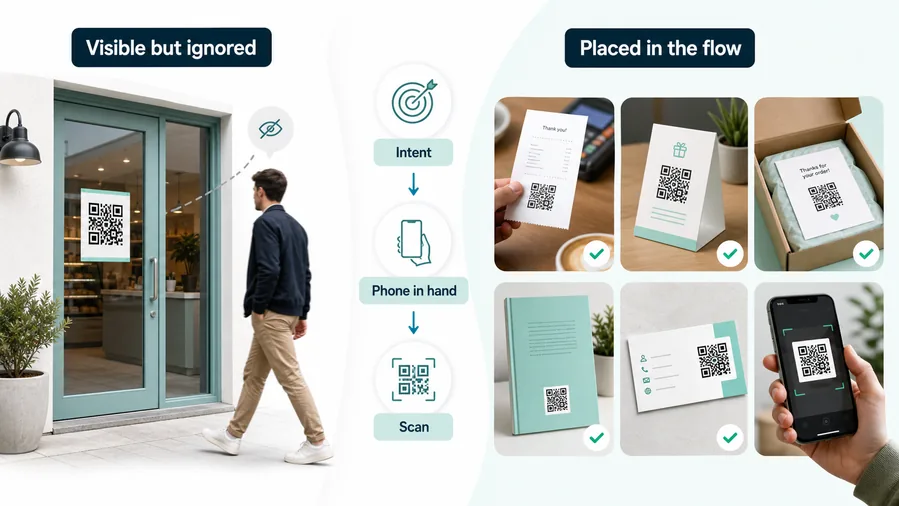
A rental QR without context can create application friction
Renters need to know whether the scan opens photos, application, pricing, availability, pet rules, or contact.
A vague code can feel risky when deposits and personal information are involved.
Put the QR beside the renter decision
Use signs and flyers for listing detail, tour requests, and availability; use lease packets for documents, payments, and resident support.
The landing page should confirm the property before asking for action.
What should open first?
Listing, availability, amenities, application, tour booking, lease documents, payment, or support.
Can it be scanned at the real distance?
Windows, flyers, lobby signs, and lease packets need different QR size and copy.
Does the first screen match the property?
Show the address, unit, property name, agent or manager, and expected action immediately.
Will the destination change?
Use dynamic QR for availability, price, status, tour times, application links, and similar-property redirects.
For-rent sign
Open listing details, availability, rent range, tour request, and manager contact.
Flyer or brochure
Use for property highlights, floor plans, virtual tours, disclosures, application steps, and follow-up contact.
Leasing office or lobby
Route visitors to applications, tour booking, move-in checklist, amenities, and resident support.
Lease packet
Use for lease documents, payment instructions, maintenance, insurance, and policy pages.
Window decal
Help passersby open details when the office is closed or staff are busy.
Directional sign
Use for map, parking, entrance notes, showing instructions, and visitor check-in.
Postcard
Send local prospects to listing, valuation, referral, similar homes, or rental availability.
Follow-up card
Route interested scanners to saved listing, contact, application, documents, or next-step reminders.
A rental QR should make the next renter step clear
Use the code where the renter has enough context to continue without guessing.
Rental update control
Use dynamic QR when rental availability, applications, or resident links change
DynamicRental property print can stay in circulation while unit status, rent, tour times, application links, lease documents, payment instructions, and maintenance routes change behind the scenes.
A fixed rental QR can send renters to stale availability
Vacancy, price, pet rules, tour windows, application forms, and deposit instructions can change before signs and flyers are replaced.
That creates friction exactly when a renter is ready to act.
The same printed code can follow the current rental step
Update the destination from listing to waitlist, application, lease packet, move-in guide, resident portal, or similar units.
The print remains useful while property operations change.
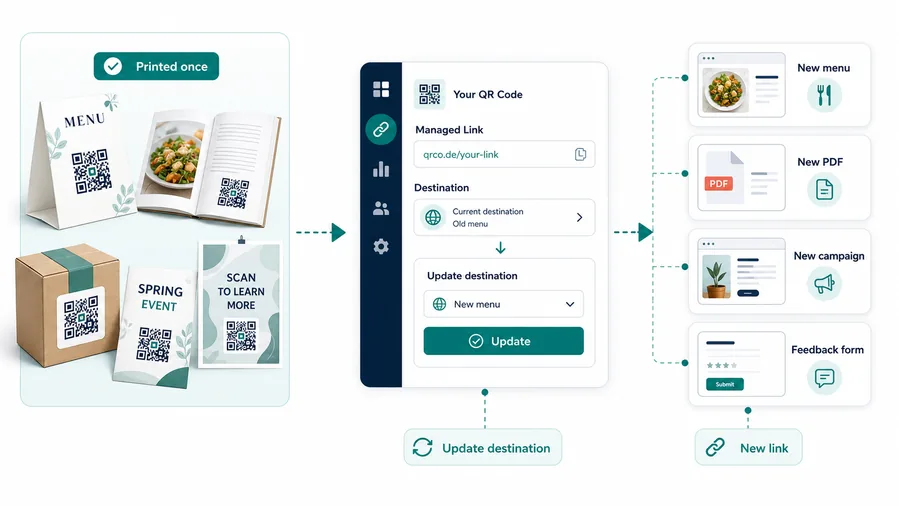
Availability and pricing
Update vacant, leased, waitlist, price change, concession, or similar-unit pages.
Tours and applications
Move renters to current tour times, application forms, screening notes, and document uploads.
Lease and move-in documents
Replace insurance, utility, pet policy, parking, move-in, and resident handbook links.
Resident support
Route lease packets to maintenance, payment, contact, emergency, and portal pages.
Use dynamic when rental print supports changing operations
If the QR is tied to availability, applications, or resident workflows, keep the destination editable.
Listing and tenant flow
Place rental property QR codes where renters need details without calling first
Useful placements include yard signs, window signs, leasing office counters, brochures, open house flyers, unit doors, mailroom notices, move-in packets, tenant guides, and maintenance cards. CTAs should say view listing, book tour, apply online, see floor plan, open map, contact manager, request maintenance, or read tenant guide. Each code should lead to the action promised by the printed piece.
Dynamic QR codes are helpful because availability, prices, application links, tour calendars, and tenant resources change. You can update the destination without replacing every sign or flyer. Scan analytics can compare yard signs, window signs, brochures, and tenant packets, showing which offline materials renters actually use.
Keep trust and privacy clear. Public signs should lead to public listing or tour pages. Tenant-only pages should not expose private details through a public code. QR Code Lab manages the printed code and scan data, while your property systems handle applications, leases, payments, and resident records. For applicant flows, use your official form or portal so renters know where their information goes.
Rental trust
Make rental QR codes trustworthy before renters apply, pay, or upload documents
TrustRental QR destinations can involve personal information, screening, deposits, lease documents, and resident portals. The page should clearly match the property, manager, domain, and requested action.

Fake listing or deposit page
Rental scams often use urgency around applications, deposits, and availability. The destination should clearly belong to the property or manager.
Watch for similar-looking domains, long URLs, login or verify keywords, and pages asking for credentials after an unexpected scan.
Sensitive document upload
Applications may ask for identity, income, references, or contact details, so the domain and privacy context matter.
A trustworthy QR should not make the final destination mysterious, especially on posters, labels, menus, parking signs, or event materials.
Stale property links
Old flyers and signs can point to leased units, expired forms, moved payment links, or outdated manager contacts.
Before paying, check the domain, HTTPS, amount, recipient, and whether the destination matches the place or brand that printed the QR.Review the rental destination before asking for action
Check property name, unit, manager identity, final domain, HTTPS, application requirements, payment purpose, and support path before distributing rental QR materials.
A QR scan is not proof of application or payment completion; those confirmations stay in the property management, payment, or leasing system.Property match
Show the correct address, unit, photos, manager, and listing status on the first screen.
Application clarity
Explain requirements, fees, documents, timing, and privacy before collecting information.
Payment boundary
Use trusted payment or property-management providers for deposits, rent, and fees.
Support route
Make manager contact, scam warning, and help options visible for renters.
Publish rental QR codes renters can verify
The printed CTA, property identity, destination domain, and first screen should all confirm the same rental action.