QR Code for Mobile Detailing - Quotes, Booking & Reviews
Create QR codes for mobile detailing linking quote forms, booking pages, service packages, reviews, coupons, contact cards, maps, and galleries. Use them on vehicles, cards, invoices, and flyers.
Free QR code generator
Create a QR code online
Generate QR codes for websites, email, phone numbers, vCards, Wi-Fi, plain text, forms, PDF files, and campaign links. Customize colors, add a logo or frame, then download a print-ready PNG or SVG.
Choose QR code type
Website QR code, Email QR code, Phone QR code, vCard QR code, Wi-Fi QR code, Text QR code, SMS, WhatsApp, event, and download links.
Add your content
Enter your website URL, contact details, message, phone number, location, or file destination before generating the QR code.
Customize and download
Adjust QR colors, error correction, logo, frame, size, and margin. Generate QR Code, Download PNG, Download SVG, or Save and track scans.
Auto service quote path
Turn clean cars, vans, flyers, and invoices into quotes and repeat work
A QR code for mobile detailing is useful when vehicles, invoices, door hangers, coupons, van decals, and leave-behind cards should lead to quotes, booking, service packages, reviews, maps, contact cards, and galleries. It is useful for mobile detailing businesses, car detailing services, mobile car wash teams, auto care providers, and local operators who sell visual results and convenience rather than a walk-in storefront experience.
The scan should connect physical proof to a quick customer action. A clean vehicle with a small card can open a gallery and quote form. A van decal can open service areas and packages. An invoice can ask for a review or next appointment. A neighborhood flyer can open a coupon. A before-after card can prove value faster than a long sales pitch. QR Code Lab helps create print-ready codes, dynamic destinations, and scan analytics so detailers can see which placements create leads.
QR Code Lab creates URL QR codes only. It does not process payments, manage orders, collect forms, run bookings, provide vehicle care advice, or operate business software. The linked booking, quote, review, gallery, or payment system handles the actual service workflow.
Mobile detailing service path
Help vehicle owners choose packages, request quotes, send photos, pay, review, and rebook
Mobile serviceA mobile detailing QR code should turn a van, door hanger, flyer, invoice, service card, or windshield tag into a practical next step: view packages, request a quote, upload vehicle photos, schedule service, pay, read aftercare, or leave a review.
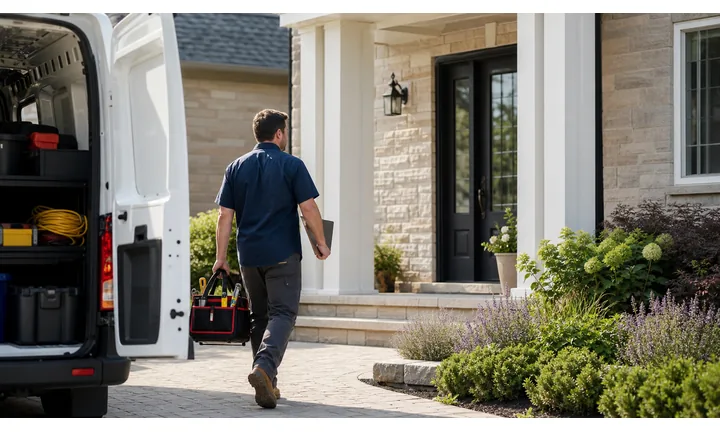
Turn a clean vehicle into visible proof and bookings
Use QR codes on vans, yard signs, service cards, flyers, and referral cards to open before-and-after galleries, package menus, booking, and quote requests.
The scan should let prospects act while the result is visible.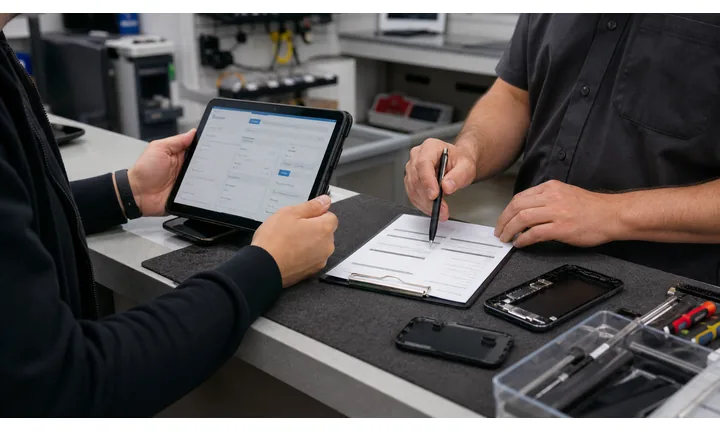
Collect the details needed for an accurate quote
A QR destination can ask for vehicle type, condition, photos, location, access notes, preferred service, and scheduling window.
Detailing quotes work better when the business sees the vehicle context before arrival.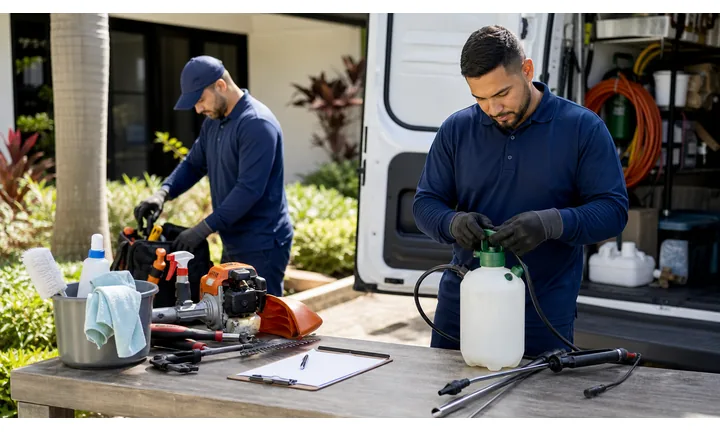
Keep service packages and payment links current
Dynamic QR helps when seasonal offers, ceramic coating pages, package names, booking forms, routes, payment links, and aftercare notes change after print.
Vehicles, flyers, and service cards should keep pointing to current offers.A mobile detailing QR should move from vehicle condition to the right service
The customer may need an exterior wash, interior deep clean, pet hair removal, ceramic coating, fleet service, gift detail, invoice payment, or maintenance plan.
Use CTAs such as view packages, request quote, upload vehicle photos, book mobile detail, pay invoice, read aftercare, or leave review.Quote
Open vehicle type, photos, condition, location, and preferred package.
Booking
Route to availability, service area, package menu, add-ons, and contact.
Payment
Connect invoices, deposits, balances, fleet work, and tips to trusted provider pages.
Aftercare
Use follow-up cards for care notes, maintenance plans, reviews, and referrals.
Detailing customer moments
Turn mobile detailing touchpoints into quote requests, bookings, payments, reviews, and repeat service
Mobile serviceMobile detailing QR codes work when the scan matches the vehicle moment: seeing a finished car, comparing packages, requesting a quote, paying after service, reading care notes, or booking maintenance.
Show before-and-after results before the quote
Open galleries, package examples, add-ons, reviews, and service areas from vans, flyers, and cards.

Collect vehicle details before arrival
Use QR forms for vehicle type, photos, condition, location, parking access, water or power notes, and desired package.

Make scheduling simple from local print
Link door hangers, referral cards, and van signs to availability, routes, service area, package menu, and contact.

Open trusted invoices and deposits
Use invoices and completion cards for deposits, balances, tips, fleet invoices, and provider checkout.
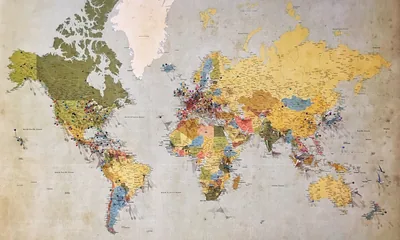
Ask while the vehicle still looks fresh
Use aftercare cards, receipts, and follow-up messages to invite reviews, private feedback, photos, and referrals.

Turn one detail into a care plan
Connect customers to wash intervals, ceramic care notes, membership plans, fleet schedules, and repeat booking.
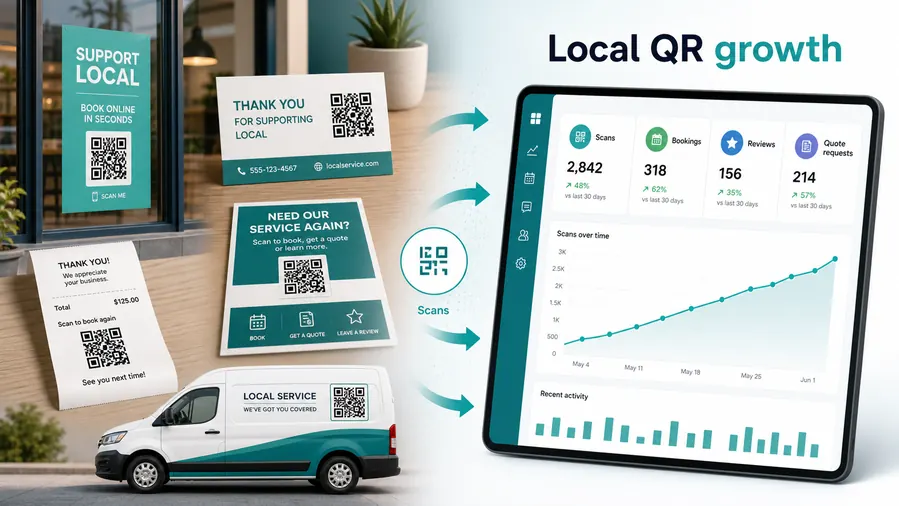
Vehicle owners scan when the result or problem is visible
The destination should help them see proof, choose a package, send useful quote details, and book without guessing what service fits.
Editable QR keeps detailing offers and routes current
Dynamic QR lets mobile detailers update packages, seasonal offers, booking forms, service areas, route days, payments, and aftercare notes without replacing printed materials.
Match each detailing QR to the vehicle action
Detailing placement
Place mobile detailing QR codes where the vehicle makes the next step obvious
PlacementMobile detailing QR placement should connect the scanner to the vehicle context: a clean car, a dirty interior, a parked service van, an invoice, or an aftercare note.
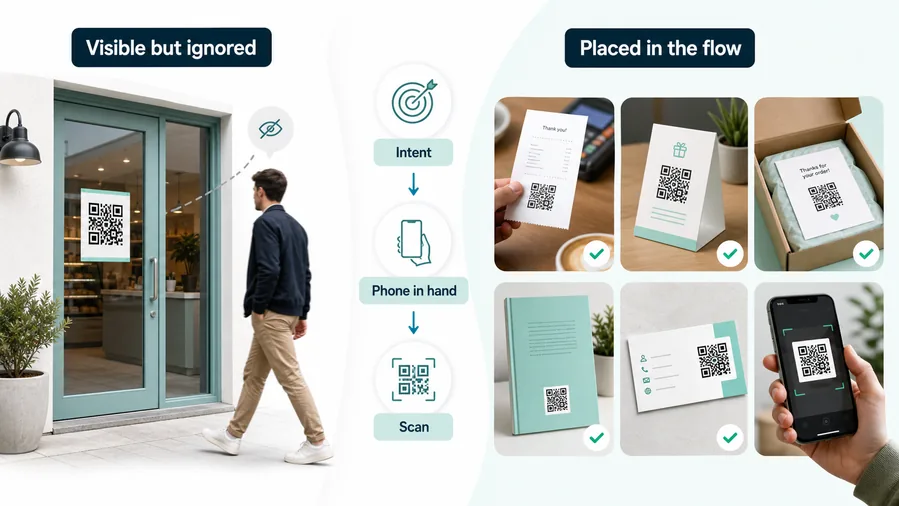
A QR without vehicle context feels like a generic ad
A code on a flyer or van needs to say whether it opens packages, booking, quote photos, payment, or reviews.
People scan when the vehicle problem or result is already in front of them.
Put the code beside the service decision it supports
Use vans for proof and booking, door hangers for quotes, invoices for payment, and windshield tags for aftercare or rebooking.
The first screen should match the printed CTA and vehicle moment.
What vehicle moment exists?
Dirty interior, finished detail, neighbor’s clean car, fleet inquiry, invoice, aftercare, or seasonal offer.
What should happen next?
View packages, request quote, upload photos, book service, pay invoice, read aftercare, review, or rebook.
Can the code scan outdoors?
Use enough size, contrast, weather-safe materials, and avoid curved or reflective placement.
Will the offer change?
Use dynamic QR for packages, route days, service areas, seasonal offers, payments, and booking pages.
Service van
Open proof, packages, service area, reviews, and booking when safely scanned while parked.
Door hanger
Route to neighborhood offer, quote form, vehicle photo upload, and scheduling.
Invoice or receipt
Open payment, review, aftercare, support, and repeat booking.
Windshield tag
Share care notes, maintenance interval, ceramic care, referral, and rebook link.
Flyer
Promote package menu, seasonal offer, fleet service, and quote request.
Business card
Show gallery, packages, booking, contact, and service area.
Fleet packet
Open contract details, schedule, invoice, service scope, and contact.
Aftercare card
Provide wash guidance, coating care, product notes, review, and referral.
Mobile detailing QR placement should turn vehicle attention into action
If the code does not help the customer choose, book, pay, or care for the vehicle, simplify the placement.
After-print control
Keep mobile detailing QR links current as packages, routes, and offers change
DynamicDetailing print lives on vans, door hangers, invoices, cards, and aftercare tags. Dynamic QR keeps those materials useful when booking pages, service areas, package names, and payment links change.
Old flyers can point to retired packages
Static QR is fine for a permanent page, but detailing packages, prices, seasonal offers, route days, and payment links often change.
A stale destination makes a local service look less professional.
One printed code can stay connected to the current service path
Dynamic QR lets you update van signs, flyers, cards, invoices, and aftercare tags without replacing every piece.
That matters when local campaigns and routes move fast.
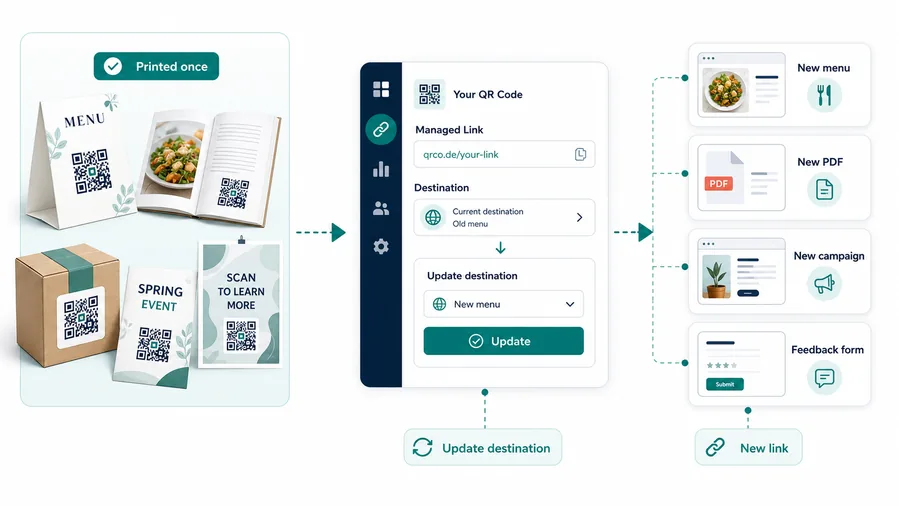
Seasonal packages
Update winter salt cleanup, spring refresh, ceramic coating, fleet, and interior deep-clean offers.
Route and service area changes
Change booking pages, route days, location limits, and contact details without reprinting.
Payment and invoices
Point invoices, deposits, balances, and tips to current provider pages.
Aftercare updates
Refresh ceramic care, product notes, maintenance plans, and rebooking prompts.
Use dynamic QR for detailing print that will stay in circulation
If a van sign, flyer, invoice, or card may outlive the current offer, keep the destination editable.
Detailing scan reading
Compare mobile detailing scans by van, flyer, invoice, and aftercare placement
AnalyticsQR analytics can show whether people scan from vans, door hangers, flyers, cards, invoices, windshield tags, or aftercare materials. Use it to improve local campaigns without overclaiming every booking source.
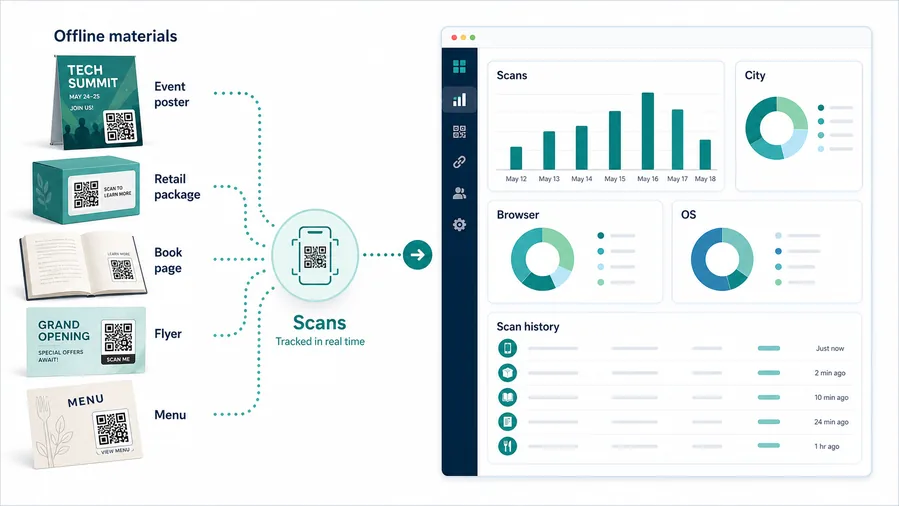
Every scan becomes one vague service total
A single QR can show general interest, but it cannot tell whether a van, door hanger, invoice, flyer, or aftercare tag produced it.
Use one code only when placement comparison does not matter.
Each detailing placement becomes a readable signal
Separate dynamic QR codes let you compare quote requests, booking, payment, reviews, aftercare, and local offers by placement.
The result is directional scan analytics, not full booking attribution, but it is useful for print decisions.
Scan volume
See which detailing placements earn attention.
Time and device
Check when vehicle owners scan and which device or browser opens the destination.
Broad location
Use approximate location signals carefully when comparing service areas or neighborhoods.
Placement comparison
Compare vans, door hangers, invoices, flyers, cards, windshield tags, and aftercare notes.
Name codes by placement and service
Use names such as van-booking, doorhanger-quote, invoice-pay, windshield-aftercare, or flyer-ceramic.
Compare local campaigns before reprinting
Use scan results to decide whether vans, flyers, door hangers, or referral cards deserve another run.
Keep expectations practical
Scan data shows attention and timing; bookings, payments, and reviews still need their own systems.
Books and printed content
Learn whether readers open bonus pages, downloads, updates, or feedback forms from book pages.
Detailing analytics work when each printed code has a purpose
Good naming turns scan totals into useful local campaign and operations decisions.
Vehicle and invoice flow
Place mobile detailing QR codes where the result is visible and booking is easy
Use mobile detailing QR codes on van decals, appointment cards, invoices, thank-you cards, flyers, door hangers, coupon cards, service package sheets, review cards, and leave-behind materials placed inside a cleaned vehicle. CTAs should be direct: request quote, book detail, view packages, see before-after gallery, claim coupon, save contact, or leave review. Customers should not need to hunt through a homepage while standing beside a car.
Dynamic QR codes help when service areas, packages, gallery links, coupons, and quote forms change. Scan analytics can compare van decals, invoices, door hangers, and leave-behind cards. That helps a mobile detailer understand which offline touchpoints create leads, repeat work, or reviews without needing a complicated marketing stack.
Make the first screen visual and local. Show the service area, package choice, a few before-after examples, and a simple quote or booking action. If the code is on a van, the destination should prove the business quickly. For invoices, make review and rebooking paths separate so happy customers know what to do next.
Detailing payments
Use mobile detailing payment QR codes for deposits, invoices, balances, and tips with clear context
PaymentsA detailing payment QR should show whether the customer is paying a deposit, invoice, package balance, fleet service, tip, or membership. The destination should open a trusted provider.
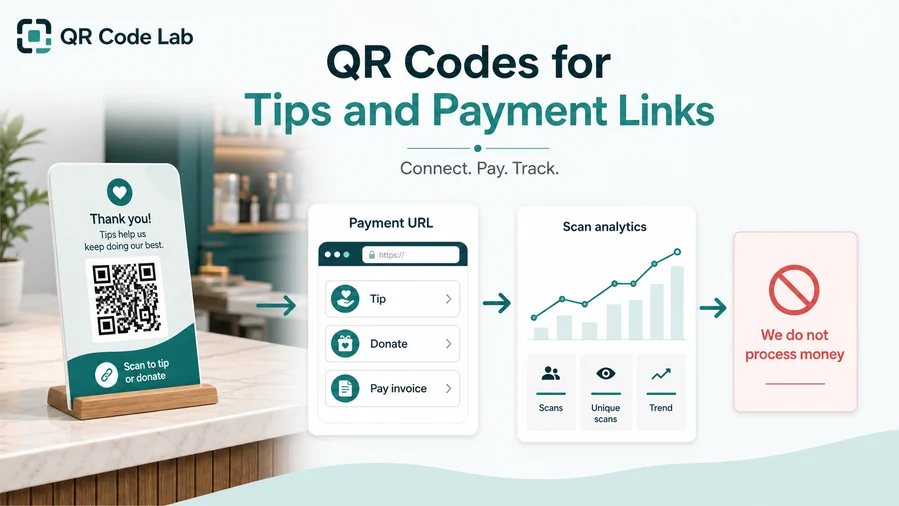
Deposits and balances
Use QR codes in confirmations and invoices for mobile appointments, ceramic coatings, fleets, and packages.
Tips and add-ons
Route completion cards to trusted tip or add-on payment pages with business identity visible.
Fleet invoices
Use QR shortcuts for recurring fleet work, account payments, and billing contact.
The QR should open a trusted payment provider, not collect card details itself
Keep authentication, receipts, refunds, disputes, and confirmation inside the provider or billing system. The QR is only the shortcut.
Scan analytics only show QR scan activity. A scan does not mean a payment was completed.Detailing payment QR codes should make the charge easy to recognize
Customers should understand the vehicle service, provider, and payment purpose before paying.
Detailing trust
Make mobile detailing QR codes look official before vehicle owners scan
TrustMobile detailing QR codes may appear on vehicles, flyers, invoices, or tags. The printed code and destination should clearly belong to the business and explain what happens next.

Anonymous vehicle stickers
A QR on a vehicle or tag can look suspicious if it does not show the business name and destination promise.
Watch for similar-looking domains, long URLs, login or verify keywords, and pages asking for credentials after an unexpected scan.
Outdated package pages
Old offers, wrong service areas, retired payment links, and broken booking forms reduce trust quickly.
A trustworthy QR should not make the final destination mysterious, especially on posters, labels, menus, parking signs, or event materials.
Unclear payment pages
Invoices, deposits, tips, and balances need provider and service context before payment.
Before paying, check the domain, HTTPS, amount, recipient, and whether the destination matches the place or brand that printed the QR.Scan like a vehicle owner before printing
Confirm the first screen matches the printed CTA, shows the detailing business, and opens a current booking, quote, payment, or aftercare path.
The current detailed report is a static URL analysis. It helps reveal the encoded content and basic URL risk signals, but it does not guarantee that a destination is safe and does not replace browser, antivirus, payment, or bank security checks.Decoded content
See the raw value inside the QR before opening it.
Content type
Recognize URL, Wi-Fi, mailto, phone, SMS, vCard, or plain text.
URL risk signals
Review HTTPS, shorteners, IP addresses, long URLs, encoded characters, query parameters, and sensitive keywords.
Destination report
For URL codes, view final URL fields, static redirect report fields, domain fields, TLS placeholders, page metadata fields, and risk reasons.
Make your own QR codes easier to trust
A safe-looking QR code is not only about security. It is also about reducing uncertainty for the scanner. Use clear destination text, a branded landing page, normal HTTPS domains, and a visible explanation of what happens after scanning.