QR Code for Storefronts - Window Signs, Hours & Offers
Create storefront QR codes for window signs, door decals, menus, hours, maps, offers, reviews, booking pages, catalogs, and after-hours info. Help passersby act even when the door is closed.
Free QR code generator
Create a QR code online
Generate QR codes for websites, email, phone numbers, vCards, Wi-Fi, plain text, forms, PDF files, and campaign links. Customize colors, add a logo or frame, then download a print-ready PNG or SVG.
Choose QR code type
Website QR code, Email QR code, Phone QR code, vCard QR code, Wi-Fi QR code, Text QR code, SMS, WhatsApp, event, and download links.
Add your content
Enter your website URL, contact details, message, phone number, location, or file destination before generating the QR code.
Customize and download
Adjust QR colors, error correction, logo, frame, size, and margin. Generate QR Code, Download PNG, Download SVG, or Save and track scans.
Window and door path
Make storefront signs useful before, during, and after opening hours
A QR code for storefronts is useful when a window sign, door decal, sidewalk board, menu, hours sign, sale poster, appointment notice, or after-hours card should open a helpful mobile page. It can link to hours, maps, menus, booking pages, catalogs, offers, reviews, pickup instructions, contact cards, social profiles, and online ordering.
The storefront is often the first physical touchpoint a passerby sees, but people may not be ready to enter. A QR code can help them act later, check hours, book, view a menu, browse products, or save the business. After closing, the same window sign can keep working. During busy hours, it can reduce simple questions. QR Code Lab helps create print-ready dynamic codes and scan analytics for these public-facing placements.
QR Code Lab creates URL QR codes and tracks scans. It does not manage store hours, run bookings, process orders, collect reviews, or control your POS. Your website, booking tool, menu page, ecommerce store, review platform, or social profile handles the action after the scan.
Storefront scan moments
Storefront scan moments print designers and marketing teams with print layouts, campaign landing pages, labels, stickers, business cards, scan-safe frames, and high-resolution exports
Window signsUse QR codes to move print designers and marketing teams from flyers, posters, banners, brochures, business cards, labels, stickers, storefront signs, and packaging to print layouts, campaign landing pages, labels, stickers, business cards, scan-safe frames, and high-resolution exports while keeping the printed layout scan-safe.

Capture after-hours interest
Put QR codes on windows and doors so passersby can book, request a quote, view products, claim an offer, or save contact details when staff are unavailable.
The CTA should say exactly what opens after the scan.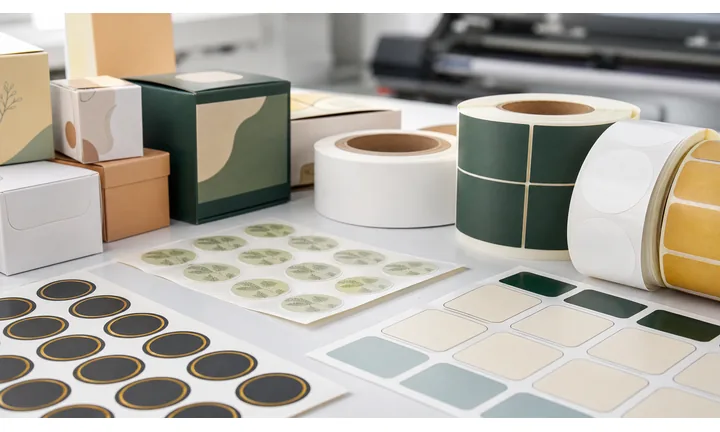
Move foot traffic into a useful destination
Use storefront signs for menus, appointments, catalogs, maps, promotions, event details, loyalty signup, waitlists, and local landing pages.
A scan should continue the promise printed beside the code.
Keep public signage current
Dynamic QR lets a business update seasonal offers, hours, booking links, product pages, and announcements without replacing the whole window sign.
Editable destinations matter when signage stays up for months.A storefront QR code should work for people outside the door
The scanner may be walking past, waiting, checking hours, comparing options, or returning when the business is closed. The destination needs to be fast, clear, and useful without staff explanation.
Use storefront QR codes for a single promise: book, browse, claim, call, join, order, review, or get directions.After-hours action
Open booking, quote, contact, menu, catalog, or offer pages when the business is closed.
Street-level clarity
Use large print, short CTA copy, and enough contrast so the code works from the sidewalk.
Editable campaigns
Change seasonal pages, offers, events, and announcements without replacing window signage.
Local measurement
Use separate tracked codes for windows, doors, sidewalk signs, and branches when comparison matters.
Storefront customer moments
Turn storefront attention into bookings, offers, orders, directions, reviews, and repeat visits
Local growthStorefront QR codes work when they answer the question a person has outside the door: are you open, what do you offer, can I book, can I order, where do I go, or what is the current deal?
Let people book even when staff are busy or closed
Open appointments, quote requests, consultation forms, waitlists, class signup, or service menus from the window or door.
Show products, menus, services, or availability
Use QR codes for catalogs, menus, portfolios, current stock, seasonal collections, packages, and local landing pages.

Make window offers easy to redeem
Connect posters and sidewalk signs to coupons, first-visit offers, events, loyalty signup, and campaign pages.
Route nearby customers to ordering or pickup
Open delivery, pickup, preorder, reservation, table waitlist, or checkout pages with the right branch context.

Ask for feedback after the visit
Use receipts, bags, and thank-you cards for reviews, private feedback, referrals, and support after the customer experience.
Turn one visit into the next one
Send customers to saved contact, maps, loyalty, newsletter, reorder, schedule, or next-purchase offers.
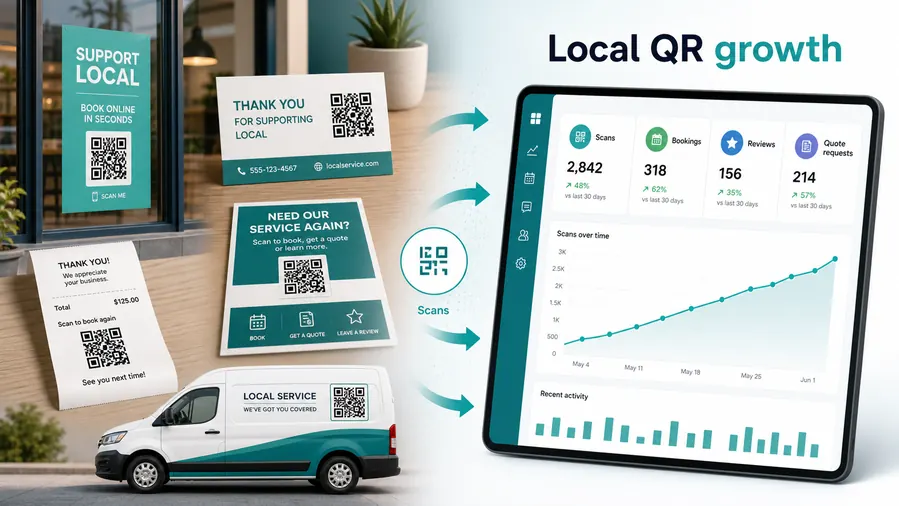
People scan storefront QR codes when the next step is obvious
The printed CTA should answer a real street-level need: check hours, book now, view menu, claim offer, order pickup, join loyalty, or ask for help.
Editable storefront QR helps signs keep working across seasons
Dynamic QR lets the business change hours, offers, menus, booking pages, event pages, and branch-specific campaigns without reprinting window graphics.
Match storefront QR placement to the customer moment
Street-level placement
Place storefront QR codes where people pause long enough to scan
PlacementThe best storefront QR placement is not just visible. It sits where the person is stopped, curious, comparing, waiting, or ready to act from a phone.
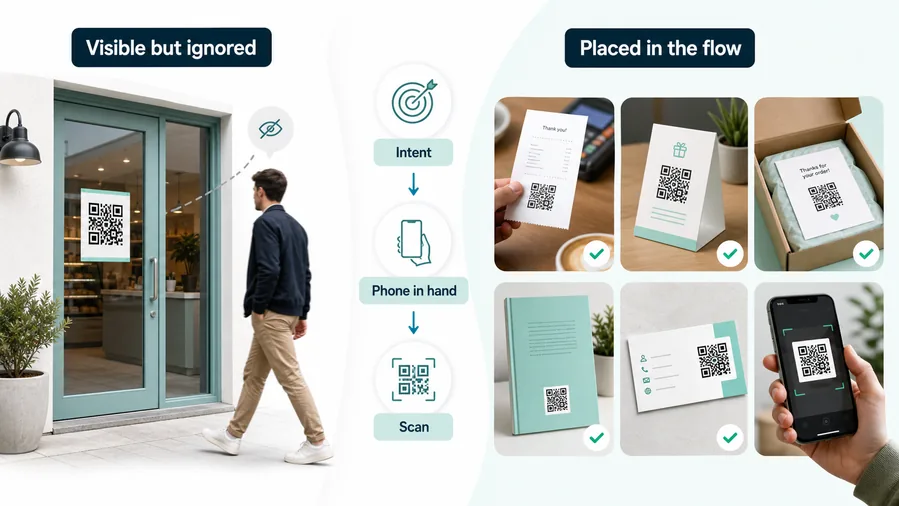
A high window corner may be visible but hard to scan
Storefront codes fail when they sit too high, too low, behind glare, too far from the sidewalk, or beside vague copy.
People walking past need a clear reason to stop and a code large enough to scan quickly.
Put the code beside the exact storefront promise
Use window signs for after-hours action, doors for entry or waitlist details, sidewalk signs for offers, and counters for reviews or loyalty.
The destination should feel like the next step from that physical spot.
Why is the person outside the storefront?
They may be checking hours, comparing services, reading a menu, looking at products, waiting, or passing after the business is closed.
What should happen next?
Open booking, menu, catalog, offer, directions, waitlist, pickup, event details, contact, loyalty, or review.
Can the phone read it from the sidewalk?
Use enough size, contrast, lighting, and quiet zone for glass glare, distance, and moving foot traffic.
Will the sign stay up longer than the offer?
Use dynamic QR when campaigns, hours, menus, calendars, events, or inventory links may change.
Window sign
Best for after-hours booking, menu, catalog, seasonal offer, event, or local landing page.
Door decal
Useful for hours, entry instructions, pickup, waitlist, directions, and contact details.
Sidewalk board
Works for short offers, daily menu, appointment CTA, and event promotion when the code is large.
Product display
Open product detail, availability, care notes, reorder, or campaign story.
Checkout counter
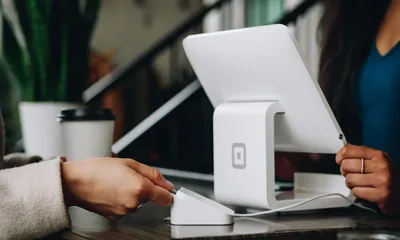
Use for loyalty, email signup, reviews, payment, and support while the customer is stopped.
Receipt or bag
Send buyers to review, reorder, warranty, support, coupon, or referral after the visit.
Local poster
Route neighborhood traffic to booking, offer, event, or branch-specific landing pages.
Vehicle or service sign
Use large codes only when people can safely scan while parked or stopped.
Storefront QR placement should earn a pause
If the code cannot be scanned comfortably or the CTA does not match the sidewalk moment, move it or rewrite the promise.
After-print control
Keep storefront signs useful when hours, offers, menus, and booking links change
DynamicStorefront signage often stays up while campaigns, calendars, products, and pages move. Dynamic QR protects the print when the destination needs an update.
A fixed URL can age faster than the window sign
A static storefront QR is fine for a permanent destination, but it cannot follow changed hours, retired offers, moved booking pages, or updated menus.
That is risky for decals, window graphics, posters, and sidewalk signs that stay visible after the campaign changes.
A managed QR keeps the sign alive
Dynamic QR lets the business update offers, calendars, menus, product pages, waitlists, and local landing pages after the sign is printed.
The same storefront code can keep serving the current action instead of sending people to an expired page.
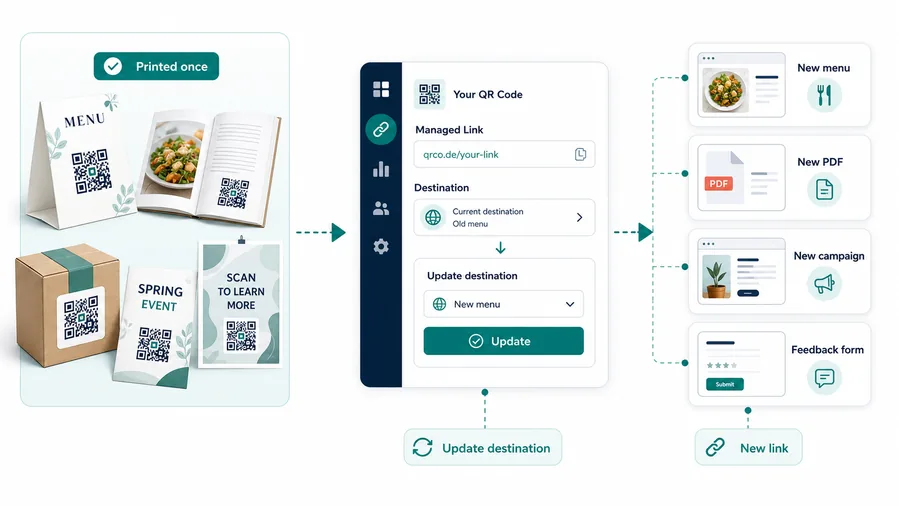
Seasonal offers
Rotate promotions, events, discounts, and local campaigns without replacing every sign.
Hours and booking
Update appointment pages, waitlists, holiday hours, service menus, and branch links.
Menus and catalogs
Keep product, service, menu, and availability pages current as the business changes.
Public signs
Use editable destinations for decals, posters, sidewalk boards, and long-lived window graphics.
Use dynamic QR when the storefront sign will outlive the campaign
If a window or door code may stay up for months, editable destination control is usually worth it.
Scan reporting
Use storefront scan data to compare signs, windows, offers, and branches
AnalyticsStorefront analytics are useful when separate QR codes help compare where street-level attention comes from without pretending every scan became a sale.
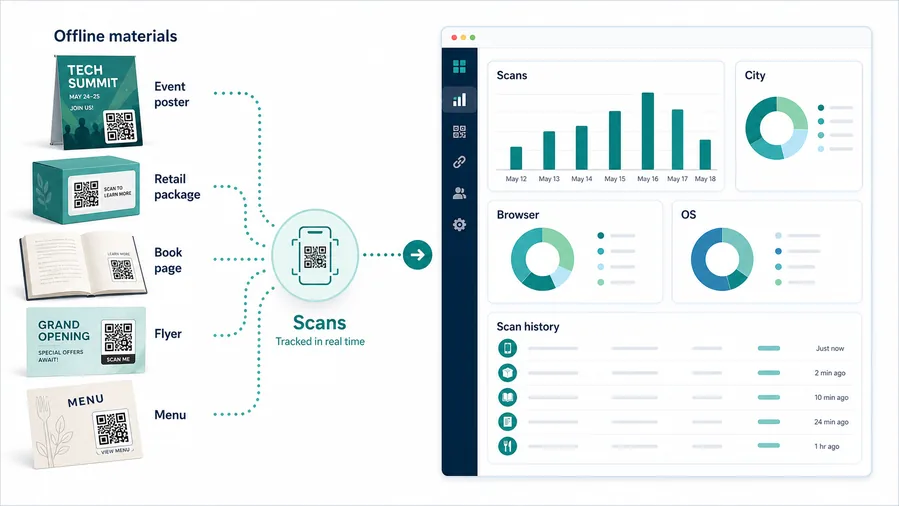
One storefront code hides the placement story
A single code can show total interest, but it cannot tell whether the window, door, sidewalk board, product display, receipt, or local poster caused the scan.
That makes it hard to judge which physical placements deserve more space.
Separate tracked codes make street attention easier to read
Use distinct dynamic codes for windows, doors, sidewalk signs, posters, counters, and branches when comparison matters.
The result is directional scan insight, not full revenue attribution, but it is better than guessing.
Scan volume
See which storefront placements and campaigns attracted scans during the selected period.
Timing
Check whether scans happen after hours, at lunch, on weekends, during events, or near campaign dates.
Broad location
Use approximate location signals to spot branch, neighborhood, or placement patterns.
Device context
Review device and browser signals to make sure the destination works for sidewalk mobile traffic.
Window vs sidewalk sign
Compare which public-facing placement earns more attention for offers, booking, menus, or catalogs.
Branch reporting
Give each location its own QR code when local campaigns or hours differ by storefront.
After-hours demand
Watch scans outside business hours to judge whether booking, menu, quote, or contact paths are working.
Campaign cleanup
Find old signs still receiving scans and redirect them to current offers or evergreen pages.
Name storefront codes by physical placement before launch
Use names like window-hours, door-waitlist, sidewalk-offer, counter-review, or branch-main so reports make sense later.
After-hours and street flow
Place storefront QR codes where people pause, wait, or decide
Useful placements include window decals, door signs, sale posters, sidewalk boards, pickup notices, hours signs, menu displays, appointment signs, event posters, and local flyers. CTAs should say view menu, book appointment, shop online, see hours, get directions, claim offer, join list, or leave review. The code should be readable from the real viewing distance, not only up close.
Dynamic QR codes are practical because storefront messages change often. A window code can point to holiday hours, a sale page, booking, pickup instructions, or an online catalog without replacing the decal. Scan analytics can show whether people scan from the door, window, sidewalk board, or poster, which is useful when deciding where to place future signage.
Think about the phone moment. A code on the entrance may be ignored if people are walking in quickly, but a code beside hours, pickup, a menu, or a closed-door notice gives them a reason to scan. Keep the landing page mobile friendly and branded so the public scan feels safe.
Payment boundary
Use storefront payment QR codes for deposits, invoices, pickup, tips, or checkout with clear context
PaymentsA storefront payment QR should explain whether the scan opens a deposit, invoice, pickup order, balance, tip page, event payment, or trusted checkout.
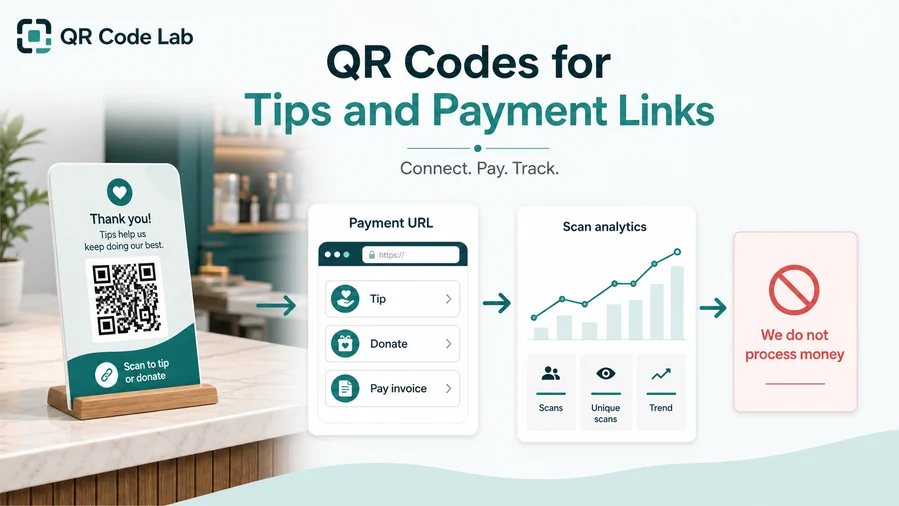
Deposits and appointments
Open booking deposits, class payments, consultation fees, or appointment balances from signs and appointment cards.
Pickup and local checkout
Use window and counter QR codes for pickup orders, preorder, menu checkout, event tickets, or branch-specific commerce.
Invoices and balances
Route customers from receipts, estimates, or counter signs to trusted invoice and payment pages.
The QR opens a trusted payment page; it does not process money inside QR Code Lab
Keep checkout, receipts, refunds, disputes, order status, tips, deposits, and confirmation inside the payment, ordering, booking, or commerce provider.
A scan shows that someone opened the payment path, not that a payment or order was completed.Storefront payment QR codes need public trust
Customers should know the business, branch, amount context, and payment provider before they pay from a public sign.
Public scan trust
Protect storefront QR codes from confusion, stale links, and sticker replacement
TrustPublic storefront QR codes are easy to see and easy to trust only when the destination clearly belongs to the business and matches the printed promise.

Sticker replacement on public signs
Window and door QR codes can be covered by unofficial stickers, especially when they open payments, offers, ordering, or login-style pages.
Watch for similar-looking domains, long URLs, login or verify keywords, and pages asking for credentials after an unexpected scan.
Expired offers and moved pages
Old campaigns, changed hours, moved menus, retired booking pages, and stale local landing pages make the business look careless.
A trustworthy QR should not make the final destination mysterious, especially on posters, labels, menus, parking signs, or event materials.
Unclear payment or booking destinations
Customers need to see business identity, branch context, HTTPS, and the exact action before submitting details or paying.
Before paying, check the domain, HTTPS, amount, recipient, and whether the destination matches the place or brand that printed the QR.Inspect the destination before the code goes public
Scan the printed proof and confirm the page identity, HTTPS domain, action, pricing or form context, and support path before customers rely on it.
A QR code reduces friction, but the destination still has to prove it belongs to the business, book, or restaurant.Decoded destination
Check that the QR opens the current business domain, booking page, menu, offer, payment page, or local landing page.
Printed promise
Confirm the page matches the nearby CTA: book, order, claim offer, view menu, pay, review, or get directions.
Public placement
Inspect window and door codes regularly for sticker tampering, damage, glare, and outdated signage.
Support path
Make contact details visible when the scan involves payment, pickup, booking, order changes, or customer data.
Publish QR codes people can understand
The printed CTA, page title, business identity, and first button should all describe the same action.