QR Code for Junk Removal - Quotes, Booking & Reviews Online
Create QR codes for junk removal linking quote forms, booking pages, service lists, reviews, coupons, maps, and before-after galleries. Use them on trucks, cards, signs, and mailers.
Free QR code generator
Create a QR code online
Generate QR codes for websites, email, phone numbers, vCards, Wi-Fi, plain text, forms, PDF files, and campaign links. Customize colors, add a logo or frame, then download a print-ready PNG or SVG.
Choose QR code type
Website QR code, Email QR code, Phone QR code, vCard QR code, Wi-Fi QR code, Text QR code, SMS, WhatsApp, event, and download links.
Add your content
Enter your website URL, contact details, message, phone number, location, or file destination before generating the QR code.
Customize and download
Adjust QR colors, error correction, logo, frame, size, and margin. Generate QR Code, Download PNG, Download SVG, or Save and track scans.
Cleanout quote path
Turn trucks, door hangers, and invoices into quote and review paths
A QR code for junk removal is useful when local print should turn into quote requests, bookings, reviews, service details, or before-after proof. It can open quote forms, booking pages, service lists, review pages, coupons, contact cards, maps, and before-after galleries. Junk removal companies, hauling services, cleanout crews, moving-related services, estate cleanout teams, and local home service businesses can use QR codes wherever customers see the mess or the completed job.
The scan should match the urgency of the job. A homeowner looking at a garage full of junk needs a quote form, not a generic homepage. A neighbor seeing a truck may want service areas and pricing. A customer after pickup may be ready to leave a review or book another job. A before-after gallery can turn messy work into visible proof. QR Code Lab helps create print-ready codes, dynamic destinations, and scan analytics for those offline placements.
QR Code Lab creates URL QR codes only. It does not process payments, manage orders, collect forms, run bookings, sell insurance, provide financial advice, or operate business software. Your quote, booking, payment, CRM, review, or gallery destination handles the real workflow.
Junk removal customer moments
Turn junk-removal touchpoints into quote requests, photo uploads, payments, reviews, and repeat pickups
Local serviceJunk-removal QR codes work when each material matches a real customer job: request a pickup, upload photos, check accepted items, get an estimate, pay an invoice, review the crew, or book the next haul.

Collect pickup details before the callback
Open forms for item types, photos, stairs, access notes, urgency, location, preferred time, and whether donation or disposal rules apply.

Set expectations before the crew arrives
Use flyers, door hangers, and cards to explain accepted items, prohibited materials, donation options, appliance handling, and estimate limits.

Make pickup booking easy from local materials
Route truck signs, yard signs, door hangers, and neighborhood flyers to booking, availability, service areas, and same-day pickup offers.

Open invoices through the provider
Use QR codes on invoices, estimates, and completion sheets as shortcuts to trusted payment pages while confirmation stays with billing systems.

Ask after the space is cleared
Use thank-you cards, receipts, and follow-up materials to request reviews or private feedback after the pickup is complete.

Make the next cleanup easy to start
Link completion cards to garage cleanouts, moving help, estate cleanouts, construction debris, and recurring pickup requests.
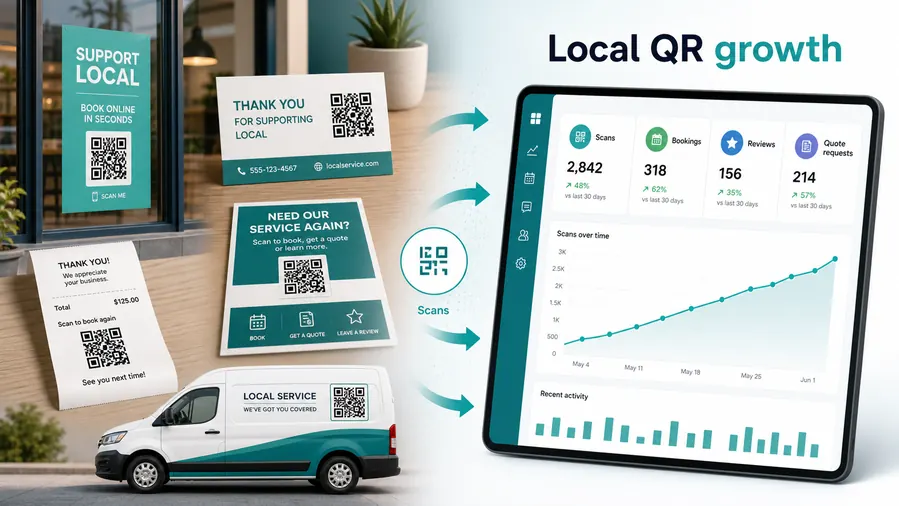
Junk-removal scans happen when the mess is visible
The customer may be staring at a pile, moving out, clearing a garage, reading an invoice, or watching a neighbor clean up. The QR should help them act before motivation fades.
Printed cleanup materials become easier to manage
Dynamic QR keeps trucks, invoices, yard signs, door hangers, and completion cards connected to current quote forms, payment pages, accepted-item rules, and offers.
Place the code where cleanup intent is strongest
Junk removal placement
Place junk-removal QR codes where customers can show the pile and request the pickup
PlacementJunk-removal QR placement should match the customer’s urgency: a visible pile, a moving deadline, a neighbor job, an invoice, or a completed cleanup.
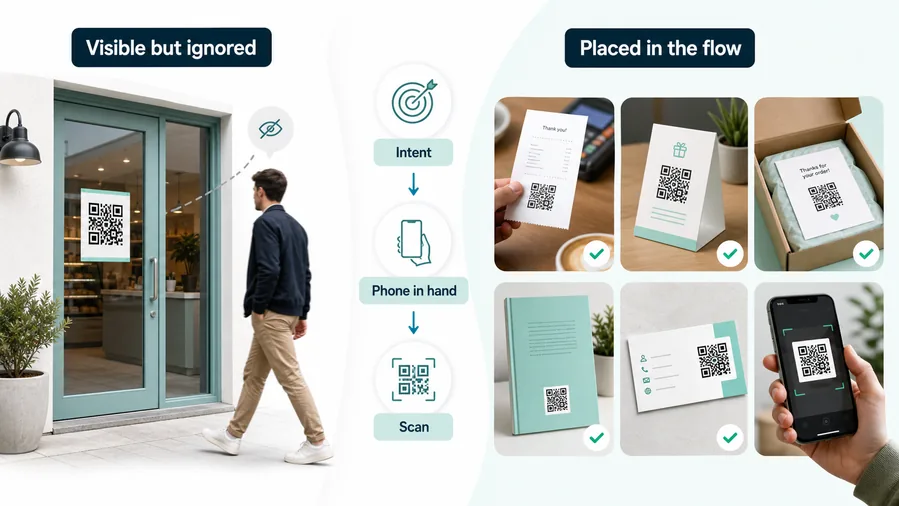
The code appears without explaining the pickup step
A QR on a flyer or truck can be visible but vague if it does not say whether it opens quote, accepted items, payment, review, or booking.
Customers need to know if they can upload photos, check rules, or schedule quickly.
The code opens the next cleanup action
Use door hangers and yard signs for quote requests, invoices for payment and reviews, and completion cards for repeat cleanups.
The first screen should match the printed promise and reduce back-and-forth.
What needs to be removed?
Furniture, appliances, construction debris, yard waste, moving junk, estate items, or garage clutter.
What should happen next?
Upload photos, request estimate, check accepted items, schedule pickup, pay invoice, review, or book another job.
Is the QR near the cleanup context?
Door hangers, trucks, yard signs, invoices, and dumpsters should each open the action that fits that placement.
Will service rules change?
Use dynamic QR for accepted items, pricing notes, service areas, payment providers, and seasonal offers.
Door hanger
Open local offer, pickup request, photo upload, accepted items, and service area.
Truck or trailer
Show proof, reviews, service area, booking, and phone contact when safely scanned while parked.
Yard sign
Connect neighbors to project proof, same-day pickup, quote request, and local campaign page.
Invoice
Route to payment, review, support, receipt, and repeat pickup.
Estimate sheet
Open scope, item list, approval, scheduling, deposit, and disposal notes.
Dumpster or bin sign
Explain rules, prohibited items, support contact, and pickup instructions.
Completion card
Invite review, referral, next cleanup, donation guidance, and support.
Moving packet
Route to cleanout booking, item photos, donation options, and deadline scheduling.
Junk-removal QR placement should shorten the path from pile to pickup
Use each code where the customer can describe the job and understand the next step.
Cleanup link control
Keep junk-removal QR links current as pricing, service areas, and payment pages change
DynamicJunk-removal materials move through neighborhoods, trucks, invoices, and door hangers. Dynamic QR keeps those printed pieces useful when forms, rules, offers, and payment pages change.
Old flyers can point to old offers or rules
Static QR works only while quote forms, service areas, accepted items, pricing notes, and payment links stay fixed.
Cleanup campaigns and disposal rules can change before old print disappears.
The same printed code can open the current pickup path
Dynamic QR lets the company update photo-upload forms, accepted-item lists, payment links, scheduling pages, and local offers behind the same printed code.
That reduces confusion before dispatch.
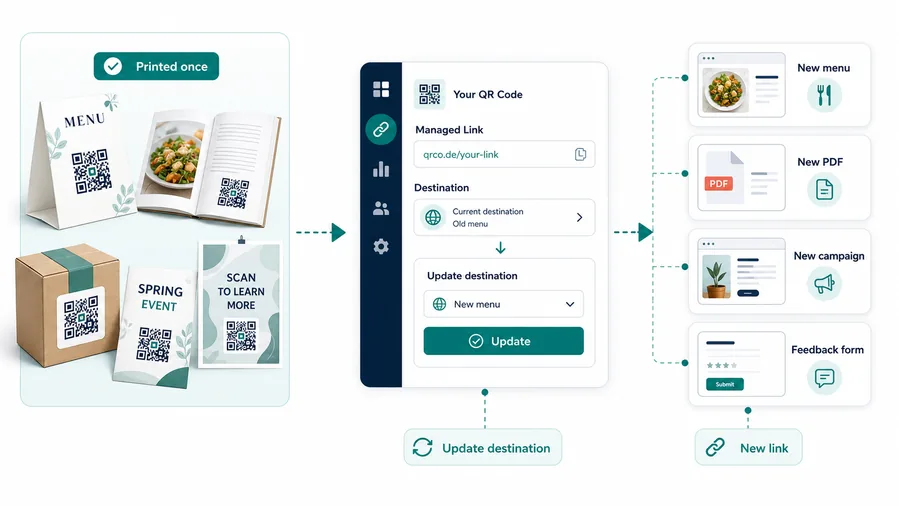
Quote forms
Update photo upload, item categories, access questions, service areas, and scheduling options.
Accepted item rules
Change disposal notes, prohibited items, appliance rules, donation options, and special handling instructions.
Invoices and payments
Move payment providers, balance links, deposits, and receipt pages without replacing templates.
Neighborhood campaigns
Keep door hangers, yard signs, truck materials, and flyers tied to current local offers.
Use dynamic QR when cleanup materials leave your control
If door hangers, invoices, signs, or truck cards may circulate after links change, editable destinations are safer.
Junk-removal scan reporting
Use scan data to compare junk-removal materials without overclaiming booked pickups
AnalyticsTracking helps compare which junk-removal materials earn scans: trucks, door hangers, yard signs, invoices, estimates, dumpsters, local flyers, and completion cards.
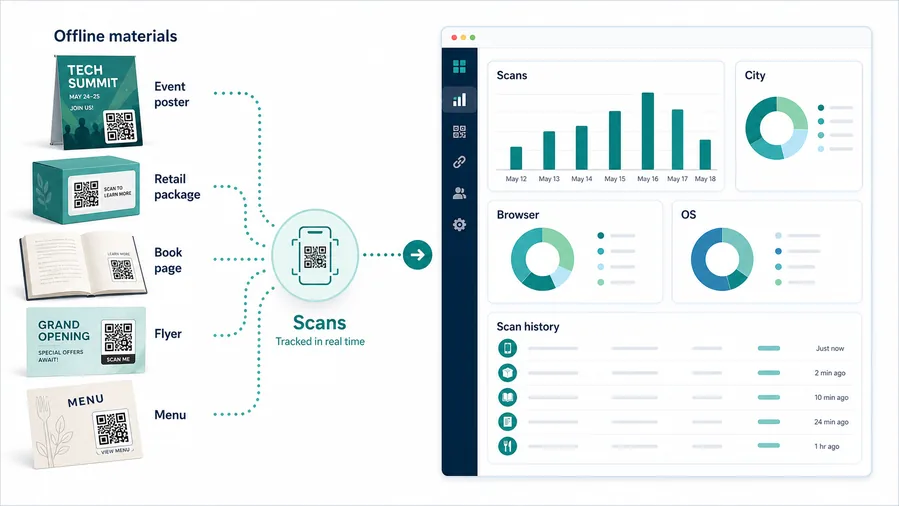
All junk-removal scans become one total
A single QR code can show interest, but it cannot tell whether a truck, door hanger, invoice, yard sign, or dumpster sign produced the scan.
That makes local campaign decisions weaker.
Each cleanup material becomes a practical signal
Use separate dynamic QR codes for door hangers, trucks, invoices, signs, and flyers when comparison matters.
Scan data shows attention and timing; booked pickups and payments remain in service systems.
Scan volume
Review how many scans each junk-removal material received during a campaign or service period.
Time and device
See when customers scanned and which device or browser opened the destination.
Broad location
Use approximate location signals to review neighborhoods and service areas without treating them as identity.
Code comparison
Compare trucks, door hangers, yard signs, invoices, estimates, flyers, and completion cards side by side.
Neighborhood campaigns
Compare door hangers, yard signs, local flyers, and truck decals by scan activity.
Invoice follow-up
Review payment, review, support, and repeat-pickup scans after completed jobs.
Accepted item education
See whether dumpster signs and flyers get scans for disposal rules and item lists.
Operational cleanup
Find old offers, dead forms, zero-scan materials, and payment links that need review.
Name junk-removal QR codes by material and neighborhood
Tracking works best when code names match the real truck, sign, door hanger, invoice, or local campaign.
Truck and invoice flow
Put QR codes where people can act while the job is visible
Use junk removal QR codes on truck decals, yard signs, door hangers, invoices, estimate sheets, business cards, neighborhood flyers, dumpster signs, review cards, cleanup checklists, and local mailers. The CTA should say request quote, book pickup, see what we remove, view before-after jobs, claim coupon, save contact, or leave review. For emergency or same-day hauling, make the destination fast and phone-friendly.
Dynamic QR codes help when service areas, coupons, quote forms, phone numbers, and gallery pages change. Scan analytics can compare truck decals, invoices, door hangers, yard signs, and flyers. That helps a local hauling business decide which offline materials actually move people into the quote path.
Keep the first screen practical. Show service area, accepted items, quote action, and contact options before long explanations. People scanning junk removal materials usually want a fast answer, not a full brand story. If the QR code is on a truck, assume the person may scan from a short distance and give the code enough size and contrast.
Cleanup payment boundary
Use junk-removal QR codes for invoice links, not payment confirmation
PaymentsQR Code Lab can open an invoice, estimate approval, deposit, balance, or provider checkout page. The payment provider, POS, or accounting system handles funds, receipts, refunds, disputes, and paid status.
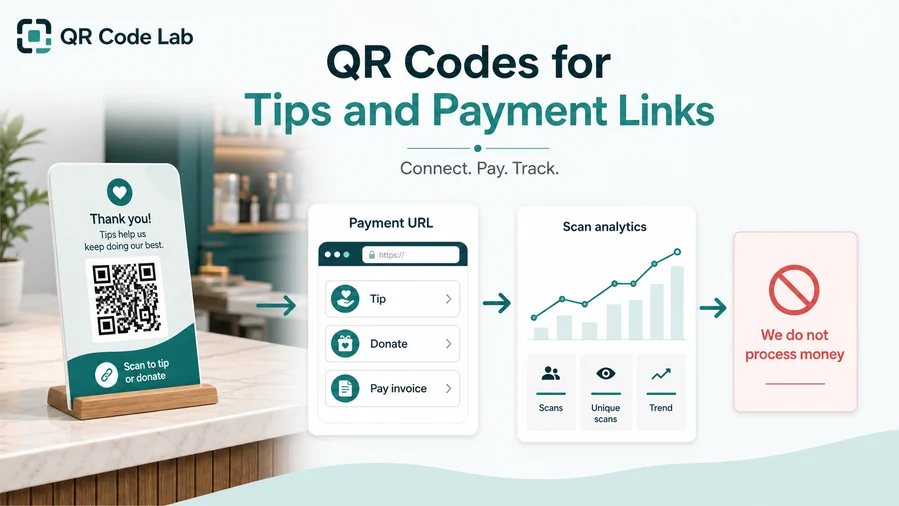
Open invoice payment without typing
Use QR codes on invoices, estimates, and completion sheets so customers can reach the correct payment page quickly.
Support deposits and job approvals
If a pickup requires a deposit, estimate approval, special handling fee, or balance payment, label the purpose before the scan.
Keep billing destinations editable
Dynamic QR helps when payment providers, invoice pages, deposit links, or billing instructions change.
A scan does not prove the customer paid
Scan analytics can show that someone opened a payment link, but only the payment provider or accounting system can confirm completed payment.
Use the billing workflow as the source of truth for balances, receipts, refunds, and disputes.Keep junk-removal payment QR codes clear and limited
Use QR to reduce typing while payment records stay with the proper provider.
Cleanup trust
Make junk-removal QR destinations trustworthy before addresses, photos, or payments
TrustJunk-removal QR codes can open quote forms, photo uploads, invoices, reviews, and disposal rules. The destination should show company identity and job purpose before asking for private details.

Unknown photo-upload forms
Customers may hesitate if a QR asks for address, photos, access notes, or phone number without clear business identity.
Explain what details help estimate the pickup and how the company will follow up.
Payment link confusion
Invoice QR codes should identify the company, provider, amount or purpose, and job context before payment.
Payment confirmation belongs in the billing provider, not scan analytics.
Public signs and old offers
Door hangers, yard signs, truck cards, and dumpster signs can keep circulating after service rules or offers change.
Review public materials and use dynamic QR for changing destinations.Inspect junk-removal QR destinations before distribution
Confirm the encoded destination, company identity, CTA match, and whether the QR opens quote, accepted items, payment, review, support, or repeat-pickup pages.
A QR checker helps reveal the destination, but it does not replace payment, dispatch, or disposal-policy review.Decoded destination
Confirm the QR opens the intended quote, payment, support, review, or accepted-items page.
Company identity
The first screen should match the junk-removal business customers expect.
Job purpose
The destination should match the printed CTA and cleanup stage.
Placement review
Check door hangers, trucks, invoices, signs, and flyers for outdated codes.
Publish junk-removal QR codes customers can understand
Clear CTAs, trusted destinations, and routine checks make QR codes useful for quotes, photo uploads, payments, reviews, and repeat service.