Reader Feedback QR Code Generator for Books & Surveys
Create reader feedback QR codes for books, author websites, beta reader forms, bonus pages, launch teams, surveys, and newsletter signups. Invite honest reader response without review-swap wording.
Free QR code generator
Create a QR code online
Generate QR codes for websites, email, phone numbers, vCards, Wi-Fi, plain text, forms, PDF files, and campaign links. Customize colors, add a logo or frame, then download a print-ready PNG or SVG.
Choose QR code type
Website QR code, Email QR code, Phone QR code, vCard QR code, Wi-Fi QR code, Text QR code, SMS, WhatsApp, event, and download links.
Add your content
Enter your website URL, contact details, message, phone number, location, or file destination before generating the QR code.
Customize and download
Adjust QR colors, error correction, logo, frame, size, and margin. Generate QR Code, Download PNG, Download SVG, or Save and track scans.
Reader response path
Make it easy for readers to share feedback after the book reaches them
A reader feedback QR code is useful when an author, publisher, or course creator wants a simple way for readers to respond from a printed book, workbook, launch card, bookmark, or bonus page. It can open feedback forms, beta reader surveys, review prompts, author websites, bonus pages, launch team pages, newsletter signup, or private question forms.
The best reader feedback QR code respects the reader’s moment. A beta copy can ask specific improvement questions. A finished book can invite a review or private note. A workbook can ask what lesson was most useful. A back-matter page can open bonus resources and feedback together. QR Code Lab helps create print-ready dynamic codes so the same printed book can point to updated forms or reader pages later.
QR Code Lab creates URL QR codes and scan analytics. It does not collect responses by itself unless you connect a form destination, manage reviews, run newsletters, or store reader records. Your form tool, author website, review platform, email service, or publisher page handles the actual feedback.
Reader feedback workflow
Reader feedback workflow book, author, KDP, and reader projects with author pages, reader bonuses, sample chapters, reviews, feedback, newsletters, catalogs, and updates
Reader feedbackUse QR codes to move book, author, KDP, and reader projects from book covers, interiors, inserts, bookmarks, launch flyers, catalogs, reading guides, and author materials to author pages, reader bonuses, sample chapters, reviews, feedback, newsletters, catalogs, and updates without making readers type a long URL.

Ask for feedback at the right reading moment
Use QR codes after a chapter, at the end of the book, in an author note, or on an ARC card when readers can respond with fresh context. The destination can collect questions, comments, corrections, discussion notes, testimonials, or private feedback.
The printed CTA should say what kind of response you want.
Separate private feedback from public reviews
Reader feedback is not always a review request. Some readers need a private path for errors, accessibility issues, classroom use, book club questions, or sensitive comments before they decide whether to post publicly.
A fair feedback path protects trust with readers.
Keep the feedback destination useful after launch
Forms, newsletters, bonus pages, ARC surveys, series updates, and review prompts can change as the book moves from launch to long-term sales. Dynamic QR keeps old print pointing to the right reader path.
Printed books travel longer than a launch campaign.A reader feedback QR should respect the relationship between reader and author
The scan should make it easy to say something useful: ask a question, report an issue, join updates, discuss the book, share a classroom response, or leave private feedback without feeling pushed into a public review.
Use a specific prompt: send feedback, ask the author, report an error, join book club notes, or share ARC comments.Private feedback
Use for questions, corrections, accessibility issues, errata, sensitive responses, and reader support.
ARC and launch input
Use for early-reader surveys, testimonials, launch-team notes, and revision signals.
Book club and classroom
Use for discussion prompts, teacher feedback, group questions, and reading reflections.
Long-term reader path
Use dynamic QR when forms, series links, newsletters, and bonus pages may change later.

Reader trust
Ask for reader feedback and reviews without hiding the private response path
FeedbackA reader feedback QR should make it clear whether the author wants private comments, corrections, questions, ARC notes, book club responses, testimonials, or public reviews.
Give readers a direct way to respond privately
Use forms or contact pages for questions, errors, accessibility problems, sensitive reactions, classroom notes, and support requests.
Back matter, author notes, ARC cards, classroom handouts, and companion pages. Do not force every response into a public review channel.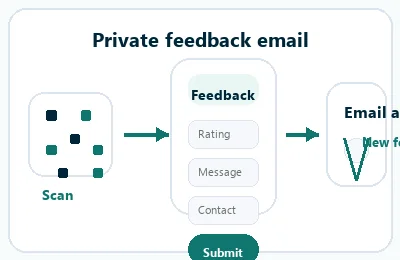
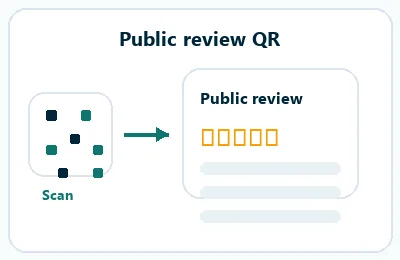
Invite reviews after support and context are clear
When readers are ready, route them to a review page, retailer listing, Goodreads-style profile, testimonial form, or launch-team review instructions.
End matter, thank-you page, launch cards, email inserts, and bonus pages. Do not imply that feedback must be positive or compensated.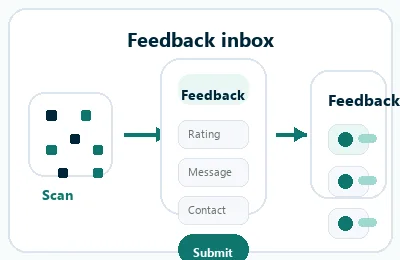
Use feedback to keep book conversations alive
Book clubs, classrooms, author events, and series communities can use QR feedback for prompts, questions, discussion notes, and future topic ideas.
Book club guides, classroom sheets, author talks, signings, and reader resource pages. Keep group or student privacy expectations clear.Reader feedback should deepen trust, not extract praise
The best QR feedback path gives readers a useful voice and gives the author clearer next steps.
Back matter and beta flow
Ask for reader feedback where the request feels natural
Useful placements include back matter, author notes, bookmarks, launch cards, beta reader packets, workbook endings, bonus pages, email inserts, and review request cards. CTAs should say send feedback, answer reader survey, ask the author, join updates, get bonus pages, leave review, or join launch team. Make the request clear and respectful, not pushy.
Dynamic QR codes are practical because feedback forms, launch pages, bonus offers, and newsletter links change. You can update the destination after the book is printed, which is especially helpful for long-running titles and print-on-demand books. Scan analytics can show whether readers actually use the feedback path and which printed placement works best.
Separate public reviews from private feedback. A review link is best when the reader is ready to share publicly. A private form is better for questions, corrections, beta notes, or sensitive reactions. QR Code Lab manages the printed link and scan counts, while your chosen platform handles responses and follow-up. That separation makes the request feel more respectful and gives readers the right channel.
After-print feedback control
Use dynamic QR when reader feedback forms and author paths may change after publication
DynamicBooks, ARC cards, launch inserts, and classroom materials can keep circulating long after the first feedback form changes. Dynamic QR keeps the printed prompt useful as the reader relationship evolves.
Printed books can outlive the first feedback form
A static QR may keep sending readers to an old survey, closed launch form, moved author page, or outdated review instruction.
That is frustrating because readers usually scan when they are ready to respond.
The same printed QR can follow the current reader path
Move the destination from ARC survey to launch feedback, errata, book club resources, newsletter, review page, or series updates.
The printed book stays useful while the author workflow changes.
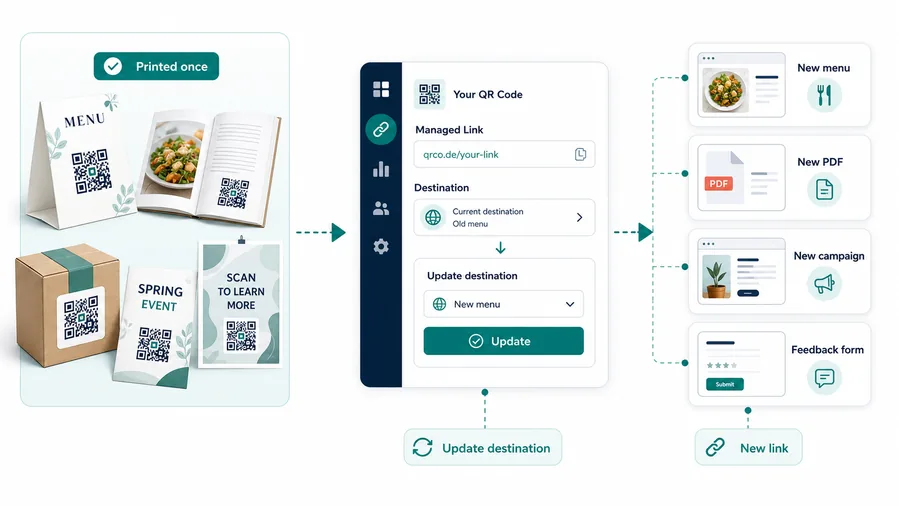
ARC to launch
Switch early-reader surveys to testimonial requests, review instructions, or launch updates.
Errata and corrections
Route readers to current correction forms, known issues, updated files, and author notes.
Book clubs and classrooms
Update discussion guides, teacher forms, reading prompts, and shared resources.
Long-tail reader relationship
Move feedback prompts to newsletter, next book, series page, community, or support.
Use dynamic when the feedback path will mature with the book
A reader feedback QR should stay useful after the launch window closes.