
QR Code for Insurance Agents - Quotes, Contact & Referrals
Create QR codes for insurance agents linking quote forms, appointment pages, policy resources, reviews, contact cards, maps, and referral pages. Use them on cards, mailers, signs, and handouts.
Free QR code generator
Create a QR code online
Generate QR codes for websites, email, phone numbers, vCards, Wi-Fi, plain text, forms, PDF files, and campaign links. Customize colors, add a logo or frame, then download a print-ready PNG or SVG.
Choose QR code type
Website QR code, Email QR code, Phone QR code, vCard QR code, Wi-Fi QR code, Text QR code, SMS, WhatsApp, event, and download links.
Add your content
Enter your website URL, contact details, message, phone number, location, or file destination before generating the QR code.
Customize and download
Adjust QR colors, error correction, logo, frame, size, and margin. Generate QR Code, Download PNG, Download SVG, or Save and track scans.
Insurance contact path
Make quotes, appointments, resources, and referrals easier to start
A QR code for insurance agents is useful when a prospect sees a business card, direct mail piece, seminar handout, office sign, referral card, policy review sheet, or local sponsorship material and needs a trusted next step. It can open quote forms, appointment pages, policy resources, review pages, contact cards, maps, referral pages, newsletters, and agent bios. The QR code should reduce friction while keeping the experience official and clear.
The scan should not feel like a vague financial shortcut. A business card can open a contact page. A seminar handout can open a resource. A direct mail piece can open a quote form. A review card can open a public review or private feedback path. A referral card can open the correct agent page instead of a generic office homepage. QR Code Lab helps create print-ready codes, dynamic destinations, and scan analytics so agents can update links and compare print materials.
QR Code Lab creates URL QR codes only. It does not process payments, manage orders, collect forms, run bookings, sell insurance, provide financial advice, or operate agency software. The linked quote, booking, CRM, review, or agency platform handles the actual workflow.
Insurance client path
Help insurance prospects request quotes, save contact details, prepare documents, and follow up
Quote flowAn insurance-agent QR code should connect cards, mailers, renewal packets, event handouts, office signs, and referral materials to a careful next step: request a quote, save the agent, upload context, book a review, or read policy guidance.

Turn offline trust into qualified quote requests
Use QR codes on business cards, mailers, local event materials, renewal reminders, and referral cards to open quote forms, coverage checklists, appointment booking, and agent profile pages.
The scan should reduce friction without making a sensitive insurance decision feel rushed.
Show who the agent is before asking for details
A strong destination can show agent identity, agency or carrier context, service area, coverage types, privacy expectations, and what information helps prepare a quote.
Insurance forms often ask for personal context; credibility belongs on the first screen.
Keep forms and campaign links current after materials are printed
Dynamic QR helps when quote forms, carrier pages, appointment links, claim resources, referral offers, and renewal pages change after cards or mailers are already distributed.
Long-lived insurance print should not send prospects to stale forms.An insurance QR should route by intent, not by vague contact
The scanner may need an auto quote, home quote, policy review, claims contact, referral, appointment, or document checklist. The destination should make that next step obvious before asking for information.
Use CTAs such as request quote, book policy review, save agent contact, upload details, read checklist, or contact claims support.New quote
Open coverage-specific forms, appointment booking, required details, and agent follow-up.
Existing client
Route to reviews, renewal prep, claims contacts, document checklists, and service requests.
Referral
Explain who the agent serves, what the first conversation covers, and how to request contact.
Local campaign
Keep mailers, cards, event tables, and office materials connected to current pages.
Insurance customer moments
Turn insurance touchpoints into quote requests, reviews, referrals, and prepared conversations
Local agent flowInsurance-agent QR codes work best when each printed piece has one purpose: request a quote, save the agent, prepare for renewal, contact claims support, review service, or refer a friend.
Collect the right quote context before the call
Open coverage-specific forms for auto, home, renters, business, life, or umbrella insurance with clear expectations for follow-up.

Book policy reviews when life changes
Use renewal packets, mailers, and office signs to open annual reviews, appointment booking, coverage checklists, and document prep.

Let clients save the agent without retyping
Use business cards and referral pieces to open vCard, office hours, phone, email, location, and preferred contact paths.

Separate claims help from sales follow-up
Route existing clients to claim instructions, carrier contact, emergency numbers, and document checklists when appropriate.

Make referred prospects feel oriented
Use referral cards to explain the agency, coverage fit, first conversation, privacy expectations, and quote request path.

Ask after the service moment is complete
Use renewal follow-ups and thank-you cards to request reviews or private feedback after a quote, claim support, or policy review.
Insurance scans start from trust and timing
The person may have received a referral, moved homes, bought a car, opened a renewal notice, or attended a local event. The QR should continue that exact conversation.
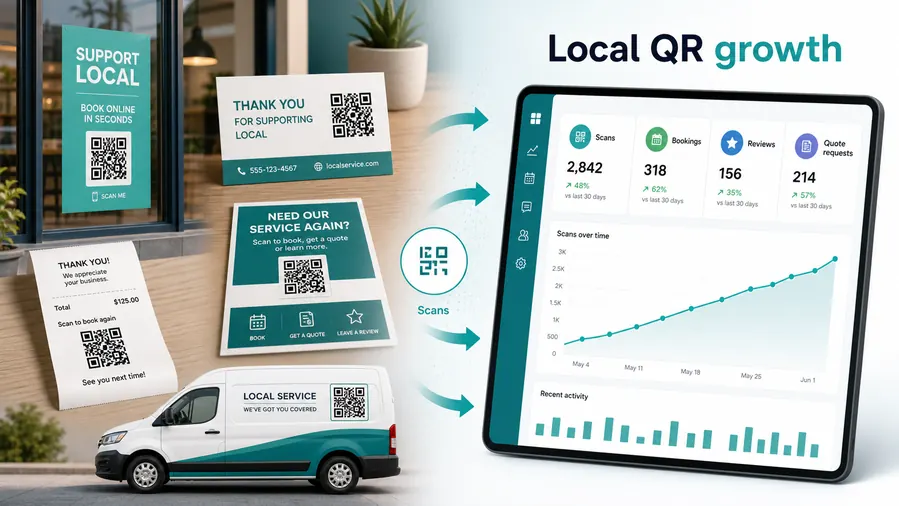
Agent materials become easier to manage and compare
Dynamic QR keeps cards, mailers, office signs, and event handouts connected to current quote forms, booking pages, and support resources.
Place the code where insurance intent is strongest
Insurance placement
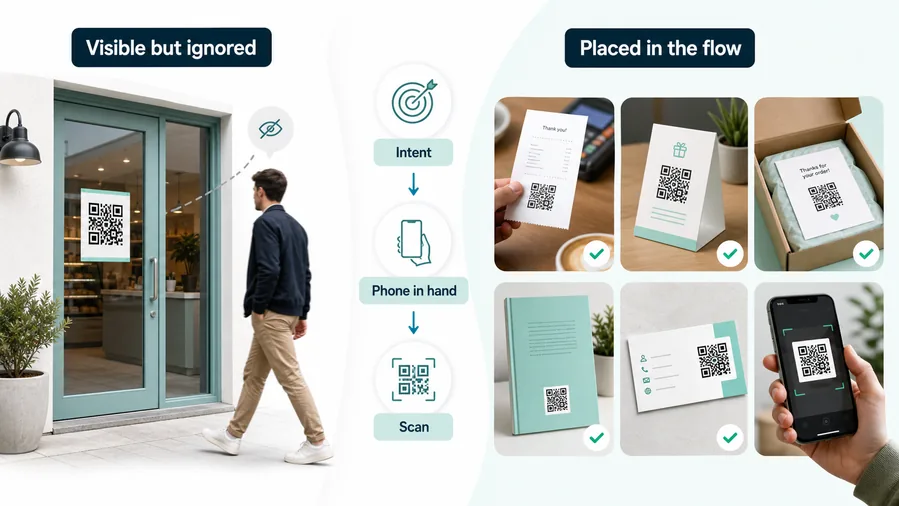
Place insurance QR codes where prospects already understand the coverage question
PlacementInsurance QR placement should continue a specific context: referral, renewal, quote request, event conversation, claim support, or policy review.
The code asks for personal details before trust is clear
A QR on a mailer or card can feel risky if the scanner does not know whether it opens a quote, claim contact, review booking, or generic sales page.
Insurance decisions involve private details, so the printed CTA and first screen must be specific.
The code continues the insurance moment
Use cards for saving contact, mailers for quote and renewal actions, office signs for appointment prep, and event materials for follow-up.
The destination should show the agent or agency identity before asking for information.
What coverage question exists?
New quote, policy review, claims contact, renewal, referral, life event, or local campaign.
What should happen next?
Request quote, book review, save contact, upload details, read checklist, or contact support.
Is the data request appropriate?
Use trusted forms and explain why contact, property, vehicle, business, or family details are needed.
Will the destination change?
Use dynamic QR for carrier links, quote forms, booking pages, renewal campaigns, and claim resources.
Business card
Open agent profile, vCard, quote request, appointment booking, and office contact.
Direct mailer
Send recipients to coverage-specific quote pages, local offers, checklists, and renewal reviews.
Referral card
Introduce the agent, service fit, privacy expectation, and request-contact path.
Renewal packet
Open document prep, policy review booking, coverage checklist, and support contact.
Office sign
Help visitors book appointments, prepare documents, save contact, or find claims guidance.
Event table
Route to seminar follow-up, quote pages, giveaway forms, and local campaign resources.
Vehicle or storefront
Show services, location, reviews, agent contact, and quote request when safe to scan.
Thank-you card
Invite reviews, referrals, feedback, and next policy review scheduling.
Insurance QR placement should feel credible and precise
Use the code where the scanner already understands what kind of insurance action comes next.
Insurance scan experience
Make insurance QR destinations clear before asking for private details
Scan UXThe first screen should confirm the agent, agency or carrier context, coverage type, and next action before requesting personal, property, vehicle, family, or business information.
Quote pages should explain what happens next
Auto, home, renters, life, businessWhen someone scans from a card, mailer, or event handout, the destination should show which quote type the form supports and what follow-up to expect.
Ask only for details needed to start the conversation and keep sensitive flows on trusted forms.
Existing clients need service clarity
Claims, renewal, policy review, documentsA client scanning from a renewal packet or office card may need service, not sales.
Put claim guidance, review booking, support contact, and document prep where the printed CTA promised them.
Referrals should feel warm and oriented
Agent intro, service fit, booking, contact requestA referred prospect should immediately see who the agent is, what they help with, and how the first conversation works.
Avoid dumping referrals into a broad homepage before the relationship context is clear.
Does the first screen identify the agent?
The scanner should know who receives their information and why the page opened.
Is the form proportional to the scan moment?
A quick quote request should not feel like a full policy application unless the page clearly explains that step.
Does the CTA match the printed piece?
A renewal, referral, or claims QR should open that exact path, not a generic sales page.
The scan should make insurance follow-up easier and safer
Use this block when the page needs to prove the QR destination respects trust, privacy, and coverage context.
Insurance scan reporting
Use scan data to compare insurance materials without overclaiming quote intent
AnalyticsTracking helps insurance agents compare which printed materials earn scans: cards, mailers, office signs, renewal packets, event handouts, referral cards, and local ads.
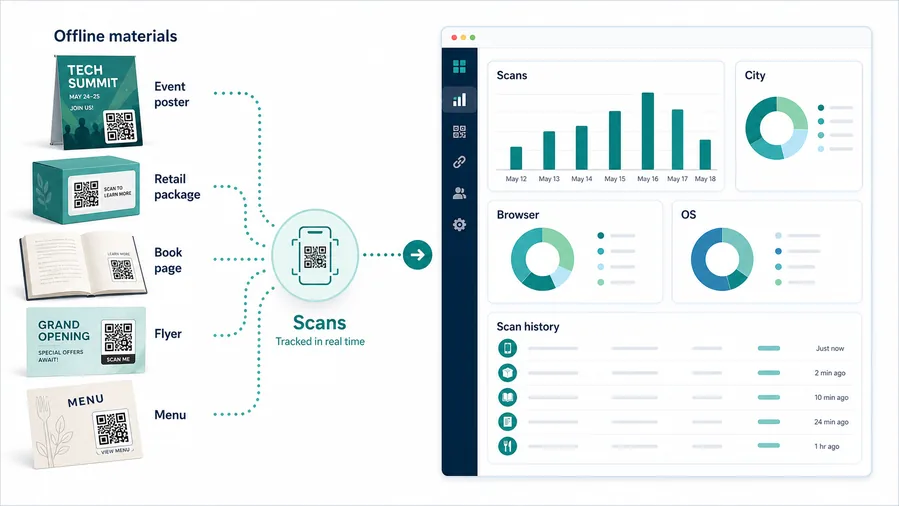
All insurance scans become one blended number
A single QR code can show interest, but it cannot tell whether a mailer, business card, referral card, office sign, or event table produced the scan.
That makes campaign and follow-up decisions weaker.
Each insurance material becomes a planning signal
Use separate dynamic QR codes for quote campaigns, renewal packets, referral cards, and event materials when comparison matters.
Scan data shows attention and timing, not qualified leads, bound policies, or completed applications.
Scan volume
Review how many scans each card, mailer, event handout, office sign, or renewal packet received.
Time and device
See when prospects or clients scanned and which device or browser opened the destination.
Broad location
Use approximate location signals to review local campaigns without treating them as identity.
Code comparison
Compare quote mailers, referral cards, business cards, office signs, and event materials side by side.
Quote campaigns
Compare auto, home, renters, business, and life insurance mailers by scan activity.
Referral materials
See whether partner cards, client referral pieces, or local introductions earn attention.
Renewal reviews
Use separate codes for policy review booking, checklist downloads, and support contact.
Operational cleanup
Find old quote forms, expired event pages, zero-scan materials, and stale carrier links.
Name insurance QR codes by campaign and coverage type
Scan reports help only when code names match the real card, mailer, event, office sign, or renewal packet.
Trust and follow-up flow
Use official destinations and clear CTAs for insurance-related scans
Use insurance agent QR codes on business cards, direct mail, seminar handouts, appointment cards, office signs, referral cards, policy review sheets, local sponsorship materials, review request cards, and resource worksheets. The CTA should say request quote, book appointment, save contact, read policy resource, refer a friend, join newsletter, or leave review. Insurance links should feel official and easy to verify because people may be asked for sensitive information later.
Dynamic QR codes help when quote forms, appointment pages, disclosures, agent bios, referral pages, and resource links change. Scan analytics can show which offline materials create real interest, while the agency system remains responsible for lead capture, compliance, appointments, and customer records.
Avoid suspicious short links in insurance contexts. Use recognizable branding, explain what the form is for, and avoid asking for too much on the first screen. A clear, calm scan path builds more trust than a rushed lead form. For referral cards, send the scan to the named agent or office, not a broad corporate page where the relationship disappears.
Insurance trust
Make insurance QR destinations trustworthy before collecting client or quote details
TrustInsurance QR codes can open quote forms, claim resources, booking pages, referrals, and document checklists. The page should show identity, purpose, and privacy expectations before asking for information.

Unknown quote forms
Prospects may hesitate if a QR asks for vehicle, property, family, business, or contact details without clear agent identity.
Show the agency, agent, coverage type, and reason for each requested detail.
Confusing claims or carrier pages
Claim guidance should make it clear whether the scanner is contacting the agent, carrier, emergency service, or a third-party provider.
Use the carrier or agency system as the source of truth for claim status.
Old campaign links still circulating
Mailers, referral cards, and renewal packets may stay in homes long after campaigns or carrier links change.
Use dynamic QR for materials that may need updates.Inspect insurance QR destinations before printing
Confirm the encoded destination, agent identity, agency or carrier context, CTA match, and whether the QR opens quote, claim, booking, renewal, or support pages.
A QR checker helps reveal the destination, but it does not validate coverage, compliance, claim status, or provider security.Decoded destination
Review whether the QR opens the intended quote, claim, booking, referral, or checklist page.
Agent identity
The first screen should match the agent, agency, carrier, or campaign the scanner expects.
Information request
Check that forms ask only for details appropriate to the coverage step.
Printed context
Review cards, mailers, packets, and office signs for old or mismatched codes.
Publish insurance QR codes clients can understand
Clear CTAs, recognizable destinations, current forms, and careful data requests make QR codes useful without undermining trust.