QR Code for Consultants - Leads, Booking & Case Studies
Create QR codes for consultants linking booking pages, lead forms, portfolios, case studies, proposals, reviews, payment links, and bios. Use them on cards, proposals, slides, and handouts.
Free QR code generator
Create a QR code online
Generate QR codes for websites, email, phone numbers, vCards, Wi-Fi, plain text, forms, PDF files, and campaign links. Customize colors, add a logo or frame, then download a print-ready PNG or SVG.
Choose QR code type
Website QR code, Email QR code, Phone QR code, vCard QR code, Wi-Fi QR code, Text QR code, SMS, WhatsApp, event, and download links.
Add your content
Enter your website URL, contact details, message, phone number, location, or file destination before generating the QR code.
Customize and download
Adjust QR colors, error correction, logo, frame, size, and margin. Generate QR Code, Download PNG, Download SVG, or Save and track scans.
Lead and booking path
Turn a conversation, talk, or one-sheet into the next business step
A QR code for consultants is useful when a professional conversation should become a booked call, downloaded proof, or saved profile. It can open a booking page, lead form, portfolio, case study, proposal page, review page, payment link, bio, resource page, or workshop follow-up. Consultants, coaches, agencies, freelancers, advisors, B2B service providers, and independent experts can use QR codes on business cards, one-sheets, slides, and event materials.
The scan should match the level of interest. After a short networking talk, a bio or resource may be enough. After a sales meeting, a booking page or proposal may be better. After a workshop, a worksheet or case study can keep the conversation moving. QR Code Lab helps create dynamic links and scan analytics so consultants can see which events and materials produce real interest.
QR Code Lab creates URL QR codes only. It does not process payments, manage bookings, collect leads, host proposals, or operate CRM software. The linked booking, CRM, portfolio, proposal, or payment platform handles the actual business workflow.
Consulting lead path
Turn consulting interest into a qualified next conversation
Lead flowA consultant QR code should move people from a card, deck, event handout, proposal, or workshop material to a focused next step: book a call, review proof, download a resource, request a proposal, or join a follow-up list.

Make the scan continue the business conversation
Use QR codes on business cards, pitch decks, workshop handouts, one-pagers, proposals, and conference materials to open a booking page, diagnostic form, case study, resource library, or tailored offer.
The destination should reflect the context where the consultant met the prospect.
Use proof when the buyer needs confidence first
A QR destination can show case studies, frameworks, client results, industry pages, founder bio, service packages, and a short intake path before asking for a meeting.
Consulting scans often need trust and specificity before conversion.
Keep event and proposal links editable
Dynamic QR helps when calendars, lead magnets, webinar pages, proposal documents, diagnostic forms, and campaign landing pages change after print or distribution.
Consultants reuse materials across events and clients; the destination should stay current.A consultant QR code should qualify intent instead of dumping traffic
The scanner may be a referral, event attendee, workshop participant, buyer, or stakeholder reviewing a proposal. The QR destination should give them the next useful business step without forcing them through a generic site.
Use CTAs such as book strategy call, download framework, view case study, request proposal, or send project brief.Events and talks
Open slides, diagnostic worksheets, resource pages, calendar links, and follow-up offers.
Business cards
Route to bio, proof, booking, service packages, and a concise contact path.
Proposals
Link to case studies, scope notes, calendars, supporting docs, and decision resources.
Workshops
Give participants templates, exercises, recordings, feedback forms, and next-session booking.
Consulting buyer moments
Turn consulting touchpoints into meetings, briefs, and proof-driven follow-up
GrowthConsultants earn scans from referrals, cards, decks, events, workshops, proposals, and leave-behind documents. Each QR should make one valuable next step easy.
Make the right meeting easy to schedule
Send prospects to a calendar page that matches the context: discovery, audit, workshop follow-up, proposal review, or implementation call.
Collect project context before the call
Use a short intake form for goals, industry, budget range, timeline, team size, and the problem the prospect wants solved.

Show why the conversation is worth having
Link to relevant case studies, frameworks, testimonials, sample deliverables, and outcome-focused service pages.

Give useful material after a talk or workshop
Route attendees to slides, templates, checklists, worksheets, recordings, and follow-up notes.
Help warm referrals self-identify
Use referral cards or partner materials to open a focused page that explains fit, next steps, and booking options.
Learn which materials are actually useful
Use feedback forms after workshops, audits, and advisory sessions to improve content and follow-up offers.
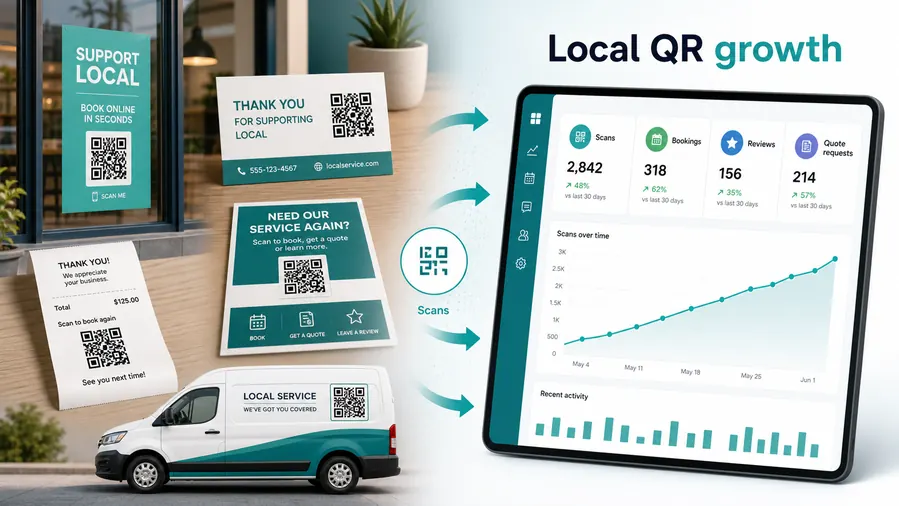
Consulting scans happen when trust is still forming
The buyer may know the consultant from a referral, event, deck, or proposal, but still needs context. The QR destination should help them judge fit and take the next step with confidence.
Printed consulting materials become easier to tune
Dynamic QR codes help compare and update business cards, event handouts, proposals, one-pagers, workshop materials, and partner referrals without reprinting.
Place the QR where consulting intent is strongest
Consulting placement
Place consultant QR codes where the buyer can take the next professional step
PlacementConsulting QR placement should respect the decision moment: after a conversation, during a workshop, beside a framework, inside a proposal, or on a card passed through a referral.
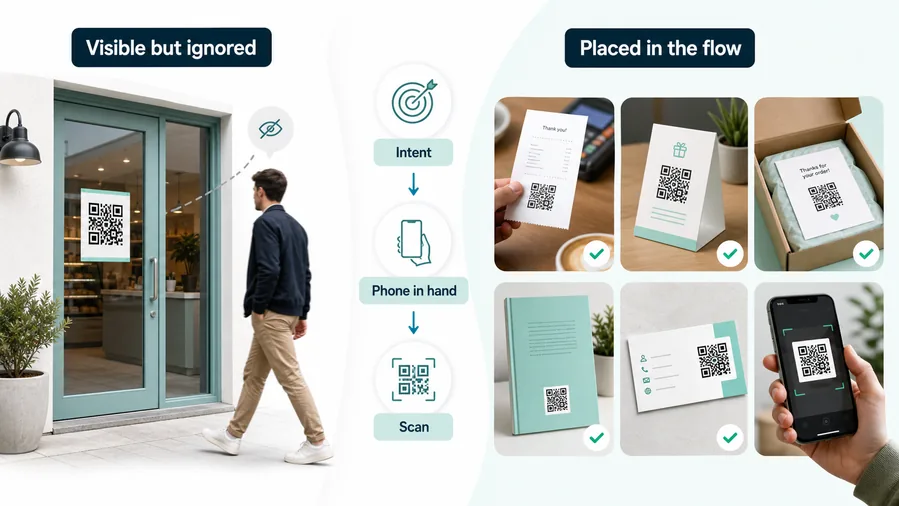
A broad QR sends every prospect to the same homepage
A generic homepage QR wastes the context created by a referral, talk, proposal, or workshop.
The prospect still has to figure out what to read, why it matters, and how to engage.
The QR continues the specific consulting moment
Pair the code with a clear CTA: book a discovery call, download the framework, view relevant cases, send a brief, or review proposal details.
The destination should match the buyer’s stage and remove the next bit of friction.
What relationship exists already?
Referral, event attendee, workshop participant, proposal reviewer, newsletter reader, or card recipient.
What should happen next?
Book a call, review proof, download a template, submit a brief, share a deck, or ask a question.
Does the QR show fit quickly?
Consulting pages should identify the problem, audience, proof, and next step before asking for commitment.
Will this material be reused?
Use dynamic QR for evergreen cards, decks, templates, workshop packets, and proposals that may need updated links.
Business card
Open consultant bio, positioning, proof, booking, and contact details.
Conference handout
Route attendees to slides, templates, session resources, and follow-up booking.
Proposal appendix
Link to cases, references, scope details, calendar, and supporting documents.
Workshop worksheet
Open exercises, recordings, templates, feedback, and next-session options.
Partner referral card
Explain fit, services, outcomes, and how referred prospects should engage.
Office sign or badge
Use for event booking, quick contact, profile, and resource download.
Printed framework
Send readers to deeper explanation, examples, and implementation notes.
Leave-behind one-pager
Open industry-specific proof, offer page, and short project brief.
Consulting QR placement should preserve context
Use each code to continue the buyer’s current conversation, not to restart them at the top of the website.
Buyer scan experience
Make the consulting scan feel valuable before asking for a meeting
Scan UXA consultant QR code should quickly prove relevance, explain the next step, and make booking or resource access easy on a phone.
Case-study pages should match the buyer’s problem
Case studies, frameworks, diagnosticsIf the scan comes from a proposal, event, or referral, the first screen should show a relevant problem, outcome, or resource instead of generic marketing copy.
Give the buyer enough context to decide whether a conversation is worth scheduling.
Booking should not require hunting
Calendar, project brief, contact formWhen the CTA promises a call or project brief, the form or calendar should be visible and easy to complete from a phone.
Ask only for details that help qualify the next conversation.
Downloads should feel useful immediately
Slides, templates, worksheets, recordingsFor talks and workshops, deliver the promised resource first, then offer the follow-up path.
That makes the scan feel helpful rather than a lead trap.
Does the first screen match the printed CTA?
Book strategy call, download template, view case study, or send brief should open exactly that action.
Is the buyer stage respected?
A referral, proposal reviewer, and event attendee may need different proof and different commitment levels.
Is the form short enough for mobile?
Keep initial consulting intake focused on fit, problem, timeline, budget range, and contact path.
Consulting QR works when it earns the next conversation
Use the scan to deliver immediate value and make the professional next step obvious.
Consulting campaign reporting
Use scan data to compare consulting materials without pretending every scan is a lead
AnalyticsTracking helps when separate QR codes compare cards, decks, proposals, events, partner referrals, workshops, and printed resources.
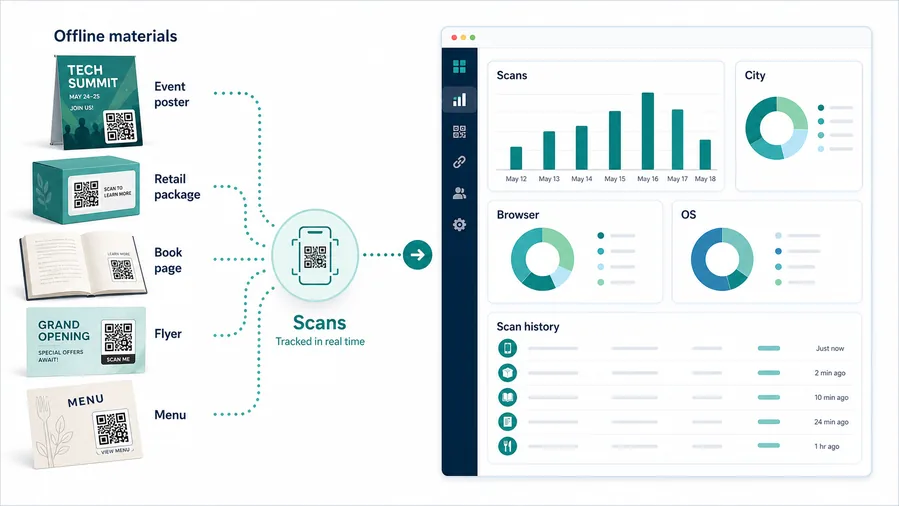
All consulting interest becomes one total
A single QR cannot show whether scans came from a workshop, referral card, proposal, business card, or conference handout.
That makes it harder to improve materials and follow-up paths.
Each consulting placement becomes a signal
Use separate dynamic QR codes when events, decks, proposals, and referral partners need their own readout.
Scan data is not a signed contract, but it helps compare attention and timing.
Scan volume
Compare scans from cards, decks, handouts, proposals, referrals, and workshops.
Timing
See whether interest happens during events, after proposals, or when materials are shared later.
Device and browser
Check whether booking pages, PDFs, forms, and resources work on buyer phones.
Broad location
Use approximate signals for conferences, markets, partner campaigns, and regional outreach.
Event follow-up
Compare slides, session handouts, booth cards, and workshop resources.
Proposal review
See whether supporting docs, case studies, and calendars are opened after delivery.
Referral partners
Compare partner cards, industry pages, and warm-introduction materials.
Lead magnets
Measure templates, checklists, diagnostics, and resource pages by campaign.
Name consultant QR codes by material and buyer stage
Tracking works when code names match the real card, deck, event, proposal, or referral source.
B2B context
Make the QR destination match the level of intent
Use consultant QR codes on business cards, conference slides, one-sheets, proposals, workshop handouts, booth signs, sales decks, leave-behinds, name badges, and printed resource guides. The CTA should say book a call, view case study, download proposal, open bio, get worksheet, or see services. The destination should feel like a helpful follow-up, not a generic homepage.
Dynamic QR codes help when booking pages, case studies, offers, calendars, and campaign pages change. Separate QR codes for a keynote slide, booth sign, proposal, and business card can show which touchpoints create interest. QR Code Lab analytics can show scan activity, but actual leads, meetings, payments, and CRM records stay in your business tools. Keep the page concise and mobile friendly because B2B scans often happen between sessions, in hallways, or right after a conversation.
For proposals, link to a focused page with next steps, not a broad services page. The reader has context already, so the QR should continue that conversation, make booking easy, reinforce the offer, and reduce follow-up emails after meetings.