QR Code for Gyms - Memberships, Classes & Waivers Online
Create QR codes for gyms linking membership pages, class schedules, waiver forms, trainer bios, reviews, payment links, and app downloads. Use them on posters, front desks, lockers, and cards.
Free QR code generator
Create a QR code online
Generate QR codes for websites, email, phone numbers, vCards, Wi-Fi, plain text, forms, PDF files, and campaign links. Customize colors, add a logo or frame, then download a print-ready PNG or SVG.
Choose QR code type
Website QR code, Email QR code, Phone QR code, vCard QR code, Wi-Fi QR code, Text QR code, SMS, WhatsApp, event, and download links.
Add your content
Enter your website URL, contact details, message, phone number, location, or file destination before generating the QR code.
Customize and download
Adjust QR colors, error correction, logo, frame, size, and margin. Generate QR Code, Download PNG, Download SVG, or Save and track scans.
Fitness member path
Help gym visitors open memberships, schedules, waivers, and trainer links
A QR code for gyms is useful when visitors, members, and class attendees need a quick path from the physical space to the right digital action. It can open membership pages, class schedules, waiver forms, trainer bios, review pages, payment links, app downloads, trial passes, facility rules, event pages, and feedback forms. It works well for gyms, fitness studios, personal trainers, wellness clubs, class-based studios, and local fitness businesses.
The scan should support a specific fitness moment. A window sign can open trial membership. A front desk sign can open waivers or class schedules. A trainer card can open a bio and booking link. A locker-room sign can open app download or facility rules. A review card can ask for feedback after the first session. QR Code Lab helps create print-ready codes, dynamic links, and scan analytics so the gym can update links and compare placements.
QR Code Lab creates URL QR codes only. It does not process payments, manage orders, collect forms, run memberships, or operate POS software. The linked membership, waiver, booking, payment, or gym app platform handles the actual member workflow.
Gym member moments
Turn gym touchpoints into membership, class, waiver, and retention actions
Gym growthGym QR codes work when they match what the member or prospect is doing: joining, booking a class, checking a schedule, signing a waiver, paying for training, reviewing a visit, or coming back after a trial.
Make joining feel clear at the front desk
Use lobby signs, trial cards, and flyers to open membership options, starter offers, pricing pages, tours, and staff contact without making prospects search later.

Send members to the current schedule
Place QR codes near studio doors, class boards, and trainer areas so members can see live class times, waitlists, booking rules, and instructor notes.

Move forms before the workout moment
Use trial passes, event signs, and front-desk cards to open waivers, health questionnaires, emergency contact forms, and onboarding steps before the member reaches the floor.

Route interest to the right coach or package
Use trainer cards, equipment-area signs, and consultation sheets to open personal training profiles, assessment booking, packages, and follow-up forms.

Open deposits and package payments through the provider
Use QR codes for training packages, day passes, events, or balances while payment status remains in the billing or POS system.

Ask when the workout experience is fresh
Use exit signs, thank-you cards, challenge wrap-ups, and class follow-ups to request reviews or private feedback without blocking support.
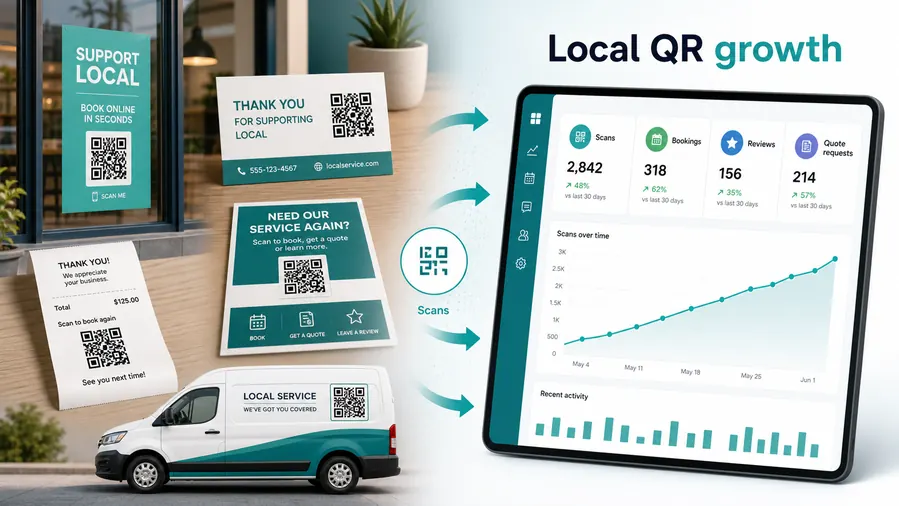
Gym scans happen when motivation is high
The person may have just finished a class, joined a trial, met a trainer, noticed a challenge poster, or wants to book the next session. The QR should turn that momentum into one clear action.
Gym print becomes easier to update and measure
Dynamic QR helps keep schedules, offers, waivers, booking links, payment pages, and trainer profiles current while scan reports show which placements earn attention.
Place the code where member intent is strongest
Gym placement
Place gym QR codes where members can scan without interrupting the workout
PlacementGym QR placement should respect movement, sweat, equipment, and short attention windows. Put the code where people pause and where the printed CTA names the exact action.
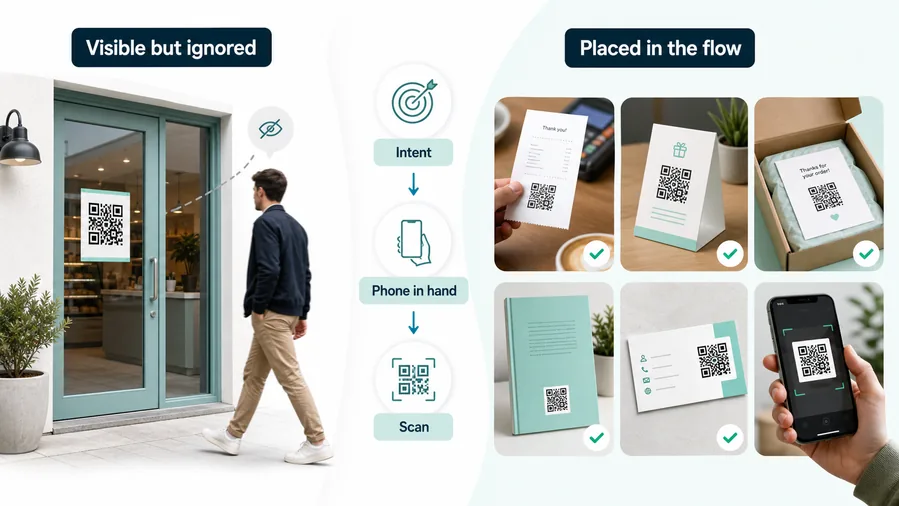
The code sits where people are moving or distracted
A QR code on a busy equipment area, hallway, or crowded class poster may be visible but ignored if members cannot stop comfortably.
Gym placements work better when the member is checking in, waiting, reading a schedule, paying, or leaving.
The code appears at a natural pause
Use lobby counters, class doors, trainer desks, locker-area signs, receipts, and challenge boards for actions members can complete on a phone.
Make the CTA specific: book class, sign waiver, view schedule, join challenge, pay package, or leave feedback.
What is the member doing?
Joining, checking in, waiting for class, choosing training, signing paperwork, paying, reviewing, or leaving.
What should happen next?
Book, join, pay, sign, save schedule, meet trainer, review, refer, or contact staff.
Can the person scan safely?
Avoid moving equipment zones and use flat, well-lit placements at natural pause points.
Will the schedule or offer change?
Use dynamic QR for classes, challenges, trials, prices, trainer pages, and waivers.
Front desk sign
Open membership options, trial signup, waivers, payment, app download, and tour booking.
Class studio door
Show schedule, booking, waitlist, instructor details, rules, and class feedback.
Trainer card
Route to coach profile, assessment booking, package options, and follow-up form.
Locker room sign
Use for Wi-Fi, app links, class schedule, facility rules, and member support.
Challenge poster
Open registration, leaderboard, rules, calendar, and progress tracking.
Invoice or receipt
Link to package payment, review request, referral offer, and support.
Flyer or local ad
Send prospects to trial offers, tours, pricing, location, and first-visit prep.
Equipment-area sign
Use carefully for form tips, safety notes, trainer help, and machine guides where scanning is safe.
Gym QR placement should support momentum
Use each code where the member already understands the next action and can scan without disrupting the workout.
Gym scan experience
Make gym QR destinations fast enough for a member between tasks
Scan UXA gym scan often happens at the front desk, outside a class, after a workout, or while deciding on training. The destination should load quickly and put the promised action first.
Schedules and bookings should be immediate
Class booking, waitlist, challenge, app linkWhen a member scans from a studio door or class board, the current schedule or booking action should be visible without hunting.
Use short pages, strong buttons, and current times because the member may be minutes from class.
Trial and membership pages should lower anxiety
Tour, pricing, waiver, first visitA prospect scanning a flyer or lobby sign should see location, offer, pricing context, trial steps, and what to expect on the first visit.
The page should invite action without hiding important rules or commitments.
Forms and payments need clear boundaries
Waiver, package payment, assessment, supportIf the QR opens forms, payment providers, or onboarding, label what happens next and keep confirmation inside the proper system.
Do not rely on scan analytics as proof that a waiver or payment was completed.
Does the first screen match the gym CTA?
A “scan for schedule” code should open schedule or booking, not a broad homepage.
Can the action be completed one-handed?
Large buttons, short forms, readable class times, and fast loading matter in a gym environment.
Is the destination current?
Test schedules, waivers, payment links, challenge pages, and trainer profiles after operational changes.
The scan should fit the gym rhythm
Use this block when the page needs to prove the QR destination is practical for real members and prospects.
Gym scan reporting
Use scan data to compare gym placements without treating scans as memberships
AnalyticsTracking helps gyms compare which materials create action: lobby signs, class boards, trainer cards, challenge posters, flyers, receipts, locker signs, and local campaigns.
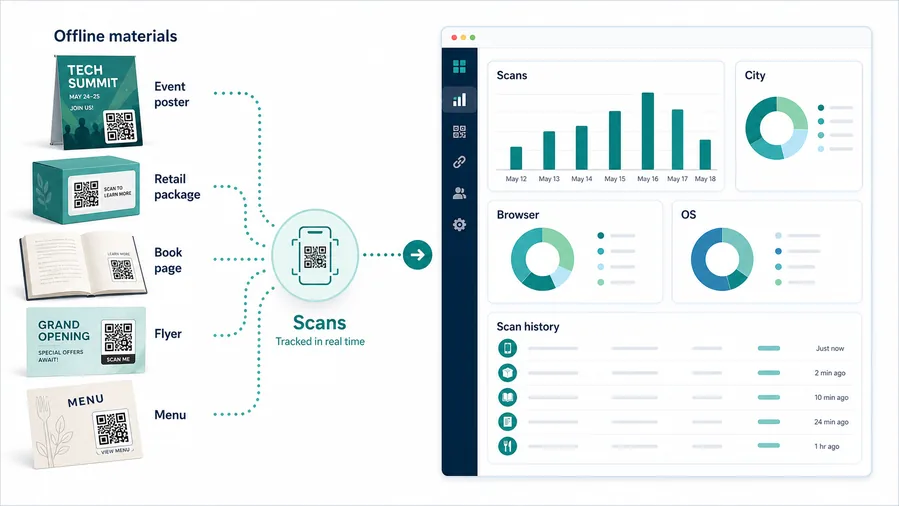
All gym scans become one blended number
A single QR code can show interest, but it cannot tell whether the lobby sign, studio door, trainer card, challenge poster, or receipt produced the scan.
That makes it harder to improve member acquisition and retention placements.
Each gym placement becomes a practical signal
Use separate dynamic QR codes for class signs, front-desk offers, trainer cards, invoices, and local ads when comparison matters.
Scan data shows attention and timing; membership, attendance, and payment confirmation stay in gym systems.
Scan volume
Review how many scans each gym QR code received during a campaign, class cycle, or offer window.
Time and device
See when members scanned and which device or browser opened the destination.
Broad location
Use approximate location signals to review local campaigns without treating them as member identity.
Code comparison
Compare lobby signs, class doors, trainer cards, flyers, receipts, and challenge posters side by side.
Class promotion
Compare studio-door signs, app prompts, and flyers to see which class materials earn scans.
Trainer lead generation
Use separate codes for trainer profiles, assessment offers, and package cards.
Membership campaigns
Compare local ads, referral cards, trial flyers, and front-desk signs.
Operational cleanup
Find old schedules, expired offers, zero-scan posters, and payment links that need review.
Name gym QR codes by placement and campaign
Scan reports help only when code names match the real sign, card, flyer, class, trainer, or offer.
Facility and class flow
Use different QR codes for prospects, members, and class attendees
Useful placements include window decals, front desk signs, class posters, trainer cards, trial-pass flyers, locker-room notices, event tables, equipment-area signs, review cards, and new-member packets. The CTA should be direct: start trial, view schedule, sign waiver, meet trainers, download app, read rules, book trainer, or leave review. Avoid sending every scan to the homepage; a person near a class poster needs the schedule, not the entire site.
Dynamic QR codes help when schedules, trial offers, waiver forms, class pages, app links, and trainer profiles change. Scan analytics can show whether front desk signs, studio windows, or class flyers generate more digital action. That helps improve offline promotion without guessing.
Keep safety and privacy in mind. Do not use a public sign for private member information. If a QR code opens a waiver, payment link, or account page, the destination should look official and explain what information the member will be asked to provide. For class posters, send people directly to that class schedule or booking page, not the full gym site.
Membership payment boundary
Use gym QR codes for payment links, not payment confirmation
PaymentsQR Code Lab can open a membership checkout, class pass, package payment, event fee, deposit, or invoice link. The billing, POS, wallet, or payment provider handles funds, receipts, refunds, disputes, and active membership status.
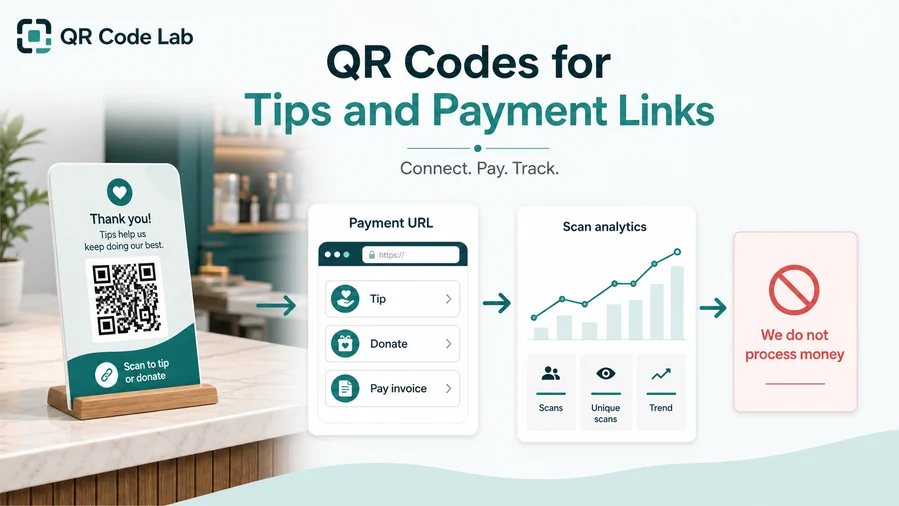
Open the right checkout without typing
Use QR codes on invoices, front-desk cards, training forms, and event materials to reach trusted payment pages quickly.
Support packages, passes, and deposits
Label whether the QR opens personal training, class pass, day pass, challenge fee, event registration, or membership balance.
Keep payment destinations editable
Dynamic QR helps when billing providers, checkout pages, package offers, and membership links change.
A scan is not proof that the member paid
Scan analytics can show that someone opened a payment link, but only the billing or payment provider can confirm completion, refunds, and membership status.
Use the gym management system or provider as the source of truth.Keep gym payment QR codes convenient and limited
Use QR to reduce friction while the financial record stays with the proper provider.
Gym trust
Make gym QR destinations clear before forms, payments, or member data
TrustGym QR codes can open waivers, payments, booking pages, apps, and member forms. The destination should show the gym identity, action, and provider clearly before asking for information.

Unknown waiver or health forms
Members may hesitate if a QR asks for health information, emergency contacts, or liability acceptance without clear gym identity and purpose.
Use trusted form or gym-management destinations and explain what the form is for.
Payment pages without context
Training packages, day passes, class fees, and memberships should show the purpose and provider before checkout.
Payment confirmation belongs in the provider, not scan analytics.
Old schedules and offers still visible
Class posters, flyers, and challenge signs can stay up after schedules, prices, or destinations change.
Review public materials and use dynamic QR for changing links.Inspect gym QR destinations before publishing
Confirm the encoded destination, gym identity, CTA match, and whether the QR opens schedule, waiver, payment, booking, app, or feedback pages.
A QR checker helps reveal the destination, but it does not confirm completed waivers, payments, or memberships.Decoded destination
Review whether the QR opens the intended schedule, form, checkout, trainer page, or review path.
Gym identity
The first screen should match the gym, branch, trainer, or program the member expects.
Data request
Check whether forms ask only for information appropriate to the scan moment.
Printed placement
Review signs, flyers, cards, and receipts for outdated or mismatched codes.
Publish gym QR codes members can trust
Use clear printed CTAs, recognizable destinations, current schedules, and trusted providers so QR codes support membership and service flow.