QR Code for Clinics - Patient Forms, Appointments & Maps
Create QR codes for clinics linking patient forms, appointment pages, reviews, maps, payment pages, aftercare guides, and support. Use them on front desks, handouts, doors, and reminder cards.
Free QR code generator
Create a QR code online
Generate QR codes for websites, email, phone numbers, vCards, Wi-Fi, plain text, forms, PDF files, and campaign links. Customize colors, add a logo or frame, then download a print-ready PNG or SVG.
Choose QR code type
Website QR code, Email QR code, Phone QR code, vCard QR code, Wi-Fi QR code, Text QR code, SMS, WhatsApp, event, and download links.
Add your content
Enter your website URL, contact details, message, phone number, location, or file destination before generating the QR code.
Customize and download
Adjust QR colors, error correction, logo, frame, size, and margin. Generate QR Code, Download PNG, Download SVG, or Save and track scans.
Patient access path
Help patients reach the right form, appointment page, or aftercare link
A QR code for clinics is useful when patients need a clear link from a printed card, front desk sign, intake packet, invoice, or aftercare sheet. It can open patient forms, appointment pages, review pages, maps, payment pages, aftercare guides, support pages, clinic policies, contact information, and patient portal links. Clinics, medical offices, wellness practices, therapy offices, patient care teams, and local healthcare businesses can use QR codes to reduce confusion at common touchpoints.
The destination should be predictable and clearly labeled. Patients should know whether they are opening a form, booking page, aftercare guide, map, payment page, or clinic contact page before scanning. QR Code Lab helps create printable codes, dynamic links, and scan analytics, so clinics can update links and see which printed materials are actually used.
QR Code Lab creates URL QR codes only. It does not provide medical advice, collect patient data, process payments, manage appointments, or operate clinic software. The clinic's approved systems handle forms, appointments, payments, patient records, and care instructions.
Patient access
Help clinic patients open forms, appointments, directions, and follow-up resources
Clinic flowA clinic QR code should reduce administrative friction while keeping the destination clear: booking, intake, patient forms, directions, preparation notes, payment links, feedback, or trusted resources.

Move patients from print to the right clinic action
Use QR codes on front-desk signs, appointment cards, referral sheets, lobby materials, discharge papers, and outreach flyers to open forms, booking, directions, or follow-up resources.
The scan should help patients complete a concrete task, not guess where to go next.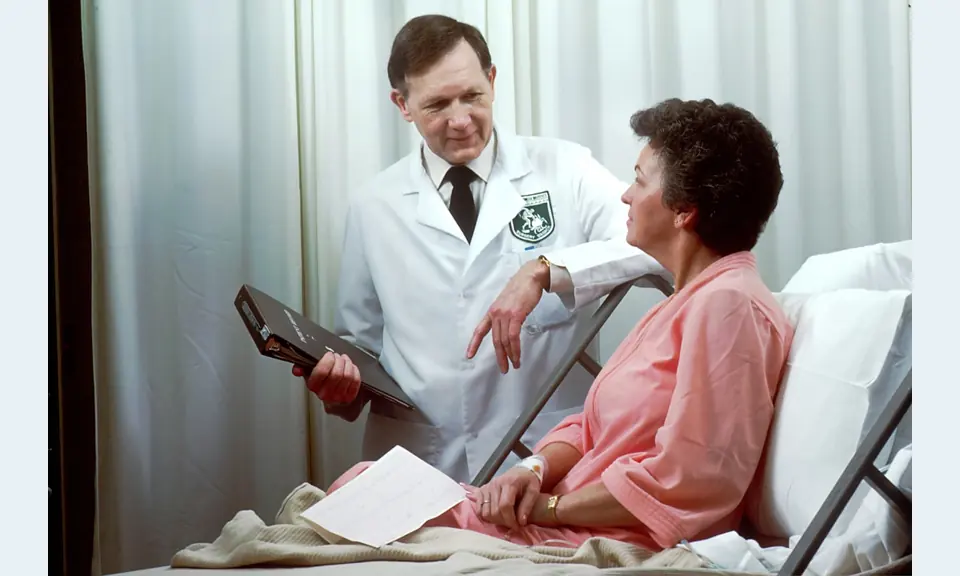
Make forms and preparation easier before arrival
A QR code can route patients to intake forms, appointment instructions, parking details, insurance notes, consent pages, and what-to-bring guidance before the visit starts.
Keep sensitive tasks on trusted, appropriate systems and explain the destination clearly.
Keep printed clinic materials current
Dynamic QR helps when forms, booking links, department pages, service notices, payment pages, or patient resources change after cards and signs are printed.
Clinics need stable print with destinations that can be updated responsibly.A clinic QR code should make the patient journey easier to navigate
Patients may be booking, checking in, completing forms, finding a department, paying through a provider, or looking for follow-up information. The QR destination should match that task exactly.
Use clear CTAs such as complete intake, book appointment, open directions, pay bill, leave feedback, or read preparation notes.Before visit
Open booking, intake, insurance notes, preparation instructions, and parking details.
At clinic
Route patients to check-in, department directions, forms, Wi-Fi, and service information.
After visit
Provide follow-up resources, feedback forms, payment links, and appointment scheduling.
Outreach
Keep flyers, appointment cards, and referral sheets connected to current clinic destinations.
Patient scan experience
Make clinic QR destinations clear before patients trust the next step
Scan UXClinic QR codes need especially clear destinations because patients may be opening forms, appointment systems, payment providers, directions, or health-adjacent resources from a phone.
Booking and directions should be obvious immediately
Appointments, maps, hours, department pagesWhen a clinic QR promises booking or directions, the first screen should show that action without forcing patients through a generic homepage.
Make location, department, appointment type, and contact options easy to see on a phone.
Intake and consent paths need context
Patient forms, preparation, insurance, consentIf the QR opens forms, say what the patient is completing and why before asking for information.
Use trusted destinations and avoid collecting unnecessary sensitive details through broad public forms.
After-visit resources should be easy to return to
Instructions, feedback, payment provider, rebookingPatients may reopen the destination later, so organize follow-up notes, payment links, feedback, and scheduling clearly.
The scan experience should reduce calls to staff, not create new confusion.
Does the first screen match the printed CTA?
Complete forms should open forms; pay bill should open the provider payment path; directions should open location details.
Is the phone experience usable for stressed patients?
Keep buttons clear, forms short, pages fast, and instructions understandable without zooming.
Is the destination trustworthy?
Use recognizable domains, clear clinic naming, and careful wording for forms, payments, and health-adjacent resources.
Clinic QR codes should reduce uncertainty
The QR is useful only when patients know what opened, why it matters, and what they should do next.
Clinic placement
Place clinic QR codes where the patient is ready for that exact task
PlacementClinic placement should follow the patient journey: before arrival, at check-in, in the waiting area, near a department, at checkout, or on take-home instructions.
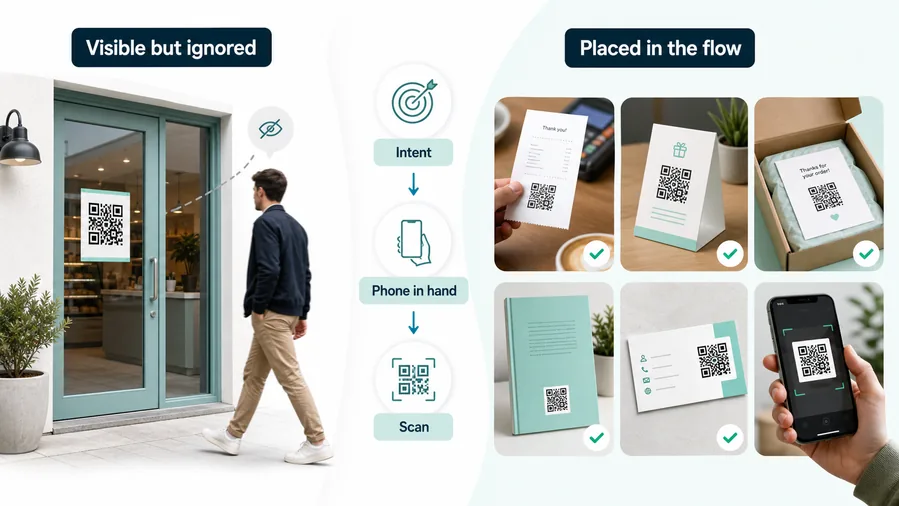
One vague QR creates patient hesitation
A QR code on a clinic sign can be visible but unclear if it does not say whether it opens forms, booking, directions, payment, or feedback.
Patients should not have to scan to discover the purpose of the code.
Each clinic QR names one patient task
Attach the code to a specific action with a plain CTA: complete intake, check in, find this department, pay bill, book follow-up, or leave feedback.
The destination should match the printed promise and avoid unnecessary steps.
What stage is the patient in?
Before visit, arrival, waiting, department navigation, checkout, follow-up, or referral.
What should happen next?
Book, complete forms, find location, check in, pay provider, read instructions, or send feedback.
Is the placement private enough?
Forms, payments, and health-adjacent resources should not pressure patients into sharing information publicly.
Can staff support the QR if asked?
Front-desk and care teams should know what each code opens and when to recommend it.
Appointment card
Open booking details, preparation notes, directions, and rescheduling paths.
Front desk
Route to intake, check-in, feedback, payment provider, or follow-up scheduling.
Lobby sign
Use for Wi-Fi, department information, patient resources, and general preparation.
Department door
Open location-specific instructions, forms, hours, or service information.
Referral sheet
Send new patients to booking, intake, directions, and what-to-expect pages.
Checkout note
Open feedback, payment provider, follow-up booking, and care resources.
Take-home handout
Link to instructions, resources, forms, contact paths, and reminders.
Outreach flyer
Connect campaigns to appointment requests, eligibility information, and clinic services.
Clinic QR placement should remove administrative friction
Keep each code tied to one patient task and make the destination clear before the scan.
Patient feedback
Ask clinic patients for feedback with a clear private path
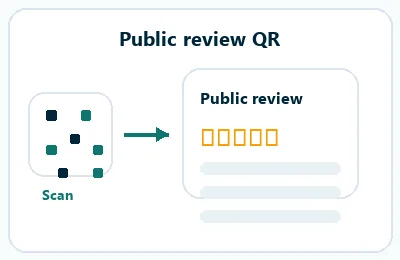
FeedbackClinic review and feedback QR codes should respect timing, privacy, and patient comfort. Public reviews are useful, but private concerns need a direct clinic route.
Ask only after the visit experience is complete
Use checkout cards, follow-up notes, and patient communications when it is appropriate to invite a public review of the service experience.
After appointments, wellness visits, administrative support, and completed non-urgent interactions. Do not pressure patients or encourage disclosure of private medical information in public reviews.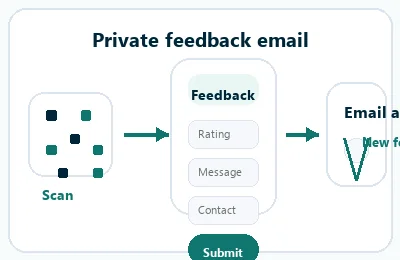
Give concerns a direct staff route
Use a private feedback form or contact page for scheduling issues, billing questions, wait times, accessibility, communication problems, or service concerns.
Front desk cards, discharge materials, follow-up messages, and patient handouts. Keep feedback forms focused and avoid requesting unnecessary sensitive health details.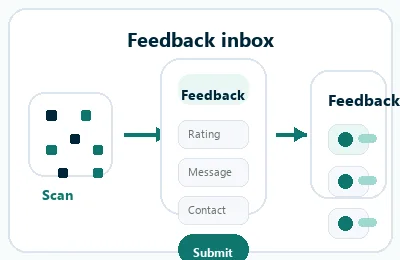
Use feedback to improve patient logistics
A QR feedback path can help clinics understand forms, directions, check-in, wait experience, payment friction, and follow-up clarity.
Waiting rooms, checkout, patient resource pages, and post-visit materials. Separate operational feedback from clinical advice or emergency communication.Feedback QR codes should build trust, not pressure
Use clear review and private feedback paths so patients know where to share praise, concerns, or administrative issues.
Payment boundary
Use clinic QR codes for payment links, not payment confirmation
PaymentsQR Code Lab can open a trusted payment provider, bill-pay page, deposit link, or invoice path. The clinic’s payment system handles processing, receipts, refunds, disputes, and paid-status confirmation.
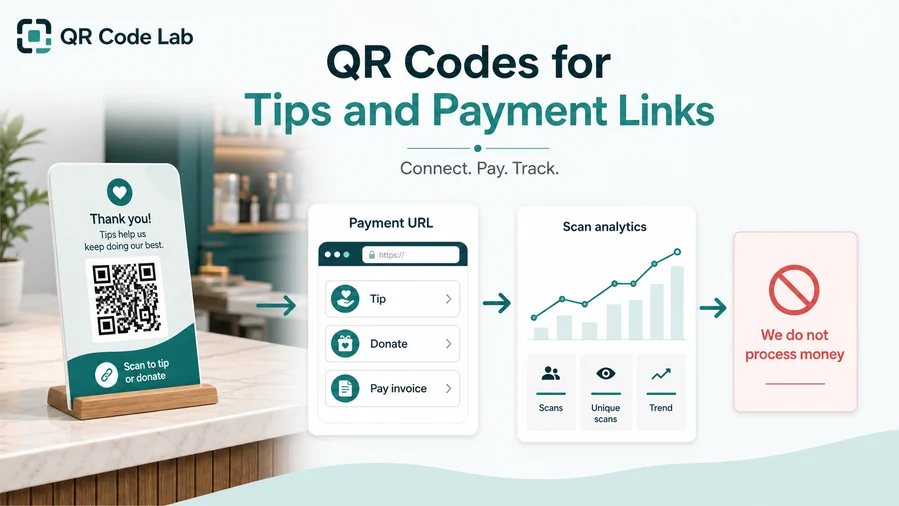
Open bill-pay or invoice links faster
Use QR codes on statements, checkout cards, appointment notes, or front-desk materials to reduce typing when patients need to reach a trusted payment page.
Support deposits or appointment fees carefully
If a clinic uses deposits, cancellation fees, or service payments, the QR should clearly name the purpose and open the provider that manages the transaction.
Keep payment destinations editable
Dynamic QR helps when provider links, billing pages, invoice routes, or department payment instructions change after materials are printed.
Scan analytics cannot prove payment status
A scan can show that someone opened a payment link, but only the clinic’s payment provider, billing system, or accounting workflow can confirm payment completion.
Use the payment system as the source of truth for balances, receipts, refunds, and disputes.Keep clinic payment QR codes clear and narrow
Use QR to reduce typing and routing friction, while payment records stay with the proper provider.
Healthcare trust
Keep the scan destination official, mobile-friendly, and easy to verify
Use clinic QR codes on reception signs, intake packets, appointment cards, discharge notes, aftercare sheets, invoices, maps, review cards, patient education handouts, and local health event materials. The CTA should say complete form, book appointment, get directions, read aftercare, contact clinic, pay bill, or open patient portal. Sensitive actions need especially clear labels.
Dynamic QR codes help when forms, policy pages, aftercare instructions, appointment links, maps, and portal pages change. Avoid suspicious short links for patient-facing actions, especially when the destination asks for personal information. QR Code Lab analytics can show which print materials send people to clinic resources, but it does not store patient records or form responses. Keep the destination official, fast on mobile, and consistent with the clinic brand so patients feel confident they are in the right place.
For aftercare sheets, link to one focused page instead of a general website. Patients should see the relevant instructions quickly, without hunting through navigation. For forms, make sure the destination is clearly marked as official and easy to confirm.
Patient trust
Make clinic QR destinations recognizable before patients share information
TrustClinic QR codes can point to forms, payments, booking, or resources, so the printed context and first screen should make the destination feel legitimate and expected.

Unknown forms and login pages
Patients may hesitate if a QR opens a form or portal that does not clearly show the clinic name, purpose, and expected action.
Use trusted domains and explain what information the form requests before sending patients there.
Payment confusion
Payment QR codes should identify the clinic, provider, amount or purpose, and should not rely on scan analytics as payment proof.
Patients should confirm payment only through the official provider or clinic billing system.
Printed tampering risk
Public clinic signs and posters can be targets for sticker replacement or misleading short links if the destination is not clearly described.
Use clear destination copy and check public placements during routine staff walkthroughs.Inspect sensitive QR destinations before publishing
Before printing clinic QR codes, confirm the encoded destination, page title, visible clinic identity, and action the patient will see.
A checker helps reveal the QR value, but it does not replace clinic privacy, compliance, or IT review.Decoded destination
Confirm the QR opens the intended booking, form, payment, or resource page.
Visible clinic identity
The first screen should show the expected clinic, department, or provider context.
Purpose match
The page should match the printed CTA: forms, directions, bill pay, feedback, or follow-up.
Public placement review
Check lobby, door, poster, and counter codes for sticker replacement or outdated links.
Publish clinic QR codes patients can understand
Clear labels, trusted destinations, and staff awareness reduce uncertainty before patients scan.