QR Code for Yoga Studios - Classes, Booking & Waivers
Create QR codes for yoga studios linking class schedules, booking pages, waiver forms, instructor profiles, reviews, memberships, maps, and contact cards. Use them on studio signs, mats, flyers, and cards.
Free QR code generator
Create a QR code online
Generate QR codes for websites, email, phone numbers, vCards, Wi-Fi, plain text, forms, PDF files, and campaign links. Customize colors, add a logo or frame, then download a print-ready PNG or SVG.
Choose QR code type
Website QR code, Email QR code, Phone QR code, vCard QR code, Wi-Fi QR code, Text QR code, SMS, WhatsApp, event, and download links.
Add your content
Enter your website URL, contact details, message, phone number, location, or file destination before generating the QR code.
Customize and download
Adjust QR colors, error correction, logo, frame, size, and margin. Generate QR Code, Download PNG, Download SVG, or Save and track scans.
Studio class path
Help yoga students open schedules, booking, waivers, memberships, and studio info
A QR code for yoga studios is useful when students need a calm, simple path from a window sign, front desk card, class schedule, mat area sign, waiver form, flyer, membership card, or event poster to the right studio action. It can open class schedules, booking pages, waiver forms, instructor profiles, reviews, membership pages, maps, contact cards, and workshop details.
Yoga students often scan before or after class, when the next step should feel easy. A window sign can open the schedule. A front desk card can open booking or membership. A workshop poster can open registration. A waiver QR can reduce paperwork. A class handout can open instructor notes or follow-up resources. QR Code Lab helps create print-ready dynamic codes and scan analytics for these studio touchpoints.
QR Code Lab creates URL QR codes and tracks scans. It does not manage class bookings, process memberships, collect waivers, provide wellness advice, or operate studio software. Your booking platform, waiver tool, website, payment provider, review site, or schedule page handles the student workflow.
Studio member moments
Turn yoga studio print into class bookings, memberships, waivers, payments, reviews, and return visits
Studio growthYoga studio QR codes should match the student stage: discovering the studio, booking a class, signing a waiver, buying a pass, reading prep notes, joining a challenge, reviewing, or coming back.

Make the current class schedule easy to open
Use window signs, flyers, and desk cards to show classes, teachers, levels, times, availability, and booking links.

Move interest into the right class or trial offer
Open trial passes, intro classes, workshops, private sessions, and consultation forms with studio and location context.

Collect waivers and intake before class
Route new students to waiver, health notes, injury context, emergency contact, and studio policy pages before arrival.

Make passes and memberships clear
Use invoices, reception signs, and class cards for drop-ins, class packs, memberships, workshops, and receipts.

Invite students into ongoing practice
Connect cards and posters to challenges, retreats, teacher profiles, events, newsletters, and member resources.

Ask after students feel supported
Use follow-up cards for private feedback, public reviews, referrals, testimonials, and next-class prompts.
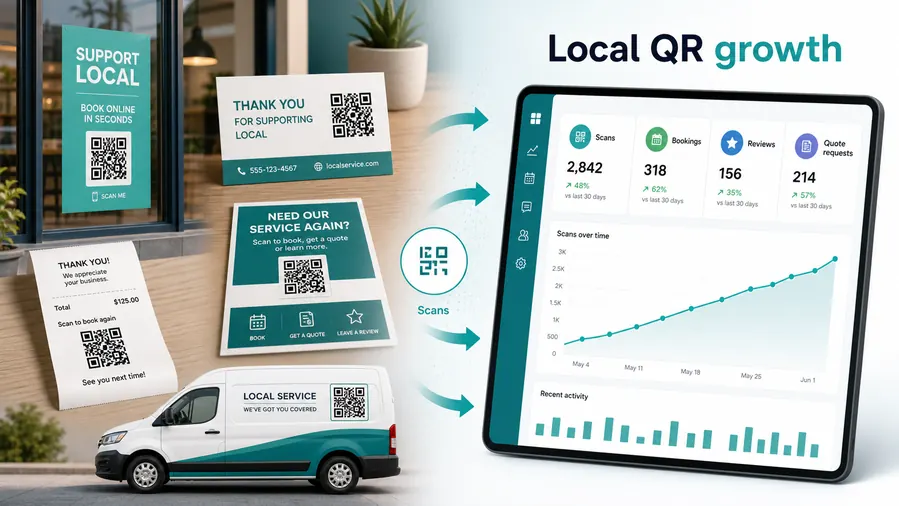
Students scan when the next step feels calm and practical
The destination should help them choose a class, understand level and prep, book confidently, pay clearly, and ask questions without pressure.
Editable QR keeps studio print current as schedules and offers change
Dynamic QR lets studios update class schedules, teacher pages, passes, waivers, workshops, retreats, memberships, and review links without replacing every sign.
Match yoga QR placement to the student moment
Studio placement
Place yoga studio QR codes where students are choosing, booking, checking in, paying, or returning
PlacementYoga QR placement should follow the studio flow: first interest, schedule check, new-student intake, class prep, payment, workshop signup, feedback, and community follow-up.
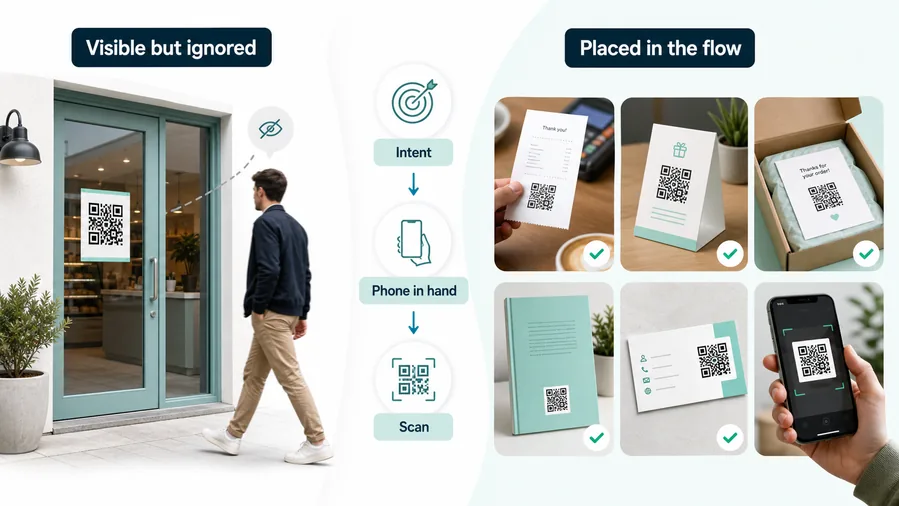
A generic studio QR makes students search again
Someone at the window wants a schedule or trial class, while a new student at reception needs waiver, payment, or prep details.
A single vague destination can make the studio feel less organized.
Put the QR beside the class action
Use windows for schedule and trial offers, reception for waivers and passes, class cards for prep, and receipts for reviews or memberships.
The first screen should show studio identity and the exact next step.
Who is scanning?
New student, member, parent, workshop guest, private-session client, or returning visitor.
What should happen next?
View schedule, book class, sign waiver, buy pass, read prep, join challenge, review, or refer a friend.
Will the destination change?
Use dynamic QR for schedules, teacher pages, class packs, waivers, workshops, retreats, and seasonal offers.
Does the page feel welcoming?
Make level, location, time, price, prep, and support clear before asking for booking or payment.
Window sign
Open class schedule, intro offer, trial booking, and studio location details.
Reception card
Use for waiver, check-in, pass purchase, membership, and questions.
Class schedule poster
Link live schedule, teacher profiles, levels, cancellations, and booking.
Workshop flyer
Open event details, teacher bio, price, availability, and registration.
Mat rental or locker area
Share studio etiquette, rental policy, amenities, and support.
Invoice or receipt
Route to receipt, membership, referral, review, and support.
Teacher card
Open teacher profile, private sessions, class list, and booking.
Community board
Promote challenges, retreats, events, newsletters, and member resources.
Yoga QR placement should make the studio path feel easier
If the scan does not help someone book, prepare, pay, review, or return, the destination needs a clearer purpose.
Studio scan UX
Make the yoga studio scan calm, current, and easy to act on
Scan UXYoga students scan from a real physical moment: outside the studio, at reception, before class, after payment, or after a workshop. The first screen should match that moment.
Schedule scans should show current classes first
Classes, teachers, levels, bookingLead with today’s classes, teacher names, levels, location, availability, and booking CTA.
Avoid sending window-sign scans to a broad homepage where the schedule is hard to find.
New-student scans should reduce first-visit anxiety
Waiver, prep, level, policyShow what to bring, when to arrive, class level, waiver, injury notes, cancellation policy, and how to ask questions.
A clear first screen makes booking feel less intimidating.
Member scans should support repeat practice
Passes, workshops, retreats, reviewsMake class packs, memberships, workshops, teacher profiles, challenges, and review paths easy to reach.
Keep payment, booking, and feedback flows separate and clearly labeled.
Does the first screen match the printed CTA?
The scanner should immediately see schedule, book class, sign waiver, buy pass, workshop, review, or support.
Is the class choice clear?
Show level, teacher, time, location, price, and availability before asking students to book.
Can students ask for help?
Keep contact visible for injuries, accessibility, late arrival, cancellation, payments, and first-visit questions.
A yoga QR code should make the studio feel easier to enter
If the destination creates uncertainty around class fit, price, prep, or booking, rewrite the first screen.
Studio feedback
Ask yoga students for reviews after class support and private feedback are clear
ReviewsYoga studio reviews work best after students know how to share private concerns about class fit, injury comfort, teacher style, billing, or accessibility.
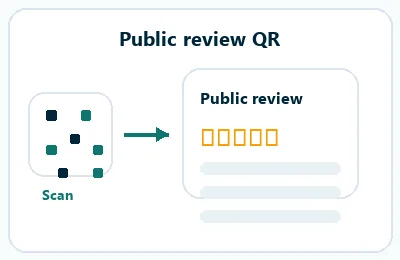
Invite reviews after a positive class or workshop
Use follow-up cards and receipts when students can comment on teacher quality, atmosphere, cleanliness, class fit, and booking experience.
After intro classes, memberships, workshops, retreats, and private sessions. Do not pressure students to review before concerns about injury, comfort, or billing are handled.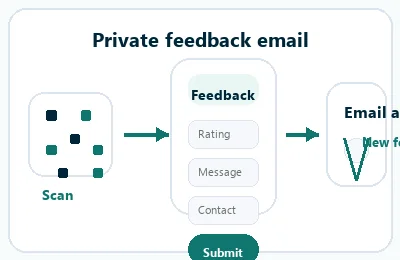
Keep a private path for sensitive class concerns
Offer private feedback for injuries, accessibility, teacher fit, room comfort, cancellations, payment issues, or studio policies.
Reception cards, receipts, member emails, workshop cards, and class follow-up. Private support should be visible beside public review prompts.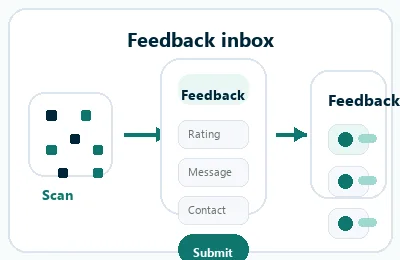
Invite the next class after trust is protected
After support is clear, suggest class packs, workshops, teacher profiles, referrals, challenges, or retreats.
Review confirmation, class cards, receipts, and member follow-up. Keep promotion separate from urgent comfort, injury, or billing concerns.Yoga review QR codes should protect student trust first
The scan should make support and feedback easy before asking for public praise or another purchase.
Class and membership flow
Place yoga QR codes where students are ready to book, join, or return
Useful placements include window decals, front desk signs, class schedules, mat room posters, workshop flyers, waiver cards, membership brochures, welcome packets, receipt inserts, and teacher business cards. CTAs should say view schedule, book class, sign waiver, meet instructor, join membership, register workshop, get directions, or leave review. The wording should feel clear and low-pressure.
Dynamic QR codes are useful because class schedules, workshop pages, membership offers, instructor pages, and waiver links change often. You can update the destination without replacing every flyer or sign. Scan analytics can compare windows, front desk signs, workshop posters, and class cards, helping the studio see which printed materials support real action.
Make the landing page mobile friendly and peaceful to use. Students may scan while arriving, leaving, or standing at the desk. Put schedule, booking, or waiver action first. If the destination asks for personal details or payment, use a branded page so the scan feels safe and connected to the studio. The code should support the studio atmosphere, not break it.
Payment boundary
Use yoga studio payment QR codes for class packs, memberships, workshops, deposits, and invoices with clear context
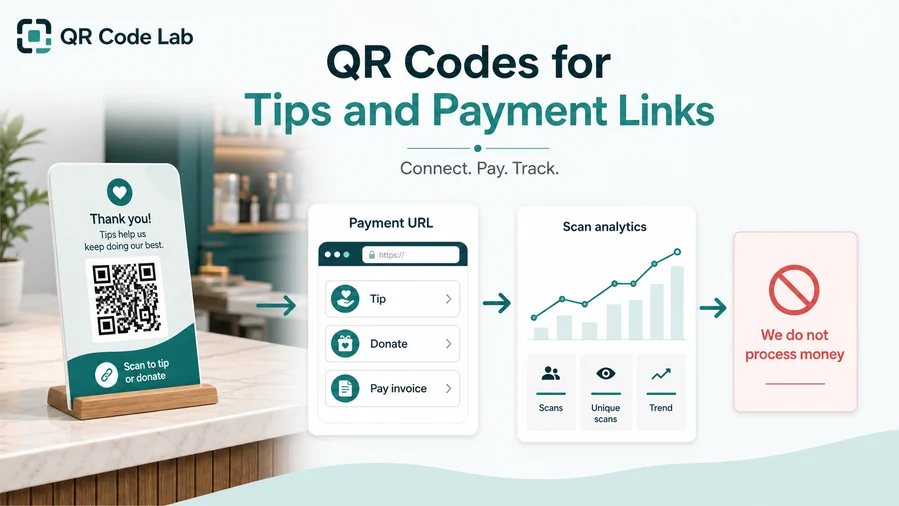
PaymentsA yoga payment QR should explain whether the student is buying a drop-in, class pack, membership, workshop, retreat deposit, private session, rental, or invoice.
Class packs and memberships
Open trusted checkout for drop-ins, class packs, subscriptions, renewals, and membership upgrades with studio context.
Workshops and retreats
Route event posters and cards to registration, deposits, balances, cancellation terms, and receipt pages.
Private sessions and rentals
Use QR codes for private yoga, equipment rental, room rental, and add-on services with clear pricing.
The QR opens a trusted payment page; it does not process money inside QR Code Lab
Keep checkout, receipts, refunds, disputes, subscriptions, deposits, invoices, tips, and payment confirmation inside the booking, billing, commerce, or payment provider.
A scan shows that someone opened the payment path, not that payment was completed.Yoga payment QR codes need class and studio clarity
Students should know exactly what pass, class, event, or invoice the scan belongs to before paying.
Scan trust
Make yoga studio QR codes trustworthy before students book, sign waivers, or pay
TrustYoga QR codes may open schedules, waivers, class booking, payments, memberships, reviews, and student support. The destination should clearly belong to the studio.

Anonymous waiver or booking pages
Students may hesitate to share health notes, emergency contact, or payment details if the page does not show studio identity.
Watch for similar-looking domains, long URLs, login or verify keywords, and pages asking for credentials after an unexpected scan.
Outdated schedules and class links
Old teacher pages, cancelled classes, moved calendars, and expired workshop links create frustration before arrival.
A trustworthy QR should not make the final destination mysterious, especially on posters, labels, menus, parking signs, or event materials.
Unclear payment destinations
Class packs, memberships, deposits, and retreat payments need purchase context, receipt expectations, and support.
Before paying, check the domain, HTTPS, amount, recipient, and whether the destination matches the place or brand that printed the QR.Inspect the destination before people rely on it
Scan the printed proof and confirm the page identity, HTTPS domain, action, form, file, booking, payment, review, or support path before distribution.
A QR code removes typing, but the destination still has to prove that it belongs to the publisher, studio, or business.Decoded destination
Check whether the QR opens the current schedule, waiver, booking, payment, review, or support page.
Studio identity
Confirm the page shows studio name, location, class, teacher, or event context before forms or payment.
Policy clarity
Review waiver, cancellation, level, arrival, injury, and refund information before printing.
Support path
Show contact for injuries, accessibility, payment issues, late arrivals, and first-visit questions.
Publish QR codes people can understand
The printed CTA, destination title, brand identity, and first button should all describe the same action.