
QR Code for Event Tickets - Ticket Pages & Check-In Links
Create QR codes for event tickets that link to ticket pages, registration pages, attendee details, check-in instructions, maps, and updates. Use them on printed tickets, emails, and signs.
Free QR code generator
Create a QR code online
Generate QR codes for websites, email, phone numbers, vCards, Wi-Fi, plain text, forms, PDF files, and campaign links. Customize colors, add a logo or frame, then download a print-ready PNG or SVG.
Choose QR code type
Website QR code, Email QR code, Phone QR code, vCard QR code, Wi-Fi QR code, Text QR code, SMS, WhatsApp, event, and download links.
Add your content
Enter your website URL, contact details, message, phone number, location, or file destination before generating the QR code.
Customize and download
Adjust QR colors, error correction, logo, frame, size, and margin. Generate QR Code, Download PNG, Download SVG, or Save and track scans.
QR solutions for this use case
Ticket destination link
Make ticket links, check-in details, and venue updates easier to open
A QR code for event tickets is useful when printed or shared materials need to open a ticket page, registration page, attendee detail page, check-in instructions, venue map, event update, refund note, or ticketing-platform URL. It is not the same as a secure ticket credential. It is a clean way to move people from posters, flyers, handouts, confirmation printouts, or venue signs to the official page they need.
The promise should be clear before the scan. A QR code that says buy tickets should open the ticket purchase page. A QR code that says check-in info should explain entry, ID rules, bag policy, timing, or will-call details. A QR code that says venue map should open the map, not the homepage. QR Code Lab helps make those links print-ready, editable with dynamic QR codes, and measurable with scan analytics.
QR Code Lab creates URL QR codes only. It does not validate tickets, sell tickets, process payments, manage entry, scan attendees, or operate a ticketing platform. Your ticketing, registration, or venue system handles those actions.
Ticket scan flow
Help ticket holders open entry, transfer, event updates, payment, or support without hunting
Ticket actionsA ticket QR code should support the moment around entry and event attendance: show the ticket, confirm details, open the venue map, handle transfer, collect payment, or route people to help when something changes.

Make entry and ticket lookup feel immediate
Use QR codes on ticket PDFs, confirmation pages, wristbands, printed passes, and box-office handouts to open the right ticket, check-in page, seat details, or support path.
The scanner should see the event identity and next action before they reach the door.
Give attendees a route when ticket details change
Dynamic ticket QR destinations can open updated times, venue instructions, transfer pages, wallet links, weather notes, accessibility details, and last-minute organizer messages.
Tickets often circulate before final logistics settle, so editable destinations reduce confusion.
Separate ticket payment, entry, and support boundaries
A QR code can open a trusted ticket checkout, deposit, balance, or support page, but ticket validation, payment confirmation, refunds, and entry rules stay with the ticketing or payment provider.
Use clear labels so scanners know whether they are paying, checking in, or getting help.A ticket QR should reduce anxiety at the event moment
People scan ticket-related codes when they are arriving, checking details, paying a balance, transferring a pass, finding a seat, or solving a problem. The destination should confirm the event and show the next step immediately.
Use CTAs such as open ticket, view seat, transfer pass, pay balance, show venue map, or contact support.Entry
Open ticket lookup, check-in, seat details, QR pass, and gate instructions.
Updates
Show time changes, venue notes, weather plans, accessibility details, and organizer messages.
Payments
Send balances, deposits, upgrades, or checkout links to the trusted provider.
Support
Route lost tickets, transfer issues, refund questions, and help requests to the correct page.
Events, conferences, and weddings
Give ticket holders the right action before they reach the door
Attendee flowTicket QR codes should make the event path feel clear: confirm the ticket, open the entry page, view seat or schedule details, transfer a pass, pay a balance, or get support from the organizer.

Open the ticket or check-in page quickly
Place QR codes on confirmation emails, printed tickets, wristbands, badges, and box-office handouts so attendees can reach the entry path without searching.

Show the event details that prevent arrival confusion
Use ticket QR destinations for gate, seat, venue map, start time, parking, bag policy, accessibility, and schedule notes.

Support transfers, upgrades, and help requests
Route scanners to transfer pages, upgrade options, lost-ticket support, refund policy, organizer contact, or help forms.

Collect feedback after the event
Use post-event ticket emails, printed programs, or exit signage to gather surveys, reviews, photo uploads, and future-event interest.

Speaker materials and feedback
After a session, attendees can scan a slide, poster, handout, or table sign to open slides, PDFs, worksheets, links, speaker profile, Q&A, or feedback form. The attendee gets the materials; the organizer gets a clean follow-up action.
The ticket holder should know whether they are entering, paying, or getting help
Ticket QR copy should name the destination plainly: open ticket, view gate, transfer pass, pay balance, contact support, or see event updates.
Use separate codes when event reporting matters
Separate entry signs, ticket PDFs, support cards, upgrade offers, and post-event feedback links when the organizer needs to compare how each placement performs.
Match ticket QR placement to attendee flow
Ticket placement
Place ticket QR codes where attendees already need entry, details, or help
PlacementTicket QR placement should follow the attendee journey: confirmation, arrival, entry, seating, support, upgrade, and follow-up. The code is strongest when the next action is obvious from the surrounding ticket material.
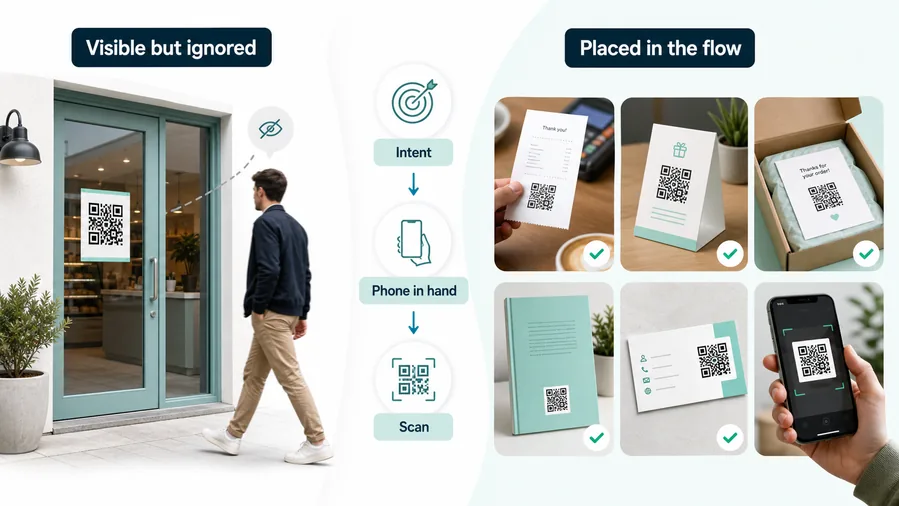
The QR code appears without saying which ticket job it solves
A ticket QR can look official but still confuse people if it does not say whether it opens entry, payment, transfer, venue details, or support.
Confusion at the door is costly because people are under time pressure and staff are busy.
The code sits beside the ticket task
Put the QR code beside the pass, confirmation, box-office note, gate instruction, map, or help prompt that explains why scanning helps.
The first screen should confirm the event, date, and action before asking for anything sensitive.
What is the attendee trying to do?
Enter, find a seat, transfer a ticket, pay a balance, solve an issue, open the map, or check event updates.
What should happen next?
Show ticket, open wallet pass, display gate details, confirm payment purpose, submit support request, or view organizer updates.
Is the code placed before the bottleneck?
Use confirmation emails, ticket PDFs, and pre-entry signs so people can prepare before the scanner or staff checkpoint.
Can the code survive schedule changes?
Use dynamic QR when venues, times, support pages, payment links, or event instructions may change after tickets are issued.
Ticket PDF or email
Open the entry page, wallet pass, seat details, event updates, transfer tools, and support before arrival.
Wristband or badge
Use for attendee resources, agenda, map, support, and event-specific links when the code remains readable.
Box office sign
Route to ticket lookup, balance payment, pickup instructions, accessibility support, or transfer help.
Entry queue sign
Prepare attendees with gate, bag policy, QR pass, schedule changes, and venue map before they reach staff.
Event program
Link ticket holders to session details, speaker files, sponsor pages, photo galleries, and feedback.
Upgrade or add-on card
Open trusted checkout, seat upgrade, merch pickup, VIP access, or donation pages.
Support handout
Help with lost tickets, refunds, transfer issues, late arrivals, and organizer contact.
Post-event email or card
Collect reviews, surveys, photos, future-event interest, and referral offers.
Ticket QR placement should reduce pressure at entry
Use the code where attendees can act before confusion reaches the gate, box office, or support desk.
Ticket scan experience
Make ticket QR destinations feel official, fast, and specific
Scan UXTicket holders scan under pressure. The destination should load quickly, show the event identity, match the printed promise, and make entry, payment, transfer, or support actions easy on a phone.
The ticket page must confirm the event immediately
Event name, date, gate, seat, check-inWhen the QR opens a ticket or check-in page, the first screen should reassure the attendee that they are in the right place.
Avoid burying the entry action behind unrelated event marketing or desktop-heavy pages.
Payment links need clear purpose before checkout
Balance, upgrade, deposit, add-onIf the QR opens a payment provider, label the amount or purpose before the scan and make the event identity visible after it.
A scan is not proof of payment; the ticketing or payment provider remains the source of truth.
Help pages should solve urgent ticket problems first
Lost ticket, transfer, refund, accessibilityTicket support pages should answer the common panic points quickly: where is my pass, can I transfer it, what changed, and who can help.
Keep forms short and make fallback contact visible for event-day issues.
Does the page match the event and date?
The ticket holder should immediately recognize the event, venue, date, and action connected to the QR.
Can the attendee act in a queue?
Large buttons, fast pages, clear ticket status, and readable help links matter more than decorative content at entry.
Does the destination separate scan from validation?
Use ticketing, check-in, and payment systems to confirm validity, entry, refunds, and completed payments.
A ticket QR should lower entry stress
Keep scan UX focused on the real ticket job: enter, update, transfer, pay, or get help.
Ticket trust
Keep ticket QR codes official, specific, and easy to trust
Use event ticket QR codes on posters, flyers, will-call cards, event handouts, confirmation printouts, venue signs, sponsor materials, box office windows, and pre-event mailers. The CTA should say buy tickets, open registration, view check-in info, see map, read entry rules, or get event updates. Avoid vague labels because ticketing and payment contexts already make people cautious.
Dynamic QR codes help when ticket pages, registration links, venue maps, entry rules, or check-in instructions change. This is especially useful before festivals, school events, conferences, concerts, and community events where details can move late. Scan analytics can show which printed materials send people to the ticket flow, but purchases and attendee records stay inside the official ticketing system.
For payment or entry workflows, use recognizable official URLs and avoid suspicious short links. If the QR code is not the actual ticket, say so clearly. People should know whether they are buying, checking details, or opening an already issued ticket. Test every ticket-related code shortly before launch because a broken link can create confusion at the worst possible moment.
Ticket payment boundary
Use ticket QR codes for trusted payment links, not payment confirmation
PaymentsQR Code Lab can create the code, manage an editable destination, and show scan activity. The ticketing platform, payment processor, or box-office system handles checkout, receipts, refunds, disputes, and ticket validity.
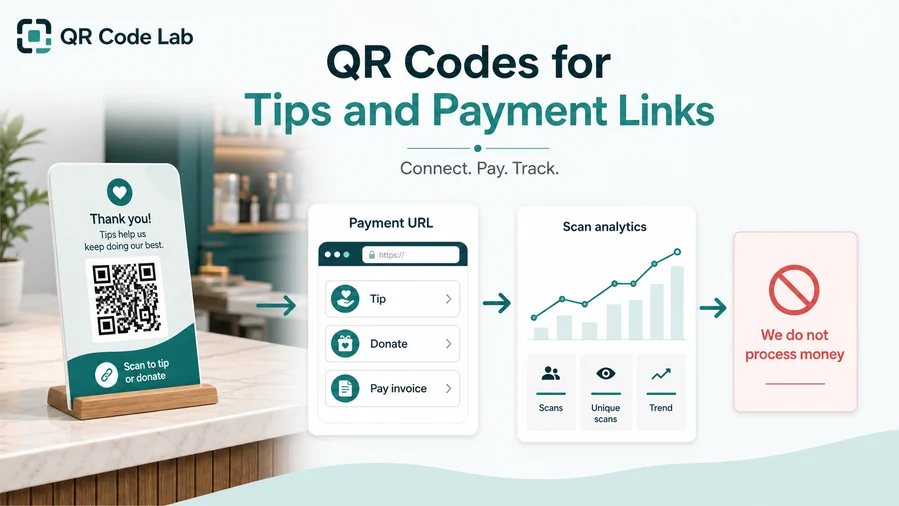
Open the correct ticket checkout page
Use QR codes for deposits, balances, add-ons, upgrades, donations, merch pickup, VIP access, or event checkout links without forcing people to type a URL.
Keep event payment destinations editable
Dynamic QR helps when the ticket provider, checkout page, event package, upgrade offer, or payment instructions change after printing.
Reduce box-office friction
Put payment QR codes on invoices, pickup notices, entry signs, or support cards when attendees need to settle a balance before receiving access.
Scan analytics do not prove that a ticket was paid or valid
A scan can show that someone opened a payment or ticket page, but the provider must confirm payment completion, ticket status, refund eligibility, and entry validity.
Use the ticketing or payment system as the source of truth at check-in.Keep ticket payment QR codes honest and specific
Use QR to shorten the path to checkout while ticket validation stays with the official system.
Ticket safety
Make ticket QR destinations recognizable before people trust entry or payment links
SafetyTicket QR codes often appear in public, emails, PDFs, and box-office materials. Clear event identity, expected domains, and specific CTAs help attendees avoid fake entry pages, confusing payment links, and outdated support paths.

Fake ticket or payment pages
Unknown QR codes can lead to pages that imitate ticketing providers, venues, payment screens, or organizer portals.
Check the domain, event name, amount, recipient, and whether the page matches the printed ticket context.
Old event links still circulating
Ticket PDFs, posters, and support cards may be copied, forwarded, or found after the event if destinations are not reviewed.
Use dynamic QR for public materials that may need a post-event support or closed-event destination later.
Public stickers or replaced signs
Venue signs and box-office materials should be checked for tampering, replacement, or mismatched QR codes before attendees arrive.
Make staff review QR destinations as part of event setup.Inspect ticket QR destinations before publishing
Confirm what the QR opens, whether it matches the ticket promise, and whether the first screen clearly identifies the event, organizer, provider, and action.
A QR checker can reveal signals, but ticket validity and payment status still belong to the official provider.Decoded destination
Review whether the QR opens ticket lookup, checkout, transfer, entry, updates, or support.
Event identity
Make the event name, date, venue, and organizer visible before sensitive actions.
Payment purpose
Show amount, upgrade, deposit, balance, or add-on context before checkout.
Printed placement
Check venue signs, ticket PDFs, wristbands, posters, and box-office handouts for mismatched codes.
Publish ticket QR codes attendees can verify
Use clear printed CTAs, trusted provider domains, event identity, and routine destination checks so ticket holders know what they are scanning.