QR Code for Rental Businesses - Bookings, Waivers & Support
Create QR codes for rental businesses linking booking pages, inventory pages, waivers, price lists, maps, payment pages, and support. Use them on tags, counters, contracts, and delivery paperwork.
Free QR code generator
Create a QR code online
Generate QR codes for websites, email, phone numbers, vCards, Wi-Fi, plain text, forms, PDF files, and campaign links. Customize colors, add a logo or frame, then download a print-ready PNG or SVG.
Choose QR code type
Website QR code, Email QR code, Phone QR code, vCard QR code, Wi-Fi QR code, Text QR code, SMS, WhatsApp, event, and download links.
Add your content
Enter your website URL, contact details, message, phone number, location, or file destination before generating the QR code.
Customize and download
Adjust QR colors, error correction, logo, frame, size, and margin. Generate QR Code, Download PNG, Download SVG, or Save and track scans.
Rental customer path
Help renters open booking, instructions, waivers, and support faster
A QR code for rental businesses is useful when customers need quick access to booking pages, inventory pages, waiver forms, price lists, maps, payment links, pickup instructions, return rules, support pages, or reviews. It works for equipment rentals, party rentals, event rentals, storage, vehicles, tools, furniture, costumes, sports gear, and local rental shops that already use printed signs, tags, invoices, contracts, or delivery paperwork.
Rental customers often scan at very practical moments. Before renting, they may want availability, sizes, prices, photos, or a quote form. At pickup, they may need a waiver, instructions, deposit rules, or support contact. During use, they may need setup videos, safety notes, troubleshooting, or return steps. After return, they may need a receipt, review link, or next booking offer. QR Code Lab helps create dynamic QR codes for those moments and track which printed materials actually get scanned.
QR Code Lab creates URL QR codes and scan analytics. It does not manage inventory, process payments, collect legal waivers, run bookings, or operate rental software. Your booking system, form tool, payment provider, contract platform, or rental website handles the workflow.
Rental customer moments
Turn rental print into bookings, deposits, pickup instructions, returns, support, and reviews
Rental workflowRental QR codes should support the real lifecycle: browse inventory, check availability, reserve dates, pay deposits, understand pickup or delivery, report issues, return items, and review the experience.

Open live rental options from print
Use QR codes on catalogs, shelf signs, flyers, and booth materials to open available items, packages, specs, photos, and booking calendars.

Move interest into a reservation request
Route customers to date checks, quote forms, deposits, delivery areas, pickup windows, and rental agreements.

Attach use and safety guidance to the rented item
Equipment labels, pickup cards, and contracts can open setup, operation, safety, cleaning, damage, and return instructions.

Make deposits and balances easy to handle
Use invoices and agreements for deposits, remaining balances, extensions, damage fees, and receipt pages through trusted providers.

Clarify what happens at drop-off or pickup
Open return windows, inspection rules, cleaning expectations, late fees, support contact, and next-rental offers.

Ask after the rental is complete
Use return receipts and follow-up cards for reviews, private feedback, referrals, and future rental promotions.
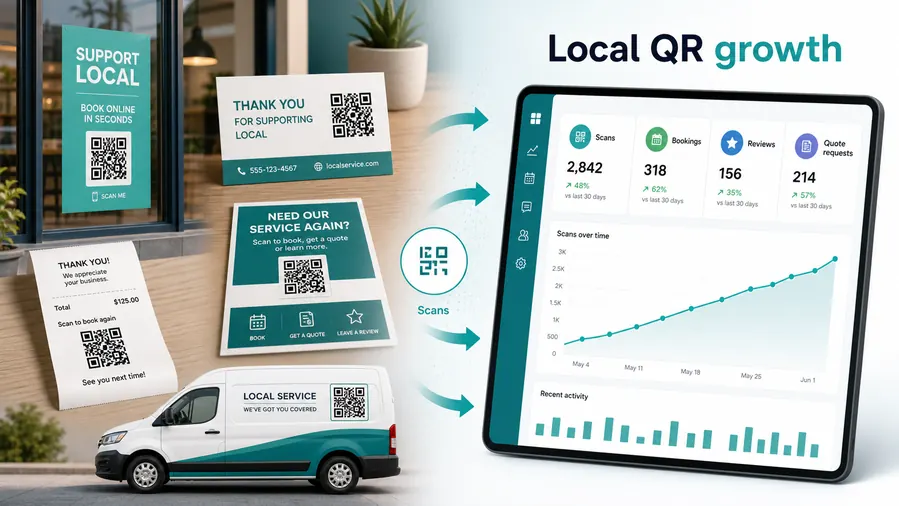
Rental customers scan when timing and rules matter
The destination should help them check availability, reserve confidently, use the item correctly, pay safely, and return it without confusion.
Editable QR keeps rental print current across inventory and seasons
Dynamic QR lets rental businesses update catalogs, calendars, agreements, delivery rules, deposits, instructions, and support pages without replacing every printed piece.
Match rental QR placement to the rental stage
Rental placement
Place rental QR codes where customers choose, reserve, pick up, use, return, or pay
PlacementRental placement should follow the customer path: catalog browsing, quote request, contract review, pickup, usage, return, payment, and post-rental feedback.
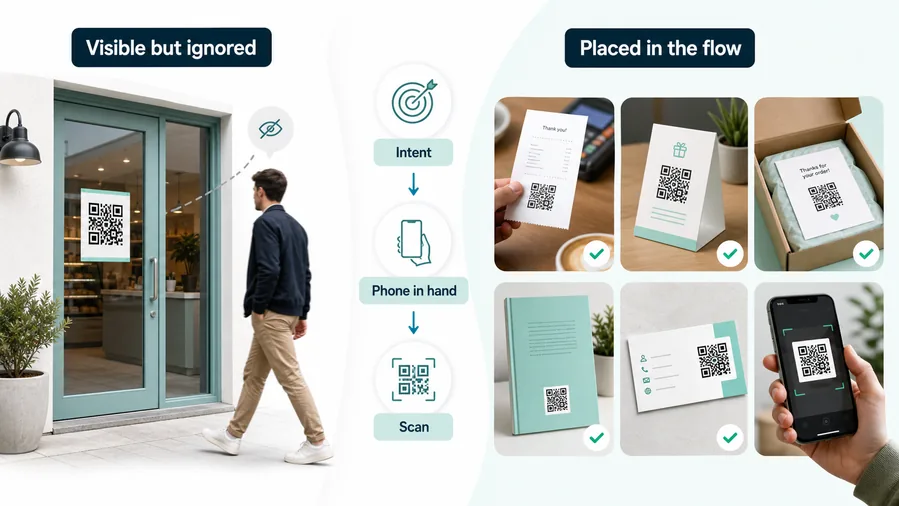
A generic rental QR leaves customers guessing
Customers need to know whether the scan opens inventory, booking, deposit, instructions, support, return rules, or review.
Rental scans work when the next action is explicit.
Put the code beside the rental task it supports
Use catalogs for inventory, agreements for deposits and rules, equipment labels for instructions, invoices for payment, and return cards for reviews.
The first screen should match the printed promise.
What stage is the rental in?
Browsing, quote, reservation, pickup, use, issue, extension, return, balance, or review.
What should happen next?
Check availability, reserve, pay deposit, read instructions, contact support, extend rental, return item, or leave feedback.
Will details change?
Use dynamic QR for calendars, inventory, prices, contracts, delivery rules, deposits, and support pages.
Will the QR survive handling?
Use durable, high-contrast codes on equipment labels, pickup packets, contracts, and return cards.
Printed catalog
Open live inventory, packages, dimensions, availability, and quote request.
Counter sign
Route to booking, deposits, ID requirements, delivery areas, and pickup windows.
Rental agreement
Link terms, deposit, extension rules, damage policy, and support contact.
Equipment label
Open setup, operation, cleaning, safety, troubleshooting, and return instructions.
Pickup packet
Share checklist, schedule, access notes, support, and emergency contact.
Invoice
Route to payment, receipt, balance, damage questions, and billing support.
Return card
Show drop-off rules, inspection expectations, review, referral, and next-rental offer.
Partner flyer
Promote packages, event fit, service area, quote form, and proof.
Rental QR placement should reduce timing and rule confusion
If the code does not help with inventory, booking, instructions, payment, return, or support, it needs a clearer job.
Rental link control
Keep rental QR links current as inventory, availability, deposits, and return rules change
DynamicRental materials can stay in circulation while calendars, inventory, prices, agreements, deposits, delivery rules, and support pages change. Dynamic QR keeps print useful.
Old rental print can send customers to stale inventory or rules
Static QR is risky when availability, pricing, deposits, policies, equipment instructions, or return rules change between seasons.
A stale destination creates booking friction and support calls.
One printed code can keep opening the current rental path
Dynamic QR lets reusable catalogs, agreements, equipment labels, invoices, and packets point to current inventory, calendars, and support.
That protects materials that are handled again and again.
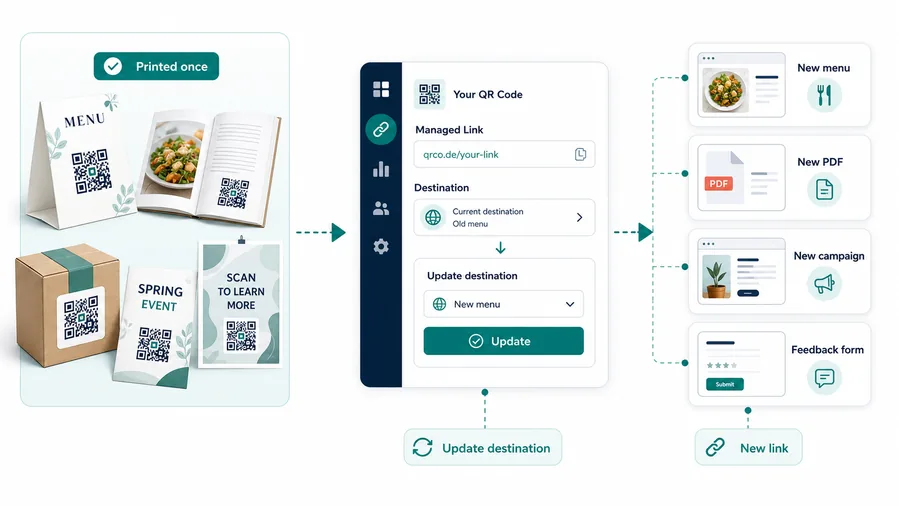
Inventory and calendars
Update item pages, packages, availability, dimensions, photos, and booking windows.
Deposits and payments
Point deposits, balances, extensions, damage fees, and invoices to current trusted pages.
Rules and instructions
Refresh contracts, setup guides, safety notes, cleaning expectations, and return procedures.
Support and follow-up
Update pickup contact, emergency help, private feedback, reviews, and next-rental offers.
Use dynamic QR for rental print that may outlive current inventory or policies
If the destination may change before the printed material is retired, make the QR editable.
Rental scan reading
Compare rental scans by catalog, contract, equipment label, pickup packet, invoice, and return card
AnalyticsQR analytics can show which rental materials customers actually use. Separate dynamic codes help compare inventory browsing, booking, instructions, payments, returns, and reviews.
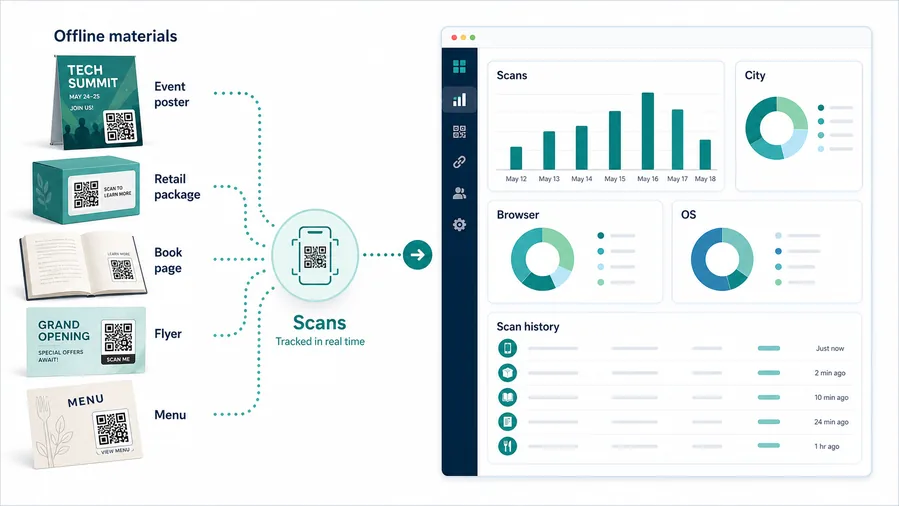
All rental scans become one broad number
A shared QR can show total activity, but it cannot tell whether a catalog, agreement, equipment label, invoice, pickup packet, or return card caused the scan.
Use one code only when comparison does not matter.
Each rental placement becomes a useful signal
Separate dynamic QR codes let you compare booking, deposit, instruction, support, return, and review paths.
The data is directional, but it helps improve rental operations.
Scan volume
See which rental placements receive attention.
Time and device
Check when customers scan before, during, or after the rental.
Broad location
Use approximate location carefully for branches, venues, service areas, and events.
Placement comparison
Compare catalogs, counter signs, contracts, labels, pickup packets, invoices, and return cards.
Name codes by rental stage
Use names such as catalog-booking, contract-deposit, label-instructions, invoice-balance, or return-review.
Separate booking and support scans
Inventory, deposits, instructions, payments, returns, and reviews should not share one code if reporting matters.
Keep expectations practical
Scan data shows attention and timing; bookings, payments, and returns still need rental management systems.
Books and printed content
Learn whether readers open bonus pages, downloads, updates, or feedback forms from book pages.
Rental analytics work when every code has an operational role
Clear QR naming turns scan totals into useful inventory, booking, support, and return signals.
Pickup and item flow
Put rental QR codes where customers need instructions, not just marketing
Useful placements include counter signs, item tags, equipment labels, invoices, rental agreements, delivery notes, pickup cards, return signs, vehicle decals, storage doors, and event setup sheets. CTAs should say book this item, check availability, sign waiver, view setup guide, read return rules, call support, pay balance, or leave review. A code attached to the rented item should usually open help for that item, not the company homepage.
Dynamic QR codes are helpful because rental inventory, prices, seasonal pages, waiver links, pickup locations, and instructions change. You can update the destination without replacing stickers or printed agreements. Scan analytics can show whether customers use item tags, counter signs, delivery papers, or return-area signs, which makes it easier to improve the customer path.
Separate customer instructions from staff-only material. A renter wants clear steps, safety notes, support contact, and return rules. Staff may need internal records or maintenance notes, which should not be exposed through public printed codes. If a QR code points to a payment, waiver, or account page, make the destination clearly branded so the customer can trust it before entering details.
Rental payments
Use rental payment QR codes for deposits, balances, extensions, fees, and invoices with clear rental context
PaymentsA rental payment QR should show whether the customer is paying a reservation deposit, remaining balance, extension, delivery charge, cleaning fee, damage fee, or invoice.
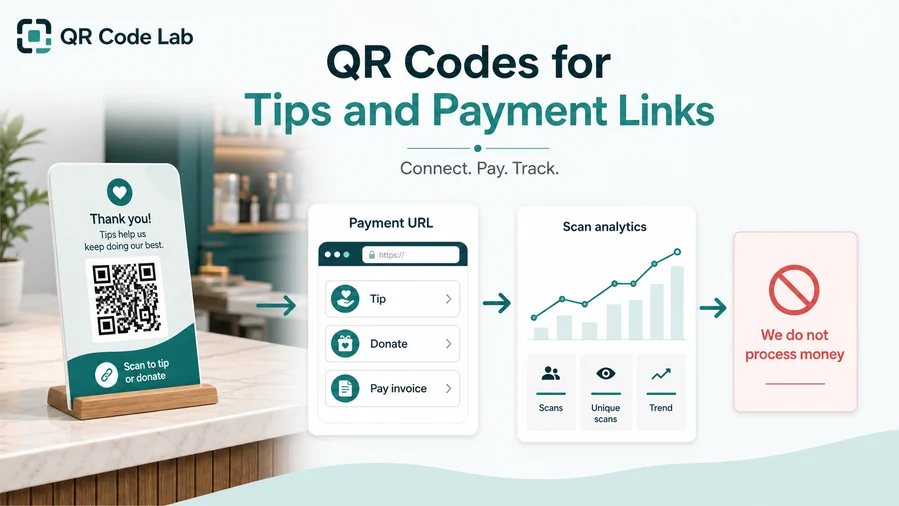
Deposits and reservations
Open trusted payment pages from quotes, agreements, and booking packets with date, item, and customer context.
Balances and extensions
Use invoices and pickup packets for remaining balances, rental extensions, delivery changes, and late fees.
Damage and cleaning fees
Route post-return charges to clear explanations, photos, terms, support contact, and payment pages.
The QR should open a trusted payment provider, not collect card details itself
Keep authentication, receipts, refunds, disputes, and confirmation inside the provider or rental system. The QR is only the shortcut.
Scan analytics only show QR scan activity. A scan does not mean a payment was completed.Rental payment QR codes need reservation and item clarity
Customers should know which rental, date, and fee the scan belongs to before paying.
Rental trust
Make rental QR codes look official before customers reserve, pay, or follow equipment instructions
TrustRental QR codes may open booking, deposits, contracts, equipment instructions, damage forms, returns, and reviews. The printed code and destination should clearly belong to the rental business.

Anonymous booking or deposit pages
Customers may hesitate to share dates, address, ID details, or payment if the page does not show the rental company and reservation context.
Watch for similar-looking domains, long URLs, login or verify keywords, and pages asking for credentials after an unexpected scan.
Outdated rules or instructions
Old pickup windows, cleaning rules, safety notes, return procedures, and support numbers can create avoidable disputes.
A trustworthy QR should not make the final destination mysterious, especially on posters, labels, menus, parking signs, or event materials.
Unclear damage or fee paths
Late fees, damage charges, cleaning fees, and extensions need clear explanation before payment.
Before paying, check the domain, HTTPS, amount, recipient, and whether the destination matches the place or brand that printed the QR.Scan like a renter before materials go live
Confirm the first screen matches the printed CTA, shows the company identity, and opens the current booking, deposit, instruction, return, payment, or support path.
The current detailed report is a static URL analysis. It helps reveal the encoded content and basic URL risk signals, but it does not guarantee that a destination is safe and does not replace browser, antivirus, payment, or bank security checks.Decoded content
See the raw value inside the QR before opening it.
Content type
Recognize URL, Wi-Fi, mailto, phone, SMS, vCard, or plain text.
URL risk signals
Review HTTPS, shorteners, IP addresses, long URLs, encoded characters, query parameters, and sensitive keywords.
Destination report
For URL codes, view final URL fields, static redirect report fields, domain fields, TLS placeholders, page metadata fields, and risk reasons.
Make your own QR codes easier to trust
A safe-looking QR code is not only about security. It is also about reducing uncertainty for the scanner. Use clear destination text, a branded landing page, normal HTTPS domains, and a visible explanation of what happens after scanning.