Telegram QR Code Generator - Channels, Groups & Bot Links
Create QR codes for Telegram channels, groups, usernames, invite links, bots, and community campaigns. Useful for print and events. Share it from cards, posters, packaging, merch, and events.
Free QR code generator
Create a QR code online
Generate QR codes for websites, email, phone numbers, vCards, Wi-Fi, plain text, forms, PDF files, and campaign links. Customize colors, add a logo or frame, then download a print-ready PNG or SVG.
Choose QR code type
Website QR code, Email QR code, Phone QR code, vCard QR code, Wi-Fi QR code, Text QR code, SMS, WhatsApp, event, and download links.
Add your content
Enter your website URL, contact details, message, phone number, location, or file destination before generating the QR code.
Customize and download
Adjust QR colors, error correction, logo, frame, size, and margin. Generate QR Code, Download PNG, Download SVG, or Save and track scans.
Related QR code generators
Telegram URL QR
Create QR codes for Telegram channels, groups, usernames, bots, and support links
A Telegram QR code is usually a URL QR code that opens a channel, group, username, invite link, bot, private chat, support link, community page, or event destination. It is useful for community managers, course creators, SaaS support teams, crypto and Web3 communities, publishers, event organizers, creators, local groups, and businesses that already use Telegram.
Choose the Telegram destination by the action you want. Channels are good for announcements. Groups are good for conversation. Bots are good for guided actions. Usernames or support links are good for direct contact. A landing page can be useful when the scanner needs to choose between several Telegram actions or understand rules before joining.
QR Code Lab creates URL QR codes and can help you style, download, manage, and track the code. It does not create Telegram channels or groups, build bots, approve members, manage subscribers, send messages, or control Telegram access.
That boundary matters for trust. The QR code makes Telegram easier to reach from print, but Telegram and your own setup decide who can enter and what happens after opening.
Telegram QR workflow
Use a Telegram QR when the scan should open the right chat, channel, group, or bot
Telegram QRTelegram can mean several different destinations. The QR code should make clear whether people are messaging a business, joining a group, subscribing to a channel, opening a bot, or following a campaign path.
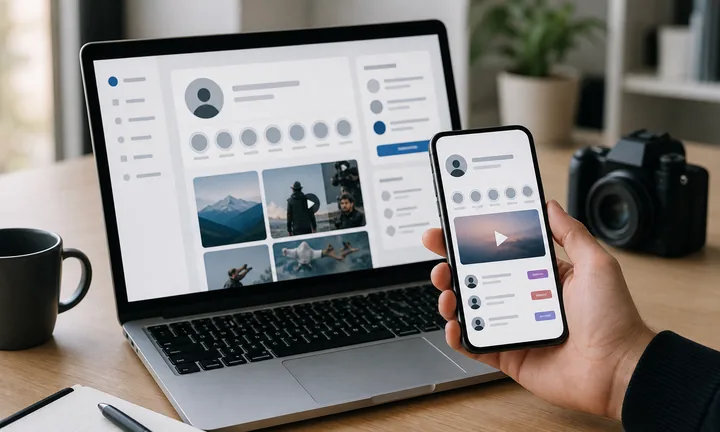
Match the QR to the Telegram action people expect
Use Telegram QR codes on business cards, event signs, flyers, support labels, receipts, product inserts, class sheets, and community posters when the scanner already understands why Telegram is the next step.
The printed CTA should name the action: message us, join the group, subscribe for updates, open the bot, or get event alerts.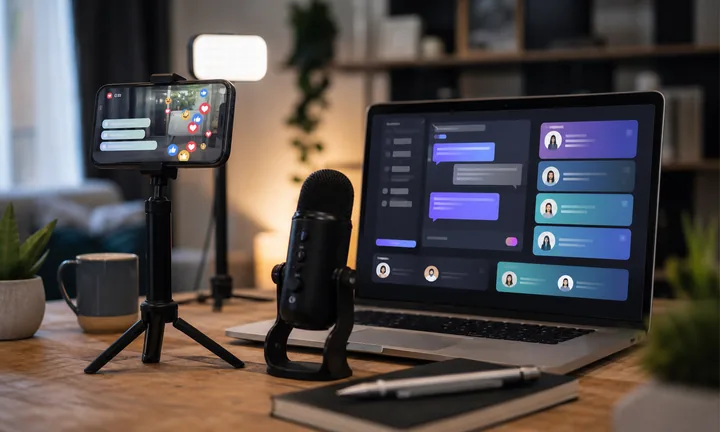
Choose the destination before designing the code
A chat link starts a conversation. A channel builds an update audience. A group opens discussion. A bot guides a task. A landing page helps when scanners need privacy notes, choices, fallback contact, or context before Telegram opens.
Different Telegram destinations solve different jobs; do not use one generic link for every printed material.
Keep long-lived Telegram routes editable when links may change
Usernames, group invites, channel links, bot start parameters, and support paths can change after print. If posters, labels, cards, or packaging will stay in circulation, dynamic QR gives you a way to update the Telegram route later.
Editable routing protects printed Telegram QR codes from stale invite links and renamed destinations.A Telegram QR should tell people what kind of relationship starts after the scan
Telegram is not one destination type. It can be private contact, public updates, group discussion, automated intake, or event coordination. The printed material should set that expectation before the app opens.
A clear Telegram promise improves trust and reduces wrong joins, vague messages, and abandoned scans.Business contact
Use chat or bot paths for quotes, support, booking help, order questions, and local service follow-up.
Channel subscription
Use channels for announcements, alerts, drops, class notices, creator posts, and event updates.
Group participation
Use groups when members should ask questions, coordinate, discuss, or support each other.
Bot workflow
Use bots for check-in, intake, routing, support triage, order lookup, access requests, and campaign automation.
Telegram destination choice
Choose the Telegram QR type by what should happen after the scan
ChooseBefore exporting the QR code, decide whether the scanner needs a direct conversation, an announcement stream, a shared group, an automated bot, or a landing page that explains the options first.
URL QR code
Use for websites, landing pages, menus, product pages, portfolios, booking pages, and campaign pages.
Best dynamic when links may changePDF / File QR code
Use for menus, manuals, worksheets, bonus materials, brochures, certificates, ZIP archives, and checklists.
Dynamic is safer for printvCard QR code
Use for business cards, badges, counters, portfolios, sales materials, and follow-up contact details.
Static opens native contact saveWi-Fi QR code
Use for cafes, hotels, offices, classrooms, venues, rental spaces, and guest networks.
Usually best as staticForm QR code
Use for feedback, registrations, quote requests, surveys, support requests, applications, and check-in.
Dynamic helps forms evolveWhatsApp / messaging QR
Use when the next step is a conversation: support, sales, booking, delivery questions, or consultation.
Prefilled messages reduce frictionMaps QR code
Use for venues, offices, stores, events, pickup points, property listings, booths, and meeting locations.
Great for physical destinationsSocial QR code
Use for Instagram, TikTok, YouTube, X, LinkedIn, Behance, creator pages, and community profiles.
Best when relationship continuesPayment link QR code
Use for invoices, tips, donations, event payments, deposits, checkout pages, and payment requests.
Make amount and context clearNative action?
Wi-Fi, vCard, email, phone, and SMS often work best when the action is encoded directly, especially if the native phone interface matters.
Editable or measurable?
Use a dynamic QR code when the destination may change, files may be replaced, campaigns need analytics, or printed material must stay useful later.
Several actions?
Use a microlanding page when one scan should offer buttons, files, contact, feedback, booking, social links, or multiple next steps.
Telegram QR is a routing decision
The best destination is the one that matches the scanner’s next action and the level of control the publisher needs after print.
Telegram scan experience
Make the first Telegram screen confirm the printed promise
Scan UXThe scan should not dump people into Telegram without context. The account, channel, group, bot greeting, or landing page should immediately match the words beside the printed QR code.
Direct action: the device handles it
Wi-Fi, vCard, phone, email, SMS, plain URLWhen the QR code contains direct data, the phone decides what to show. It may open the native Wi-Fi join prompt, contact-save screen, email client, phone dialer, SMS composer, browser, or another app chosen by the user.
There is not much QR Code Lab can improve inside that native interface. Compatibility depends on the scanner app, camera, operating system, browser, and user settings. Your responsibility is to encode clean data: correct Wi-Fi credentials, a valid email, a tidy vCard, a working URL, and a clear printed caption near the code.
Tracked QR: your destination carries the experience
Dynamic URL, tracked campaign, external page, PDF, formWhen a dynamic QR code redirects to your website, form, shop page, PDF, booking page, or campaign, QR Code Lab can manage the link, keep it editable, and record scan analytics. But the page people land on is still your experience.
That destination should be fast, mobile-friendly, and honest about the promise printed near the QR code. The main CTA should be visible without hunting, forms should be short, files should open cleanly on phones, and the content should not feel like a desktop page squeezed onto a small screen.
Microlanding: QR Code Lab shapes the experience
Hosted page, buttons, image, files, contact, feedbackA QR Code Lab microlanding page is useful when you do not have a good mobile destination or when one scan should offer several actions. Instead of sending people to a heavy page, you can present a clean mobile-first page with clear buttons, files, images, links, and contact actions.
This is where QR Code Lab can do the most for scan experience. The content is organized for phones, buttons are easy to tap, PDF or ZIP downloads can be presented clearly, and the page can be updated after printing. It works well for books, packaging, menus, events, instructions, bonus materials, and feedback flows.
Does the QR open the intended Telegram surface?
Test the chat, channel, group, bot, or landing page on mobile before printing public material.
Is the reason to continue clear?
Tell people whether they will message, subscribe, join, check in, receive updates, or start a bot flow.
Can the route be changed if the link expires?
Use dynamic QR for invites, bots, campaigns, events, public signs, and long-lived printed materials.
The scan should continue a specific Telegram workflow
Telegram QR works when the printed context and app destination agree on the next action. If the destination needs explanation first, use a landing page before Telegram.
Telegram placement
Place Telegram QR codes where communication or updates are the natural next step
PlacementTelegram scans work best at moments where people already expect contact, announcements, community access, event coordination, or guided automation.
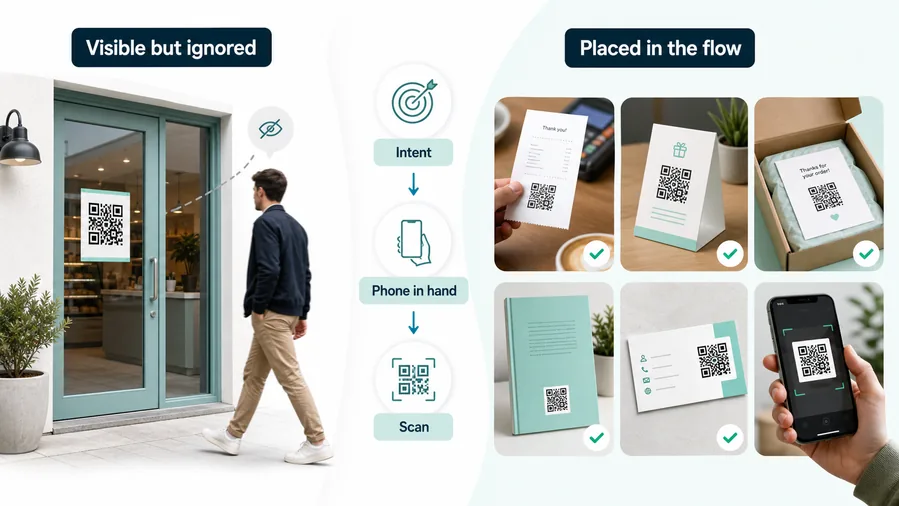
A Telegram logo without intent creates friction
People may not know whether the QR opens a private chat, public channel, group invite, bot, or campaign page.
Communication apps require trust, so a vague QR feels riskier than a normal destination link.
Put the QR where the Telegram action solves the next problem
Place it near the business contact prompt, event update, community invitation, product support moment, class resource, or bot task it completes.
The printed CTA should make the Telegram destination feel expected before the scanner opens the app.
What should Telegram do here?
Choose message, join group, subscribe to channel, open bot, receive updates, coordinate, or request support.
Who is the audience?
Match the destination to customers, attendees, students, members, creators, local residents, support users, or internal teams.
Is the physical moment appropriate?
Use Telegram where people have enough trust and time to open a communication app, not where a simple web page would be clearer.
Will the link remain valid?
Use dynamic QR when invite links, usernames, bots, groups, channels, or campaign paths may change after print.
Business card
Open a direct contact, support bot, channel, or sales conversation after a meeting or service discussion.
Event sign or badge
Use for schedule updates, attendee help, group coordination, check-in bots, and post-event resources.
Community poster
Invite people to a group or channel with clear topic, owner, and participation expectations.
Product insert
Send customers to support, updates, bot intake, warranty help, or a channel for release notes.
Receipt or invoice
Open order updates, service questions, delivery help, returns, or customer communication.
Classroom handout
Use for cohort channels, class groups, resource updates, Q&A bots, and assignment reminders.
Storefront sign
Invite local customers to updates, availability alerts, support chat, booking help, or announcements.
Campaign flyer
Route people to launch updates, group access, bot registration, or a time-sensitive Telegram path.
Use Telegram QR where the app is part of the value
If people only need a file, article, menu, or form, a normal URL QR may be more direct than opening Telegram.
Print to community
Make the QR code explain the Telegram action before the scan
Use Telegram QR codes on onboarding cards, event signage, flyers, product inserts, support materials, classroom pages, conference handouts, book pages, packaging, local business counters, and community posters. The printed call to action should say whether the scanner will join a channel, enter a group, open a bot, message support, or receive updates.
Dynamic QR is helpful for printed materials that will last longer than the invite link or campaign. You can change the destination from prelaunch channel to live support group, from event group to recap page, or from old bot flow to a new support path without reprinting the code.
Tracking scans can show which offline touchpoints send people into Telegram. QR Code Lab manages QR routing and reporting; Telegram handles access, messages, members, notifications, bot behavior, and account rules after the scan.
Use clear printed labels such as join channel, enter group, message support, or start bot. The label should remove uncertainty before the scanner opens Telegram, especially on public signs and handouts nearby.