Behance Portfolio QR Code - Portfolio, Case Study & Contact Links
Create a Behance portfolio QR code linking project pages, creative portfolios, case studies, design collections, artist profiles, and contact pages. Ready for print and digital use.
Free QR code generator
Create a QR code online
Generate QR codes for websites, email, phone numbers, vCards, Wi-Fi, plain text, forms, PDF files, and campaign links. Customize colors, add a logo or frame, then download a print-ready PNG or SVG.
Choose QR code type
Website QR code, Email QR code, Phone QR code, vCard QR code, Wi-Fi QR code, Text QR code, SMS, WhatsApp, event, and download links.
Add your content
Enter your website URL, contact details, message, phone number, location, or file destination before generating the QR code.
Customize and download
Adjust QR colors, error correction, logo, frame, size, and margin. Generate QR Code, Download PNG, Download SVG, or Save and track scans.
Related QR code generators
Creative portfolio access
Send scanners to the exact Behance work you want them to review
A Behance portfolio QR code is useful when the scanner should land on a project page, creative portfolio, case study, design collection, artist profile, or contact page without searching your name manually. It works well for designers, artists, illustrators, photographers, agencies, students, freelancers, and creative studios that use print, events, packaging, proposals, or leave-behind materials to show work.
The best Behance QR destination depends on the conversation. A general profile is fine for broad discovery. A project-specific link is stronger when the printed piece is about one campaign, illustration set, photography collection, UX case study, brand identity, or studio capability. A proposal can link to relevant proof, not every project you have ever posted.
QR Code Lab creates the QR code for your Behance URL, lets you style it for print, and can provide scan analytics when you use a dynamic destination. It does not host your portfolio, post to Behance, manage your account, collect leads inside Behance, or operate the social platform. The QR code is the bridge between a physical touchpoint and the Behance page you already control.
Creative portfolio moments
Use a Behance portfolio QR code when the scan should open a specific creative proof point
Behance QRA Behance QR should send people to the portfolio, project, case study, moodboard, campaign, or profile that supports the printed creative context.
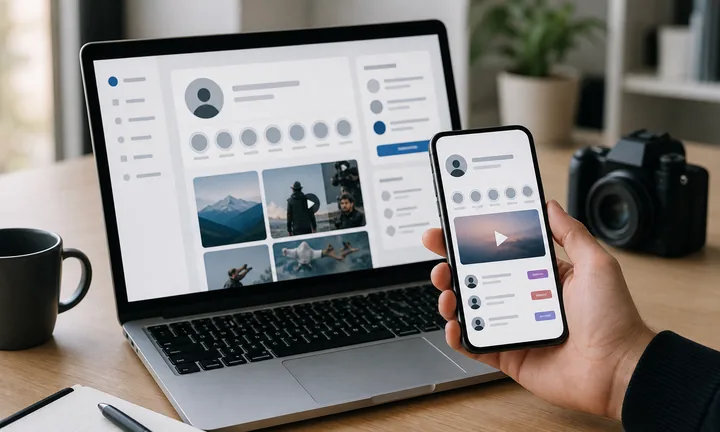
Point clients to the work that matches the pitch
Use Behance QR codes on business cards, leave-behinds, posters, event badges, resumes, proposals, packaging, and portfolio sheets when a visual project can sell the story faster than a URL.
The code should open the project that backs up the conversation.
Choose between profile and project destinations
A profile QR is useful for broad discovery, but a project QR is stronger when the print references a specific campaign, identity system, illustration set, UI case study, or photography series.
Destination specificity makes the scan feel intentional.
Keep portfolio links current after materials are printed
Dynamic QR helps when Behance project URLs, featured work, case studies, portfolio order, hiring pages, or campaign landing pages change after cards and decks are distributed.
Creative portfolios evolve constantly.A Behance QR should continue the creative conversation
The scanner may be a client, recruiter, collaborator, event attendee, art director, or buyer. The destination should show the work they are most likely to care about, not force them to browse from zero.
Use clear CTAs such as view portfolio, see this project, open case study, or follow on Behance.Profile discovery
Open a full Behance profile when the goal is broad creative credibility and browsing.
Project proof
Open a specific project, case study, campaign, visual system, or series when the print references that work.
Hiring and inquiry
Pair Behance with contact, booking, resume, rate card, or inquiry paths when the next step is professional.
Print survival
Use dynamic QR when portfolio links, featured projects, or hiring destinations may change.
Portfolio scan UX
Make the Behance scan open the right creative context immediately
Scan UXA portfolio QR should respect why someone scanned: to review a project, validate taste, see more work, contact the creator, or save the profile after a live conversation.
Use profile links for broad creative discovery
Portfolio, profile, followA Behance profile works when the printed piece is general: business card, resume, event badge, sticker, or portfolio postcard.
The first screen should make the creator name, discipline, and strongest work easy to recognize.
Use project links when the print references one piece of work
Case study, campaign, UI, identity, photo seriesA project QR is stronger when someone is looking at a specific visual, campaign, packaging sample, or proposal page.
Send them directly to the case study instead of making them search a full profile.
Use a landing page when the next step is more than Behance
Behance, contact, resume, booking, storeSome portfolio scans need several actions: view Behance, contact the creator, download resume, book a call, open shop, or see a campaign microsite.
Dynamic QR keeps that hub editable as the creator’s portfolio changes.
Does the destination match the printed work?
If the card shows a project, the QR should open that project or a closely related portfolio section.
Is the creator identity clear?
The scanner should immediately see name, discipline, portfolio context, and contact path when relevant.
Will the portfolio link change?
Use dynamic QR for printed materials that may outlive the featured Behance project or profile structure.
The Behance scan should show proof, not make people hunt
Choose the destination that best continues the creative conversation started by the printed piece.
Portfolio placement
Place Behance QR codes where creative proof can change the conversation
PlacementBehance QR placement should match a real portfolio moment: business card, resume, event badge, proposal, leave-behind, gallery label, packaging concept, class show, or social print.
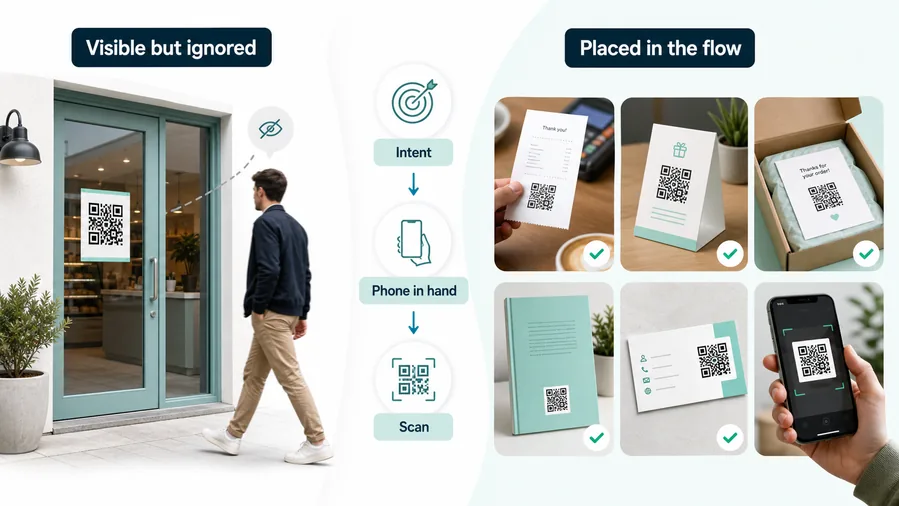
A generic Behance QR can feel like extra decoration
If the print does not explain whether the code opens a profile, project, case study, or contact path, scanners have little reason to act.
The QR should be tied to a creative proof point.
Put the QR beside the work or opportunity
Use project QR codes near the work itself and profile QR codes on identity materials where broad discovery makes sense.
The first screen should continue the same creative signal.
What is the scanner looking at?
Business card, resume, project print, proposal, booth, badge, gallery label, packaging mockup, or portfolio sheet.
What should they see first?
Full Behance profile, specific project, case study, contact path, resume, shop, or booking page.
Will featured work change?
Use dynamic QR for portfolios, proposals, event materials, and printed cards that need updated links later.
Is the CTA specific?
Print view portfolio, see this project, open case study, follow on Behance, or contact for work.
Business card
Open full profile, contact hub, or featured portfolio overview.
Resume or CV
Send recruiters to relevant case studies, portfolio, contact, and downloadable resume context.
Proposal deck
Open supporting case study, visual system, campaign proof, or related project.
Portfolio sheet
Place project QR beside the work so viewers can see process, detail, and outcome.
Event badge
Let attendees save the creator profile, follow on Behance, or request collaboration.
Gallery label
Open artist profile, project story, print shop, or exhibition details.
Packaging mockup
Show full brand case study, product visuals, process, and contact path.
Class show card
Route to student portfolio, thesis project, process book, and hiring contact.
Behance QR placement should make the work easier to evaluate
Use the QR where deeper creative context, process, or contact can help the viewer act.
Portfolio context
Match the QR destination to the creative conversation you want to continue
On a business card, the QR can open the main portfolio. On a pitch deck, proposal, portfolio postcard, exhibition label, student show display, packaging sample, conference badge, or agency leave-behind, it may be better to send scanners to the exact case study that supports the work in front of them. That makes the scan feel intentional instead of generic.
Use a dynamic QR code when the featured Behance project, contact page, portfolio route, or campaign destination may change. You can update the link later if you publish a stronger case study or want a different project to lead. Scan analytics can also show whether printed portfolios, event booths, classroom displays, or client proposals actually send people into your work.
Keep the printed CTA specific. Say view portfolio, see this case study, explore design work, or open Behance project. If the goal is hiring or leads, make sure the Behance page includes an easy next step, such as contact details or a link to your main site. QR Code Lab helps with the QR path, while Behance controls the final portfolio experience.