Telegram Bot QR Code Generator - Bot Invites, Docs & Support Links
Create Telegram bot QR codes for support bots, booking bots, order bots, lead forms, automation links, start parameters, and printed prompts. Ready for print and digital use.
Free QR code generator
Create a QR code online
Generate QR codes for websites, email, phone numbers, vCards, Wi-Fi, plain text, forms, PDF files, and campaign links. Customize colors, add a logo or frame, then download a print-ready PNG or SVG.
Choose QR code type
Website QR code, Email QR code, Phone QR code, vCard QR code, Wi-Fi QR code, Text QR code, SMS, WhatsApp, event, and download links.
Add your content
Enter your website URL, contact details, message, phone number, location, or file destination before generating the QR code.
Customize and download
Adjust QR colors, error correction, logo, frame, size, and margin. Generate QR Code, Download PNG, Download SVG, or Save and track scans.
Related QR code generators
Bot start links
Use a Telegram bot QR code when the scanner should open a bot or start parameter
A Telegram bot QR code can point to a bot URL, bot start link, support bot, booking bot, order bot, lead form, automation prompt, or printed instruction that starts a Telegram-based flow. It is useful for businesses, support teams, creators, event organizers, ecommerce sellers, local services, course teams, and communities that already use Telegram bots.
Bot QR codes need clear expectations. If scanning starts a support flow, booking request, order path, campaign action, automation, or lead form, the printed text should say that before the person scans. A bot link can feel abrupt if people do not know whether they are starting chat, sending data, choosing a service, or requesting help.
QR Code Lab creates the QR code for the Telegram bot URL. It does not build bots, process bot orders or payments, control automation, approve users, or manage Telegram. The bot behavior belongs to your Telegram setup; the QR code only makes the link easier to scan from print and physical materials.
Telegram bot QR workflow
Use a Telegram bot QR when the scan should start an automated action, not a vague chat
Bot QRA Telegram bot QR works when printed material needs to open a specific bot flow: support triage, onboarding, order lookup, event check-in, community routing, product help, alerts, or a guided first message.
Send scanners into a prepared bot path
A bot QR should do more than open Telegram. Use it when the printed context can start a known task: report an issue, claim access, receive updates, register interest, check an order, join a workflow, or trigger a support sequence.
The CTA should name the bot action so the first Telegram screen feels expected.
Use start parameters when the print context matters
Telegram bot links can carry a start parameter, which helps separate posters, packaging, events, regions, teams, or campaign sources. That makes the bot greeting more relevant and reduces the need for the scanner to explain why they arrived.
A contextual bot start is stronger than sending everyone to the same generic bot welcome.
Keep bot routing editable for public materials
Bot usernames, start links, support flows, campaign logic, and fallback pages can change after QR codes are printed. Use dynamic QR when the same label, poster, handout, or package insert may need a corrected bot route later.
Dynamic QR protects physical material when the automation behind the bot changes.A Telegram bot QR should make the automated next step clear
People scan bot QR codes when the printed moment already explains the task. The bot should greet them with the right context, ask for the next useful input, and provide a human or fallback route if automation cannot solve it.
Do not make the scanner guess what the bot is for.Support intake
Use for product labels, service counters, receipts, and help cards where the bot collects issue type, order, model, or location.
Event or access flow
Use for check-ins, attendee help, reminders, schedule updates, lead capture, or restricted community onboarding.
Order or service status
Use when the bot can guide customers through pickup, delivery, booking, quote, warranty, or service steps.
Campaign handoff
Use dynamic QR when the printed bot route may need to point to a new bot, updated start parameter, or landing page later.
Telegram bot scan experience
Make the bot greeting match the printed promise
Scan UXThe first bot screen should confirm why the person scanned and what the bot can do next. If the greeting is generic, the QR feels like a broken shortcut even when the link technically works.
Direct action: the device handles it
Wi-Fi, vCard, phone, email, SMS, plain URLWhen the QR code contains direct data, the phone decides what to show. It may open the native Wi-Fi join prompt, contact-save screen, email client, phone dialer, SMS composer, browser, or another app chosen by the user.
There is not much QR Code Lab can improve inside that native interface. Compatibility depends on the scanner app, camera, operating system, browser, and user settings. Your responsibility is to encode clean data: correct Wi-Fi credentials, a valid email, a tidy vCard, a working URL, and a clear printed caption near the code.
Tracked QR: your destination carries the experience
Dynamic URL, tracked campaign, external page, PDF, formWhen a dynamic QR code redirects to your website, form, shop page, PDF, booking page, or campaign, QR Code Lab can manage the link, keep it editable, and record scan analytics. But the page people land on is still your experience.
That destination should be fast, mobile-friendly, and honest about the promise printed near the QR code. The main CTA should be visible without hunting, forms should be short, files should open cleanly on phones, and the content should not feel like a desktop page squeezed onto a small screen.
Microlanding: QR Code Lab shapes the experience
Hosted page, buttons, image, files, contact, feedbackA QR Code Lab microlanding page is useful when you do not have a good mobile destination or when one scan should offer several actions. Instead of sending people to a heavy page, you can present a clean mobile-first page with clear buttons, files, images, links, and contact actions.
This is where QR Code Lab can do the most for scan experience. The content is organized for phones, buttons are easy to tap, PDF or ZIP downloads can be presented clearly, and the page can be updated after printing. It works well for books, packaging, menus, events, instructions, bonus materials, and feedback flows.
Does Telegram open the intended bot?
Test the link on mobile and confirm the bot username, start parameter, and first message are correct.
Does the greeting match the printed CTA?
If the print says check in, report issue, get updates, or request support, the first bot message should continue that exact task.
Is there a fallback when the bot cannot help?
Offer contact, support, group, form, or landing-page fallback for edge cases and expired campaign paths.
The scan should start a guided workflow, not just open Telegram
Telegram bot QR is worth using when automation makes the next step faster, clearer, or easier to route than a normal web page or chat link.
Telegram bot placement
Place the bot QR where automation can answer the next question
PlacementTelegram bot scans work best at operational moments where a guided flow is more useful than a static page: check-in, support, service routing, updates, access, order status, or community onboarding.
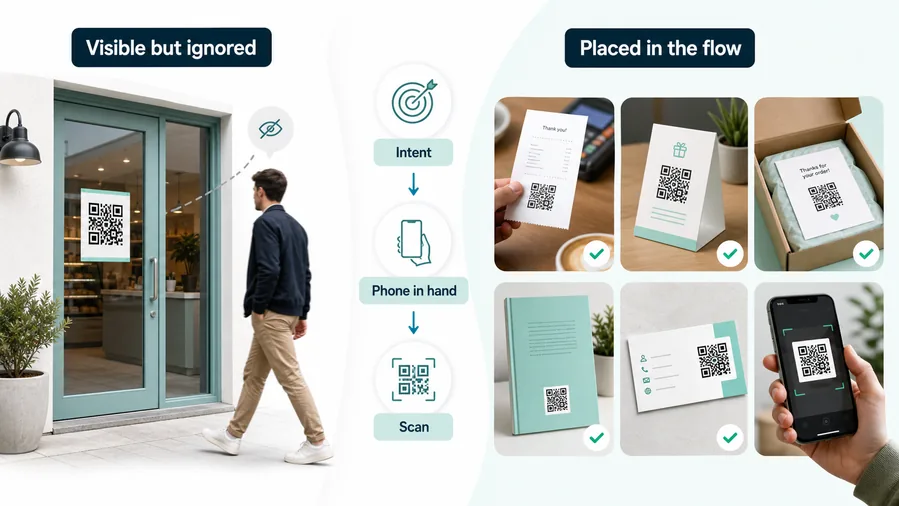
A bot QR fails when the task is not obvious
People may hesitate if they do not know whether the bot is for support, access, updates, ordering, feedback, or community joining.
A generic Telegram bot link on a poster or label creates extra uncertainty instead of reducing work.
Put the QR beside the task the bot can automate
Place it near the product issue, event entrance, service counter, receipt, classroom sheet, package insert, or community invitation that gives the bot a clear job.
When the physical context and bot greeting match, the scan feels like the shortest path to action.
What should the bot do?
Choose check-in, support intake, order lookup, booking help, updates, access request, lead capture, or community onboarding.
What context should the bot receive?
Use separate codes or start parameters for product, event, location, region, campaign, team, or support category.
Can the scanner use Telegram here?
Bot QR fits moments where the audience already accepts Telegram as a communication or automation channel.
Will the bot route change later?
Use dynamic QR when usernames, start links, forms, groups, or support paths may change after print.
Event check-in
Start attendee verification, help requests, schedule updates, reminders, lead capture, or community access from badges and entrance signs.
Product support label
Route customers to setup help, issue reporting, warranty questions, spare parts, or model-specific troubleshooting.
Service counter card
Collect queue questions, booking changes, quote requests, pickup status, after-hours help, or local support details.
Receipt or invoice
Open order lookup, delivery updates, returns, billing questions, or post-purchase support inside a guided chat.
Community poster
Help people join updates, request access, receive rules, choose a group, or start a moderated onboarding path.
Campaign flyer
Trigger giveaway entry, event reminders, product launch updates, or a short qualification flow.
Training handout
Start quizzes, collect questions, deliver resources, or route learners to the next module.
Equipment sticker
Open maintenance reporting, fault intake, inspection prompts, or emergency support instructions.
Use bot QR where guided automation is the value
If the scanner only needs to read a page, download a file, or save a contact, a simpler QR destination may be better than a bot.
Prompt clarity
Tell people what the Telegram bot will help them do
Use bot QR codes on table cards, product inserts, event handouts, service counters, packaging, onboarding cards, support flyers, local business materials, training sheets, and appointment cards. The scanner should know whether the bot handles booking, support, ordering, updates, questions, lead capture, a specific campaign action, or a guided setup flow.
Dynamic QR codes are useful when the bot URL, start parameter, support path, or campaign flow may change. You can keep printed prompts in place while changing the bot route behind them. That matters for restaurants, events, support desks, classes, ecommerce inserts, and local services where printed materials stay around.
Scan analytics can show which printed prompts send people into the bot. QR Code Lab manages the QR path and scan reporting; Telegram and your bot logic handle messages, permissions, orders, payments, records, automation, and user data after the scan begins. Keep the printed prompt short, practical, and honest about what the bot will do, especially if the bot collects details, starts an order, or sends automated replies.
Editable bot routing
Keep Telegram bot QR routes editable after the code is printed
DynamicBot links are operational: usernames, start parameters, support teams, campaign flows, groups, and fallback pages can change. Dynamic QR gives printed materials a safer route when automation evolves.
A fixed bot link can lock print to the wrong automation
A static Telegram bot QR is fine when the bot username, start parameter, audience, and workflow are final.
The risk appears when a bot is renamed, a campaign ends, support routing changes, a group invite expires, or the first message needs a different context after the material has shipped.
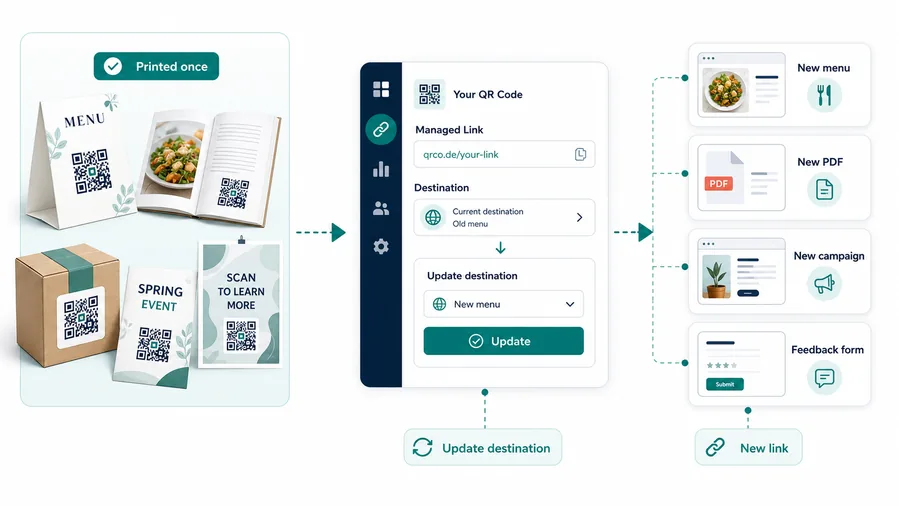
The same printed code can point to the current bot route
A dynamic QR separates the printed image from the final Telegram destination, so the visible code can stay in place while the managed link changes.
That is useful for events, product labels, receipts, service counters, training sheets, campaigns, and community materials that stay visible after the bot flow changes.
Support bot updates
Change issue categories, regional routing, fallback contacts, or support start parameters without replacing labels and cards.
Event bot changes
Move scans from registration to check-in, live help, session reminders, post-event resources, or community follow-up.
Campaign routing
Replace giveaway links, launch flows, product drops, qualification questions, or expired offers after distribution.
Community onboarding
Update bot links, group paths, rules, access steps, or moderation instructions while old posters continue working.
Use dynamic when bot routing is part of an operating process
If the QR code will live on public or long-lived material, editable routing can prevent a bot change from becoming a reprint problem.