Telegram Group QR Code Generator - Group Invites, Chats & Community Links
Create Telegram group QR codes for invite links, private groups, community chats, event groups, class groups, support chats, and flyers. Share it from cards, posters, packaging, merch, and events.
Free QR code generator
Create a QR code online
Generate QR codes for websites, email, phone numbers, vCards, Wi-Fi, plain text, forms, PDF files, and campaign links. Customize colors, add a logo or frame, then download a print-ready PNG or SVG.
Choose QR code type
Website QR code, Email QR code, Phone QR code, vCard QR code, Wi-Fi QR code, Text QR code, SMS, WhatsApp, event, and download links.
Add your content
Enter your website URL, contact details, message, phone number, location, or file destination before generating the QR code.
Customize and download
Adjust QR colors, error correction, logo, frame, size, and margin. Generate QR Code, Download PNG, Download SVG, or Save and track scans.
Related QR code generators
Group invite path
Use a Telegram group QR code when the scan should open a chat or invite link
A Telegram group QR code points scanners to a group invite link, private group, community chat, event group, class group, support chat, local discussion, creator community, or member space. It is useful for communities, event organizers, schools, clubs, local businesses, support teams, course creators, and creators who want people to join a conversation from a physical touchpoint.
A group QR should be used when conversation is the point. If the scanner only needs updates, a channel may be cleaner. If they need a specific automated action, a bot link may be cleaner. For groups, the first minute matters: people should understand the purpose, rules, who is inside, and whether approval is required.
QR Code Lab creates the QR code for the group URL. It does not create groups, approve members, moderate chats, bypass Telegram invite settings, or manage Telegram access. The QR code can only send scanners to the link you provide.
If the group has rules, sensitive topics, or limited access, the printed material should say so. That keeps the join path clear and avoids surprising new members.
Telegram group QR workflow
Use a Telegram group QR when the scan should bring people into a managed conversation
Group inviteA Telegram group QR is right when the printed moment should become community access: event coordination, class discussion, support circles, local groups, teams, clubs, beta users, or customer communities.
Make the group purpose clear before people join
A group invite is more personal than a normal link because it opens a shared conversation. Use the printed CTA to explain who the group is for, what happens inside, and why joining is useful right now.
A clear promise improves member quality and reduces moderation cleanup.
Use groups for conversation, not one-way announcements
Choose a group when members should ask questions, coordinate, discuss, share updates, or get peer support. If the goal is only broadcasts, reminders, or official announcements, a Telegram channel usually sets better expectations.
Group QR should match participation intent, not just Telegram availability.
Control invite quality on public print
Printed group invites can spread beyond the original audience. Use clear rules, moderation notes, invite settings, and dynamic routing when a public QR might need to be paused, replaced, or moved to an onboarding page later.
Public group QR codes need trust and moderation planning.A Telegram group QR should protect the community it opens
The scan should not only make joining easy. It should help the right people join for the right reason, with enough context that the conversation stays useful.
A group link is an access decision, not just a traffic shortcut.Event coordination
Use for attendee help, ride sharing, volunteer teams, session questions, and temporary event discussion.
Learning or cohort groups
Use for class questions, workshop discussion, resource sharing, reminders, and peer support.
Customer or beta community
Use when members should give feedback, ask product questions, share examples, or receive guided updates.
Local and club communities
Use when printed flyers, posters, or cards invite people into a moderated local conversation.
Telegram group scan experience
Make the group join path clear, moderated, and expected
Scan UXThe first screen should confirm the group identity, purpose, and rules. A public group QR needs more context than a simple link because it opens access to other people.
Direct action: the device handles it
Wi-Fi, vCard, phone, email, SMS, plain URLWhen the QR code contains direct data, the phone decides what to show. It may open the native Wi-Fi join prompt, contact-save screen, email client, phone dialer, SMS composer, browser, or another app chosen by the user.
There is not much QR Code Lab can improve inside that native interface. Compatibility depends on the scanner app, camera, operating system, browser, and user settings. Your responsibility is to encode clean data: correct Wi-Fi credentials, a valid email, a tidy vCard, a working URL, and a clear printed caption near the code.
Tracked QR: your destination carries the experience
Dynamic URL, tracked campaign, external page, PDF, formWhen a dynamic QR code redirects to your website, form, shop page, PDF, booking page, or campaign, QR Code Lab can manage the link, keep it editable, and record scan analytics. But the page people land on is still your experience.
That destination should be fast, mobile-friendly, and honest about the promise printed near the QR code. The main CTA should be visible without hunting, forms should be short, files should open cleanly on phones, and the content should not feel like a desktop page squeezed onto a small screen.
Microlanding: QR Code Lab shapes the experience
Hosted page, buttons, image, files, contact, feedbackA QR Code Lab microlanding page is useful when you do not have a good mobile destination or when one scan should offer several actions. Instead of sending people to a heavy page, you can present a clean mobile-first page with clear buttons, files, images, links, and contact actions.
This is where QR Code Lab can do the most for scan experience. The content is organized for phones, buttons are easy to tap, PDF or ZIP downloads can be presented clearly, and the page can be updated after printing. It works well for books, packaging, menus, events, instructions, bonus materials, and feedback flows.
Does the invite open the intended group?
Test the QR on mobile and confirm the group title, invite settings, and first visible context.
Are rules or expectations visible before discussion starts?
Use a nearby note, approval step, pinned message, or onboarding screen to keep the group focused.
Can the invite be controlled later?
For public print, prepare approval settings, replacement links, or a fallback page if the group changes.
The scan should admit the right people into the right conversation
Use group QR when participation is the value. Use channel QR for broadcasts and bot QR for guided automation.
Telegram group placement
Place the group QR where joining the conversation is appropriate
PlacementTelegram group QR codes work best when the person has context for the community before joining: event participation, class discussion, club membership, customer beta, team coordination, or local support.
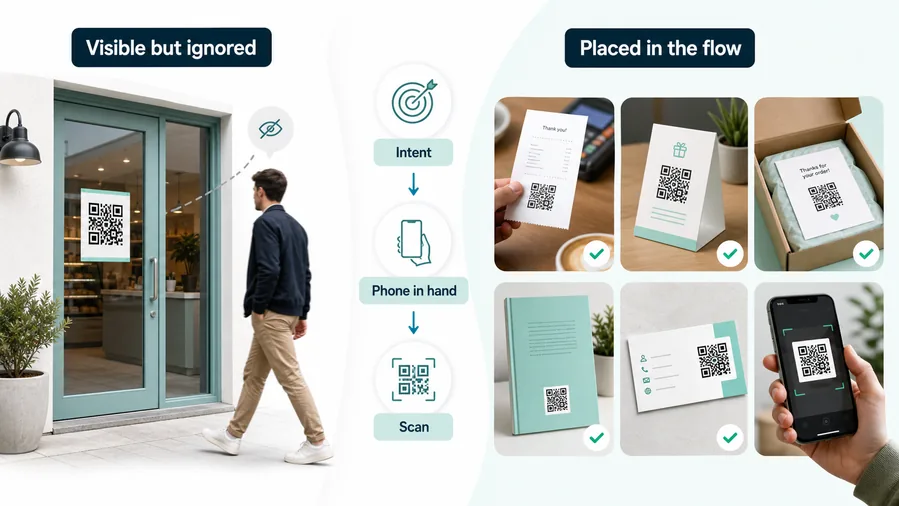
An open group invite can attract the wrong conversation
People may join without understanding the topic, rules, or audience, which creates moderation work.
A group QR should not be placed broadly unless the community can handle public access.
Put the invite where context and trust already exist
Use it after registration, purchase, class enrollment, event entry, team signup, or a local conversation.
The scan should admit people who already understand why the group exists.
Who should join?
Define attendees, students, customers, members, volunteers, beta users, local residents, or team participants.
What should happen inside?
Use the QR for discussion, coordination, questions, peer support, feedback, or community updates.
How will the group stay focused?
Prepare rules, moderation, pinned context, approval settings, or a welcome message.
Can the invite spread safely?
Public printed group links need a plan for replacement, approval, or fallback if the audience changes.
Event badge or entrance
Bring attendees into coordination, Q&A, ride sharing, volunteer updates, or session discussion.
Class or workshop sheet
Use for cohort questions, shared resources, homework discussion, reminders, and peer support.
Club poster
Invite people who understand the club topic, meeting rhythm, and participation expectations.
Customer community card
Connect buyers or beta users to feedback, examples, troubleshooting, and product discussion.
Local flyer
Use for neighborhood groups, volunteer coordination, community alerts, and moderated local discussion.
Team handout
Help staff, volunteers, or project members join the correct coordination group quickly.
Venue sign
Use for temporary event groups, meetup coordination, or moderated community nights.
Product beta insert
Invite early users into a focused feedback group with clear expectations.
Use group QR only when participation is welcome and managed
If the destination should only publish updates, choose a Telegram channel instead.
Chat readiness
Prepare the first minute after someone joins the group
For classes, events, support communities, clubs, local groups, and creator spaces, the QR code should appear near the reason to join: schedule, rules, onboarding instructions, help desk, event map, member benefits, course materials, or local discussion prompt. A raw invite link without context can feel abrupt, especially if the group is private or moderated.
Use dynamic QR if invite links expire, groups change, or you may switch from a group to a landing page with rules first. You can also change the destination after an event, moving the printed code from a live discussion group to a recap, support page, or next event community.
Scan analytics can show which placements create real join interest. QR Code Lab manages the printed QR path and scan reporting; Telegram handles joins, members, moderation, messages, privacy, and notifications after the scan.
For busy events or classes, place the code near the moment people need the group. A code on the schedule or welcome card usually works better than a generic footer link or tiny poster mark.
Group trust
Publish Telegram group QR codes with clear access expectations
TrustA group invite can expose members to a shared conversation, so the printed QR should explain who the group is for, what happens inside, and how the space is moderated.

Wrong audience joins the group
A public QR can travel beyond the original poster, class, event, or customer material.
Use approval, rules, or a landing page when membership should be controlled.
People do not know what they are joining
A vague group invite can feel risky because it opens a conversation with other people, not just a page.
Name the group purpose, owner, and expected discussion before the scan.
Old invites keep circulating
Printed group QR codes may remain visible after an event, cohort, campaign, or beta group closes.
Prepare a replacement route, approval step, or fallback page for long-lived public materials.Review the group invite before publishing
Check that the QR opens the intended group, the invite settings match the audience, and the first visible context helps people decide whether to join.
A working invite is not enough; public group access should be understandable and manageable.Group identity
Confirm title, avatar, description, owner, and visible context match the printed material.
Invite settings
Review approval, expiration, member visibility, moderation, and whether the link can be replaced.
Rules and welcome
Use pinned messages or onboarding notes to explain behavior, topic, and support boundaries.
Fallback path
Plan where old printed QR codes should send people if the group closes or changes.
Make public group invites easier to trust
The best printed group QR codes make joining feel intentional and give moderators enough control to protect the conversation.