QR Code for Posters - Scannable Codes for Signs & Events
Create poster QR codes for events, storefronts, classrooms, campaign walls, and signs. Tune size, contrast, quiet zone, placement, and tracking for reliable distance scans in print.
Free QR code generator
Create a QR code online
Generate QR codes for websites, email, phone numbers, vCards, Wi-Fi, plain text, forms, PDF files, and campaign links. Customize colors, add a logo or frame, then download a print-ready PNG or SVG.
Choose QR code type
Website QR code, Email QR code, Phone QR code, vCard QR code, Wi-Fi QR code, Text QR code, SMS, WhatsApp, event, and download links.
Add your content
Enter your website URL, contact details, message, phone number, location, or file destination before generating the QR code.
Customize and download
Adjust QR colors, error correction, logo, frame, size, and margin. Generate QR Code, Download PNG, Download SVG, or Save and track scans.
Distance and visibility
Use a QR code on posters when the scan has to work from farther away
A poster QR code can send people to an event page, ticket page, menu, campaign landing page, signup form, map, review page, donation page, classroom resource, storefront offer, or social profile. Posters are different from flyers because people often scan from a distance, at an angle, in a hallway, through glass, under bright light, or while deciding whether to stop.
That changes the design decision. The QR code must be larger, simpler, and easier to notice. A tiny code that looks fine in a desktop mockup may fail on a wall, window, venue entrance, classroom board, trade show display, or campaign sign. The poster should also explain the reason to scan before the person walks away.
Dynamic QR is useful for posters because the physical sign may stay up after an event, promo, schedule, or campaign changes. QR Code Lab lets you update the destination and view scan analytics, so you can learn whether the poster location is worth repeating or whether people see the sign without scanning it.
Poster print handoff
Check poster QR codes at real viewing distance before printing
Print readyA poster QR has to work from farther away than a handout. Size, contrast, quiet zone, lighting, mounting height, crowd flow, and the printed CTA all matter before the file goes to production.
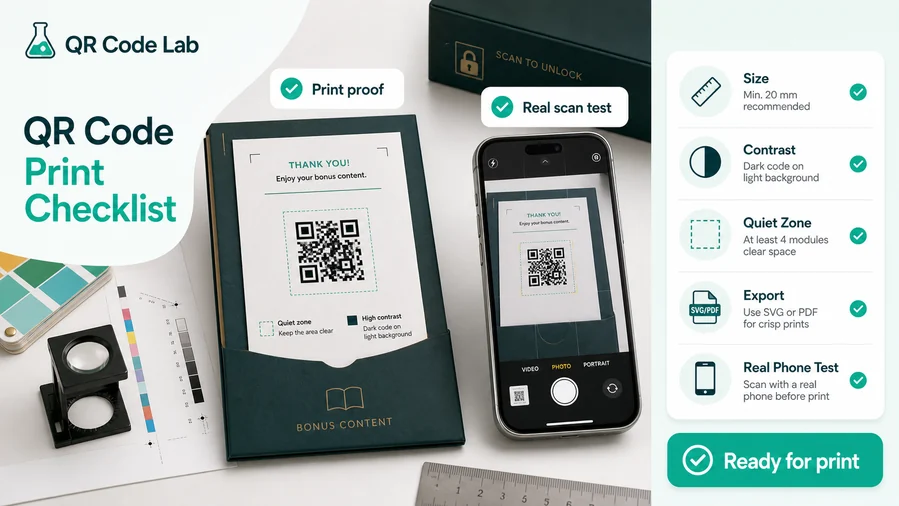
Size the QR for distance, not the design file
A code that scans on a monitor can fail when it is small on a wall, window, event sign, or street poster.
Print a real-size sample, stand at the expected viewing distance, and scan it under similar lighting before approving production.
Make the poster CTA obvious in a glance
People may be walking, waiting, or standing in a crowd. The poster should quickly explain the scan value: tickets, menu, map, offer, demo, donation, registration, or more information.
Use dynamic QR when event details, offers, forms, maps, or campaign pages may change after posters are printed.
Use a mobile landing page when the poster needs more than one action
A direct URL is fine for one action, but posters often need tickets, maps, schedules, offer terms, downloads, contact, and social proof together.
A short landing page keeps the poster clean while giving scanners a clear first action after the scan.
Event poster
Open tickets, RSVP, schedule, venue map, speaker details, reminders, and share links.
Retail poster
Route shoppers to offer, product demo, coupon, availability, reviews, or store page.
Restaurant poster
Open menu, booking, delivery, specials, loyalty signup, or review page.
Public notice
Send people to forms, instructions, maps, updates, resources, or contact paths.
Approve the poster only after the distant scan works
The QR should be large enough, clear enough, and useful enough for the real environment where the poster will hang.
Poster placement
Place poster QR codes where people can stop, understand, and scan
PlacementPoster QR placement is about distance and attention. The code needs enough size, clean space, and a scan promise that makes sense before the viewer walks away.
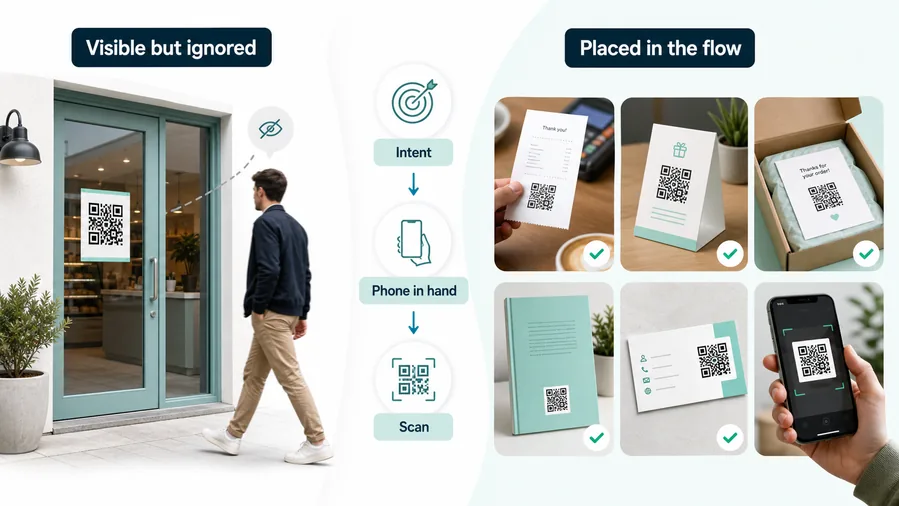
A small corner QR disappears at poster distance
A poster may be viewed from several feet away, through glass, in low light, or while people are moving.
A tiny QR in a busy corner may look tidy in the layout but fail in the real environment.
Give the QR enough space and a reason to scan
Place the code near the headline, offer, event detail, or CTA that explains the value.
Use enough contrast and quiet zone so the camera can find the code quickly.
How far away is the viewer?
Size the code for the real viewing distance, not the artboard preview.
Can the viewer pause safely?
Avoid placements where people are walking fast, blocking traffic, driving, or unable to hold a phone steady.
What does the scan promise?
Tickets, schedule, map, offer, menu, form, donation, demo, download, or contact should be clear.
Will details change?
Use dynamic QR when dates, venues, offers, forms, menus, or campaign pages may change.
Event poster
Put the QR near ticket, RSVP, schedule, map, or reminder copy at a size people can scan while standing.
Window poster
Account for glare, glass distance, reflections, and whether people can stop outside.
Retail display
Open coupon, product info, demo, availability, reviews, or loyalty signup beside the offer.
Restaurant wall sign
Route to menu, ordering, booking, specials, delivery, or feedback where guests are waiting.
Community board
Open forms, calendars, volunteer signup, resource pages, maps, or public updates.
Transit or hallway poster
Use larger codes and very short CTA copy because attention and stopping time are limited.
Conference sign
Open agenda, speaker files, room maps, sponsor offers, lead forms, or feedback.
Campus or office notice
Send viewers to policies, forms, instructions, booking pages, help desks, or announcements.
Poster QR placement should respect distance and attention
Use the QR where the viewer can understand the value and physically complete the scan.
After-print control
Use dynamic QR when poster details may change after printing
DynamicPosters often stay up after event details, offers, room assignments, menu links, forms, or campaign pages change. Dynamic routing prevents stale print from wasting attention.
A fixed poster link can age while the sign is still visible
Static QR is fine for a permanent destination, but posters are often used for events, offers, campaigns, notices, and rotating messages.
When the page moves or details change, the printed code keeps opening the wrong destination.
Editable routing keeps public signs useful
Dynamic QR lets the same poster route to the current event page, offer, menu, map, form, or fallback message.
It also helps compare scan activity by location, poster version, venue, team, or campaign.
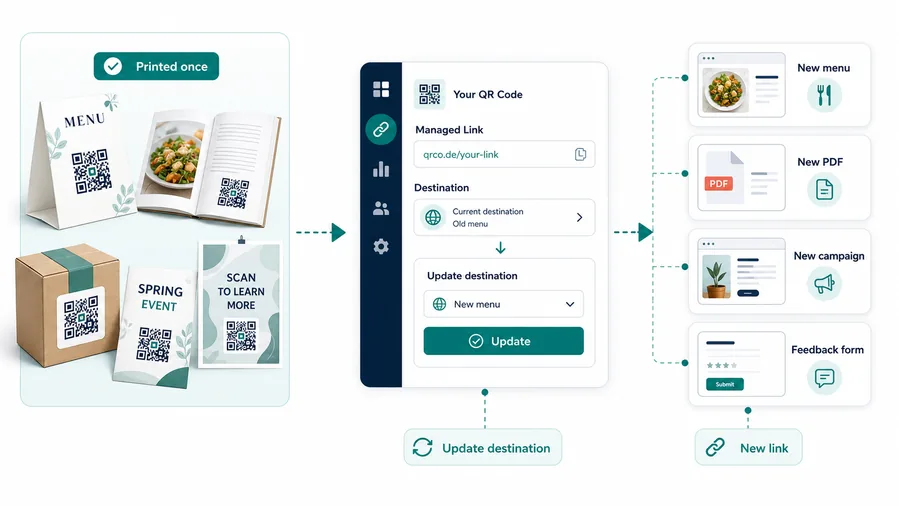
Event signs
Update tickets, RSVP, schedules, room changes, maps, speaker pages, and reminders.
Retail promotions
Rotate coupons, product pages, launch offers, store pages, and campaign messages.
Restaurants and venues
Change menus, booking links, specials, delivery pages, hours, and feedback paths.
Public notices
Update forms, instructions, service alerts, maps, deadlines, and resource pages after posting.
Use dynamic when posters carry changing information
If the poster may stay visible longer than the first destination is valid, keep the QR editable.
Poster placement
Design for the scanner distance, height, and available attention
Use poster QR codes on event walls, storefront windows, classroom boards, venue displays, campaign boards, restaurant signs, retail posters, nonprofit notices, school announcements, and trade show signage. Place the code where people can pause, lift the phone, and scan without blocking traffic. If the code is too high, too low, too small, or behind glare, the scan count will suffer even if the design looks polished.
Test from the actual scan distance, not only from a close-up phone camera. Keep contrast high, avoid glossy glare, preserve the quiet zone, and pair the code with a short CTA such as get tickets, open map, view menu, register, donate, download details, or claim offer. The CTA gives people a reason to stop.
Use dynamic QR codes when poster links may change or when you want analytics by location. QR Code Lab can track scans and manage the destination, while the ticket page, form, map, menu, or campaign site handles the final action. If the poster will be reused, dynamic routing also lets you refresh the destination instead of throwing away a good printed sign.