QR Code for Language Schools - Tests, Classes & Signups
Create QR codes for language schools linking placement tests, class schedules, signup forms, resources, trial lessons, reviews, and payments. Use them on flyers, classroom signs, and brochures.
Free QR code generator
Create a QR code online
Generate QR codes for websites, email, phone numbers, vCards, Wi-Fi, plain text, forms, PDF files, and campaign links. Customize colors, add a logo or frame, then download a print-ready PNG or SVG.
Choose QR code type
Website QR code, Email QR code, Phone QR code, vCard QR code, Wi-Fi QR code, Text QR code, SMS, WhatsApp, event, and download links.
Add your content
Enter your website URL, contact details, message, phone number, location, or file destination before generating the QR code.
Customize and download
Adjust QR colors, error correction, logo, frame, size, and margin. Generate QR Code, Download PNG, Download SVG, or Save and track scans.
QR solutions for this use case
Class signup path
Help learners open placement tests, schedules, trial lessons, and resources
A QR code for language schools is useful when learners, parents, or adult students need a direct path from a flyer, classroom poster, reception sign, workbook, certificate, or event booth to the right learning action. It can open placement tests, class schedules, signup forms, learning resources, trial lesson pages, review pages, payment links, and student guides. Language schools, ESL programs, tutors, course creators, training centers, and local education businesses can use QR codes to reduce typing and missed follow-up.
The QR code should reduce the friction between interest and enrollment. A flyer can open a trial lesson page. A classroom handout can open homework resources. A poster can open schedules by level. A reception sign can open placement testing. A review card can ask current students to share feedback after the course. QR Code Lab helps create print-ready codes, dynamic destinations, and scan analytics so schools can update links and see which materials create student interest.
QR Code Lab creates URL QR codes only. It does not manage bookings, collect forms, host files, sell classes, or run school management software. The linked LMS, form, payment, booking, or school platform handles the learning workflow and student data.
Language learning path
Help language-school students enroll, place into the right level, access lessons, and pay clearly
Learning flowA language-school QR code should connect flyers, classroom posters, placement-test cards, parent letters, certificates, and lesson handouts to the exact next step: trial lesson, level test, class schedule, enrollment form, homework, payment, or support.

Turn interest in a course into the right learning path
Use QR codes on flyers, open-house signs, school desks, and local ads to open trial lessons, placement tests, course calendars, tuition pages, and enrollment forms.
The scan should help students or parents choose a level, not dump them on a generic homepage.
Attach resources to the exact lesson or class stage
Use handouts, workbook pages, posters, and certificates to open vocabulary audio, homework files, answer keys, pronunciation clips, attendance forms, and parent updates.
Language learning benefits from fast access to the resource connected to the printed material.
Keep schedules and forms current across terms
Dynamic QR helps when class times, placement tests, enrollment forms, payment links, teacher pages, and homework resources change after flyers or handouts are printed.
Course information changes often; printed school materials should stay accurate.A language-school QR should route by learner stage
The scanner may be a parent choosing a course, an adult learner booking a trial, a student opening homework, or a teacher sharing class resources. The destination should match that stage immediately.
Use CTAs such as book trial lesson, take placement test, view schedule, open homework, pay tuition, or contact admissions.Prospective students
Open trial lessons, placement tests, course levels, tuition, and enrollment.
Current learners
Route to homework, audio, vocabulary, class files, attendance, and teacher notes.
Parents
Use QR for translated notices, consent forms, calendars, payment links, and progress resources.
Term updates
Keep schedules, forms, and class pages editable after print.
Schools, classrooms, workbooks, and textbooks
Connect language-school materials to the exact class, form, or practice resource
Learning accessLanguage-school QR codes are useful when a flyer, workbook page, classroom poster, certificate, or parent notice should open the matching trial lesson, placement test, audio file, homework, payment page, or update without a search.

Attach practice resources to printed lessons
Use QR codes on handouts and workbook pages to open vocabulary audio, pronunciation practice, grammar examples, extra exercises, and teacher-selected review.

Open placement tests and level checks quickly
Send prospective students to level tests, needs-assessment forms, trial-class booking, and course recommendations from flyers or admissions cards.

Share homework and class files by group
Use classroom posters or lesson sheets to open the current homework, PDF files, answer explanations, and class-specific links.

Give parents translated school information
Use QR codes on notices and calendars to open translated updates, consent forms, payment reminders, and event details.

Support listening and pronunciation practice
Attach audio clips, video explanations, teacher recordings, and pronunciation guides to the printed lesson where learners need them.

Make enrollment and trial lessons easier
Route local flyers and open-house materials to enrollment forms, course levels, calendars, tuition context, and admissions contact.

Help adult learners continue after class
Link certificates, completion cards, and follow-up sheets to next-level courses, conversation clubs, tutoring, and exam prep.

Keep school forms current across terms
Use dynamic destinations for schedules, teacher links, enrollment forms, payment pages, and term notices that change often.
Students and parents should land on the right resource immediately
The QR should remove typing, searching, and guessing by opening the specific class page, audio file, homework, placement test, payment link, or parent form connected to the printed material.
Language schools can update class destinations without reprinting
Dynamic QR helps when class schedules, homework files, teacher pages, enrollment forms, audio resources, and parent notices change after materials are printed.
Put the QR beside the learning or enrollment moment
School placement
Place language-school QR codes where learners, parents, or prospects already need the next step
PlacementLanguage-school QR placement should match the moment: choosing a course, taking a placement test, reviewing homework, checking a class schedule, paying tuition, or helping a parent understand a notice.
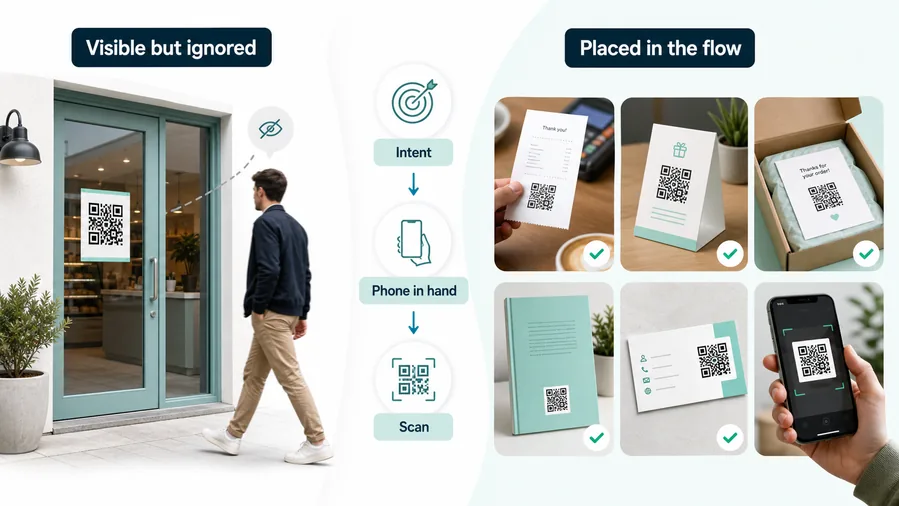
The code appears without naming the learning action
A QR on a flyer or worksheet can be visible but confusing if it does not say whether it opens enrollment, audio, homework, payment, or parent information.
Language-school materials often serve different audiences, so vague QR codes create extra questions.
The code sits beside the exact class or admissions task
Use flyers for trial lessons, workbook pages for audio and homework, parent letters for forms, and certificates for next-level offers.
The first screen should match the language, level, class, or learner group.
Who is scanning?
Prospective student, parent, current learner, adult learner, teacher, school administrator, or event visitor.
What should happen next?
Book trial, take placement test, enroll, open homework, listen to audio, pay tuition, sign form, or ask support.
Does the page match the class level?
Use class-specific or level-specific destinations where learners need precise resources.
Will the term details change?
Use dynamic QR for schedules, enrollment, payment links, teacher pages, files, and term notices.
Local flyer
Open trial lesson, placement test, course calendar, tuition page, and admissions contact.
Classroom poster
Show schedule, class files, attendance form, homework, and teacher announcements.
Workbook page
Link to audio, vocabulary, pronunciation, grammar examples, and answer explanations.
Parent letter
Open translated notice, consent form, calendar, payment reminder, and support contact.
Certificate
Route to next level, conversation club, exam prep, referral, and review request.
Open-house sign
Send visitors to placement test, demo class, enrollment form, and program comparison.
Payment notice
Open trusted tuition payment, installment, invoice, or provider checkout page.
Teacher handout
Provide lesson files, homework upload, class resources, and update notes.
Language-school QR placement should remove friction from learning
Use each code where it opens the exact resource or form the scanner expects.
Learning scan experience
Make language-school QR destinations clear for students, parents, and prospects
Scan UXThe first screen should confirm the school, language, class level, learner stage, and action before asking for enrollment details, payment, homework upload, or contact information.
Trial and placement pages should orient the learner
Trial lesson, level test, course calendar, tuitionWhen a prospect scans from a flyer or open-house sign, the destination should show the language, level path, next available class, and enrollment step clearly.
Avoid sending every learner to a broad program page when the printed piece promised a trial or placement test.
Current students need the exact resource quickly
Homework, audio, vocabulary, teacher notesWhen students scan from a workbook or classroom poster, the relevant homework, audio, file, or form should be visible immediately.
Class-specific destinations reduce confusion across levels and teachers.
Parent notices should be easy to understand and complete
Translation, consent, payment, calendarParent-facing pages should be mobile-friendly, translated where appropriate, and clear about due dates or required action.
Payment and consent confirmations stay in the school or provider system, not scan analytics.
Does the page match the printed promise?
A “scan for placement test” code should open the test or a clear test button, not a generic homepage.
Is the audience obvious?
Student, parent, adult learner, or admissions prospect should know the page is for them.
Can the task be completed on a phone?
Enrollment, payment, homework, audio, and consent pages should be readable and easy to tap.
The scan should make learning administration easier
Use this block when the page needs to prove QR destinations fit real school workflows.
School scan reporting
Use scan data to compare language-school materials without overclaiming enrollment
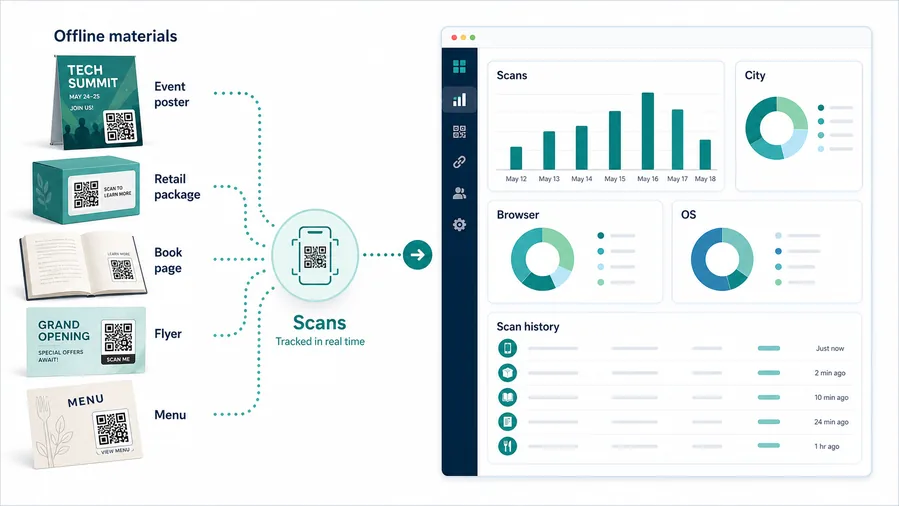
AnalyticsTracking helps language schools compare flyers, open-house signs, class posters, parent letters, workbook pages, certificates, and payment notices.
All school scans become one unclear total
A single QR code can show interest, but it cannot tell whether scans came from enrollment flyers, parent letters, workbook pages, certificates, or posters.
That makes it harder to improve admissions and class-resource materials.
Each school material becomes a useful signal
Use separate dynamic QR codes for admissions, class resources, parent notices, payment pages, and certificates when comparison matters.
Scan data shows attention and timing; enrollment, attendance, homework, and payments stay in school systems.
Scan volume
Review how many scans each flyer, notice, worksheet, poster, certificate, or payment card received.
Time and device
See when learners or parents scanned and which device or browser opened the destination.
Broad location
Use approximate location signals to review local campaigns without treating them as student identity.
Code comparison
Compare flyers, open-house signs, class posters, parent letters, workbook pages, and certificates side by side.
Admissions campaigns
Compare trial lesson, placement test, local flyers, event signs, and program brochures.
Class resources
Review scans from homework, audio files, answer explanations, and teacher handouts.
Parent communication
Track notices, consent forms, translated pages, calendars, and payment reminders.
Operational cleanup
Find old schedules, stale teacher links, expired forms, zero-scan materials, and dead payment pages.
Name language-school QR codes by class, audience, and term
Tracking works best when code names match the real flyer, notice, class, level, teacher, or campaign.
Learner and parent flow
Place QR codes where the learner is choosing a level, class, or next resource
Use language school QR codes on flyers, classroom posters, student workbooks, trial lesson cards, reception signs, event booths, certificates, homework sheets, review request cards, and parent handouts. The CTA should say take placement test, view schedule, book trial lesson, open resources, pay tuition, join class, or leave review. For mobile scanning, keep forms short and make the language level obvious before the learner commits.
Dynamic QR codes help when schedules, placement tests, signup pages, payment links, and learning resources change. Scan analytics can show which schools, flyers, events, and classroom materials generate student interest. The school still owns the forms, payments, and learner records.
Send each placement to the exact next step. A beginner flyer should not open an advanced course page. A workbook QR should open the matching exercise, audio, or answer key. This makes the scan feel like help, not homework. For parent-facing materials, make the schedule, price path, and trial lesson option clear before asking for a long form.
Tuition payment boundary
Use language-school QR codes for tuition links, not payment confirmation
PaymentsQR Code Lab can open tuition invoices, registration fees, course deposits, installment pages, exam fees, or provider checkout links. The school system, accounting tool, or payment provider handles funds, receipts, refunds, disputes, and enrollment status.
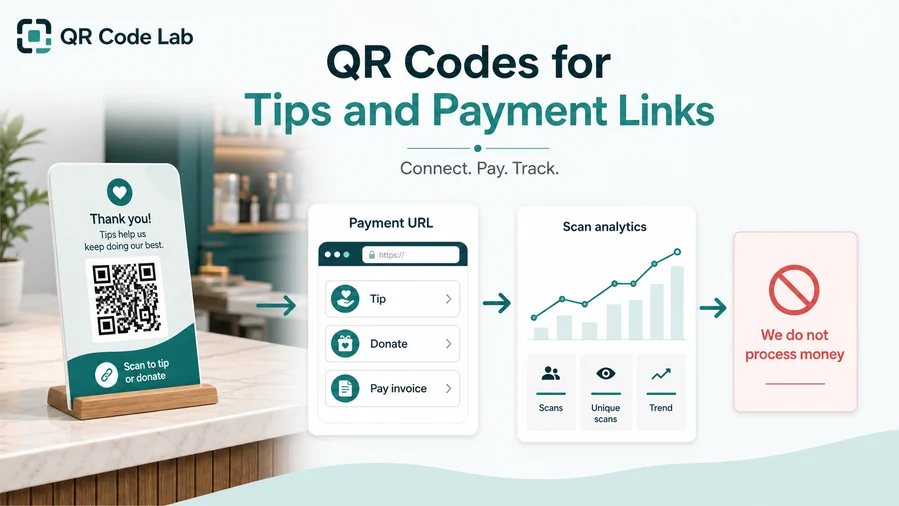
Open tuition or registration payment quickly
Use QR codes on invoices, parent letters, admission cards, and course packets so families or adult learners can reach the correct payment page.
Clarify what the student is paying for
Label whether the QR opens tuition, trial lesson fee, registration, exam prep, materials, placement test, or installment payment.
Keep provider links editable
Dynamic QR helps when payment providers, installment pages, course IDs, term invoices, or registration pages change.
A scan does not confirm tuition was paid
Scan analytics can show that someone opened a payment link, but only the school, accounting system, or payment provider can confirm completion.
Use the school’s payment workflow as the source of truth for balances and enrollment.Keep school payment QR codes convenient and clear
Use QR to reduce typing while payment records stay with the proper provider.
School trust
Make language-school QR destinations trustworthy before forms, payments, or student details
TrustLanguage-school QR codes can open enrollment forms, placement tests, payment links, parent notices, and student resources. The destination should show school identity and purpose clearly.

Unknown enrollment or placement forms
Students and parents may hesitate if a QR asks for names, ages, contact details, language level, or learning goals without clear school identity.
Show the school, program, and reason for each requested detail.
Payment links without term context
Tuition, registration, exam, and materials QR codes should identify the school, course, term, and provider before checkout.
Payment confirmation belongs in the provider or school system, not scan analytics.
Old schedules and forms still circulating
Flyers, parent letters, classroom posters, and workbooks can keep circulating after classes, teachers, forms, or links change.
Review term materials and use dynamic QR for changing destinations.Inspect language-school QR destinations before distribution
Confirm the encoded destination, school identity, CTA match, and whether the QR opens enrollment, placement, homework, payment, parent, or support pages.
A QR checker helps reveal the destination, but it does not confirm payment, enrollment, attendance, or student record status.Decoded destination
Confirm the QR opens the intended form, class page, payment, homework, audio, or parent notice.
School identity
The first screen should match the school, language, class, term, or teacher the scanner expects.
Information request
Check that forms ask only for details appropriate to the learner or parent task.
Printed context
Review flyers, handouts, posters, letters, and certificates for old or mismatched codes.
Publish language-school QR codes students and parents can trust
Clear CTAs, recognizable destinations, current forms, and careful payment links make QR codes useful for admissions, class resources, and parent communication.