QR Code for Tutors - Booking, Lesson Resources & Reviews
Create QR codes for tutors linking booking pages, lesson resources, signup forms, reviews, contact cards, payment links, calendars, and profiles. Use them on flyers, worksheets, cards, and signs.
Free QR code generator
Create a QR code online
Generate QR codes for websites, email, phone numbers, vCards, Wi-Fi, plain text, forms, PDF files, and campaign links. Customize colors, add a logo or frame, then download a print-ready PNG or SVG.
Choose QR code type
Website QR code, Email QR code, Phone QR code, vCard QR code, Wi-Fi QR code, Text QR code, SMS, WhatsApp, event, and download links.
Add your content
Enter your website URL, contact details, message, phone number, location, or file destination before generating the QR code.
Customize and download
Adjust QR colors, error correction, logo, frame, size, and margin. Generate QR Code, Download PNG, Download SVG, or Save and track scans.
Lesson booking path
Help students and parents open booking, resources, reviews, and contact details
A QR code for tutors is useful when students or parents need a simple path from a flyer, business card, worksheet, classroom handout, poster, event booth, lesson note, or invoice to the right tutoring action. It can open booking pages, calendar links, lesson resources, signup forms, reviews, payment links, tutor profiles, contact cards, and homework support pages.
Tutoring QR codes work best when they reduce small but annoying steps. A parent can scan a flyer and book a first call. A student can scan a worksheet and open the practice resource. A handout can open a lesson video. An invoice can open payment or next-session booking. A business card can save the tutor contact. QR Code Lab helps tutors create print-ready dynamic QR codes and see which materials actually get scanned.
QR Code Lab creates URL QR codes and scan analytics. It does not teach lessons, process tutoring payments, collect student records, run calendars, grade work, or manage education platforms. Your booking tool, payment provider, website, form, learning platform, or review page handles the actual student workflow.
Tutor learning moments
Tutor learning moments schools, teachers, tutors, and training teams with assignments, worksheets, lessons, schedules, feedback, resources, and parent or student follow-up
Tutoring flowUse QR codes to move schools, teachers, tutors, and training teams from worksheets, classroom posters, school handouts, lesson materials, event signs, and training packets to assignments, worksheets, lessons, schedules, feedback, resources, and parent or student follow-up without making students, parents, or attendees type a long URL.

Turn interest into a lesson request
Use tutor flyers, business cards, school notices, and referral cards to open subject pages, availability, intake forms, trial lesson booking, and contact options.
The scan should make the subject and tutor offer clear immediately.
Connect lessons to practice resources
QR codes on worksheets and lesson notes can open homework, answer keys, examples, videos, revision sheets, and upload forms tied to the exact topic.
Learning resources should match the student’s current assignment.
Keep payments and progress updates organized
Route parents to lesson packages, invoices, receipts, progress notes, private feedback, reviews, and rescheduling without long links.
Payment and student information need trusted destinations.A tutor QR code should remove friction for students and parents
The destination should help someone book, practice, catch up, pay, ask a question, or understand progress without searching through messages.
Use specific CTAs: book assessment, open homework, upload work, pay invoice, view resources, or message tutor.Booking path
Open subject fit, schedule, assessment, intake, trial lesson, and parent questions.
Learning resource
Connect worksheets and notes to the exact video, answer key, practice, or upload form.
Parent handoff
Use QR codes for progress notes, rescheduling, payment, policies, and support.
Trust and privacy
Keep student details, payments, and feedback on clear tutor-controlled or provider pages.
Schools, classrooms, workbooks, and textbooks
Connect tutor worksheets and lesson notes to the resource students need next
Learning accessTutor QR codes are useful when a worksheet, assignment, review sheet, lesson note, or parent handout should open the matching practice, answer key, video, form, booking page, or upload path.

Open practice for the exact topic
Attach QR codes to worksheets and notes so students can reach extra examples, drills, videos, and revision tasks without searching.

Share answer keys at the right time
Use self-check pages, guided solutions, or released answers when the student should review work independently.

Collect homework or intake details
Route students or parents to upload forms, assessment questions, subject goals, availability, and lesson prep.

Support missed lessons
Open recap notes, lesson recordings, homework, make-up instructions, and next-step practice after an absence.

Guide parents clearly
Use parent handouts for progress notes, scheduling, payment policy, materials, and tutor contact.

Separate subjects and levels
Use different QR destinations for math, reading, language, exam prep, early learning, and advanced topics.

Keep resources current
Use dynamic QR when files, forms, calendars, lessons, answer keys, or practice sets change during the term.

Make follow-up easier
Send families to booking, rescheduling, referrals, reviews, and support after the lesson path is clear.
Students should land on the resource for their current task
The scan should open the promised worksheet, video, answer, upload form, or practice set without making the student hunt through a folder.
Tutors can update learning links without reprinting handouts
Dynamic QR helps when homework, calendars, answer keys, lesson files, forms, or parent notes change between sessions.
Put tutor QR codes beside the learning handoff
Tutoring placement
Place tutor QR codes where students or parents need the next step
PlacementTutoring QR placement should follow the relationship: discovery, trial lesson, homework, missed session, parent update, payment, review, and referral.
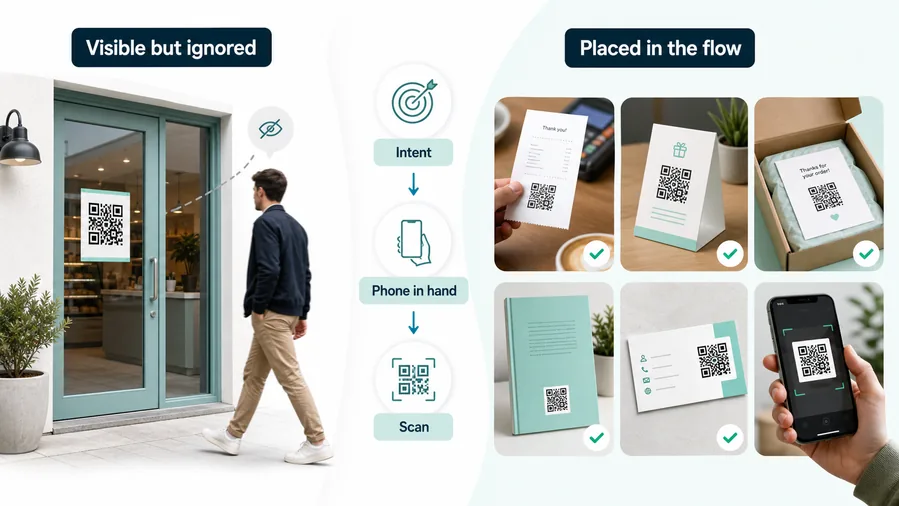
A generic tutor QR does not help the student act
A flyer, worksheet, invoice, and parent note each need a different destination.
If the printed CTA does not say what opens, families may ignore the code or land on the wrong resource.
Put the QR beside the handoff it supports
Use flyers for booking, worksheets for practice, lesson notes for recaps, invoices for payment, and parent notes for progress or scheduling.
The first screen should show tutor identity, subject, and action.
Who is scanning?
Parent, student, school partner, referral source, returning family, or new lead.
What should happen next?
Book assessment, open homework, watch example, upload work, pay invoice, reschedule, review progress, or refer a friend.
Will the destination change?
Use dynamic QR for calendars, homework files, answer keys, booking pages, payment links, and parent updates.
Does the page protect trust?
Student details, payments, assessments, and feedback should open clear tutor-controlled or trusted provider pages.
Flyer or school notice
Open subject fit, trial lesson, availability, intake, and parent contact.
Business card
Share tutor profile, contact, booking, subjects, reviews, and referral offer.
Worksheet
Open practice, hints, answer key, video explanation, and upload form.
Lesson note
Link recap, homework, next steps, resources, and missed-lesson support.
Parent handout
Show progress notes, schedule, policies, payment, materials, and contact.
Invoice
Open trusted payment, package balance, receipt, and billing support.
Review card
Invite private feedback, public review, referral, and next booking.
Classroom poster
Route students to resource hub, signup, office hours, and support.
Tutor QR placement should make the next learning step easier
If the code does not help someone book, practice, pay, ask, or continue, it needs a sharper role.
Tutoring scan UX
Make the tutor QR scan open a clear lesson, booking, homework, or payment path
Scan UXStudents and parents scan because they need a next step quickly. The first screen should show the tutor, subject, resource, and action without forcing them through a generic homepage.
Booking scans should answer parent questions quickly
Trial lesson, intake, schedule, subjectShow subject fit, tutor credentials, availability, format, pricing context, intake questions, and trial lesson CTA.
Parents should not have to search for the form after scanning a flyer or card.
Homework scans should open the exact resource
Practice, answer key, video, uploadThe page should match the worksheet, topic, level, and assignment promised beside the QR code.
Make video, PDF, answer key, and upload buttons visible on mobile.
Payment and progress scans need trust context
Invoice, progress, policy, contactBefore payment or forms, show tutor identity, student or package context where appropriate, due date, receipt expectation, and support.
Keep sensitive student information inside trusted systems.
Does the page match the printed handoff?
The scanner should immediately see booking, homework, answer key, progress, payment, review, or support based on the CTA.
Is the resource easy to use on a phone?
Buttons, files, videos, forms, and contact options should be visible without zooming or searching.
Is privacy clear for student information?
Use trusted forms and payment pages when scans involve assessments, homework uploads, invoices, or parent communication.
A tutor QR code should make follow-through easier
If the scan creates a new search task for the family, the destination needs to be more specific.
Scan reporting
Use tutor scan data to compare flyers, worksheets, subjects, and parent handoffs
AnalyticsTracking helps tutors see which printed materials get attention, without treating scan totals as bookings, learning progress, or paid lessons.
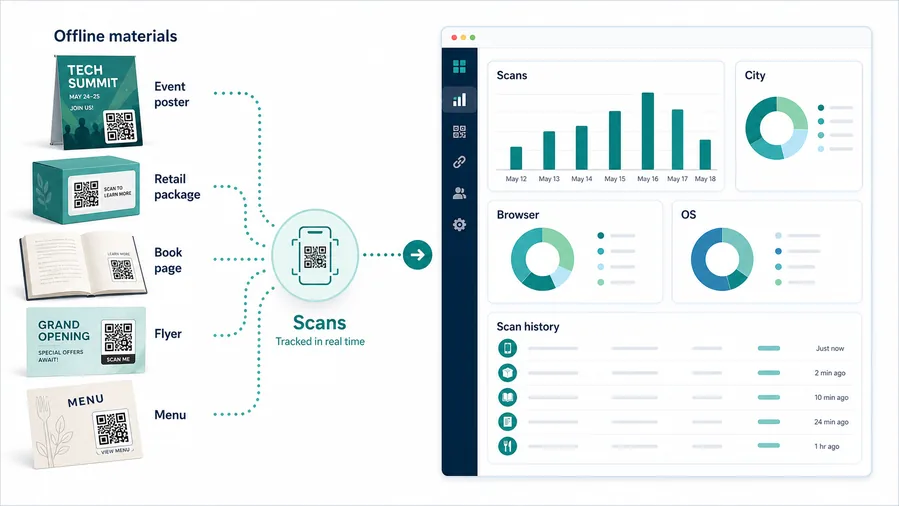
One shared tutor code hides the learning context
A single QR can show total scans, but it cannot tell whether interest came from a flyer, worksheet, lesson note, invoice, review card, or school notice.
It also cannot separate booking, homework, answer keys, payment, feedback, and referrals.
Separate tracked codes make tutoring follow-up clearer
Use different dynamic codes for subjects, handouts, flyers, lesson packs, invoices, and parent materials when comparison matters.
Scan data is not proof of learning, but it helps show which handoffs families actually use.
Scan volume
Review scans by flyer, subject, worksheet, parent note, invoice, or referral card.
Timing
Check patterns around homework deadlines, exam periods, school terms, and booking campaigns.
Broad location
Use approximate location signals to compare neighborhoods, schools, or local placements.
Device context
Confirm forms, videos, PDFs, and payment pages work on student and parent devices.
Lead source comparison
Compare school notices, flyers, business cards, referrals, and local posters.
Homework resource use
Separate practice, answer key, video, and upload codes when student support matters.
Parent admin signals
Track payment, scheduling, policy, and progress-note scans separately.
Cleanup old materials
Find retired calendars, stale homework links, old invoices, and moved forms still receiving scans.
Name tutor QR codes by subject, handout, and action
Use names like math-flyer-booking, algebra-homework-3, parent-invoice, or exam-review-upload so reports stay readable.
Parent and student flow
Place tutor QR codes where the next learning step is obvious
Useful placements include flyers, business cards, lesson sheets, homework packets, classroom posters, parent handouts, invoices, event booth signs, bookmarks, and welcome packets. CTAs should say book lesson, view profile, open resources, download worksheet, pay invoice, save contact, read reviews, or ask a question. The code should match one action instead of sending everyone to a crowded homepage.
Dynamic QR codes help when calendars, resources, prices, reviews, and signup pages change. A tutor can keep printed materials active while updating the destination for a new term, exam season, summer program, or subject offer. Scan analytics can compare flyers, worksheets, cards, and invoices so the tutor can see which printed pieces support real interest.
For learning resources, send students to the exact page they need. For parent-facing material, show trust signals, contact details, and booking steps early. If the destination asks for student information, keep it clearly branded and use the proper education or form system to handle privacy. A clear scan path can also make printed flyers feel more professional.
Payment boundary
Use tutor payment QR codes for lessons, packages, invoices, and deposits with clear family context
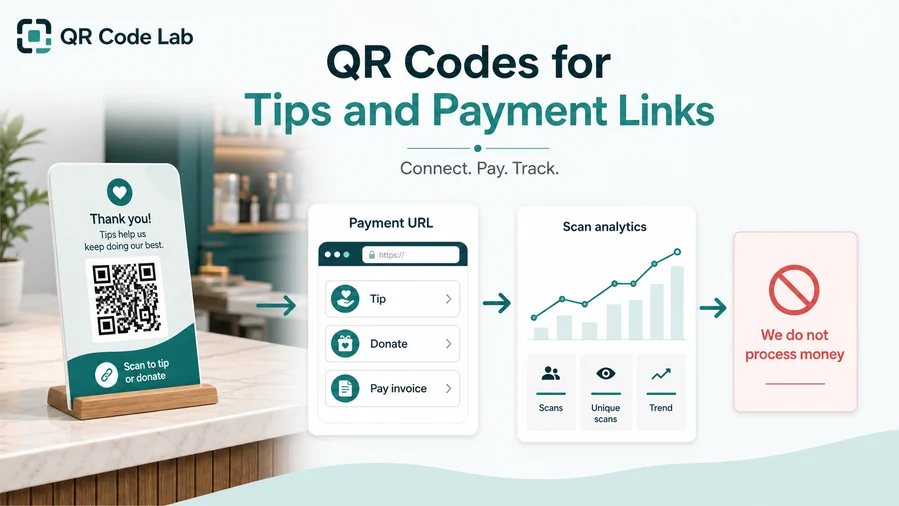
PaymentsA tutor payment QR should make clear whether the parent is paying a trial lesson, package, monthly invoice, deposit, materials fee, make-up lesson, or balance.
Lesson packages
Open trusted payment pages for package purchases, renewals, deposits, or trial lessons with tutor and subject context.
Invoices and balances
Use parent handouts and invoices for monthly balances, receipts, make-up lessons, and billing support.
Materials and assessments
Route workbook fees, test prep materials, assessments, and course resources to clear checkout pages.
The QR opens a trusted payment page; it does not process money inside QR Code Lab
Keep checkout, receipts, refunds, disputes, deposits, balances, tips, and confirmation inside the booking, education, commerce, invoice, or payment provider.
A scan shows that someone opened the payment path, not that payment was completed.Tutor payment QR codes need lesson and invoice clarity
Parents should know what lesson, package, or resource the scan belongs to before paying.
Scan trust
Make tutor QR codes trustworthy before families book, share student details, or pay
TrustTutor QR codes may open booking, assessments, homework uploads, parent notes, payments, reviews, and support. The destination should clearly belong to the tutor or learning program.

Anonymous student forms
Parents may hesitate to share learning needs, schedules, assessments, or contact details if the page does not show tutor identity.
Watch for similar-looking domains, long URLs, login or verify keywords, and pages asking for credentials after an unexpected scan.
Stale homework or calendar links
Old resource folders, moved forms, outdated calendars, and retired answer keys create missed work and parent confusion.
A trustworthy QR should not make the final destination mysterious, especially on posters, labels, menus, parking signs, or event materials.
Unclear payment pages
Invoices, packages, deposits, materials, and make-up lesson payments need subject and billing context.
Before paying, check the domain, HTTPS, amount, recipient, and whether the destination matches the place or brand that printed the QR.Inspect the destination before people rely on it
Scan the printed proof and confirm the page identity, HTTPS domain, action, form, file, booking, payment, review, or support path before distribution.
A QR code removes typing, but the destination still has to prove that it belongs to the publisher, tutor, or tour operator.Decoded destination
Check whether the QR opens the current booking, homework, answer key, upload, payment, review, or support page.
Tutor identity
Confirm the page shows tutor name, learning program, subject, or parent context before forms or payment.
Student privacy
Keep assessments, homework uploads, parent notes, and student details inside trusted forms.
Payment context
Verify invoice, package, trial lesson, materials, and receipt details before printing.
Publish QR codes people can understand
The printed CTA, destination title, brand identity, and first button should all describe the same action.