QR Code for Art Classes - Signups, Schedules & Portfolios
Create QR codes for art classes linking signup forms, class schedules, supply lists, instructor portfolios, waivers, reviews, and maps. Use them on flyers, studios, handouts, and posters.
Free QR code generator
Create a QR code online
Generate QR codes for websites, email, phone numbers, vCards, Wi-Fi, plain text, forms, PDF files, and campaign links. Customize colors, add a logo or frame, then download a print-ready PNG or SVG.
Choose QR code type
Website QR code, Email QR code, Phone QR code, vCard QR code, Wi-Fi QR code, Text QR code, SMS, WhatsApp, event, and download links.
Add your content
Enter your website URL, contact details, message, phone number, location, or file destination before generating the QR code.
Customize and download
Adjust QR colors, error correction, logo, frame, size, and margin. Generate QR Code, Download PNG, Download SVG, or Save and track scans.
Creative signup path
Turn curiosity about the class into signup, supplies, or portfolio viewing
A QR code for art classes is useful when a poster, window sign, handout, or studio display makes someone curious and the next step should be easy. It can open a signup form, class schedule, supply list, instructor portfolio, waiver, review page, map, student gallery, workshop landing page, or payment page. Art teachers, studios, kids programs, community centers, private instructors, creative schools, and workshop hosts can use QR codes wherever people discover the class offline.
The scan should answer the practical question in front of the student or parent. What class is available? When does it meet? What supplies are needed? Is it beginner friendly? Who teaches it? How do I register? A clear QR destination can move someone from interest to action without forcing them to search online later.
QR Code Lab creates URL QR codes and can support dynamic destinations and scan analytics. It does not manage bookings, payments, waivers, student records, forms, or professional advice. The linked class platform, form, portfolio, schedule page, or payment tool handles the actual signup and student information.
Schools, classrooms, workbooks, and textbooks
Connect art class materials to signups, schedules, and creative resources
Learning accessAn art class QR code should help students, parents, and visitors move from a flyer, studio sign, handout, or supply list to the exact action: register, see the schedule, download materials, submit work, or view a class gallery.

Open registration while interest is fresh
Use QR codes on flyers, posters, studio windows, school notices, and event tables so families can choose a class, workshop, camp, or trial session before they forget.

Attach supply lists to the class they belong to
Put QR codes on handouts and confirmation sheets to open current supplies, tools, reference images, safety notes, and preparation steps.

Share examples without crowding the flyer
Send scanners to student galleries, instructor portfolios, technique previews, class outcomes, and age-level examples that help them picture the experience.

Collect permission and contact details cleanly
Use forms for waivers, parent contacts, photo permission, waiting lists, and follow-up questions instead of handwritten scraps.
Support students after class
Link printed exercises to recap videos, downloadable practice sheets, reference photos, and homework prompts students can use at home.

Promote the next workshop
Use a dynamic destination when the same studio poster or handout should point to the next date, seasonal camp, or exhibition.

Make event tables easier to staff
Let visitors scan for schedules, pricing, portfolios, teacher bios, and booking while instructors keep talking to families.

Keep class communication organized
Route questions, makeup requests, and interest forms to the right place instead of spreading them across messages and paper notes.
Students and parents should land on the right class action immediately
The QR code should remove searching and typing by opening the class page, signup form, schedule, supply list, gallery, or resource that matches the printed material.
Studios can update class details without reprinting every flyer
Dynamic QR codes help when dates, available seats, supply lists, instructor notes, event pages, or seasonal workshops change after posters and handouts are already out.
Put the QR beside the creative moment
Studio placement
Place art class QR codes where people are ready to choose or create
PlacementArt class QR placement should match the moment: a parent reading a flyer, a student holding a handout, a visitor looking at student work, or a family comparing workshops at an event table.
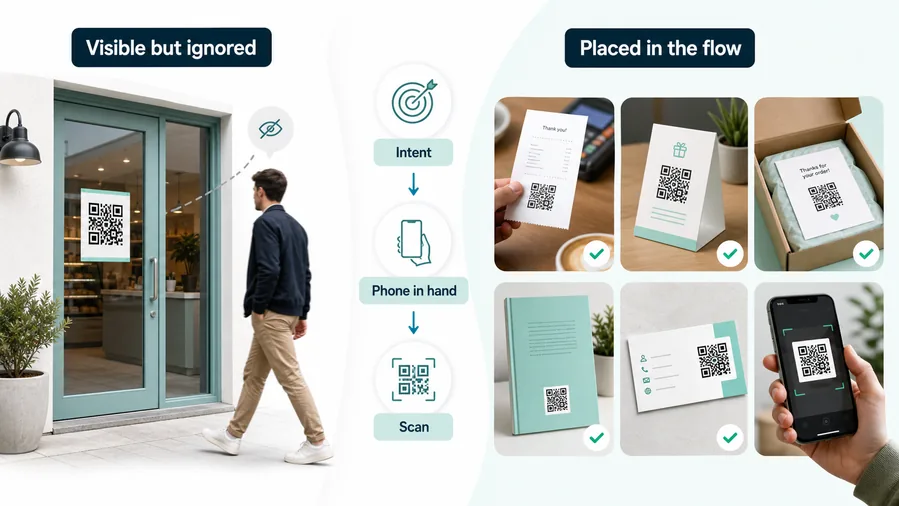
The QR opens a generic studio page
A broad homepage makes families hunt for dates, age groups, prices, supplies, and registration.
The scan should continue the exact class promise printed beside the code.
The QR opens the class action for that moment
Flyers can open registration, handouts can open resources, gallery labels can open class details, and event cards can open trial booking.
The caption should name what the scanner receives.
Who is scanning?
Parent, adult learner, teen, student, visitor, teacher, or event guest should shape the destination.
What decision are they making?
Register, compare classes, prepare supplies, view examples, ask questions, or continue practice.
Is the phone naturally available?
Studio windows, event tables, handouts, and gallery walls usually work better than fast-moving hallway spots.
Will class details change?
Use dynamic QR when dates, seats, supplies, prices, or teacher notes may move.
Flyer or poster
Open class schedule, age group, pricing, trial session, and registration.
Studio window
Show upcoming workshops, portfolio examples, map, and contact after hours.
Student handout
Link to reference images, recap video, supply list, and practice prompts.
Gallery wall
Explain the class, technique, student age group, and enrollment path.
Event table
Open booking, pricing, instructor bios, waiting list, and questions.
Supply list
Keep tools, materials, substitutions, and safety notes current.
Class certificate
Send families to photos, next-level classes, and feedback forms.
School notice
Open parent information, consent forms, dates, and pickup instructions.
Art class QR placement should make the creative next step obvious
Put the code where curiosity, preparation, or class follow-up is already happening.
Class updates
Use dynamic QR when class details change after flyers are printed
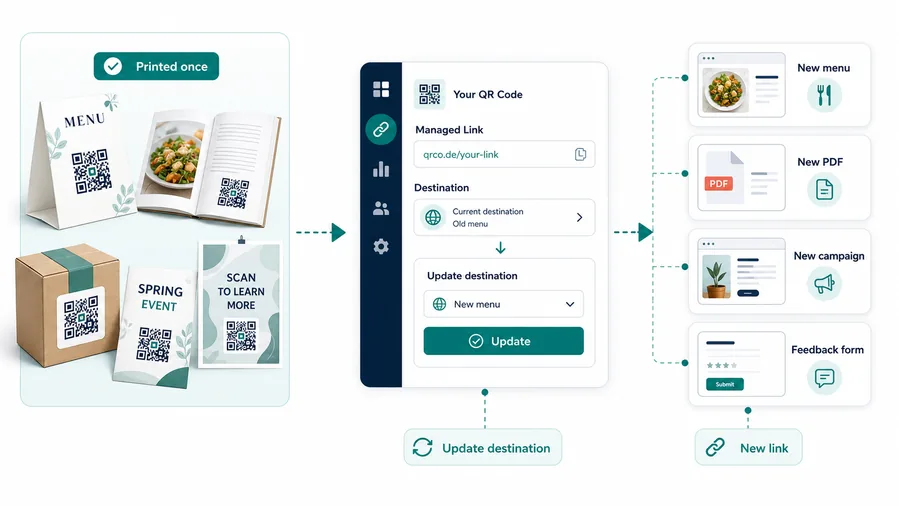
DynamicArt class schedules, seat counts, supply lists, instructors, galleries, and workshop pages can change while posters, handouts, and school notices are still circulating.
Printed class materials can age before the workshop starts
A flyer may keep circulating after a class fills, a date changes, a supply list updates, or a registration page moves.
Static QR can send interested families to stale information.
The same QR can follow the class season
Redirect from open registration to waitlist, from workshop promo to recap gallery, or from one camp session to the next.
This keeps studio print useful without reprinting every sign.
Registration and waitlists
Move scans between open seats, waitlists, seasonal camps, and next available workshops.
Supply and prep updates
Change tools, material substitutions, safety notes, and reference images before class.
Student resources
Update recap videos, practice sheets, galleries, and homework prompts after each session.
Event follow-up
Redirect open-house or exhibition scans to booking, gallery, feedback, or next class.
Use dynamic when the class promise may move
If printed art class material may outlive the schedule or resource page, keep the destination editable.
Studio flow
Make the scan answer the next practical class question
Use QR codes on studio windows, workshop flyers, classroom handouts, supply lists, kids program cards, gallery walls, community boards, event tables, instructor portfolio cards, school newsletters, and local business counters. The CTA should be specific: join class, view schedule, see supplies, sign waiver, get directions, meet the instructor, or view student gallery. A simple label can turn a nice poster into a working signup path.
Dynamic QR codes help when class dates, prices, locations, supply lists, instructor pages, waivers, and signup forms change. Separate QR codes for window signs, community boards, event tables, and school flyers can show which placements create real class interest. QR Code Lab scan analytics will not replace registration data, but it can show where people started the path. Keep the destination mobile friendly, especially for parents scanning from a flyer or students scanning a handout between classes.
If the class is visual, use the print to show the artwork and the QR to handle details. That keeps the flyer attractive while still giving people the practical path to join.
Class UX
Make art class scans answer the family or student question fast
Scan UXThe scan should confirm the class, age group, schedule, and next action before people have to dig through a studio website.
Registration needs confidence before the form
Class, age group, dates, price, seatsFamilies should immediately see which class the flyer promised and whether it fits the learner.
Show age range, schedule, location, price, and what happens after registration before the form feels demanding.
Student materials should open directly
Supply list, video, reference, homeworkA QR on a handout should not send students to a general blog or homepage.
Open the exact practice file, supply list, recap, or reference set connected to the lesson.
Examples should help people picture the outcome
Gallery, teacher bio, class level, projectsParents and adult learners often want proof that the class fits their style and level.
Use galleries, instructor notes, and project previews to make the choice easier.
Does the page identify the class?
Class name, age group, schedule, and location should appear quickly.
Is the next action obvious?
Register, join waitlist, download supplies, view gallery, or ask a question should be visible.
Can students use it after class?
Resources should work on a phone without logins or confusing navigation.
An art class QR should turn interest into a confident next step
Make the destination feel like part of the studio experience, not a shortcut pasted onto a flyer.