Bookstore QR Code for Shelves, Events, Catalogs & Reviews
Create bookstore QR codes for book pages, staff picks, catalogs, events, reviews, loyalty signup, maps, preorder forms, and reading lists on shelves, windows, receipts, and event displays.
Free QR code generator
Create a QR code online
Generate QR codes for websites, email, phone numbers, vCards, Wi-Fi, plain text, forms, PDF files, and campaign links. Customize colors, add a logo or frame, then download a print-ready PNG or SVG.
Choose QR code type
Website QR code, Email QR code, Phone QR code, vCard QR code, Wi-Fi QR code, Text QR code, SMS, WhatsApp, event, and download links.
Add your content
Enter your website URL, contact details, message, phone number, location, or file destination before generating the QR code.
Customize and download
Adjust QR colors, error correction, logo, frame, size, and margin. Generate QR Code, Download PNG, Download SVG, or Save and track scans.
Shelf to digital
Turn bookstore browsing into a helpful next step
A bookstore QR code can open book pages, staff picks, catalogs, events, review pages, loyalty signup, maps, preorder forms, reading lists, local author pages, or seasonal display pages. It is useful for bookstores, bookshops, publishers, local authors, retail libraries, and event teams that want shelf browsing to continue on a phone.
The value is not that every shelf needs a QR code. The value is placing the code where it answers a real shopper question. A shelf talker can open staff notes. A display table can open a reading list. An event poster can open registration. A preorder card can open a form. A checkout sign can open loyalty signup, reviews, or upcoming events.
QR Code Lab creates the QR code and can help stores use dynamic links for changing displays, events, and seasonal pages. It does not process orders, manage inventory, run loyalty programs, collect reviews, or host your catalog. Point the QR to the store page, form, catalog, or event system that already handles the action. The code should make that action easier from the shelf, not replace the store workflow.
Storefront moments
Use bookstore QR codes to connect shelves, events, and readers
BookstoreA bookstore QR code should serve the moment in the shop: book details, staff picks, event signup, preorder lists, loyalty signup, author pages, reading guides, or online ordering.

Turn shelf interest into the next reader action
Place QR codes on shelf talkers, window displays, table signs, bookmarks, receipts, and event posters so shoppers can open reviews, series order, staff notes, sample chapters, or preorder pages while the book is in front of them.
The scan should support buying or discovery, not send readers to a generic homepage.
Give events and signings a clean follow-up path
For author nights, children’s readings, book clubs, launches, and workshops, QR codes can open RSVP forms, schedules, speaker bios, maps, photos, and post-event purchase links.
Event QR pages should match the exact event material.
Keep seasonal and campaign links current
Book displays change fast. Dynamic destinations help when staff picks rotate, preorder campaigns end, events pass, or a featured title moves from launch to evergreen recommendation.
Printed shelf materials should not freeze one old campaign.A bookstore QR code should make discovery easier without pulling shoppers away
The best destination confirms the book, display, or event quickly, then offers one clear action: buy, preorder, RSVP, join, save, or learn more.
Use separate codes for shelves, windows, receipts, events, and staff picks when you need to compare what drives scans.Shelves
Open staff notes, reviews, reading order, author pages, sample chapters, or related titles.
Events
Link RSVP, schedule, signing details, speaker bios, maps, and follow-up offers.
Receipts
Invite loyalty signup, reviews, book club membership, reorder links, or upcoming events.
Displays
Route seasonal campaigns, preorder tables, school reading lists, and local author features.
Retail workflow
Use bookstore QR codes where staff cannot fit the whole story on print
Store growthQR codes help bookstore teams keep printed displays clean while giving readers deeper context, live event details, and next-step actions from the shelf or counter.

Explain a staff pick without crowding the shelf tag
Send shoppers to a short recommendation, genre note, reading order, review collection, sample chapter, or author interview that supports the printed shelf copy.

Collect event interest before the seat fills
Use QR codes on posters and table signs for RSVP, calendar save, author bio, ticket details, livestream links, or post-event follow-up.

Move receipt traffic into loyalty and repeat visits
A receipt QR can invite shoppers to loyalty signup, book club updates, review requests, newsletter offers, or upcoming event calendars after purchase.

Support online ordering from physical displays
Let readers save a title, order a book, check availability, join a preorder list, or request a hold without asking staff to type the link.

Directions and service area
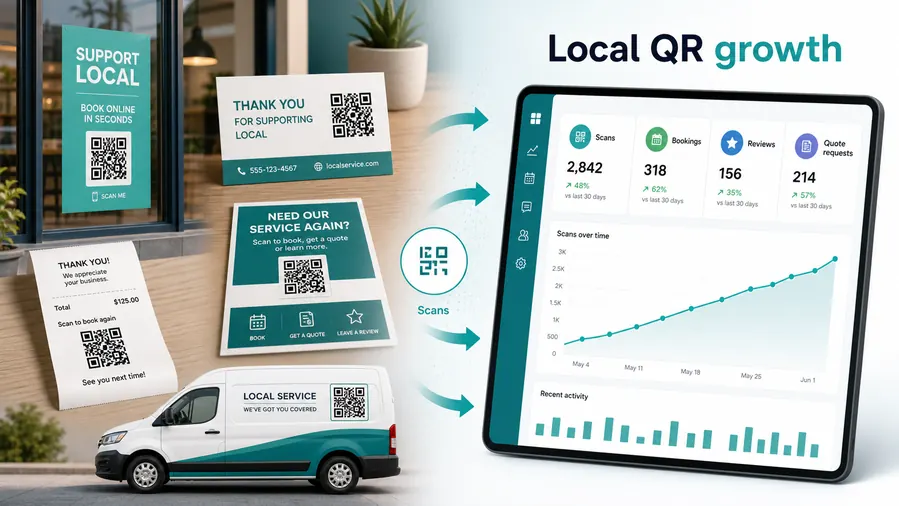
A QR code on a window sign, flyer, local ad, reception card, or booth can open directions, parking notes, entrance instructions, branch selection, service area, or call-before-arrival details without making customers search manually.
Coupons and quote forms
QR codes can turn local interest into a first-visit offer, seasonal coupon, estimate form, callback request, lead form, or quote request. The best offers match the placement: window sign, flyer, receipt, vehicle wrap, or local event booth.
Readers should land on the book or event they just saw
A shopper scanning a shelf tag or poster expects the exact title, author, display, or event. A broad store homepage breaks the moment and forces them to search again.
The store needs destinations it can update as displays change
Featured tables, school lists, event calendars, and seasonal picks rotate often. Editable QR destinations keep printed materials useful while the merchandising plan changes.
Choose placements by bookstore workflow
Store placement
Place bookstore QR codes where the reader has already paused
PlacementBookstore QR placement works when the shopper is stopped: at a shelf, display table, counter, event sign, receipt, or bookmark where the next action is easy to understand.
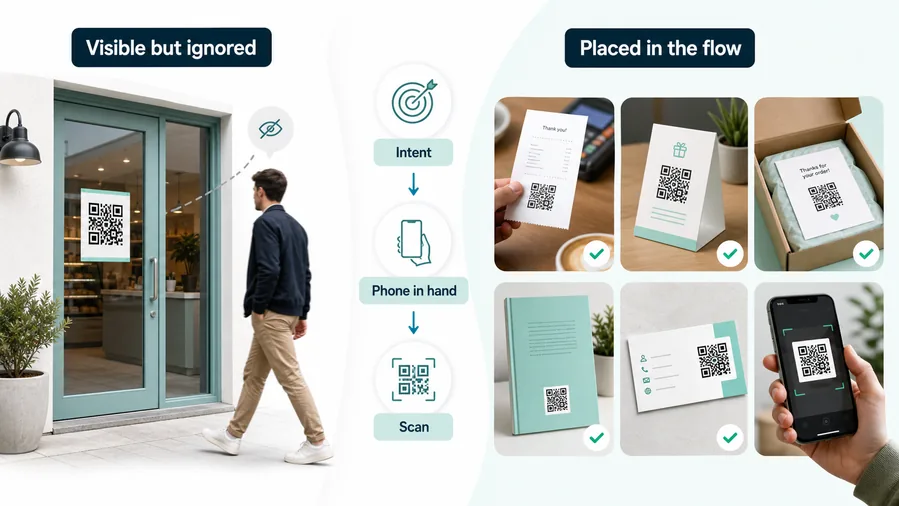
The code appears where shoppers walk past
A QR code on a distant window or crowded aisle sign may be visible without being scannable or meaningful.
If the reader is moving, carrying books, or not sure what the scan opens, the moment is weak.
The code sits beside a decision readers are already making
Place QR codes where shoppers compare books, wait at the counter, browse an event table, or hold a receipt.
The printed CTA should name the value: read staff notes, RSVP, preorder, join the club, or save this list.
What is the shopper deciding now?
Buy, preorder, attend, join, review, save, or learn more should be visible in the printed CTA.
Can the reader scan without blocking traffic?
Shelf and counter placements should leave room for browsing and checkout flow.
Does this display change often?
Use dynamic QR for seasonal tables, school lists, event posters, and preorder campaigns.
Do you need placement reporting?
Use separate codes for windows, shelves, receipts, events, and bookmarks when comparison matters.
Shelf talker
Best for staff picks, series order, reviews, sample chapters, and related books.
Display table
Use for seasonal lists, local authors, preorder campaigns, school reading, and gift guides.
Event poster or signing table
Open RSVP, schedule, author bio, media, photos, and follow-up purchase links.
Receipt or bookmark
Invite loyalty signup, book clubs, reviews, newsletters, and upcoming events after purchase.
Poster or event sign
Best where people pause: registration line, booth, waiting area, seat back, schedule board, or exit path. Weak when people only pass at speed.
Business card
Useful after a conversation because the person already knows why they might save a contact, open a portfolio, book a call, or follow up.
Window sign
Good for after-hours menus, booking, pickup instructions, or quick offers. Avoid complex actions when the person is outside and just walking by.
Cover or front label
Use it only when the promise is immediate and clear. Otherwise the better scan moment is often inside the material or after the first interaction.
Good bookstore QR placement keeps the reader in the buying moment
Put the code where curiosity already exists, then make the mobile destination match that exact shelf, event, or receipt promise.
Retail placement
Use QR codes where shoppers pause, compare, or decide
Good placements include shelf talkers, staff-pick cards, display tables, event posters, checkout counters, book club shelves, preorder displays, bookmarks, window signs, local author sections, and children’s activity tables. The CTA should explain the benefit before the scan: read staff picks, join the event, preorder here, see more books, sign up for rewards, or open the reading list.
Think about the shopper’s hands and attention. A code on a shelf card works when the person is already comparing books. A code at checkout works when the customer is already holding a phone or payment method. A code on the front door may be visible, but it may not be the best scan moment.
Dynamic QR codes are useful for events, seasonal displays, catalogs, preorder forms, and staff-pick lists because bookstore content changes often. Scan analytics can show which shelves, displays, and signs create real interest, helping the store print better materials next time. If one table display scans well, you can repeat that placement with a new list or event.
Store reporting
Read bookstore scans as placement signals, not full sales attribution
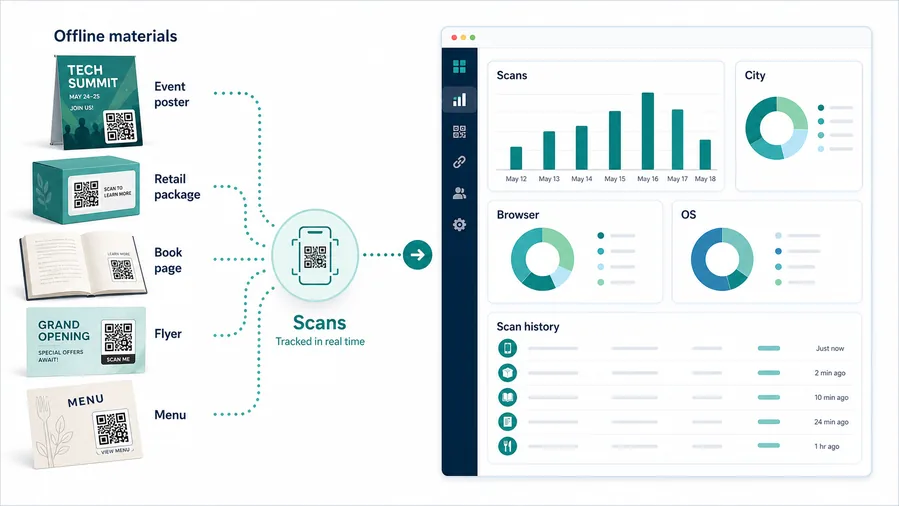
AnalyticsBookstore QR analytics are useful when separate printed materials get separate codes: shelf tags, event posters, receipts, bookmarks, window displays, and campaign tables.
All store scans collapse into one number
A shared QR can show total interest, but it cannot tell whether staff picks, receipts, events, or displays created the scan.
Use one code only when placement comparison does not matter.
Each bookstore placement becomes a useful signal
Separate dynamic codes let the team compare shelves, tables, posters, bookmarks, and receipts without changing the shopper experience.
The data is scan interest, not full purchase attribution, but it is still better than guessing which print materials earned attention.
Scan volume
See how many scans each shelf tag, poster, receipt, or display received during the campaign window.
Timing
Compare scans around event dates, weekends, launch windows, school lists, and seasonal merchandising.
Device and broad location
Use broad signals to spot patterns without treating scan data as customer identity.
Campaign cleanup
Find old displays or expired event materials that still receive scans after they should have been updated.
Staff pick testing
Compare scan interest by shelf, genre, display table, or recommendation style.
Event promotion
See which posters, receipts, bookmarks, or table signs drove event page visits.
Receipt follow-up
Measure loyalty signup, book club interest, newsletter clicks, and review prompts after purchase.
Seasonal campaigns
Review holiday lists, school reading, local author tables, and preorder displays by placement.
Name bookstore codes by real materials before launch
Analytics become useful when each QR name matches the shelf, poster, receipt, event, or display the team will review later.