Taxi Tip QR Code - Driver Tips, Payments & Reviews
Create taxi tip QR codes linking driver tip pages, payment links, review pages, dispatcher contacts, lost-item forms, and booking pages. Use them on seat cards, receipts, windows, and driver cards.
Free QR code generator
Create a QR code online
Generate QR codes for websites, email, phone numbers, vCards, Wi-Fi, plain text, forms, PDF files, and campaign links. Customize colors, add a logo or frame, then download a print-ready PNG or SVG.
Choose QR code type
Website QR code, Email QR code, Phone QR code, vCard QR code, Wi-Fi QR code, Text QR code, SMS, WhatsApp, event, and download links.
Add your content
Enter your website URL, contact details, message, phone number, location, or file destination before generating the QR code.
Customize and download
Adjust QR colors, error correction, logo, frame, size, and margin. Generate QR Code, Download PNG, Download SVG, or Save and track scans.
Driver tip path
Make taxi tips easier while keeping payment handling with the provider
A taxi tip QR code is useful when passengers should be able to open a driver tip page, payment link, review page, dispatcher contact, lost-item form, or booking page from a vehicle sticker, seat card, receipt, dashboard sign, or hotel card. It gives passengers a simple mobile action after the ride.
Tip QR codes work best when the driver or company is clearly identified. A seatback sticker can open a driver tip link. A receipt can open tip, review, and booking. A hotel taxi card can open company contact or dispatcher booking. QR Code Lab helps create dynamic QR codes, update destinations after printing, and track scans by vehicle or placement.
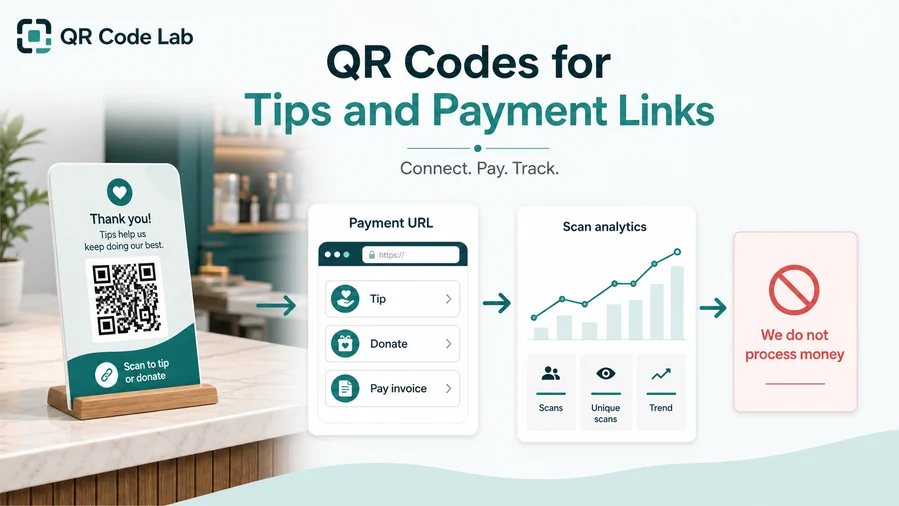
QR Code Lab creates URL QR codes and scan analytics. It does not process tips, move money, store payment data, manage drivers, or replace a taxi payment system. Your payment provider, taxi company, booking tool, or review platform handles the actual transaction and passenger record. This makes it important to choose a payment destination passengers can recognize and trust.
Taxi tip moments
Taxi tip moments payment, tip, and checkout teams with payment links, tip pages, checkout, invoices, donations, and receipts
Tip QRUse QR codes to move payment, tip, and checkout teams from counters, receipts, tip cards, invoices, signs, merch tables, and printed handouts to payment links, tip pages, checkout, invoices, donations, and receipts without asking people to type a long payment URL.

Make tipping easy at the end of the ride
Seat cards, receipts, window decals, and driver cards can open the correct driver or fleet tip page while the rider still remembers the service.
Show who receives the tip before payment.
Keep payment confirmation outside the QR tool
The QR is the shortcut to a payment provider. The provider handles amount, receipt, refund, payout, and confirmation, not QR Code Lab.
A scan is not proof that a tip was paid.
Update driver or fleet links when operations change
Driver assignments, payment accounts, fleets, shifts, and service teams can change while printed cards stay in vehicles. Dynamic destinations keep tip print usable.
Use dynamic QR for vehicle cards and long-lived decals.A taxi tip QR should make gratitude transparent
The rider should see driver or fleet identity, payment provider, and tip purpose before continuing. That clarity matters in a moving, public, and payment-adjacent environment.
Use CTAs such as tip your driver, thank your driver, leave gratuity, or tip the fleet team.Recipient clarity
Show driver, vehicle, fleet, shift, or team identity before payment.
Provider trust
Let the payment provider handle amount, receipt, refunds, disputes, and payout.
Ride-end timing
Place the QR where riders naturally close the trip: seat card, receipt, window decal, or driver card.
Operational updates
Keep driver and fleet tip links editable when accounts or assignments change.
Driver tip boundary
Use taxi tip QR codes for tip links, not payment processing
TipsQR Code Lab can create the code, manage the destination, and show scan activity. The linked payment provider handles tip amount, checkout, receipt, refunds, disputes, and payout.
Open the right driver or fleet tip page
Send riders to the exact tip destination for a driver, vehicle, shift, fleet, or shared service team with recipient identity visible.
Keep payment trust with the provider
The rider should recognize the provider, recipient, tip purpose, and receipt behavior before completing payment.
Update tip links when drivers or accounts change
Dynamic destinations can move printed taxi cards to current driver, fleet, or payment links without replacing every card immediately.
Tip confirmation stays outside QR Code Lab
QR Code Lab is not a taxi meter, POS system, bank, wallet provider, escrow service, payroll tool, or merchant of record for tips.
A scan shows interest in the tip page; it does not prove a tip was completed.Separate tip scans from tip confirmation
Use QR Code Lab to get riders to the correct tip page, then use the payment provider to confirm money moved.
Taxi tip placement
Place taxi tip QR codes where riders can thank the right driver after the ride
PlacementTip QR placement should match the ride-end moment: seat card, receipt, window decal, driver card, hotel taxi card, or fleet handout.
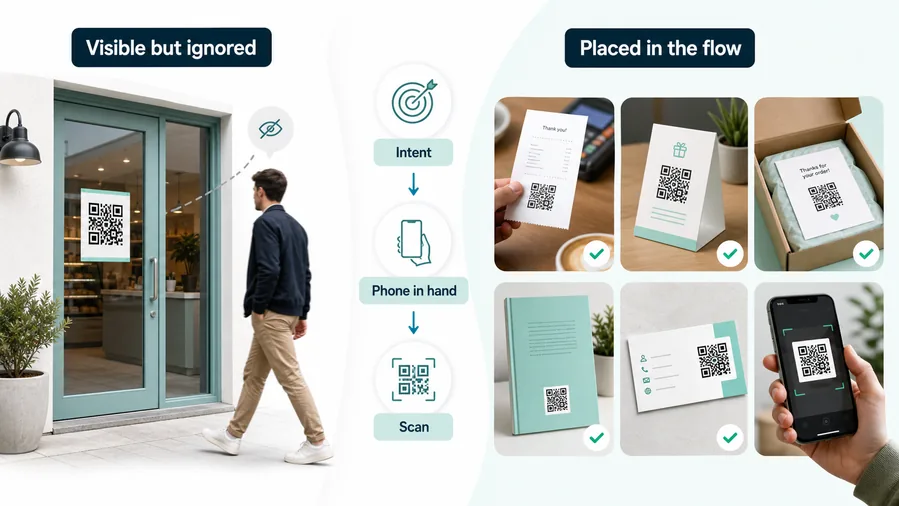
A tip QR too early can feel like pressure
Riders should not feel pushed to tip before the trip is complete or before driver identity is clear.
Placement should match the end of the ride or the moment a rider needs support.
Put the code where gratitude naturally happens
Receipts, seat cards, and driver cards let riders tip when the ride has ended and the recipient is clear.
The first screen should confirm driver or fleet identity and the expected action.
Who receives the tip?
Driver, vehicle, fleet, shift, airport service, hotel taxi partner, or shared team.
What happens after the scan?
Tip provider, amount choice, receipt behavior, and support or mistake path.
Is payment trust clear?
Show recipient, provider, and tip purpose before payment.
Will links change?
Use dynamic QR for driver cards, vehicle decals, fleet changes, and payment account updates.
Seat card
Best for ride-end tipping when driver or fleet identity is clear.
Receipt
Use for tip link, receipt context, review, support, and lost-item path.
Driver card
Show driver identity, tip link, contact policy, and service follow-up.
Window decal
Use carefully for fleet tipping or payment provider links, with clear recipient copy.
Hotel taxi card
Route guests to driver tip, hotel partner note, review, or support.
Airport stand
Open fleet tip, service feedback, support, and provider context.
Fleet handout
Use for driver teams, payment changes, and shared service gratuity.
Support follow-up
Separate mistaken payments, refund questions, and support from tip completion.
Taxi tip QR placement should feel transparent and voluntary
Use the code at the ride-end moment with recipient and provider clear.
Tip and review trust
Keep taxi tips, reviews, and private support clearly separate
TrustA taxi tip QR can invite gratitude, but riders should not confuse tipping with review, support, lost-item, or complaint paths.
Let riders thank the right driver
Use when the ride is complete and the rider can see driver or fleet identity before opening the payment provider.
Seat cards, receipts, driver cards, window decals, hotel cards, and fleet handouts. Do not hide the recipient, provider, or tip purpose.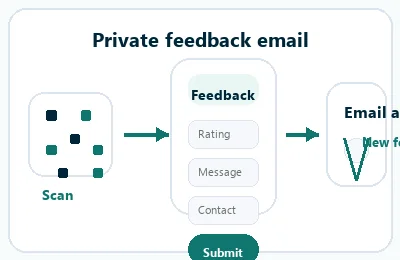
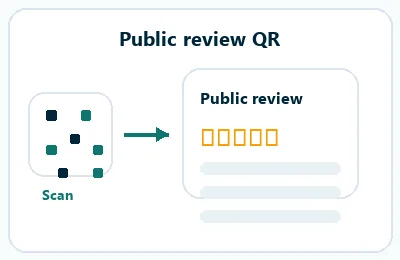
Ask for reviews after the ride
Use a separate path for public praise, driver feedback, airport service, hotel taxi partner feedback, or fleet reputation.
Receipts, post-ride cards, hotel desks, and follow-up pages. Do not treat tip payment as review consent.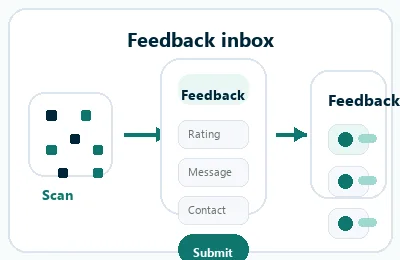
Keep lost items and safety concerns visible
Riders need clear help for lost items, unsafe driving, billing problems, accessibility issues, or route disputes.
Receipts, seat cards, support pages, and dispatcher materials. Do not bury urgent support behind a tip screen.A taxi tip QR should protect trust at the end of the ride
Make gratitude easy, but keep money, reviews, and support paths distinct.
Passenger trust flow
Place taxi tip QR codes where the passenger knows who they are tipping
Useful placements include seatback stickers, dashboard cards, receipts, business cards, window decals, hotel cards, and airport taxi desk materials. CTAs should say tip driver, thank your driver, leave review, book again, contact dispatch, or report lost item. If the tip goes to a specific driver, show the driver name or vehicle identifier clearly.
Dynamic QR codes are practical because driver links, payment providers, review pages, and dispatcher contacts can change. A company can update the destination without replacing every printed sticker. Scan analytics can show which vehicles or receipt cards get scans, while the payment provider confirms completed tips and receipts.
Make the payment destination trustworthy. If the scan opens Venmo, Cash App, Stripe, Square, or another provider, make that expected on the printed material. QR Code Lab manages the QR destination and scan counts, while the payment system handles money, privacy, refunds, and disputes. If each driver has a separate link, label the vehicle or driver clearly so passengers tip the right person.
Taxi tip trust
Make taxi tip QR destinations recognizable before riders pay
SafetyTaxi tip QR codes can sit in public vehicles and open payment pages. The destination should show driver or fleet identity, provider, tip purpose, and support route before payment.

Unclear recipient
Riders may hesitate if they cannot tell whether the tip goes to the driver, fleet, company, or unrelated account.
Show recipient identity before payment.
Payment provider mismatch
A payment page should show a trusted provider, expected recipient, and tip purpose before the rider enters money.
A scan is not a payment receipt.
Public sticker replacement
Seat cards, window decals, and vehicle signs can be covered or replaced, especially when they open payment links.
Inspect vehicle placements regularly.Inspect taxi tip QR destinations before placing cards in vehicles
Confirm recipient, provider, final domain, first-screen copy, and support route before printing seat cards, decals, receipts, or driver cards.
A QR checker reveals the destination, but it does not validate payment completion, provider security, or payout.Decoded destination
Review whether the QR opens the intended driver, fleet, or payment provider page.
Recipient identity
The first screen should show driver, fleet, vehicle, or service identity clearly.
Payment context
Check provider, tip purpose, receipt expectations, and support path before publishing.
Public placement
Inspect seat cards, window decals, receipts, and driver cards for old or replaced codes.
Publish taxi tip QR codes riders can trust
Clear recipient copy, recognizable providers, current payment links, and visible support routes make rider tipping feel voluntary and safe.