Cash App QR Code Generator for Payment Links & Tips Online
Create Cash App QR codes for payment links, profiles, tip pages, donation pages, checkout signs, invoices, and customer payment pages. QR Code Lab turns Cash App links into scan-ready codes.
Free QR code generator
Create a QR code online
Generate QR codes for websites, email, phone numbers, vCards, Wi-Fi, plain text, forms, PDF files, and campaign links. Customize colors, add a logo or frame, then download a print-ready PNG or SVG.
Choose QR code type
Website QR code, Email QR code, Phone QR code, vCard QR code, Wi-Fi QR code, Text QR code, SMS, WhatsApp, event, and download links.
Add your content
Enter your website URL, contact details, message, phone number, location, or file destination before generating the QR code.
Customize and download
Adjust QR colors, error correction, logo, frame, size, and margin. Generate QR Code, Download PNG, Download SVG, or Save and track scans.
Payment link access
Use a Cash App QR code as a clear path to an existing payment destination
A Cash App QR code can point to an existing payment link, profile, tip page, donation page, checkout sign, invoice page, or customer payment page. It is useful for small businesses, creators, vendors, service providers, fundraisers, event sellers, and hospitality teams that already use Cash App or another payment destination.
The important word is path. QR Code Lab creates the QR code and can help you make the printed payment link easier to scan, update, and measure. It does not process payments, manage Cash App accounts, confirm transactions, issue refunds, run POS software, validate IDs, or decide whether a payment succeeded. The payment experience belongs to Cash App or the destination you link.
Because payment links require trust, make the printed material very clear. Name the recipient or business, explain what the payment is for, and avoid vague short links that could make scanners hesitate. A good QR code should reduce typing, not make the customer wonder whether the payment page is safe.
Payment moment
Use Cash App QR codes only where the payment intent is unmistakable
Cash AppA Cash App QR code should support a clear payment or tip moment: checkout, invoice, donation, tip jar, market stall, service counter, event booth, or personal payment request.

Put the code beside the amount or payment context
Use the QR on signs, invoices, table cards, tip jars, receipts, booth displays, or service notes where the payer already knows what they are paying for.
A payment QR without context can feel suspicious.
Separate payment from product information
If scanners need menu details, booking, product specs, donation explanation, or support first, send them to that page before asking for payment.
The payment step should follow trust and context.
Keep the printed payment promise honest
Tell people whether the QR opens Cash App, a payment profile, a tip request, or a hosted page with payment instructions. Do not imply the scan verifies identity or purchase completion by itself.
Payment trust depends on clear boundaries.The payment QR should reduce friction without hiding risk
Cash App QR codes can make payment faster, but the surrounding copy must explain the recipient, amount context, refund path, and what the scanner should expect after opening the payment app.
Do not use QR wording that suggests scanning alone confirms payment, delivery, identity, or charity legitimacy.Checkout
Place near the counter, invoice, or booth where the payer understands the transaction.
Tips
Use for tip jars, performer signs, service counters, and event staff when the recipient is clearly labeled.
Donations
Explain the organization, cause, and receipt path before asking for payment.
Follow-up
Provide a support or contact route for payment questions, mistakes, and proof of payment.
Payment boundary
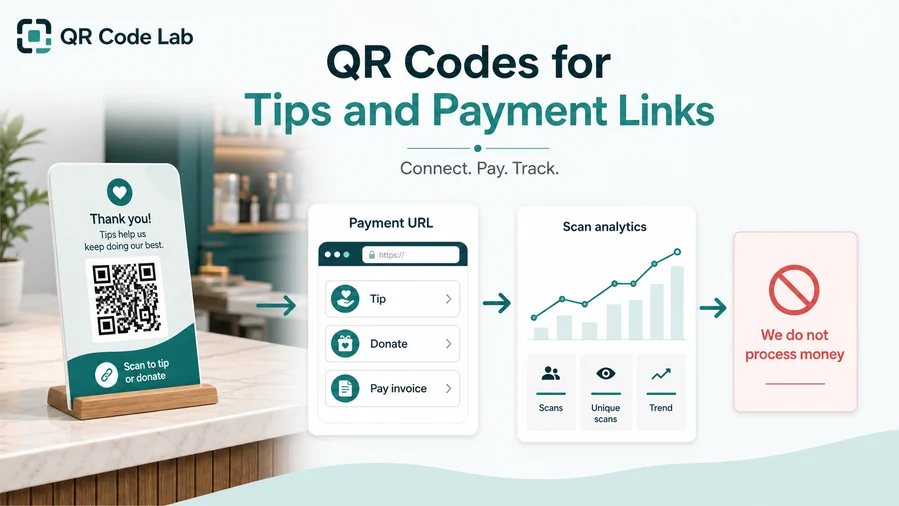
Treat a Cash App QR code as a payment shortcut, not a complete checkout system
PaymentThe QR can help someone open the right payment destination, but pricing, identity, receipts, delivery, refunds, disputes, and records still need a clear business process.
Faster small payments
Useful for tips, simple service payments, creator support, small event booths, local sales, or person-to-person payment moments where the payer already understands the reason.
Cleaner printed signs
A QR can avoid long usernames or manual search, especially on table signs, booth cards, invoices, and counter displays.
Less typing, fewer wrong recipients
A clear printed recipient name and QR destination can reduce mistakes compared with asking customers to search inside the payment app.
The QR code does not verify the transaction by itself
Staff or the business process still needs to confirm payment status, amount, recipient, refund policy, tax records, and delivery before treating the transaction as complete.
Scan analytics only show QR scan activity. A scan does not mean a payment was completed.Use Cash App QR where trust is already established
Payment QR codes work best when the customer can see the seller, service, amount context, and support path before scanning.
Payment placement
Place Cash App QR codes where the payer already understands the charge
PlacementPayment QR placement should make the recipient and reason obvious. Use it at checkout, on invoices, at booths, on tip signs, or beside donation explanations rather than as a mystery code.
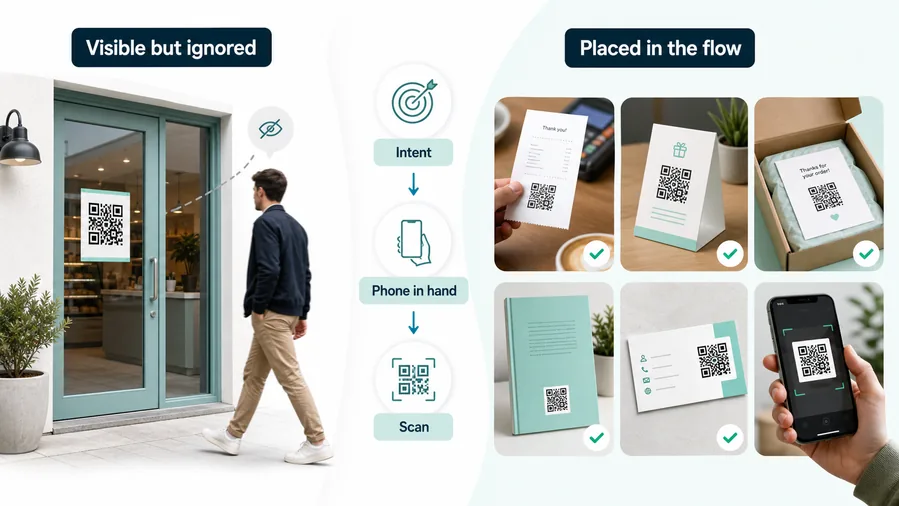
The code appears without recipient or payment context
A payment QR on a wall, flyer, or table with no explanation can look suspicious and create wrong-payment risk.
Payers should not have to scan to learn who receives the money or why.
The code is attached to a visible payment moment
Place the QR beside a product, invoice, service counter, tip jar, donation sign, or booth label with the recipient and expected action printed nearby.
The scan then becomes a convenient handoff rather than the only source of trust.
Who receives the payment?
Print the recipient, business, performer, booth, or cause clearly beside the QR.
What is the payer paying for?
Show the item, service, tip context, invoice reference, donation cause, or amount guidance.
How is payment confirmed?
Staff should know whether to check the app, ask for confirmation, record an order, or issue a receipt.
What happens if payment goes wrong?
Provide a support path for wrong amounts, duplicate payments, refunds, or proof requests.
Counter or booth sign
Best when the customer is already checking out or paying for a specific item or service.
Invoice or service note
Use for agreed payments where the invoice number, customer name, or amount context is visible.
Tip jar or performer sign
Good for voluntary support when the recipient name is unmistakable.
Donation table
Explain the cause, organization, receipt path, and whether donations are tax-deductible before payment.
Poster or event sign
Best where people pause: registration line, booth, waiting area, seat back, schedule board, or exit path. Weak when people only pass at speed.
Business card
Useful after a conversation because the person already knows why they might save a contact, open a portfolio, book a call, or follow up.
Window sign
Good for after-hours menus, booking, pickup instructions, or quick offers. Avoid complex actions when the person is outside and just walking by.
Cover or front label
Use it only when the promise is immediate and clear. Otherwise the better scan moment is often inside the material or after the first interaction.
Payment QR placement should create confidence before convenience
Use the QR where the payer already understands the transaction, then keep confirmation and support outside the scan.
Payment context
Measure scan interest, not completed payments
Use Cash App QR codes on checkout signs, invoices, tip cards, event booths, vendor tables, fundraiser flyers, service counters, market stalls, customer handouts, and printed thank-you notes. The CTA should say pay, tip, donate, open invoice, or support us only when the destination really supports that action. Clear wording helps the scanner understand the money flow before tapping anything.
Dynamic QR can help if payment links, campaign pages, or support destinations change. For example, a fundraiser flyer may point to one donation page during the event and a thank-you or follow-up page later. QR Code Lab can show scan activity by placement, but it does not know whether a payment was completed after the person leaves the QR destination.
That boundary is useful. QR scans show attention and placement performance. Your payment platform shows actual money received, refunds, disputes, and customer records. Review both if you want the full picture. That helps you improve signs and cards without confusing scans with revenue. If a tip card gets scans but few payments, the issue may be the offer, wording, or payment page.
Payment trust
Keep Cash App QR payment flows clear, limited, and verifiable
TrustPayment QR codes need stronger context than ordinary links. The page or printed sign should identify the recipient, explain the payment, and avoid collecting sensitive information outside the payment process.

A copied QR can redirect money to the wrong recipient
Use controlled placement, branded signs, recipient names, and staff checks so customers can tell the printed payment code is legitimate.
Watch for similar-looking domains, long URLs, login or verify keywords, and pages asking for credentials after an unexpected scan.
A scan is not proof of payment completion
Customers can open a payment app without sending funds. Staff still need a confirmation process for amount, recipient, memo, and order status.
A trustworthy QR should not make the final destination mysterious, especially on posters, labels, menus, parking signs, or event materials.
Payment context can be too vague
Avoid signs that only say “pay here.” Explain what the payment covers and what the payer should do after sending it.
Before paying, check the domain, HTTPS, amount, recipient, and whether the destination matches the place or brand that printed the QR.Check the payment QR before customers use it
Scan from the final sign, invoice, counter card, or booth display and confirm the recipient, wording, amount context, and support path.
The current detailed report is a static URL analysis. It helps reveal the encoded content and basic URL risk signals, but it does not guarantee that a destination is safe and does not replace browser, antivirus, payment, or bank security checks.Decoded content
See the raw value inside the QR before opening it.
Content type
Recognize URL, Wi-Fi, mailto, phone, SMS, vCard, or plain text.
URL risk signals
Review HTTPS, shorteners, IP addresses, long URLs, encoded characters, query parameters, and sensitive keywords.
Destination report
For URL codes, view final URL fields, static redirect report fields, domain fields, TLS placeholders, page metadata fields, and risk reasons.
Keep payment responsibility outside the QR image
The QR code can make payment easier, but the business still owns pricing, receipts, refunds, disputes, delivery, and customer support.