
QR Code Label Generator for Products, Shelves & Packaging
Create print-ready QR labels for product packaging, shelf tags, inventory, manuals, warranty cards, support links, retail promos, and reorder pages. Keep labels scan-safe and clear.
Free QR code generator
Create a QR code online
Generate QR codes for websites, email, phone numbers, vCards, Wi-Fi, plain text, forms, PDF files, and campaign links. Customize colors, add a logo or frame, then download a print-ready PNG or SVG.
Choose QR code type
Website QR code, Email QR code, Phone QR code, vCard QR code, Wi-Fi QR code, Text QR code, SMS, WhatsApp, event, and download links.
Add your content
Enter your website URL, contact details, message, phone number, location, or file destination before generating the QR code.
Customize and download
Adjust QR colors, error correction, logo, frame, size, and margin. Generate QR Code, Download PNG, Download SVG, or Save and track scans.
Label scan path
Use QR code labels when small printed surfaces need product details, instructions, warranty, support, and tracking links
A QR code label can open product pages, instructions, warranty cards, support links, batch details, shelf information, price cards, inventory records, reorder pages, care notes, authenticity checks, or setup videos. It is useful for retailers, ecommerce brands, warehouses, packaging teams, product teams, print shops, and local businesses that need small-format labels to carry more information than the label itself can hold.
Labels are challenging because they are small, often glossy, and scanned under imperfect lighting. A product label may curve around a bottle. A shelf tag may sit under store lights. An inventory label may be scanned quickly. A warranty label may be placed on packaging that gets handled. The QR code needs enough size, contrast, quiet zone, and background separation to survive the real label environment.
QR Code Lab creates URL QR codes and visual QR assets. It does not print labels, manage inventory, process orders, collect reviews, or operate warehouse systems. The linked product page, support system, inventory tool, warranty platform, or ecommerce page handles the final action.
Example: a product label that opens the right care instructions
A care-label QR should match the item or product family it is attached to. Decide how labels will be matched to stock before ordering a run.
- Printed promise
- Care instructions for this product. Keep a readable product identifier beside the code.
- Destination check
- The first screen identifies the same product and makes its instructions available on a phone.
- Production check
- Keep the clear area inside the usable label area and test an applied label for curvature, reflections and adhesive placement.
This page creates a QR image; it does not automatically impose a sheet of adhesive labels or manage product inventory. Arrange the exported image in your existing label layout and proof the finished sheet before ordering.
Label and sticker QR moments
Use QR labels when the printed surface needs a clear next step
Label QRA QR label should connect a physical item to the exact support, setup, warranty, reorder, safety, menu, campaign, or product information people need in that moment.
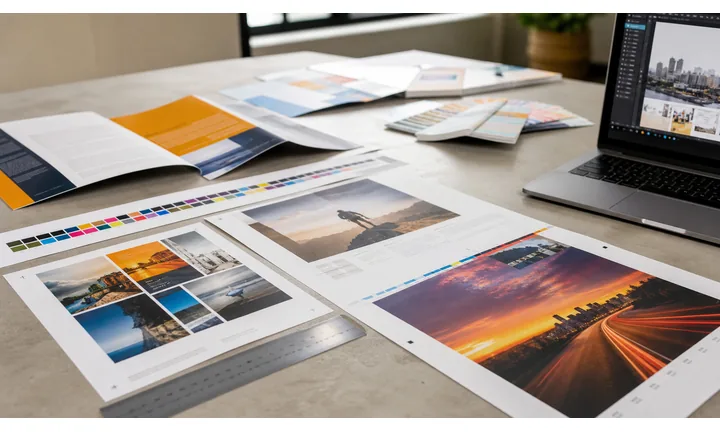
Turn a small label into a useful product path
Use QR labels on packaging, jars, boxes, equipment, shelves, samples, folders, bottles, tags, and inserts when the physical surface cannot carry all the details.
The label should promise the specific benefit, not just show a code.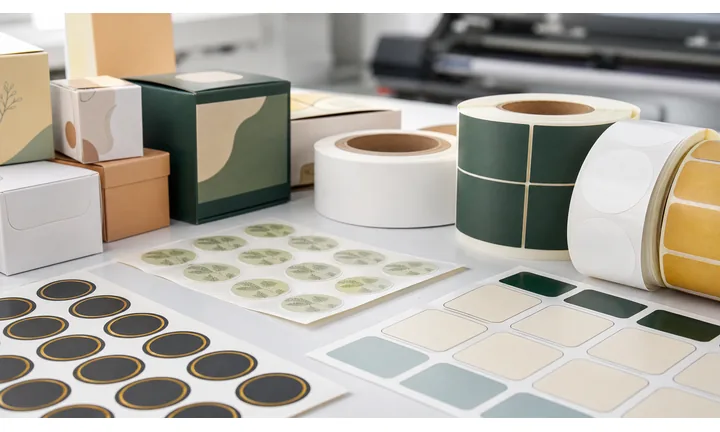
Make the scan match the item in someone’s hand
A label QR works best when it opens the resource for that exact SKU, batch, location, instruction set, campaign, or service asset instead of a generic homepage.
Specific labels reduce support friction after purchase or handoff.
Keep labels useful after files and pages change
Dynamic QR helps when manuals, warranty pages, safety notes, recipes, care guides, reorder links, menus, and promotions may change while printed labels remain in use.
Labels often live longer than the first destination URL.A QR label should connect the object to the right action
The scanner is usually holding the product, reading a tag, opening a package, checking a shelf, or reviewing a printed asset. The destination should answer the question created by that physical moment.
Use separate QR labels when batches, products, regions, languages, or placements need different destinations or reporting.Product support
Open setup, care, manual, warranty, safety, specs, compatibility, or troubleshooting content.
Customer action
Lead to reorder, registration, review, feedback, coupon, subscription, or contact paths.
Operational clarity
Use naming and dynamic links so label exports remain understandable after print.
Print reliability
Check label size, material, contrast, curvature, adhesive placement, and scan distance before rollout.
Product label actions
Make each QR label open the action buyers need after the physical handoff
Product pathQR labels work when they answer the next customer question: how to set this up, what is inside, how to register, where to reorder, how to get help, or what changed.
Open setup and care instructions
Put the QR label near the unboxing or first-use moment so buyers can open manuals, videos, care notes, recipes, or installation steps without searching.

Connect warranty and registration
Use labels, inserts, or tags to route customers to warranty registration, proof of purchase, serial lookup, safety notices, or product-specific support.
Support reorder and replenishment
Send scanners to the right replacement part, refill, subscription, accessory, size, flavor, color, or SKU page while the product is still in hand.
Collect feedback at the right time
Use QR labels after delivery, setup, or use to ask for reviews, private feedback, support requests, or product improvement notes.
Handle batch-specific information
Use separate dynamic QR labels for regions, languages, lots, campaign runs, seasonal variants, or packaging versions when content differs.
The buyer should not have to decode the label
Write a short promise beside the QR code so the scanner knows whether it opens setup help, warranty, safety notes, reorder, ingredients, specs, or customer support.
The brand gets cleaner post-purchase paths
Dynamic QR labels can reduce stale inserts, simplify support handoffs, and help compare which packages, regions, or product lines earn scans.
Put the QR label where the question appears
Label print check
Proof QR labels at real size, on the real material
Print readyQR labels are often small, curved, glossy, folded, or placed near busy artwork. The final label has to scan in the customer’s hand, not just in the design preview.
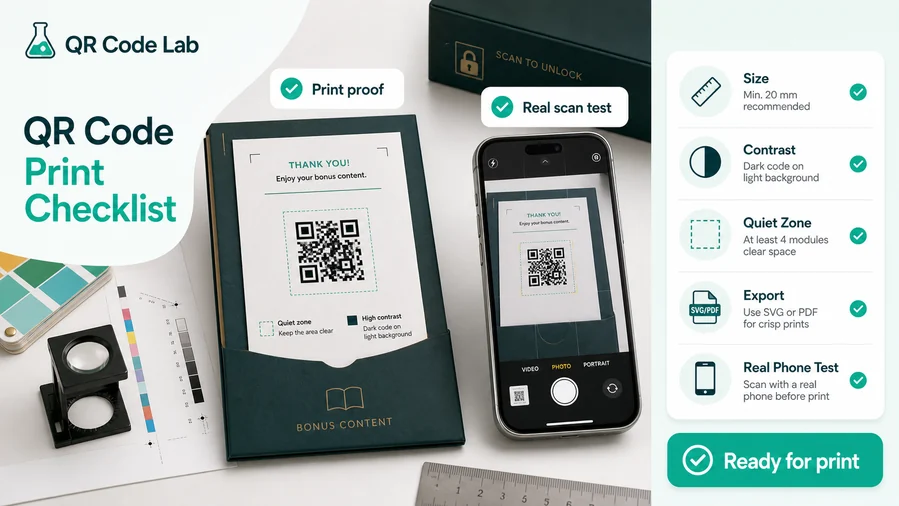
Match label size to scan distance and surface
Small stickers, curved bottles, textured boxes, glossy sleeves, and folded tags all need more careful testing than a large flat poster.
Print a real-size sample, place it on the intended surface, and scan it from the distance customers will naturally use.
Keep artwork sharp and the quiet zone clean
Export vector artwork for professional label layouts and protect the quiet zone from borders, dielines, photos, folds, seams, and nearby text.
If the label uses brand color, ink limits, or special material, test contrast after printing rather than trusting the screen preview.
Use a mobile page when the label needs more than one action
A label can open setup, warranty, care, reorder, review, contact, safety, documents, and product education from one compact printed code.
A focused mobile page keeps the printed label simple while giving buyers the exact actions they need after scanning.
Product label
Open setup, specifications, ingredients, authenticity, safety notes, care, or reorder content tied to the item.
Package insert
Connect buyers to registration, support, instructions, review, bonus files, and follow-up offers.
Shelf label
Help shoppers compare variants, view details, request help, claim an offer, or open a product page.
Asset sticker
Route staff or customers to maintenance, manuals, service history, checklists, and support contacts.
Print the label only after the physical sample scans cleanly
A QR label is ready when its size, surface, contrast, destination, and CTA all work together in the real placement.
Label design
Design QR labels so the code is noticeable, scannable, and worth the space
Label designA label has limited room, so the QR design must explain the benefit quickly while protecting quiet zone, contrast, and enough physical size.
Use the frame to separate the code from package artwork
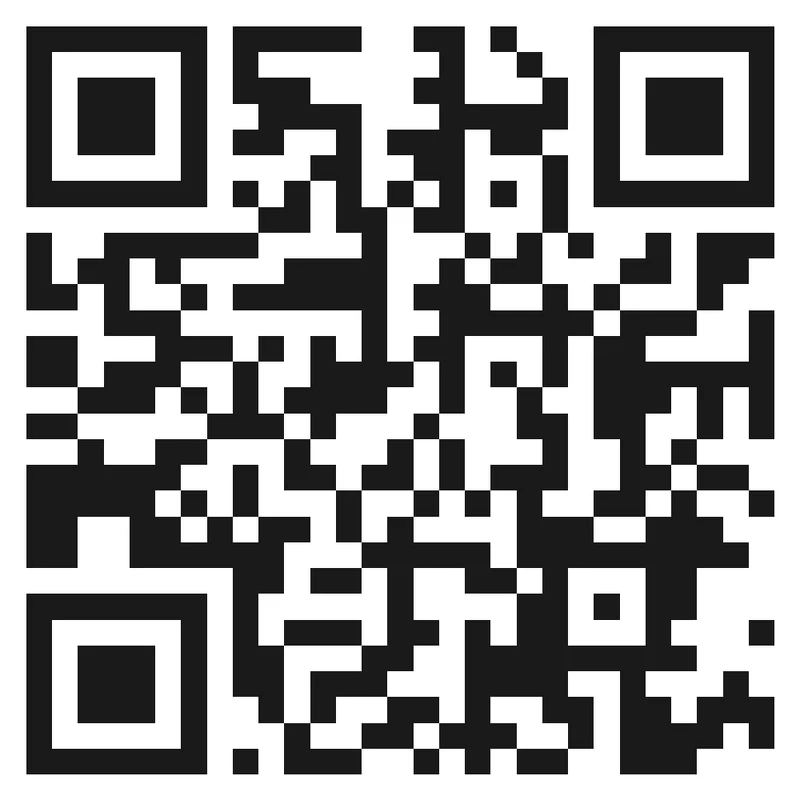
Crowded
A bare QR code placed near photos, ingredient blocks, barcodes, or decorative patterns can disappear into the label design.
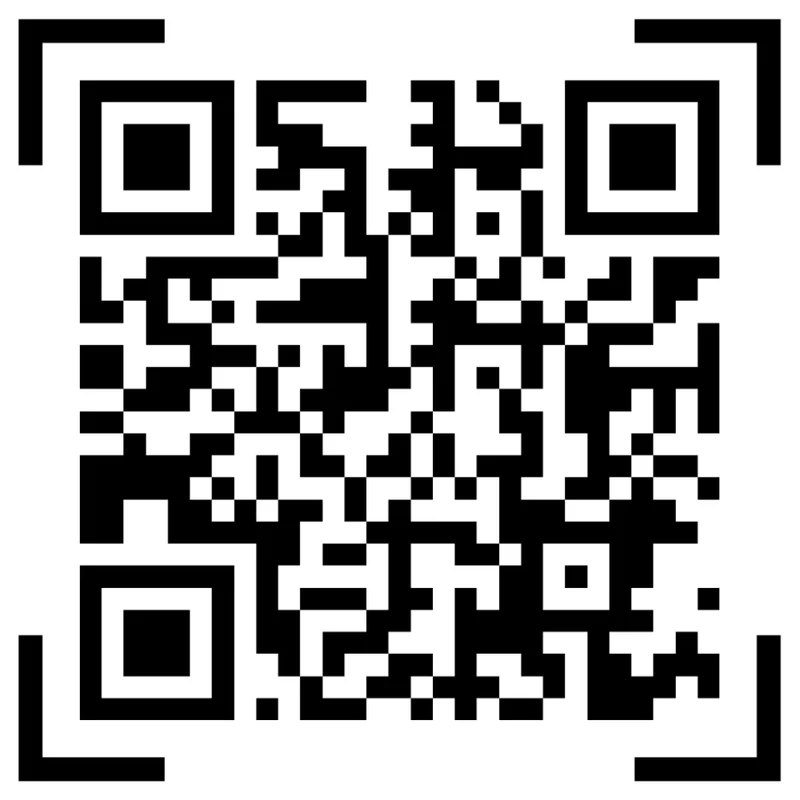
Clear
A simple frame, quiet zone, and short CTA help the code stand apart while telling buyers why scanning is useful.
Use color and logo only where the label still scans
Risk
Tiny logo treatments, low contrast brand colors, glossy material, and curved surfaces can make a label QR harder to read.
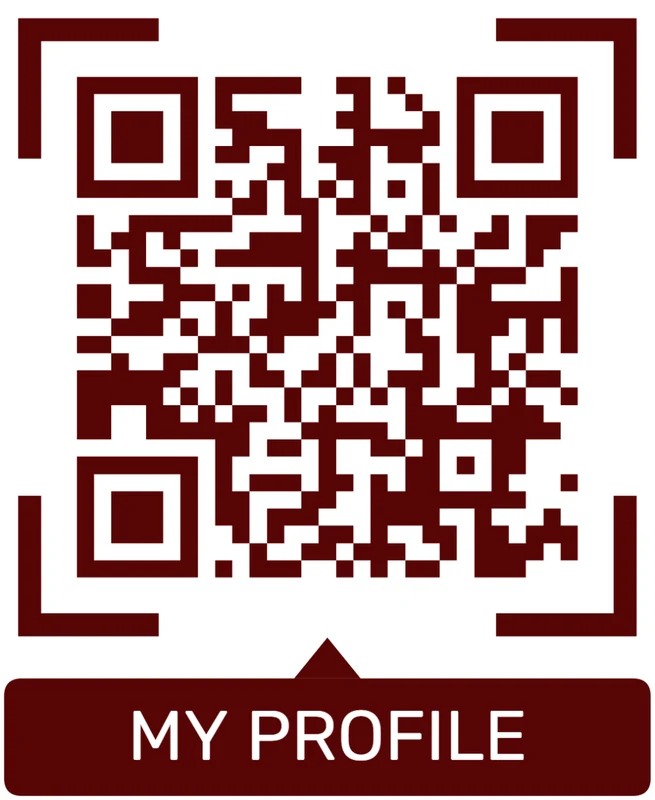
Proofed
Keep finder corners readable, maintain contrast, test the smallest label size, and use CTA copy that matches the linked product action.
Customize corners and modules
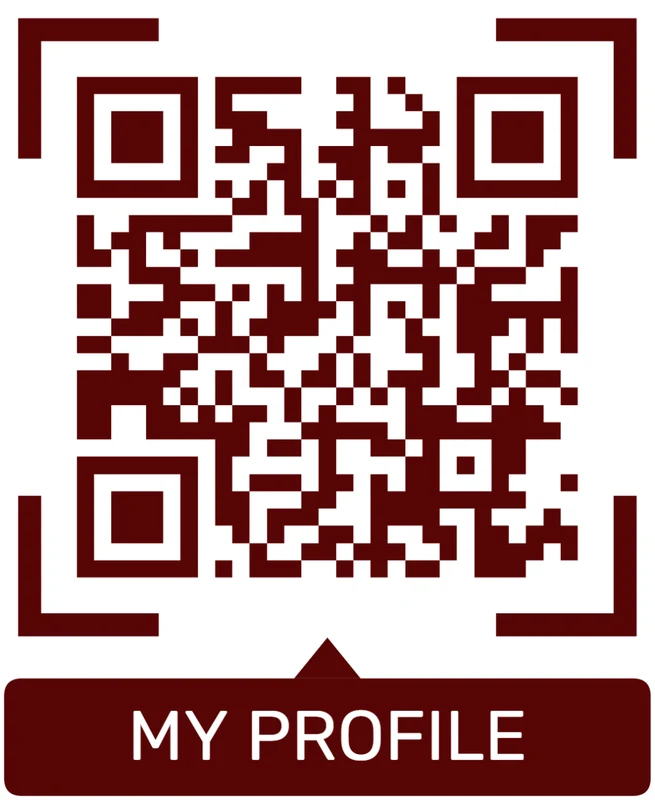
Standard pattern
A colored framed code already looks better, but it can still look like every other QR code.
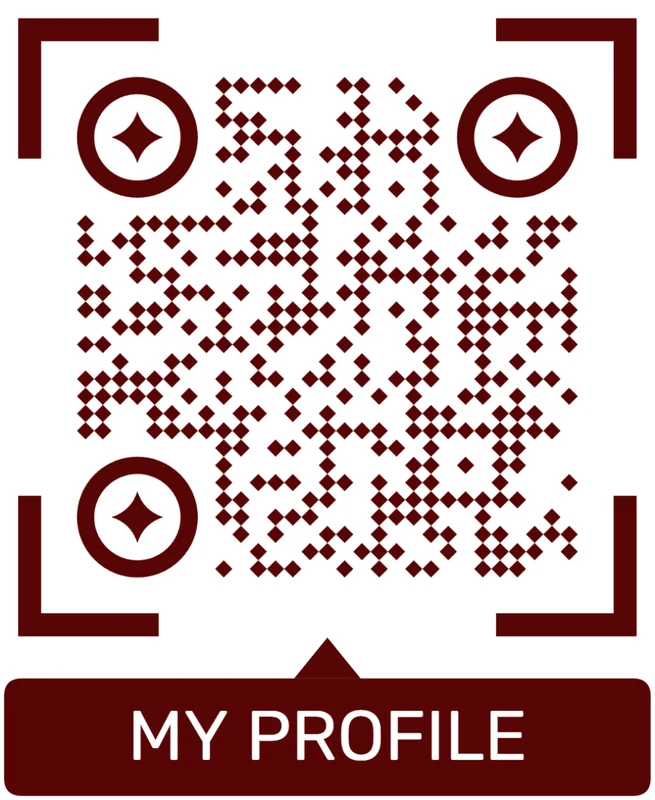
Custom eyes and module shape
Rounded modules, styled finder corners, and cleaner patterns can make the code feel premium. Keep the three corner markers clear.
Add a logo carefully
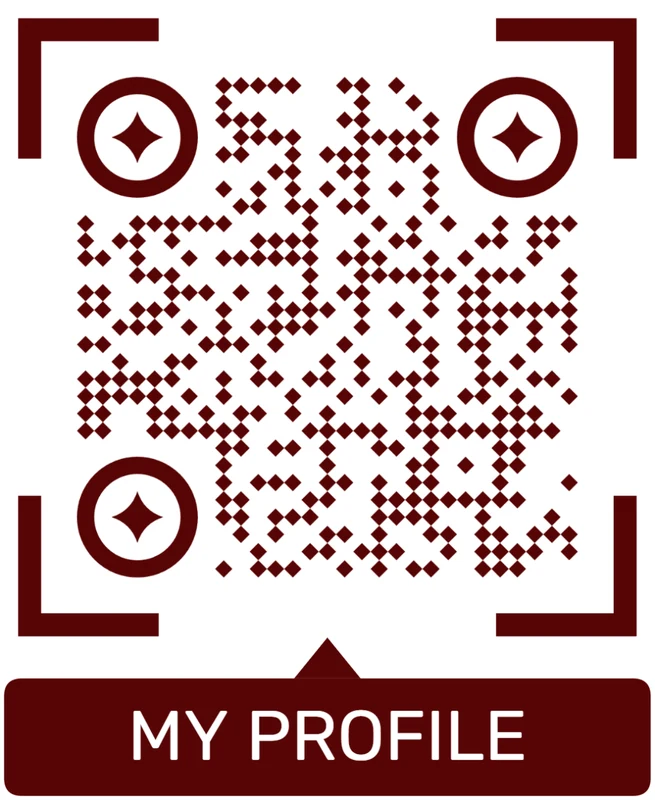
Styled QR code
A styled code can look polished, but people may still not know what brand, profile, file, or campaign it represents.
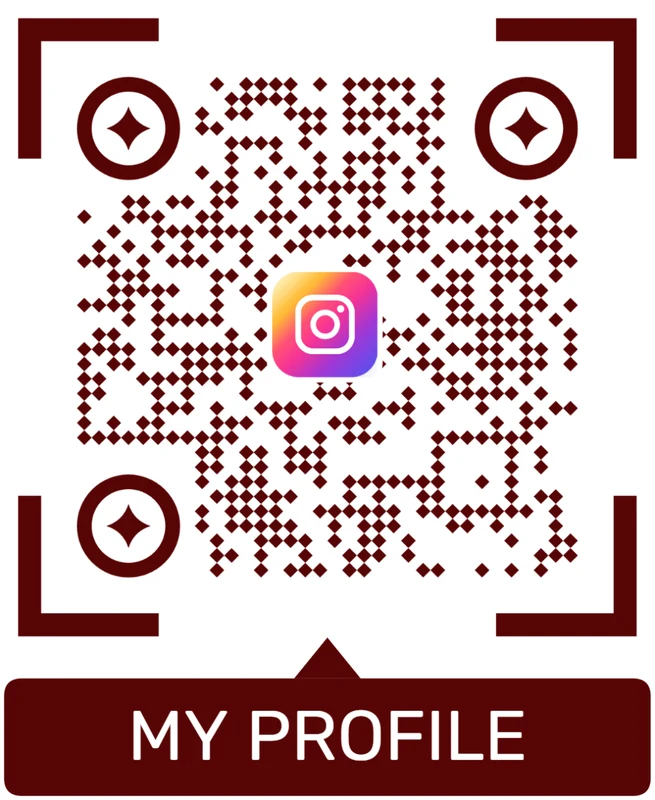
Logo QR code
A centered logo helps signal the destination. Keep it small, use a clean background behind it, and test the exported code.
The label design should make the QR feel useful, not decorative
Use styling to help buyers understand the scan while keeping the printed code easy to read on the final surface.
Label placement
Put QR labels where the customer naturally needs the linked information
PlacementThe best QR label placement depends on the physical question: before purchase, during unboxing, at first use, during support, or when the customer wants to reorder.
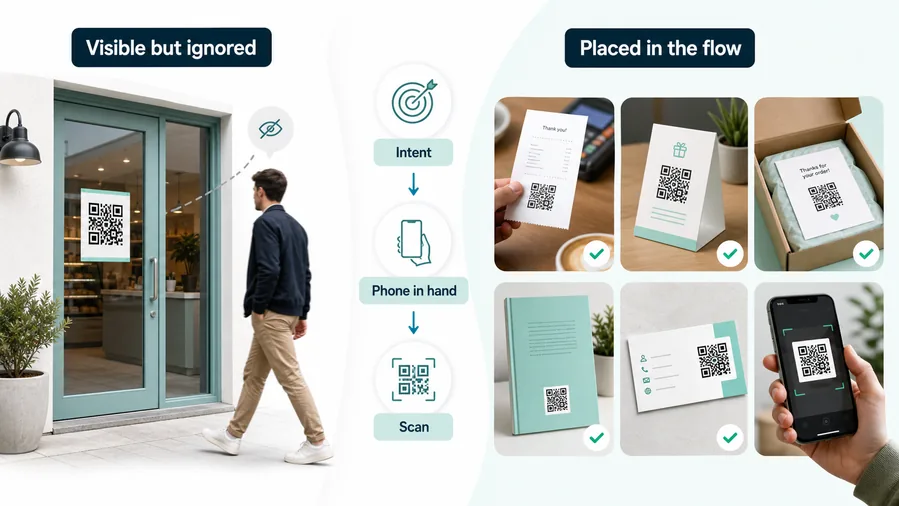
Visible does not always mean useful
A QR label can be easy to see but ignored if it appears before the customer understands the benefit or after the moment has passed.
Placement should follow the action: compare, open, install, register, care, reorder, review, or get support.
Place the code beside the question the product creates
Put setup help near the first-use moment, warranty on inserts, care instructions on tags, reorder paths on consumables, and support where issues are likely.
The label CTA should make the destination obvious before the customer scans.
What is the customer holding?
Product, box, bottle, insert, tag, folder, shelf label, sample, asset sticker, or service card.
What question happens here?
Setup, safety, ingredients, care, registration, warranty, reorder, comparison, review, or support.
Is the phone naturally available?
Unboxing, checkout, shelf comparison, installation, maintenance, and support moments usually scan better than pass-by placements.
Will the destination need updates?
Use dynamic QR labels when documents, warranty pages, product pages, campaigns, or support links can change.
Front label
Use only for high-value actions where the CTA is short and the code does not crowd required product information.
Back label
Strong for ingredients, specifications, safety notes, care, authenticity, manuals, and support.
Package insert
Good for setup, warranty, registration, review, bonus content, and post-purchase follow-up.
Product tag
Useful for care instructions, sizing, materials, authenticity, reorder, and customer service.
Shelf label
Help shoppers compare variants, open details, claim offers, or request help without searching.
Asset sticker
Open maintenance records, manuals, checklists, service contacts, or internal documentation.
Shipping label area
Use carefully for returns, tracking help, setup start pages, or delivery follow-up where it will not confuse carriers.
Sample card
Connect samples to product pages, consultation forms, portfolios, offers, or reorder paths.
A QR label belongs where the next action already makes sense
Choose placement by customer moment first, then size and design the label so the code can be scanned without friction.
Small-format print flow
Design QR labels around real scan distance, surface finish, quiet zone, and one clear destination
Useful label placements include product packaging, shelf tags, inventory labels, bottles, jars, boxes, price cards, support stickers, warranty cards, shipping labels, and equipment tags. CTAs should say view details, read instructions, register warranty, reorder, get support, see batch info, watch setup, or scan for care. Keep the CTA short because label space disappears quickly.
Dynamic QR codes help when product pages, support links, warranty pages, or batch information change after labels are printed. Scan analytics can compare products, shelves, or packaging placements, while the linked systems manage orders, inventory, and customer records. This is especially useful when labels are printed in batches and stay on products for a long time.
Before printing a batch, test the label at final size, on the intended material, under real lighting, and from the expected scanning distance. A label can look clean in design software and still fail on a curved, glossy, or textured surface. Test the smallest SKU too, and keep one approved sample as a reference for future reprints.
After-print control
Use dynamic QR labels when product information can change after printing
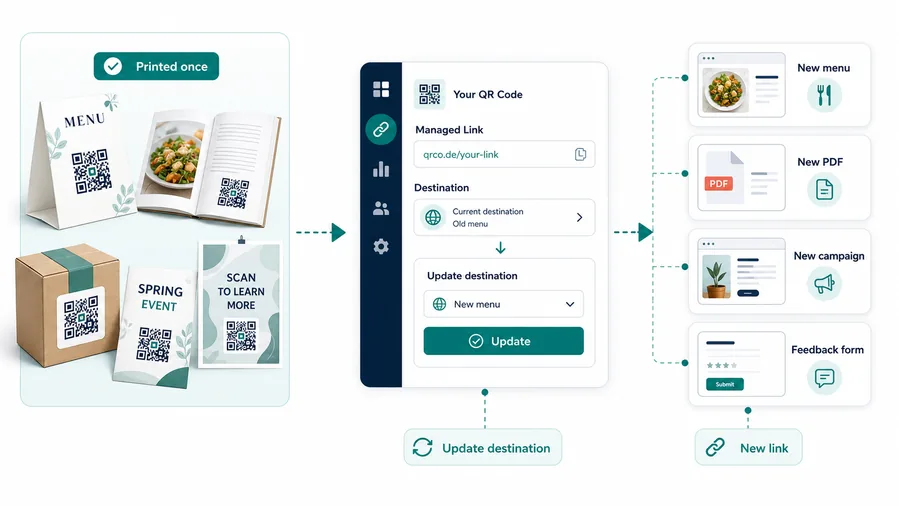
DynamicLabels, stickers, inserts, tags, and packaging often stay in circulation while manuals, warranty pages, support links, campaigns, and product URLs keep changing.
A fixed QR label can outlive the first destination
Static QR is fine for permanent product information, but labels often point to pages, files, forms, or offers that change after printing.
When the destination moves, every printed label keeps sending buyers to the old path.
Editable labels protect long-lived print
Dynamic QR lets the same printed label route to updated setup guides, warranty pages, PDFs, safety notes, support, reorder pages, and campaigns.
Separate dynamic labels can also compare scans by SKU, batch, package type, region, or placement.
Setup and care updates
Replace manuals, videos, care instructions, troubleshooting, and safety notes without changing printed labels.
Warranty and registration
Move customers to the current registration, support, serial lookup, policy, or claim page.
Reorder and replacement parts
Update product pages, refills, accessories, subscriptions, and regional store links as inventory changes.
Campaign and compliance changes
Route seasonal offers, recalls, notices, language variants, and batch-specific information to the right destination.
Use dynamic when the label will live longer than the first link
If replacing the printed label would be painful, keep the destination editable and name each label clearly before export.
Template and production flow
Build label templates that protect the QR code first, then fit brand, CTA, and product information around it
This is different from a label generator page. The template question is how the QR code, CTA, product text, border, quiet zone, and brand elements fit together on a constrained surface. A jar label may need a small code with a short CTA. A shelf tag may need price and product information beside the code. A shipping label may need operational clarity. An inventory label may need fast scanning over decorative polish.
Useful templates include product detail labels, warranty labels, care instruction labels, shelf tags, bottle labels, jar labels, inventory stickers, shipping inserts, support labels, and reorder labels. CTAs should be short: scan for details, view care, register warranty, reorder, get support, or watch setup. The template should reserve a clean quiet zone before adding decorative borders or dense product copy.
For production, test the template at real size and on the actual surface. Curved containers, glossy coatings, small labels, and busy backgrounds can all reduce scan reliability. If the same template will be reused across many SKUs, test the worst cases too: darkest label, smallest size, longest product name, and most reflective finish.
Dynamic QR codes can protect the destination after printing, but they cannot rescue a layout that is too small or cluttered. QR Code Lab manages the QR destination; the template owner manages final layout and print readiness. Treat the template as a production asset, not a one-time graphic.
Use the frame to separate the code from package artwork
A bare QR code placed near photos, ingredient blocks, barcodes, or decorative patterns can disappear into the label design.
A simple frame, quiet zone, and short CTA help the code stand apart while telling buyers why scanning is useful.
Use color and logo only where the label still scans
Tiny logo treatments, low contrast brand colors, glossy material, and curved surfaces can make a label QR harder to read.
Keep finder corners readable, maintain contrast, test the smallest label size, and use CTA copy that matches the linked product action.