QR Code for Dance Studios - Classes, Events & Waivers Online
Create QR codes for dance studios linking class schedules, trial forms, event pages, recital info, waivers, reviews, and payments. Use them on flyers, studio signs, handouts, and recital programs.
Free QR code generator
Create a QR code online
Generate QR codes for websites, email, phone numbers, vCards, Wi-Fi, plain text, forms, PDF files, and campaign links. Customize colors, add a logo or frame, then download a print-ready PNG or SVG.
Choose QR code type
Website QR code, Email QR code, Phone QR code, vCard QR code, Wi-Fi QR code, Text QR code, SMS, WhatsApp, event, and download links.
Add your content
Enter your website URL, contact details, message, phone number, location, or file destination before generating the QR code.
Customize and download
Adjust QR colors, error correction, logo, frame, size, and margin. Generate QR Code, Download PNG, Download SVG, or Save and track scans.
Class signup path
Move dance interest into schedules, trials, waivers, and recital details
A QR code for dance studios is useful when a parent, student, or event guest needs a clear next step after seeing a performance, flyer, studio window, or recital program. It can open class schedules, trial forms, event pages, recital info, waivers, review pages, payment links, studio maps, parent updates, and instructor pages. Dance studios, instructors, recital organizers, youth programs, performing arts schools, and local class businesses can use QR codes across enrollment and event moments.
The scan should fit the situation. A front desk sign can open class schedules. A recital program can open show details or photos. A trial card can open booking. A parent handout can open waivers or payment. QR Code Lab helps create printable codes, dynamic destinations, and scan analytics so studios can see which events and materials create enrollment interest.
QR Code Lab creates URL QR codes only. It does not process payments, manage bookings, collect waivers, run CRM systems, or operate studio software. The linked class, waiver, booking, parent portal, or payment platform handles the real workflow.
Schools, classrooms, workbooks, and textbooks
Connect dance studio print to classes, schedules, waivers, and practice resources
Learning accessDance studio QR codes are useful when a flyer, recital program, lobby sign, class handout, or parent packet should open the exact class, registration form, waiver, schedule, video, or update.

Open class registration from flyers and posters
Send families to the right age group, dance style, trial class, camp, workshop, or private-lesson booking page without making them search the full site.

Attach waivers and parent forms to the signup moment
Use QR codes on lobby signs, packets, and emails printed for events so parents can complete registration, emergency contacts, releases, and preferences on a phone.

Share practice resources after class
Link dancers and parents to practice playlists, choreography notes, costume details, recital music, rehearsal schedules, or class reminders.

Support recital and showcase communication
Route programs, backstage signs, and parent handouts to call times, maps, ticket links, photo rules, and performer instructions.
Keep schedule details current
Use dynamic QR when class times, teachers, rooms, camps, rehearsal updates, or studio policies change after flyers are printed.

Separate programs by audience
Use different QR destinations for preschool dance, adult classes, competitive teams, summer camps, and recital families when the next step differs.

Make the scan promise specific
Write register for trial class, complete waiver, view recital schedule, or open practice video beside the code.

Keep the page parent-friendly
The destination should load quickly, show the studio name, and make the next action obvious for busy families.
Families should land on the exact studio action they expected
A parent scanning from a recital program, flyer, or lobby sign should immediately see the right class, form, schedule, or event resource instead of a generic homepage.
Studio staff can update resources without replacing every print piece
Dynamic QR codes help when schedules, rehearsal notes, waiver links, camp pages, and event resources change during a season.
Put the QR beside the dance studio moment
Events, conferences, and weddings
Give dance families the next action at the class, recital, or open-house moment
Attendee flowDance studio QR codes should match the event context: register, check schedule, buy tickets, open maps, complete waivers, view recital details, or send feedback.

Guide recital guests without extra program pages
Use QR codes in recital programs, lobby posters, and ticket-area signs for schedules, dancer call times, venue maps, photo rules, and livestream links.
Capture trial-class interest while parents are at the studio
Put QR codes on open-house signs, flyers, and welcome packets to open age-specific trial classes, camp pages, and registration forms.

Keep backstage and family updates reachable
Use QR codes for performer instructions, costume notes, rehearsal changes, volunteer forms, and parent communication during busy event days.
Collect useful feedback after the experience
After recitals, camps, and open houses, route families to private feedback, reviews, testimonials, or next-session registration.

Speaker materials and feedback
After a session, attendees can scan a slide, poster, handout, or table sign to open slides, PDFs, worksheets, links, speaker profile, Q&A, or feedback form. The attendee gets the materials; the organizer gets a clean follow-up action.
Parents and guests should not guess the scan result
The CTA should say exactly what opens: recital schedule, buy tickets, complete waiver, register for class, view map, or send feedback.
Separate codes when events and classes need different readouts
Use different dynamic QR codes for flyers, lobby signs, recital programs, backstage sheets, and open-house materials when the studio wants to compare interest.
Match the QR placement to the studio flow
Studio placement
Place dance studio QR codes where families are ready to act
PlacementThe right placement depends on the moment: a parent comparing classes, a dancer leaving rehearsal, a guest opening a recital program, or a family completing registration.
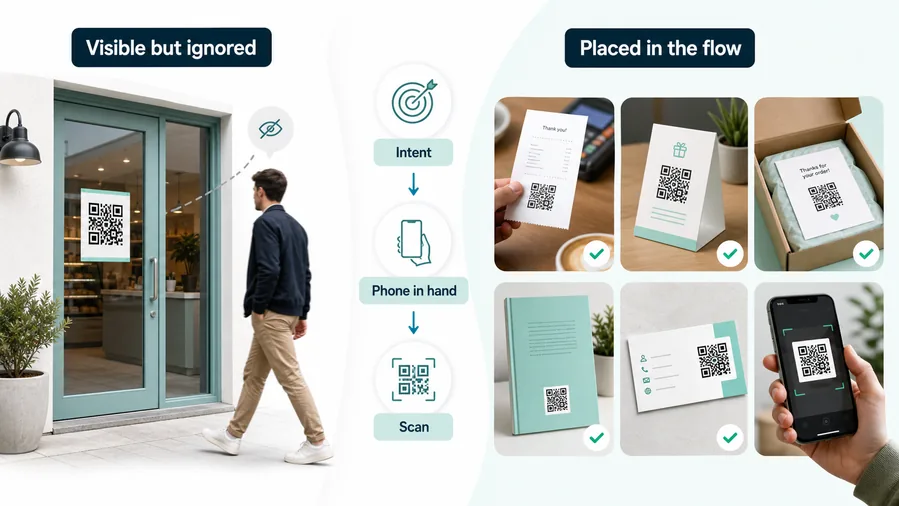
A generic QR appears without a class promise
A QR code on a flyer or lobby sign is easy to overlook if it does not say whether it opens registration, schedule, tickets, waivers, or recital details.
Families should not have to scan just to understand what the studio is offering.
The QR matches the studio action
Place the code beside the exact action: book trial class, complete waiver, view recital schedule, buy tickets, or open practice video.
The destination should match the printed copy immediately on a phone.
What did the family just see?
A flyer, lobby sign, recital program, class handout, open-house table, or parent packet.
What should happen next?
Register, complete waiver, view schedule, buy tickets, open practice resources, or ask a question.
Is the phone naturally available?
Lobby counters, programs, packets, and take-home flyers usually work better than fast-moving doorways.
Will this schedule change?
Use dynamic QR for class times, recital details, teacher pages, camp registration, and parent resources.
Lobby sign
Open class registration, waiver forms, schedules, tuition information, and contact paths.
Class flyer
Route to the right age group, dance style, trial class, or camp page.
Recital program
Link to schedule, performer call times, tickets, photo rules, and livestream.
Parent packet
Open waivers, policies, calendars, tuition, emergency forms, and reminders.
Class handout
Share practice videos, choreography notes, music links, and rehearsal details.
Open-house table
Capture inquiries, trial bookings, teacher bios, and follow-up information.
Studio window
Route local families to classes, camps, hours, and introductory offers.
Thank-you card
Ask for reviews, feedback, testimonials, referrals, or next-session registration.
Dance studio QR placement should support family decisions
Keep each code tied to one class, event, form, or resource so the next step is clear.
Studio reporting
Use scan data to compare dance flyers, recitals, classes, and open-house materials
AnalyticsTracking helps when separate QR codes show which flyers, lobby signs, recital programs, class handouts, and community placements create interest.
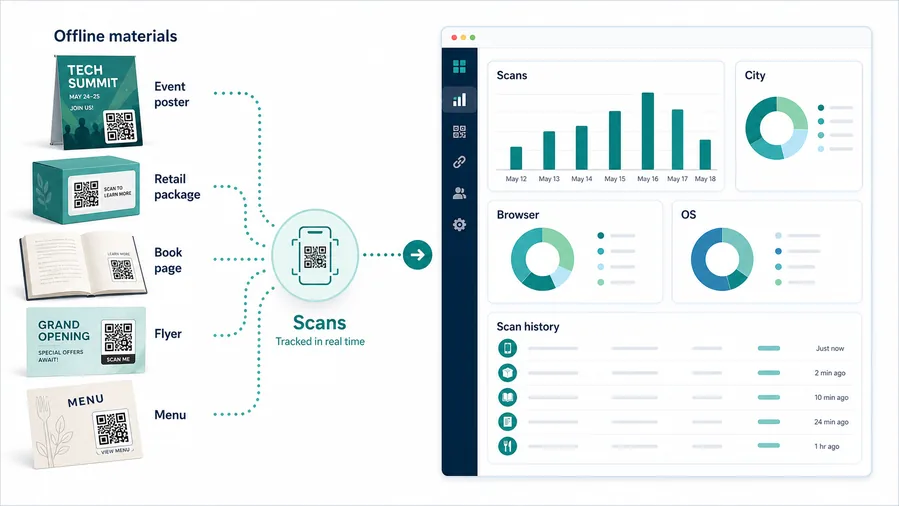
All studio scans become one total
A single QR cannot show whether interest came from a recital program, preschool flyer, summer camp poster, lobby sign, or open-house table.
That makes it harder to improve local promotion and family follow-up.
Each studio placement becomes a signal
Use separate dynamic QR codes for class types, events, campaigns, and printed placements when comparison matters.
Scan data is not full enrollment attribution, but it helps show where attention starts.
Scan volume
Compare scans from flyers, programs, lobby signs, handouts, windows, and community boards.
Timing
See whether scans happen around recital week, open house, camp registration, or class start dates.
Device and browser
Check whether registration, waiver, ticket, and schedule pages work well on parent phones.
Broad location
Use approximate signals for neighborhoods, school events, venues, and local campaigns.
Class promotion
Compare preschool, adult, competitive, camp, and beginner-class flyers.
Recital materials
Measure scans from programs, posters, ticket signs, and backstage sheets.
Open-house follow-up
See which signs, table cards, and packets drive trial bookings.
Community outreach
Compare school boards, local partners, window signs, and event handouts.
Name dance QR codes by class, event, and placement
Tracking works when code names match the real flyer, program, sign, class, or campaign.
Studio and recital flow
Use QR codes for both enrollment and event-day information
Use dance studio QR codes on studio windows, recital programs, flyers, front desk signs, trial cards, parent handouts, costume notes, event posters, classroom doors, and review cards. The CTA should say view schedule, book trial, sign waiver, open recital info, pay tuition, see costume notes, or leave review. Keep each code tied to one clear action so parents do not feel lost.
Dynamic QR codes help when class schedules, recital pages, waivers, payment links, and parent resources change. Separate codes for recital programs, studio windows, trial cards, and parent handouts can show which touchpoints bring people back. QR Code Lab analytics can show scan interest, while enrollments, payments, waivers, and student data remain in your studio systems. Test event-day signs from the real viewing distance, especially in busy lobbies or dim auditorium lighting.
For enrollment, keep the first mobile screen simple: class age range, schedule, trial option, and the signup button. Parents should not need to hunt through the whole website. If the studio has several programs, send each flyer to the matching age group or class style.
Payment boundary
Use dance studio QR codes for tuition and ticket links, not payment proof
PaymentsQR Code Lab can open a trusted tuition, ticket, deposit, costume fee, or invoice page. The payment provider or studio billing system handles processing, receipts, refunds, disputes, and paid-status confirmation.
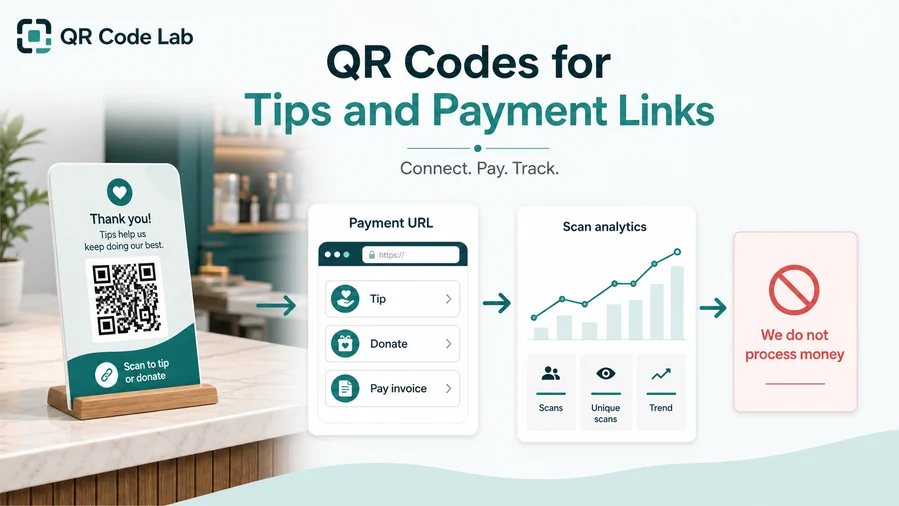
Open tuition and fee links faster
Use QR codes on parent packets, invoices, lobby signs, and recital materials so families can reach the correct payment page without typing.
Support tickets, deposits, and costume fees
If the studio collects recital tickets, camp deposits, registration fees, or costume balances, label the purpose clearly before the scan.
Keep billing destinations editable
Dynamic QR helps when tuition portals, ticket pages, invoice links, or provider checkout URLs change during a season.
A scan does not prove a family paid
Scan analytics can show that someone opened the link, but only the studio payment provider or billing system can confirm paid status.
Use the billing platform as the source of truth for balances, refunds, receipts, and disputes.Keep dance payment QR codes clear and limited
Use QR to reduce typing for families, while payment records stay with the provider.