NPS QR Code for Customer Surveys, Feedback & Review Links
Create NPS QR codes for Net Promoter Score surveys, feedback forms, satisfaction pages, review pages, and follow-up forms. Add them to receipts, emails, counters, and support flows.
Free QR code generator
Create a QR code online
Generate QR codes for websites, email, phone numbers, vCards, Wi-Fi, plain text, forms, PDF files, and campaign links. Customize colors, add a logo or frame, then download a print-ready PNG or SVG.
Choose QR code type
Website QR code, Email QR code, Phone QR code, vCard QR code, Wi-Fi QR code, Text QR code, SMS, WhatsApp, event, and download links.
Add your content
Enter your website URL, contact details, message, phone number, location, or file destination before generating the QR code.
Customize and download
Adjust QR colors, error correction, logo, frame, size, and margin. Generate QR Code, Download PNG, Download SVG, or Save and track scans.
Customer feedback link
Ask for feedback while the experience is still fresh
An NPS QR code is useful when you want customers to share feedback close to the moment they experienced the service. It can open a Net Promoter Score survey, satisfaction form, private feedback page, review page, follow-up form, support form, or short customer check-in. Local businesses, SaaS teams, restaurants, salons, hotels, clinics, retail stores, event organizers, and support teams can use QR codes on receipts, cards, signs, packaging, and post-service handouts.
The benefit is timing and simplicity. A customer may ignore a feedback email later, but they may scan a clear code on the receipt, table card, appointment card, or checkout sign while the visit is still in mind. The QR code should open a short mobile-friendly form, not a long survey that feels like homework. One or two strong questions can be more useful than a page full of fields.
QR Code Lab creates URL QR codes and can show scan activity. It does not collect survey answers, calculate NPS, store customer records, or operate feedback software. The linked survey, form, CRM, or review platform handles responses and reporting.
Customer signal
Collect NPS feedback when the customer can judge the experience
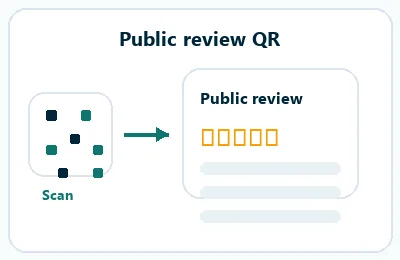
NPSAn NPS QR code should open a short, focused survey at the right customer moment: after a visit, delivery, support interaction, event, stay, purchase, appointment, or product experience.
Ask the recommendation question after the value is clear
Use the QR when customers have enough context to answer honestly, not before service starts or while a problem is still unresolved.
Receipts, service completion cards, post-event signs, packaging inserts, hotel checkout, clinic follow-up, and support handoff. Do not turn NPS into a public review gate or pressure customers toward a positive score.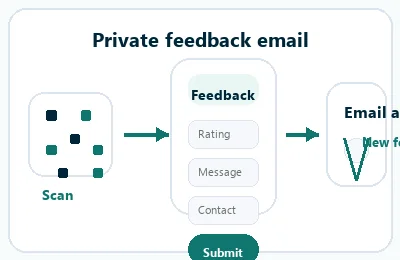
Pair the score with one useful follow-up question
A score alone is thin. Ask why the customer chose that rating or what would improve the experience while keeping the survey easy to finish.
Teams need actionable feedback without sending customers into a long research form. Long surveys from a QR scan lose people quickly, especially on receipts and counter cards.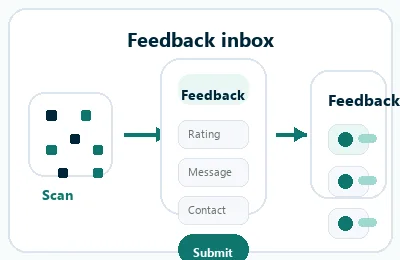
Give unhappy customers a private path for help
Low scores may point to a support issue. Make it easy to request contact, explain the problem, or reach the right team without forcing the customer into a public complaint.
Hospitality, healthcare, local services, retail, events, SaaS onboarding, and support workflows. NPS should inform service recovery; it should not hide complaints or replace customer support.NPS QR works when timing and follow-up are clear
Use the QR to capture a useful signal, then make sure the team knows how to read and act on the response.
Survey UX
Make the NPS scan feel like a one-minute survey, not a chore
Scan UXA good NPS QR destination loads quickly, names the experience being rated, asks the score clearly, and gives customers a simple way to explain the reason.
The rating context should be obvious
Visit, event, delivery, support, appointment, productCustomers should know what they are rating before they choose a score. Name the branch, event, product, appointment, support interaction, or service moment.
If several experiences are mixed together, the signal becomes harder for the team to use.
One short reason field is often enough
Why that score, what could improve, contact permissionA short explanation makes NPS more useful than a number alone, but the survey should still feel light on a phone.
Add optional contact permission only when the team is ready to follow up.
Low scores should not disappear into a dashboard
Support request, manager contact, service recoveryIf the customer indicates a problem, offer a private follow-up route or contact option.
That keeps NPS connected to service improvement instead of becoming a silent metric.
Is the survey tied to one experience?
Name the visit, delivery, event, appointment, product, or support interaction.
Can it be finished quickly?
Keep the score and reason field visible without turning the QR scan into a long form.
Is follow-up possible?
Only ask for contact permission when someone will actually respond.
NPS QR should create a usable signal
Make the survey short, specific, and connected to a follow-up path when the response needs action.
Survey placement
Place NPS QR codes after the customer has something real to rate
PlacementNPS QR placement should come after a complete interaction: checkout, delivery, support resolution, appointment, onboarding, event session, hotel stay, or product setup.
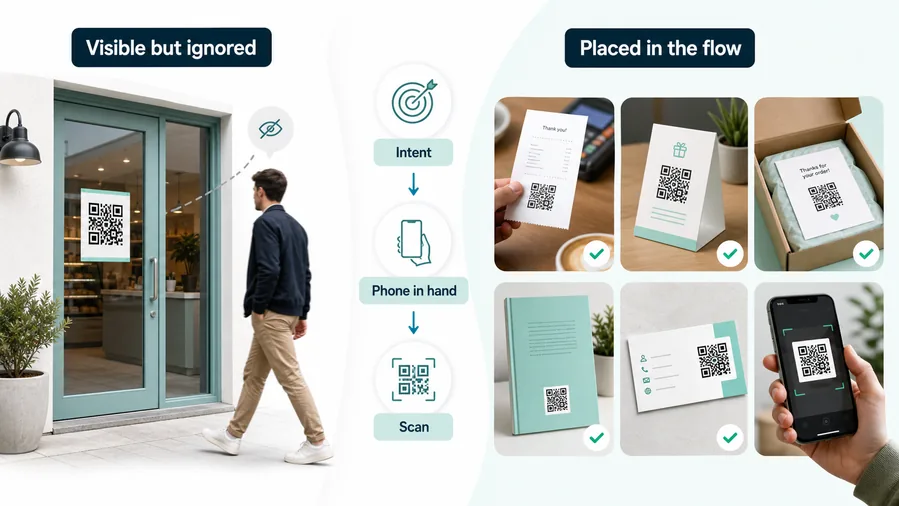
The survey appears before the experience is complete
A recommendation score is weak if the customer has not finished the visit, product setup, event, support case, or service appointment.
Ask too early and the response may reflect confusion rather than the actual experience.
The QR appears when the experience is fresh
Receipts, thank-you cards, checkout counters, service completion notes, packaging inserts, and post-event signs match NPS timing better.
The printed caption should say that the scan opens a short survey, not a review page or coupon.
What experience is being rated?
Keep each QR tied to one branch, event, product, service, delivery, or support moment.
Can the customer answer now?
Ask after enough value has been delivered and while the memory is still fresh.
Will low scores trigger action?
Use a private follow-up path when unhappy customers need help.
Is this NPS or a review request?
Make the printed CTA clear so customers know they are opening a survey.
Receipt or checkout card
Best after a purchase, visit, meal, appointment, or service completion.
Support handoff
Use after the case is resolved, with a route for unresolved problems.
Event exit or session sign
Capture feedback when attendees have just experienced the program.
Packaging insert
Ask after setup, delivery, unboxing, or enough product use to judge the experience.
Poster or event sign
Best where people pause: registration line, booth, waiting area, seat back, schedule board, or exit path. Weak when people only pass at speed.
Business card
Useful after a conversation because the person already knows why they might save a contact, open a portfolio, book a call, or follow up.
Window sign
Good for after-hours menus, booking, pickup instructions, or quick offers. Avoid complex actions when the person is outside and just walking by.
Cover or front label
Use it only when the promise is immediate and clear. Otherwise the better scan moment is often inside the material or after the first interaction.
NPS QR placement should protect signal quality
Ask when the customer can answer honestly and make the destination specific enough for the team to act.
Feedback quality
Make the scan feel like a quick customer favor, not extra work
Use NPS QR codes on receipts, service cards, table tents, appointment cards, packaging inserts, event badges, support desks, checkout counters, room cards, and post-service handouts. The printed CTA should set expectations: rate your visit, answer one short question, share private feedback, tell us what to improve, or review your experience. People are more likely to scan when they know the task is small.
Place the code after the customer has enough context to judge the experience. At a restaurant, that may be after the meal. At a salon, it may be on the appointment card or mirror after service. At an event, it may be at the exit or on a session handout. Dynamic QR codes help when survey links change, campaigns end, or different locations need separate forms. QR Code Lab analytics can show which touchpoints send people into the feedback path, while actual answers stay in the feedback tool.
If many people scan but few submit, the QR placement is probably doing its job and the form may need attention. Shorten the page, improve the button, or ask fewer questions.