Complaint Form QR Code for Customer Issues & Support Online
Create complaint form QR codes for issue forms, support pages, refund requests, service feedback, contact pages, and follow-up forms. Place them on counters, receipts, and signs today.
Free QR code generator
Create a QR code online
Generate QR codes for websites, email, phone numbers, vCards, Wi-Fi, plain text, forms, PDF files, and campaign links. Customize colors, add a logo or frame, then download a print-ready PNG or SVG.
Choose QR code type
Website QR code, Email QR code, Phone QR code, vCard QR code, Wi-Fi QR code, Text QR code, SMS, WhatsApp, event, and download links.
Add your content
Enter your website URL, contact details, message, phone number, location, or file destination before generating the QR code.
Customize and download
Adjust QR colors, error correction, logo, frame, size, and margin. Generate QR Code, Download PNG, Download SVG, or Save and track scans.
Private issue path
Give unhappy customers a direct way to ask for help
A complaint form QR code can open a customer issue form, support page, refund request, service feedback page, contact page, follow-up form, or private feedback destination. It is useful for businesses, restaurants, salons, clinics, repair shops, delivery teams, hotels, service providers, and support teams that want problems to reach the right people quickly.
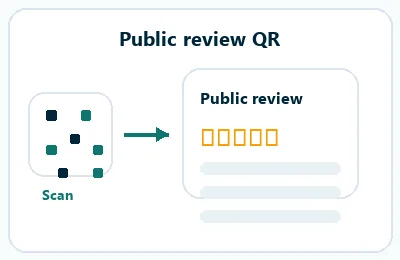
This is different from a public review QR. A review QR asks people to post about the experience. A complaint form QR gives someone a private path first, while the issue is still fresh and possibly fixable. That can protect the customer relationship and help the team learn about problems before they turn into public frustration.
QR Code Lab creates the QR code and can help track scan interest by placement. It does not collect responses, store customer data, calculate ratings, send emails, or operate your feedback software. The destination should be the form, support tool, or help page where your team actually handles the issue. That keeps customer care inside the system your staff already watches.
Complaint intake
Use complaint form QR codes when customers need a fair private path
FeedbackA complaint form QR code should give customers a clear way to report a problem, explain what happened, request follow-up, or reach support before frustration turns into public escalation.
Give unhappy customers a direct place to explain the issue
Use the QR on receipts, table cards, support counters, service notes, packaging inserts, or waiting areas so people can describe the problem while details are fresh.
Service recovery, order issues, facility problems, delivery mistakes, product defects, or staff follow-up. Do not hide public review options or imply that complaints will be ignored unless submitted privately.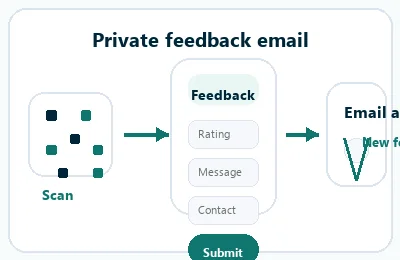
Collect the details staff need to fix the problem
Ask for the order, location, date, issue type, preferred contact path, and enough context to route the complaint without making the form feel like an interrogation.
Restaurants, clinics, hotels, retail counters, rentals, events, schools, and local services. Avoid requesting sensitive information unless the support process truly requires it.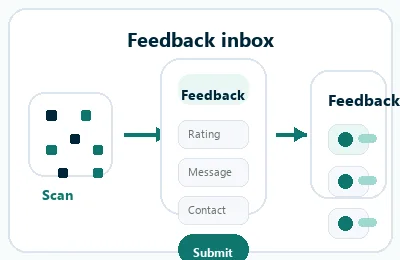
Tell customers what happens after they submit
A complaint form should set expectations: confirmation, response time, who reviews it, whether a receipt is needed, and what support channel handles urgent cases.
Any setting where the business wants private feedback before public frustration grows. Never promise refunds, compensation, medical advice, or legal outcomes that the form cannot guarantee.Complaint QR codes should create a real response path
Use them when someone owns the inbox, follows up, and improves the customer experience from what people report.
Complaint placement
Place complaint form QR codes where the problem is still easy to describe
PlacementComplaint QR placement should meet the customer close to the issue: receipt, service counter, table, package insert, room card, appointment follow-up, or support sign.
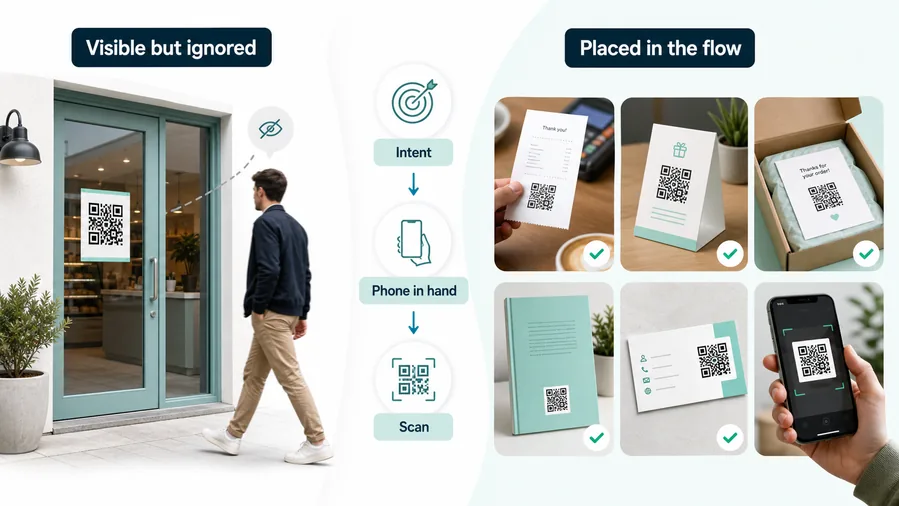
The feedback path appears after the customer has already left angry
If customers only find a complaint form after searching the website, many will go straight to public reviews or never report the issue.
A visible private path can recover problems while the details are still accurate.
The QR appears where the customer can explain the issue calmly
Place it on receipts, table cards, support desks, package inserts, lobby signs, or follow-up messages with clear wording about what the form is for.
The destination should confirm the business, location, and response expectation.
What issue just happened?
Order, service, delivery, product, room, appointment, event, or facility complaints may need different fields.
Who will respond?
Do not collect complaints unless a team checks the form and has a follow-up process.
Is urgent help needed?
Safety, health, payment, or time-sensitive problems may need a phone, desk, or staff path beside the QR.
Does the customer know it is private?
Explain whether the form goes to support, management, owner, host, or operations.
Receipt or invoice
Best for order issues, service problems, payment questions, and support follow-up after purchase.
Service counter or lobby
Use for facility issues, waiting-room problems, staff follow-up, and private escalation.
Table card or room card
Good for restaurants, hotels, rentals, events, and venues where problems happen in a specific place.
Package insert
Collect product defects, missing parts, setup trouble, warranty questions, and replacement requests.
Poster or event sign
Best where people pause: registration line, booth, waiting area, seat back, schedule board, or exit path. Weak when people only pass at speed.
Business card
Useful after a conversation because the person already knows why they might save a contact, open a portfolio, book a call, or follow up.
Window sign
Good for after-hours menus, booking, pickup instructions, or quick offers. Avoid complex actions when the person is outside and just walking by.
Cover or front label
Use it only when the promise is immediate and clear. Otherwise the better scan moment is often inside the material or after the first interaction.
Complaint QR placement should lower the temperature
Put the private path where customers can report the issue clearly and see that someone will handle it.
Complaint UX
Make the complaint form respectful, short, and actionable
Form UXA complaint QR scan should quickly confirm the business, ask for the right details, and explain what happens next. Long or vague forms make frustration worse.
The page looks official immediately
business name, location, issue type, support contextThe first screen should show the business or location so customers know they are not sending details to an unknown page.
Use a calm headline and explain the purpose before asking for personal information.
The form asks for details staff can act on
order, visit date, issue, contact preference, photo uploadAsk for the minimum useful context: what happened, when, where, and how the team can follow up.
Optional photo uploads, receipt references, or order numbers can help, but required fields should stay reasonable.
The confirmation sets expectations
response time, support channel, urgent path, reference numberAfter submission, tell customers what happens next and how urgent issues should be handled.
If the business cannot promise compensation or a timeline, use honest wording instead of generic reassurance.
Can the form be finished in under two minutes?
Complaint forms should be focused enough to complete while the issue is fresh.
Does someone own the inbox?
A complaint QR without a response process creates more distrust.
Is sensitive data limited?
Avoid asking for health, identity, payment, or private details unless the support process requires it.
A complaint QR should turn frustration into a handled case
Use it when the form is clear, the data is necessary, and the team is ready to respond.
Service recovery
Place the QR where customers can act while the experience is fresh
Use complaint form QR codes on receipts, service counters, repair tickets, hotel room cards, restaurant tables, clinic waiting rooms, packaging inserts, delivery notes, salon stations, checkout signs, and support handouts. The wording should sound useful, not defensive: report an issue, tell us what went wrong, request follow-up, or get help with this order.
Keep the form short. A frustrated customer is unlikely to complete a long survey before anyone has helped them. Ask for the details needed to route the problem, then give a clear next step. If the issue is sensitive, make the destination trustworthy and avoid collecting personal information you do not need.
Dynamic QR codes help if support forms, escalation paths, departments, or policy pages change. Scan analytics can show where issue reporting starts, while the actual response, customer data, and resolution history remain in your support tool. If one location gets more complaint scans, that may point to a fixable service gap. Clear naming in QR Code Lab makes those patterns easier to review later.
Feedback trust
Keep complaint form QR codes private enough for real issues
TrustComplaint forms may collect contact details, order numbers, photos, locations, and sensitive service context. The QR destination should be official, limited, and handled by the right team.

A public QR can be copied or misused
Use branded pages, controlled signs, and location-specific context so customers know the complaint form belongs to the business.
Watch for similar-looking domains, long URLs, login or verify keywords, and pages asking for credentials after an unexpected scan.
Forms can request unnecessary sensitive data
Do not ask for payment, medical, legal, identity, or private personal details unless the process is designed to protect that information.
A trustworthy QR should not make the final destination mysterious, especially on posters, labels, menus, parking signs, or event materials.
No follow-up damages trust
If nobody reviews submissions, the QR becomes a frustration trap. Assign ownership and response expectations before printing.
Before paying, check the domain, HTTPS, amount, recipient, and whether the destination matches the place or brand that printed the QR.Review the complaint path before publishing
Scan from the final receipt, sign, table card, or insert and confirm the form is official, mobile-friendly, and routed correctly.
The current detailed report is a static URL analysis. It helps reveal the encoded content and basic URL risk signals, but it does not guarantee that a destination is safe and does not replace browser, antivirus, payment, or bank security checks.Decoded content
See the raw value inside the QR before opening it.
Content type
Recognize URL, Wi-Fi, mailto, phone, SMS, vCard, or plain text.
URL risk signals
Review HTTPS, shorteners, IP addresses, long URLs, encoded characters, query parameters, and sensitive keywords.
Destination report
For URL codes, view final URL fields, static redirect report fields, domain fields, TLS placeholders, page metadata fields, and risk reasons.
Use complaint QR codes as part of service recovery
The value is not the form itself. The value is a response process that helps customers feel heard and gives the business details it can act on.