Worksheet QR Code Generator for Student Resource Links
Create worksheet QR codes for answer keys, videos, reading passages, assignments, quizzes, examples, audio, forms, extra practice, printable class materials, and review links.
Free QR code generator
Create a QR code online
Generate QR codes for websites, email, phone numbers, vCards, Wi-Fi, plain text, forms, PDF files, and campaign links. Customize colors, add a logo or frame, then download a print-ready PNG or SVG.
Choose QR code type
Website QR code, Email QR code, Phone QR code, vCard QR code, Wi-Fi QR code, Text QR code, SMS, WhatsApp, event, and download links.
Add your content
Enter your website URL, contact details, message, phone number, location, or file destination before generating the QR code.
Customize and download
Adjust QR colors, error correction, logo, frame, size, and margin. Generate QR Code, Download PNG, Download SVG, or Save and track scans.
Printable learning support
Use worksheet QR codes when a printed task needs one helpful digital companion
A worksheet QR code can open an answer key, video explanation, reading passage, assignment page, quiz, form, worked example, audio file, extra practice, vocabulary list, teacher note, accessibility support, or parent instruction page. It is useful for teachers, tutors, curriculum creators, homeschool parents, and schools that want printed worksheets to connect to the exact resource students need.
This is narrower than a broad classroom QR page. A worksheet QR should support one task on one page or section. The scanner should understand why the code is there: watch the explanation, hear the audio, check examples, submit the answer, open the reading, or practice more. If the code opens a general folder with many options, students may lose time and focus.
QR Code Lab creates the QR code and points it to your destination. It does not host student answers, grade work, collect classroom data, manage learning platforms, or replace school-approved tools. Link to resources that are appropriate for the age group and approved for your teaching context.
Used carefully, worksheet QR codes make paper more flexible. They can add sound, video, support, or review without crowding the printed page.
Worksheet resource workflow
Use worksheet QR codes to attach the exact digital help to the printed task
WorksheetsA worksheet QR code should open the resource students need at that moment: video explanation, answer form, hint, audio, template, dataset, teacher note, submission path, or differentiated support tied to the printed exercise.

Put support beside the exercise that needs it
Use QR codes on worksheet margins, station cards, homework sheets, lab pages, review packets, take-home notes, and classroom handouts so students can open the right material without searching a folder or retyping a long link.
The caption should name the resource: watch example, open audio, submit answer, or get hints.
Keep the scan focused on learning, not navigation
A worksheet QR should not dump students into a broad drive folder. It should land on the specific video, PDF, form, audio file, template, or practice page that matches the current question or activity.
One printed task should have one obvious digital next step.
Keep classroom resources editable after printing
Teachers revise examples, answer keys, forms, slides, audio, and practice files. Dynamic QR helps worksheets stay useful across classes, semesters, reprints, and take-home use when links change.
This is especially useful for reusable packets and printed classroom sets.A worksheet QR should save learning time at the exact point of confusion
The scan should connect the printed task to a useful resource without making students leave the learning flow. Clear labels, student-safe access, and mobile-friendly resources matter as much as the QR image.
The destination should match the worksheet, topic, level, and classroom policy.Explain the task
Open a short video, worked example, rubric, hint page, or teacher note for the exact question.
Collect the answer
Send students to a form, quiz, upload path, reflection prompt, or exit ticket tied to the worksheet.
Support accessibility
Provide audio, translated notes, enlarged resources, differentiated practice, or parent-friendly instructions.
Protect resource access
Use school-approved sharing settings and avoid destinations that require the wrong account or expose unrelated files.
Student resource actions
Choose worksheet QR actions by what the student needs next
Learning actionsThe QR should solve a classroom job: explain, practice, listen, submit, check, extend, translate, or continue at home. Keep each scan tied to one clear resource or action.

Watch the worked example
Link a problem, prompt, or diagram to a short explanation that helps students continue without waiting for the teacher.

Open audio or pronunciation
Use for language worksheets, reading passages, music practice, listening tasks, vocabulary, and accessibility support.

Submit answers or reflections
Send students to a form, quiz, exit ticket, upload folder, or reflection page connected to the exact worksheet.

Download a template or file
Provide spreadsheets, datasets, printable organizers, source files, slides, or project templates without long URLs.

Check hints or answer keys
Use controlled access for hints, review answers, self-check pages, or teacher-approved solution steps.

Support home learning
Help families open instructions, examples, translations, due dates, or parent notes when the worksheet leaves the classroom.

Extend the activity
Link enrichment tasks, simulations, videos, readings, discussion prompts, or next-level practice for early finishers.

Route by group or level
Use separate codes when groups, stations, reading levels, or differentiated versions need different resources.
For learners and parents, the QR code should remove the search
A student should not have to guess which video matches the worksheet. A parent should not have to type a long link from a printed letter. A teacher should not repeat the same resource direction for every student. Good educational QR codes open the exact resource connected to the sheet, page, task, or notice.
For teachers, printed materials become easier to update
Learning resources change: assignment links, answer keys, video explanations, due dates, parent forms, trip details, classroom notices, and correction files. Dynamic QR codes let the printed page stay useful while the destination can be updated behind the code.
Put the QR next to the learning moment
Worksheet print check
Make worksheet QR codes readable in real classroom conditions
PrintWorksheets are copied, folded, written on, photographed, placed under desk lights, and scanned by different phones. The QR code needs enough size, contrast, quiet zone, and a short label before the sheet reaches students.
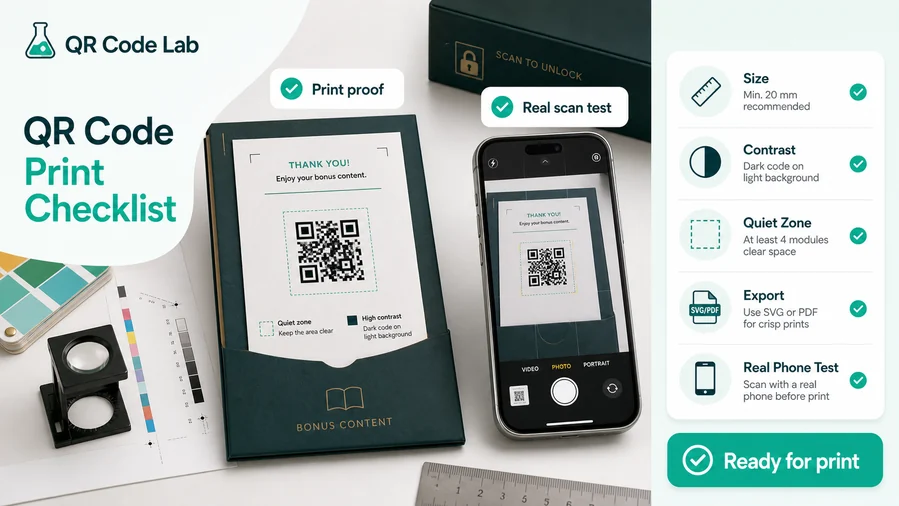
Keep the code large enough for copied paper
A QR that scans on a crisp PDF can fail after photocopying, shrinking, or printing in draft mode. Test the final worksheet version, not only the digital design.
Avoid placing the code near staples, folds, handwriting zones, punched holes, page edges, or decorative borders that can crowd the quiet zone.
Label the learning action beside the code
Students should know what opens before scanning: watch example, listen to audio, submit answers, open template, or check directions.
If the resource may change after printing, use dynamic QR so the worksheet can keep working without reissuing the whole packet.
Use a microlanding page when the scan needs more than one action
A direct URL is enough when every scanner should go to the same single page. For books, manuals, packaging, training material, event handouts, and product inserts, a microlanding page is often more useful because it can collect several clear actions behind one printed QR code.
In QR Code Lab you can make that page practical: upload a cover image or product image, add buttons for the main action, attach a PDF for reading, add a ZIP with bonus files, and include a feedback or contact path. The printed QR code stays simple, while the destination can present the exact next step the scanner needs.
Homework sheet
Use for instructions, examples, parent notes, audio, or submission forms students need outside class.
Station card
Use larger codes for shared classroom stations, lab activities, and group rotations.
Review packet
Link each section to hints, videos, answer checks, or extra practice without crowding the page.
Project worksheet
Open templates, upload paths, rubrics, datasets, or teacher feedback forms.
Test worksheet QR codes after copying, not before
If a student cannot scan quickly from the actual handout, the digital resource might as well be missing.
Worksheet scan experience
Make the worksheet scan open the promised resource without login friction
Scan UXStudents often scan while working, not browsing. The first screen should match the worksheet label, work on a phone, and avoid permission walls that stop the activity.
The scan opens the exact file, video, audio, or form
Video, PDF, audio, answer form, templateDirect links are best when one worksheet prompt needs one resource and access settings are already correct.
Test from a student-like phone session, not only a teacher account with full permissions.
A small page helps when the worksheet needs several actions
Watch, download, submit, hints, translationIf one worksheet needs multiple resources, use a mobile page with clear buttons instead of a confusing folder.
Keep labels short and tied to the printed activity so students do not waste time choosing.
Dynamic QR can keep resources current
Revised video, new answer form, updated file, closed accessDynamic QR is useful when a worksheet will be reused or distributed before the final resource is stable.
Update the destination when videos, forms, answer keys, or classroom files move.
Does the resource match the worksheet label?
The first screen should confirm the topic, resource type, and action promised beside the QR.
Can students open it with the right account?
Check sharing permissions, school accounts, file access, form settings, and mobile playback before printing.
Is there a fallback for home use?
For take-home sheets, include a short URL, teacher note, or parent-friendly instruction when scanning fails.
Worksheet QR should reduce friction during learning
If the scan sends students into a folder, login wall, or unrelated page, the worksheet loses momentum.
Worksheet placement
Place worksheet QR codes beside the task they support
PlacementThe right spot is not the prettiest corner. Put the code where the student naturally needs the resource: beside an exercise, reading passage, diagram, audio task, station instruction, upload prompt, or homework note.
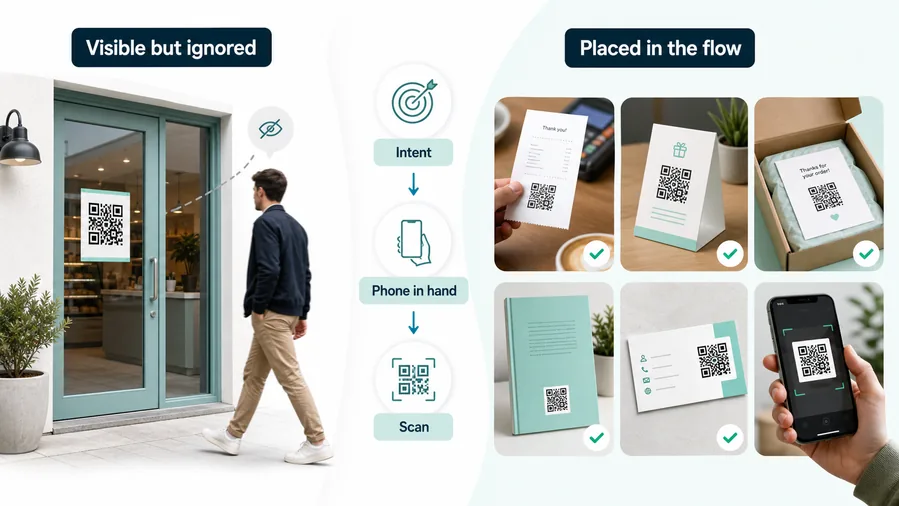
A QR in the footer can feel detached from the task
Students may not know which question the code supports or what resource will open.
That creates more confusion than a printed URL because the scan has no learning context.
The code appears where the digital resource becomes useful
Place audio beside the reading, hints beside the hard problem, uploads beside the submission instruction, and videos beside the example.
The caption should make the scan’s purpose obvious in a few words.
What is the student doing now?
Reading, solving, listening, practicing, submitting, checking, collaborating, or taking the worksheet home.
What resource helps next?
Video, audio, answer form, template, hint, rubric, source file, translation, or parent instruction.
Can the phone scan naturally?
Worksheet margins and table cards need enough size, quiet zone, and room away from handwriting or folds.
Will this sheet be reused?
Use dynamic QR for packets, station cards, laminated sheets, or materials that may outlive the current link.
Exercise margin
Open a worked example, hint, or extra practice tied to that exact problem.
Reading passage
Link audio, vocabulary, pronunciation, translation, or comprehension support.
Station card
Open instructions, timer, video demo, data sheet, or group response form.
Homework header
Provide family instructions, due date, examples, or a submission form.
Lab sheet
Open safety notes, procedure videos, datasets, observation forms, or reference diagrams.
Review packet
Attach topic-specific hints, answer checks, and revision videos by section.
Project page
Open rubric, template, source file, upload path, or feedback form.
Back page resource list
Use when one landing page organizes several worksheet resources clearly.
Worksheet QR belongs at the learning handoff
Place it where the student needs the resource, not where the layout merely has empty space.
Worksheet design
Make the QR code small enough for the page but large enough for real phones
Place worksheet QR codes near the question, section, or instruction they support. A code in the margin can open an audio prompt. A code under a problem can open a worked example. A code at the end can open answer review or extra practice. Keep the label short so students know whether to scan before, during, or after the task.
Test the printed worksheet, not only the PDF preview. Make sure the QR code still scans after photocopying, shrinking, or printing in black and white. Leave enough quiet space around the code and avoid placing it too close to page edges, hole punches, folds, or handwritten answer areas. If students will use older phones or tablets, make the code larger.
Dynamic QR codes are helpful for worksheets reused across terms because videos, forms, answer keys, and resource links can change. You can update the destination without replacing the whole worksheet file. Scan analytics can show whether students open the support resource, but they should not be treated as proof that the student completed the task.
Reusable worksheet control
Keep worksheet QR resources editable after packets are printed
DynamicClassroom resources move: videos are replaced, answer forms close, files are reorganized, and instructions improve. Dynamic QR keeps printed worksheets useful when the linked resource changes.
A fixed resource link can break across classes or semesters
A static QR is fine for a final, permanent resource, but worksheets are often reused and revised.
If a file moves, form closes, or video changes, the printed worksheet keeps pointing to the old location.
The printed worksheet can stay while the resource improves
Dynamic routing lets teachers update videos, PDFs, answer forms, templates, audio, and instruction pages without reprinting the sheet.
That is practical for packets, laminated station cards, homework sets, and reusable classroom materials.
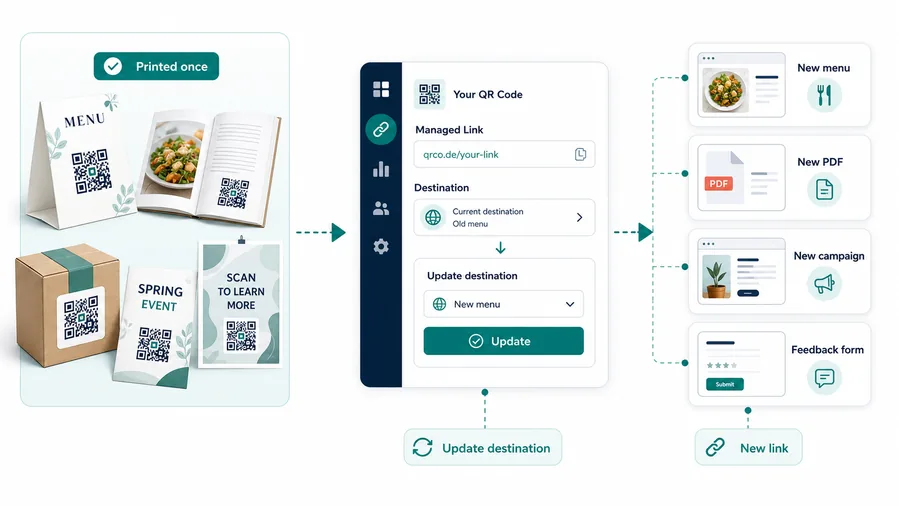
Updated answer forms
Move scans to the current form, quiz, upload path, or closed-form notice.
Revised lesson resources
Replace videos, examples, slides, datasets, audio, or templates as instruction improves.
Differentiated support
Route groups to level-specific help pages, translations, accessibility resources, or extension tasks.
Semester reuse
Keep packets and station cards working when class folders, due dates, and resource ownership change.
Use dynamic when the worksheet may outlive the link
If the printed material will be reused, shared, laminated, or sent home, keep the resource route editable.