Multi-URL QR Code Generator for Routing & Campaign Planning
Plan multi-URL QR routing for language pages, app stores, campaign variants, and location-specific destinations. For now, use one URL, a landing page, API plan, or dynamic updates.
Free QR code generator
Create a QR code online
Generate QR codes for websites, email, phone numbers, vCards, Wi-Fi, plain text, forms, PDF files, and campaign links. Customize colors, add a logo or frame, then download a print-ready PNG or SVG.
Choose QR code type
Website QR code, Email QR code, Phone QR code, vCard QR code, Wi-Fi QR code, Text QR code, SMS, WhatsApp, event, and download links.
Add your content
Enter your website URL, contact details, message, phone number, location, or file destination before generating the QR code.
Customize and download
Adjust QR colors, error correction, logo, frame, size, and margin. Generate QR Code, Download PNG, Download SVG, or Save and track scans.
Multiple-link planning
Use one QR code carefully when the destination may need more than one path
Multi-URL routing is in development at QR Code Lab, so this page should be treated as a planning guide rather than a promise of full rules-based routing today. If you need one printed QR code to offer several destinations right now, the practical route is to point it to a mobile landing page with clear buttons, or use a dynamic QR code when the main destination may change later.
That distinction matters for restaurants, creators, agencies, event teams, retailers, schools, publishers, and campaign marketers. A QR code can only deliver the scanner to the payload it contains. If the payload is a direct URL, it opens one destination. If the payload is a managed dynamic URL, QR Code Lab can update the final destination and measure scans. If you need several choices, the cleanest current experience is usually a focused landing page.
Avoid trying to hide too much logic behind one printed code. A scanner should understand what happens next: menu, booking, tickets, downloads, social links, support, or campaign offer. When the choice is visible on a landing page, the experience is more trustworthy than a mysterious redirect chain.
Destination routing decision
Choose a multi-URL QR setup by why one scan needs more than one possible destination
SetupMulti-URL QR only makes sense when the scanner may need different destinations by device, language, region, campaign stage, placement, or choice. If everyone should land on one page, keep the QR simpler.
URL QR code
Use for websites, landing pages, menus, product pages, portfolios, booking pages, and campaign pages.
Best dynamic when links may changePDF / File QR code
Use for menus, manuals, worksheets, bonus materials, brochures, certificates, ZIP archives, and checklists.
Dynamic is safer for printvCard QR code
Use for business cards, badges, counters, portfolios, sales materials, and follow-up contact details.
Static opens native contact saveWi-Fi QR code
Use for cafes, hotels, offices, classrooms, venues, rental spaces, and guest networks.
Usually best as staticForm QR code
Use for feedback, registrations, quote requests, surveys, support requests, applications, and check-in.
Dynamic helps forms evolveWhatsApp / messaging QR
Use when the next step is a conversation: support, sales, booking, delivery questions, or consultation.
Prefilled messages reduce frictionMaps QR code
Use for venues, offices, stores, events, pickup points, property listings, booths, and meeting locations.
Great for physical destinationsSocial QR code
Use for Instagram, TikTok, YouTube, X, LinkedIn, Behance, creator pages, and community profiles.
Best when relationship continuesPayment link QR code
Use for invoices, tips, donations, event payments, deposits, checkout pages, and payment requests.
Make amount and context clearNative action?
Wi-Fi, vCard, email, phone, and SMS often work best when the action is encoded directly, especially if the native phone interface matters.
Editable or measurable?
Use a dynamic QR code when the destination may change, files may be replaced, campaigns need analytics, or printed material must stay useful later.
Several actions?
Use a microlanding page when one scan should offer buttons, files, contact, feedback, booking, social links, or multiple next steps.
Multi-URL routing should solve a real scanner problem
Use it for Android/iPhone choices, language selection, regional pages, campaign fallback, product variants, or a small mobile menu of clear actions.
After-print control
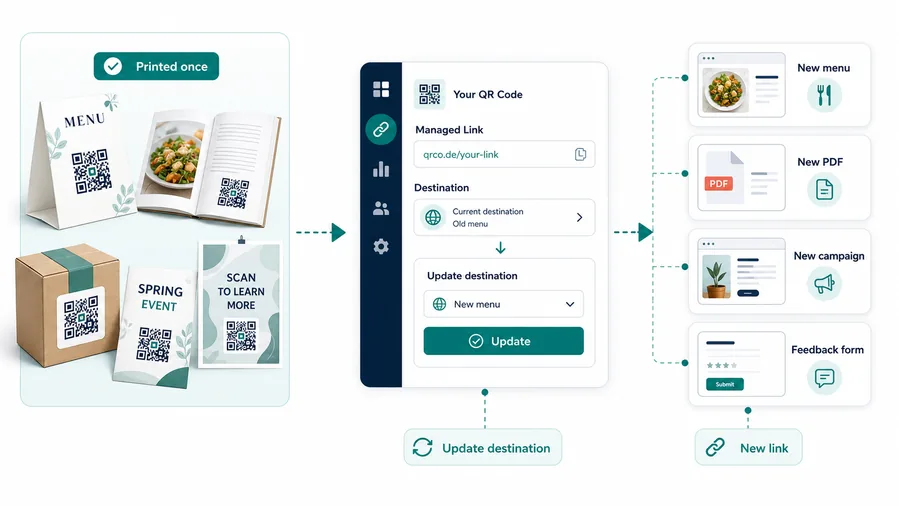
Use dynamic routing when one printed QR must serve changing destinations
DynamicA multi-URL QR is valuable when printed material needs controlled routing instead of a one-size-fits-all URL.
One fixed URL can be wrong for part of the audience
A single destination works only when every scanner needs the same next step.
It can fail when people use different devices, languages, regions, app stores, roles, or campaign contexts.
A managed QR can choose or present the right path
Dynamic routing lets the same printed code send scanners to the current destination or a small choice page.
That protects packaging, events, onboarding, international materials, and app campaigns from rigid one-link logic.
App install routing
Offer Google Play, App Store, web fallback, beta, setup, and support paths from one printed code.
Language or region pages
Route packaging, manuals, signs, and campaigns to the right localized resource or market page.
Campaign fallback
Move from launch offer to evergreen page, waitlist, recap, or next campaign without replacing print.
Product variants
Use one entry point for model, size, batch, support, warranty, setup, and care destinations when a simple page can guide the choice.
Use multi-URL only when routing improves the scan
If routing logic does not make the scanner’s next step clearer, a normal dynamic QR is cleaner.
Routing UX
Make the multi-URL scan choose the right path without making people think too hard
Scan UXA multi-destination QR should feel like guidance, not a maze. The first screen must make the available paths obvious and small enough to choose on a phone.
Use automatic routing only when the rule is reliable
Device, region, language, campaignAutomatic routing can help when the right path is clear from device, market, or campaign context.
Avoid hidden routing when the scanner may need to understand or override the choice.
Use a choice page when people need control
Android/iPhone, language, role, resourceA simple mobile page can show two to five clear options such as iPhone, Android, web, support, or language.
Each option should explain the outcome in plain words.
Always keep a fallback path visible
Wrong device, expired offer, unsupported regionRouting mistakes are frustrating because the scanner cannot see what went wrong.
Offer a fallback link, support path, or main website when the primary route does not fit.
Is the routing reason obvious?
Use multi-URL for real differences such as device, language, region, role, product variant, or campaign stage.
Are there too many choices?
Keep the choice page focused; if it becomes a directory, build a better landing page instead.
Can the destination logic change later?
Use dynamic QR when routes, offers, apps, languages, or support paths may change after print.
Multi-URL QR should reduce friction, not add decisions
Choose routing only when it gets scanners to a better destination than one fixed link would.
Current workaround
A link landing page is often the best temporary multi-URL pattern
For a menu, use buttons for dine-in menu, takeaway menu, allergens, reservations, and reviews. For an event, use agenda, map, speaker files, check-in, and feedback. For a creator or publisher, use bonus downloads, newsletter, social profiles, and contact. For packaging, use setup video, warranty, support, reorder, and product details. This keeps the printed QR simple while giving the scanner more than one useful next step.
Keep the landing page short and mobile-first. If the person scans from a table card, package insert, poster, or book page, they should see the right choices immediately. Too many buttons can be just as confusing as one wrong destination. Group the actions by what the scanner is likely to need first.
If the printed asset will live for months, make that landing page or destination dynamic. Then you can change seasonal links, replace files, update campaigns, and compare scan activity without reprinting the code. Keep the first screen short so the choices stay easy on a phone, even for someone scanning in a hurry.