LinkedIn Event QR Code Generator for Business Events Online
Create LinkedIn event QR codes for webinars, networking events, panels, conferences, workshops, speaker pages, registration links, and promos. Use them on badges, slides, flyers, and booths.
Free QR code generator
Create a QR code online
Generate QR codes for websites, email, phone numbers, vCards, Wi-Fi, plain text, forms, PDF files, and campaign links. Customize colors, add a logo or frame, then download a print-ready PNG or SVG.
Choose QR code type
Website QR code, Email QR code, Phone QR code, vCard QR code, Wi-Fi QR code, Text QR code, SMS, WhatsApp, event, and download links.
Add your content
Enter your website URL, contact details, message, phone number, location, or file destination before generating the QR code.
Customize and download
Adjust QR colors, error correction, logo, frame, size, and margin. Generate QR Code, Download PNG, Download SVG, or Save and track scans.
Professional event link
Turn business print into a clear LinkedIn event path
A LinkedIn event QR code is useful when the printed material is part of a professional conversation. It can open a webinar page, networking event, panel, conference session, workshop, speaker page, registration page, company update, or business event promo. That makes it a practical fit for B2B marketers, founders, recruiters, speakers, conference teams, SaaS companies, coworking spaces, and professional communities that already use LinkedIn to build trust around an event.
The value is context. A person who scans from a booth sign, speaker slide, postcard, or networking badge may want to see who is hosting the event, who is speaking, what company is behind it, and whether other people in their professional circle are interested. A QR code can take them straight to that event page instead of asking them to search LinkedIn later, which usually means they forget.
QR Code Lab creates the QR code and can help with dynamic redirects and scan analytics. LinkedIn controls event visibility, attendance actions, login prompts, comments, shares, and updates. If your real goal is paid registration, lead capture, or a webinar form, link directly to that destination or use a landing page that explains the next step clearly.
LinkedIn event QR workflow
LinkedIn event QR workflow social media, creator, and platform-specific QR flows
Event QRUse QR codes on packaging, posters, business cards, creator materials, stream overlays, event signs, and print campaigns to send scanners to profiles, channels, videos, posts, playlists, groups, chats, and branded social QR pages for social media, creator, and platform-specific QR flows without making people search for a handle.
Turn event interest into a professional RSVP path
A printed event mention can spark interest, but the LinkedIn event page can carry host credibility, agenda context, speakers, attendee signals, reminders, and professional follow-up. The QR should open that event context directly while the attendee is still deciding.
Use the printed CTA to say whether scanners should register, save the event, view speakers, follow the host, or share with colleagues.
Use LinkedIn when business context matters
LinkedIn event QR codes are strongest for webinars, trade shows, recruiting sessions, founder talks, product briefings, partner events, and industry meetups where the audience wants professional proof before committing time.
If the print is only a broad flyer, the QR should still explain why LinkedIn is the right event destination.
Keep event print useful before and after the date
The best destination may shift from registration to reminder, live updates, speaker posts, recap, recording, or the next event. A dynamic QR lets the same printed material keep working through the full event lifecycle.
Use dynamic QR for badges, slides, posters, booth signs, and reusable event handouts.A LinkedIn event QR should support the professional decision to attend
The scan should help people understand why the event matters, who is behind it, what they will learn, and what the next step is after the printed touchpoint.
Match the QR to the event stage: registration, reminder, live context, recap, or ongoing follow-up.Registration path
Use when scanners should save the date, register interest, or confirm attendance from printed promotion.
Speaker and host proof
Use when professional credibility, company context, and attendee trust are part of the decision.
Live and post-event updates
Use when the QR should carry schedule changes, speaker posts, recordings, recaps, or networking prompts.
Dynamic event lifecycle
Use when the printed code needs to move from invite to reminder to recap without reprinting.
LinkedIn attendee path
Make the LinkedIn event QR help people decide, save, and follow up
Event actionsA LinkedIn event QR should not be a bare social link. It should help the scanner understand the event value, confirm practical details, save the date, and return for updates or follow-up after the event.

RSVP and registration
A guest scans the invitation, poster, email printout, or wedding card and lands on the right RSVP or registration flow. This is useful when the organizer needs a clear answer fast: who is coming, who needs a seat, meal choice, workshop slot, plus-one, or special access.
Tickets and check-in
At the entrance, the attendee wants to get in, not search old emails. A QR on a badge, ticket, confirmation page, or entrance sign can open the ticket wallet, check-in page, attendee profile, or fast registration desk instructions.
Agenda and live updates
A printed program often ages during the event. A dynamic QR can send attendees to the current agenda, session list, schedule changes, speaker updates, room changes, or wedding timeline without reprinting handouts.
Venue map and directions
People do not want to ask where room B, parking, cloakroom, coffee, restrooms, photo zone, stage, or breakout area is. Place QR codes where the question appears: lobby, elevator, registration desk, room signs, badges, and venue boards.
Speaker materials and feedback
After a session, attendees can scan a slide, poster, handout, or table sign to open slides, PDFs, worksheets, links, speaker profile, Q&A, or feedback form. The attendee gets the materials; the organizer gets a clean follow-up action.
For attendees, a QR code is a shortcut, not a feature
The scan should solve the small problem happening right now. A person may need the ticket at the door, the agenda in the lobby, a room map outside the elevator, slides after a talk, or feedback after the event. The best event QR codes appear at the moment of need and open a mobile page with one obvious first action.
For organizers, printed materials become easier to manage
Event print changes quickly: room names, speaker order, session times, materials, sponsor offers, maps, feedback forms, RSVP status, and post-event links. Dynamic QR codes let badges, programs, invitations, table signs, and posters stay printed while the destination or content can change behind the code.
Match the QR code to the attendee moment
LinkedIn event placement
Place the LinkedIn event QR where attendance intent is already active
PlacementEvent QR placement works best near the reason to attend: headline, date, speaker, host, venue, lineup, booth conversation, invitation, ticket note, or professional/community promise.
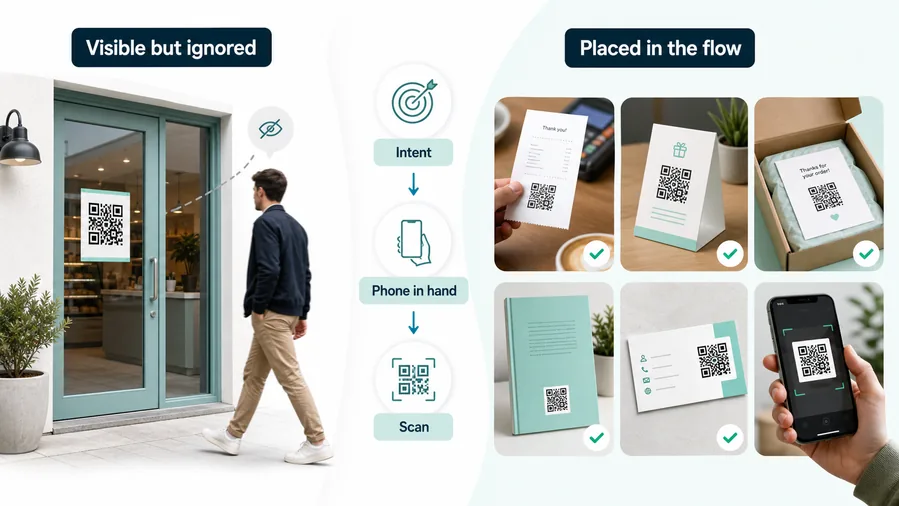
A social event QR without context is easy to ignore
People may recognize LinkedIn, but they still need to know whether the scan opens RSVP, registration, updates, discussion, tickets, or a general page.
Keep the QR close to the event promise so the action feels natural.
Put the QR beside the attendance decision
Place it near the topic, speaker, company host, agenda, badge, booth conversation, recruiting moment, or industry problem that makes someone want to act now.
The first screen should continue the printed promise instead of forcing the scanner to re-orient.
What should the attendee do next?
Choose RSVP, register, save, buy ticket, view details, follow updates, share, or open recap.
Where is the decision point?
Use the QR near the event name, date, venue, speaker, host, offer, agenda, or booth conversation.
Can people scan at the real distance?
Posters, slides, and signs need larger codes; invitations and handouts can carry more context.
Will the destination change?
Use dynamic QR when the path may move from invite to update, live info, recap, recording, or next event.
Event poster
Place near the headline, date, and RSVP prompt so people can save the event without searching.
Flyer or invitation
Use near the event value, host, location, ticket note, or schedule summary.
Venue sign
Help visitors open live details, updates, reminders, or post-event follow-up.
Booth card
Let interested visitors register, follow the host, or save a related event after a conversation.
Speaker slide
Use a larger code for session details, event page, recap, recording, or professional follow-up.
Table card
Promote the current or next event while people are seated and have time to scan.
Community board
Help local audiences save, share, and revisit event information from print.
Post-event print
Route late scanners to photos, recap, feedback, recording, or the next event.
Use the QR where event action makes sense
LinkedIn event QR placement works when the printed context and destination both support the same attendance decision.
B2B placement
Use the QR where professional follow-up already feels natural
Place LinkedIn event QR codes where business interest is already active: conference slides, booth banners, speaker one-sheets, recruiting flyers, webinar postcards, workshop handouts, networking badges, meeting room signs, sponsor tables, and printed agendas. The printed CTA should say what the scan gives people, such as view event, see speakers, RSVP on LinkedIn, register for the webinar, or follow event updates.
For professional events, the same destination can behave differently depending on the audience. A QR on a speaker slide may catch people after a strong talk. A QR on a booth sign may catch people who want to continue the conversation later. A QR on a recruiting flyer may work better if it opens a company event or talent community page. Dynamic QR codes help if the LinkedIn URL changes or you later need to redirect to replay, tickets, slides, or the next event. QR Code Lab scan analytics can show which physical material created attention before LinkedIn handles the social interaction.
If the event has several printed touchpoints, create separate QR codes for each one. That keeps the report readable and helps you see whether the booth, flyer, slide, or partner handout produced the strongest interest.