Volunteer Signup QR Code - Forms, Events & Training Links
Create QR codes for volunteer signup linking registration forms, event pages, schedules, waivers, training guides, contact pages, and updates. Use them on flyers, tables, posters, and community signs.
Free QR code generator
Create a QR code online
Generate QR codes for websites, email, phone numbers, vCards, Wi-Fi, plain text, forms, PDF files, and campaign links. Customize colors, add a logo or frame, then download a print-ready PNG or SVG.
Choose QR code type
Website QR code, Email QR code, Phone QR code, vCard QR code, Wi-Fi QR code, Text QR code, SMS, WhatsApp, event, and download links.
Add your content
Enter your website URL, contact details, message, phone number, location, or file destination before generating the QR code.
Customize and download
Adjust QR colors, error correction, logo, frame, size, and margin. Generate QR Code, Download PNG, Download SVG, or Save and track scans.
Volunteer signup path
Turn interest into a clear volunteer next step before the moment passes
A volunteer signup QR code is useful when supporters should reach a registration form, event page, shift list, waiver, training guide, contact page, or update page from a poster, flyer, booth sign, church bulletin, school handout, table card, or live event sign. It removes the awkward step of asking people to remember a long link later.
The best volunteer QR codes make the role feel concrete. A poster can open a simple signup form. A booth sign can open available shifts. A waiver card can open required forms. A training handout can open guide materials. A community flyer can open event updates and coordinator contact details. The destination should explain the cause, date, location, time commitment, and what happens after someone signs up.
QR Code Lab creates URL QR codes, supports dynamic destination updates, and can show scan analytics. It does not collect volunteer records, process donations, manage waivers, send confirmations, or replace volunteer software. Your form provider, volunteer platform, event page, waiver tool, email system, or organization website handles submissions and personal data.
Events, conferences, and weddings
Turn volunteer signup QR codes into a clear commitment path
Attendee flowA volunteer QR should move someone from a poster, event table, church bulletin, school flyer, nonprofit handout, or community board to the exact signup action they are ready to take.

Open the right signup form
Send scanners to shift signup, event volunteer form, training interest, donation support, committee role, or one-time help request instead of a broad volunteer homepage.

Explain the commitment before the form
Show date, hours, role, location, physical requirements, background checks, supplies, age rules, and whether training is required.

Support event-day recruitment
Use QR codes at booths, entrances, programs, classrooms, churches, shelters, and community events while interest is still fresh.

Route different roles separately
Use separate codes for setup, check-in, food service, mentoring, cleanup, fundraising, transport, tutoring, or admin help when follow-up differs.

Keep follow-up humane
After the form, tell volunteers when they will hear back, who contacts them, what to bring, and how to change availability.
Volunteers need confidence before sharing details
The first screen should make the organization, role, schedule, and commitment clear enough that the form feels worth completing.
Teams need signups that stay organized after print
Dynamic QR helps when shifts, forms, training links, roles, contacts, and event details change after flyers and posters are distributed.
Match signup QR placement to the volunteer moment
Volunteer placement
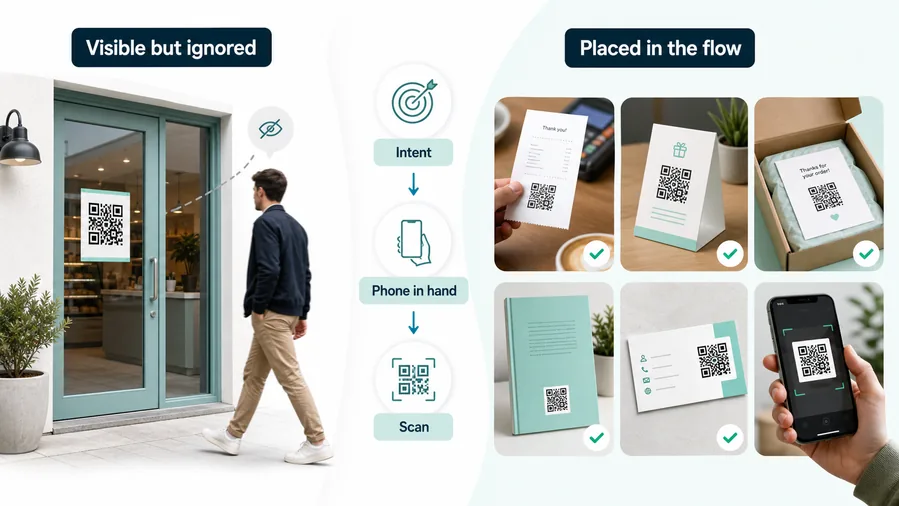
Place volunteer signup QR codes where people can say yes immediately
PlacementVolunteer QR placement should match moments of goodwill and attention: event tables, posters, bulletins, classrooms, shelters, community boards, church lobbies, and nonprofit handouts.
A vague volunteer QR asks for commitment too early
People hesitate when the print says volunteer but the destination does not explain role, time, location, requirements, or follow-up.
The QR should reduce uncertainty before the form.
Put the QR beside a specific help request
Use one code for a shift, campaign, event, role group, or training path when the commitment differs.
The first screen should continue the same request printed beside the code.
What help is being requested?
Setup, check-in, tutoring, food service, transport, cleanup, mentoring, fundraising, admin, or event support.
What must volunteers know first?
Date, time, place, age limits, background check, training, supplies, accessibility, and contact person.
Will details change?
Use dynamic QR for shifting dates, roles, forms, training links, contacts, and capacity needs.
Is the CTA specific?
Print sign up for Saturday setup, join meal delivery team, volunteer at check-in, or help with cleanup.
Event table
Best for same-day signups, role lists, training interest, and direct organizer contact.
Poster
Use for one campaign, one event, one role family, or a clear recurring volunteer ask.
Church bulletin
Connect members to service teams, donation drives, youth help, meals, and community outreach.
School board
Show age rules, parent permissions, schedule, background checks, and teacher contact.
Nonprofit handout
Route to role descriptions, orientation, intake form, and coordinator details.
Shelter or community desk
Use for urgent shifts, supplies, training, and contact paths.
QR on program
Invite people who just attended an event to join the next volunteer step.
Email printout
Give offline audiences a fast path to the current form and schedule.
Volunteer QR placement should make yes feel practical
The scan should answer enough questions that the person can commit without guessing what happens next.
After-print control
Use dynamic QR when volunteer roles, shifts, or forms may change
DynamicVolunteer needs often change after flyers, posters, bulletins, and event materials are printed. Dynamic QR lets teams update forms, dates, roles, contacts, and training pages without redistributing every asset.
Old volunteer forms create confusion and missed help
A static QR can work for a permanent volunteer page, but it becomes risky when shifts fill, dates move, contacts change, or roles close.
People who are ready to help should not land on stale information.
Editable destinations keep signup materials useful
Use dynamic QR for campaign posters, event tables, church bulletins, school flyers, and recurring volunteer drives.
The printed ask stays in circulation while the destination reflects current needs.
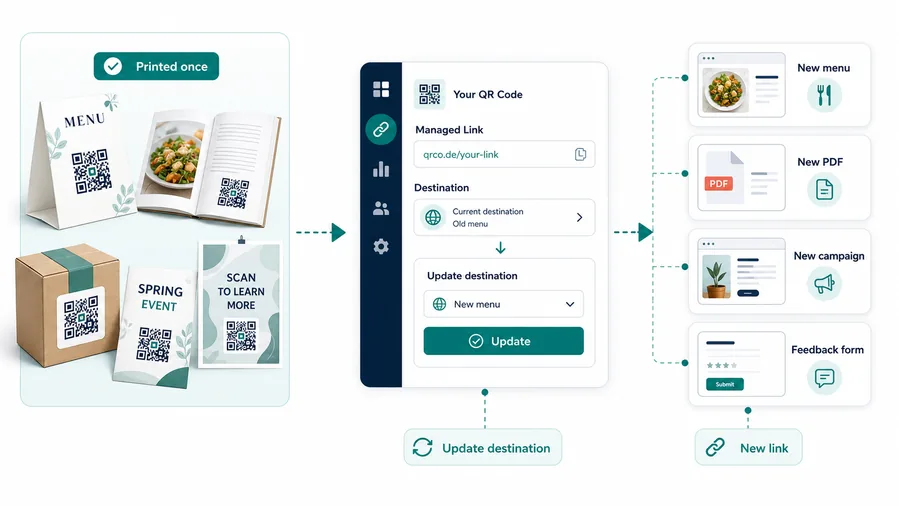
Shift updates
Move scanners to open shifts, waitlists, new dates, or closed-role notices.
Role changes
Update setup, food, transport, tutoring, mentoring, cleanup, and admin needs.
Coordinator handoff
Change contact person, training link, orientation details, and follow-up instructions.
Campaign reuse
Reuse posters or table signs across drives while sending scanners to the current form.
Use dynamic when volunteer information is operational
If a signup depends on current capacity, schedule, role, or coordinator details, keep the QR destination editable.
Scan reporting
Use volunteer QR analytics to compare campaigns and signup placements
AnalyticsTracking is useful when posters, tables, bulletins, flyers, classrooms, events, and community boards need separate scan readouts.
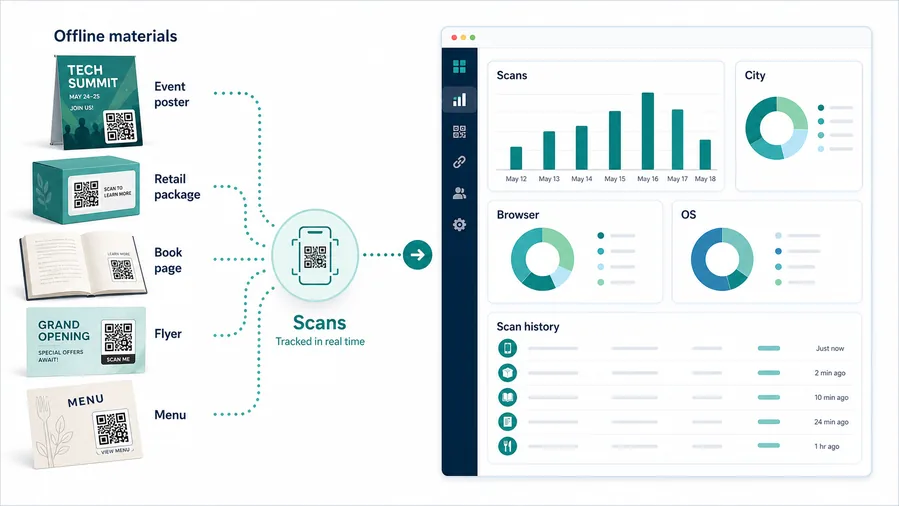
One volunteer QR hides where interest came from
A shared QR can show total interest, but it cannot explain whether a church bulletin, event table, poster, classroom, or nonprofit handout created the scan.
That makes outreach decisions harder after the campaign.
Separate signup codes make outreach easier to read
Use one dynamic code per campaign, role, placement, event, or partner site when comparison matters.
Scan data does not equal completed signup, but it shows which printed asks earned attention.
Scan volume
Review which volunteer posters, tables, flyers, bulletins, or events generated interest.
Time and device
Compare event windows, weekend outreach, service announcements, and mobile behavior.
Broad location
Use approximate location to catch stale materials or partner placements still scanning.
Campaign comparison
Compare roles, shifts, events, orientation pages, and signup forms.
Role recruitment
Separate setup, food, tutoring, transport, cleanup, mentoring, and admin asks.
Event table reporting
Compare booth, lobby, classroom, church, and community-board placements.
Partner outreach
See which schools, nonprofits, churches, or local partners create scan interest.
Old flyer cleanup
Find retired campaigns, closed shifts, and outdated forms still receiving scans.
Name volunteer QR codes by campaign, role, and placement
Use names like food-drive-poster, sunday-bulletin-setup, school-board-tutors, or event-table-cleanup so reports stay useful.
Recruitment and shift flow
Put volunteer QR codes where motivated people can act right away
Useful placements include posters, booth signs, school flyers, church bulletins, community boards, event programs, training sheets, waiver cards, table tents, and thank-you cards. CTAs should say sign up to volunteer, choose a shift, read the training guide, sign the waiver, contact the coordinator, get updates, or join the team. Keep the form short enough to finish on a phone.
Dynamic QR codes are helpful because volunteer needs change quickly. Shifts fill up, locations move, waiver links change, and training guides get updated. With a dynamic QR code, the same printed flyer can keep working while the destination is adjusted. Scan analytics can compare posters, booths, flyers, and event materials, showing which recruitment spots create real interest.
Make the scan feel safe and official. Use the organization name, event name, and a clear explanation before asking for personal details. QR Code Lab manages the printed QR path and scan reporting, while your volunteer system handles confirmations, assignments, consent, privacy, and records. That keeps the QR code simple while the real volunteer workflow stays in the right tool.
Scan trust
Make volunteer signup QR codes trustworthy before people share personal details
TrustVolunteer forms can ask for contact details, availability, age, skills, background checks, or emergency information. The destination should clearly belong to the organization and explain the commitment.

Unclear organization identity
People hesitate when a QR opens a form without the nonprofit, school, church, event, or coordinator clearly visible.
Watch for similar-looking domains, long URLs, login or verify keywords, and pages asking for credentials after an unexpected scan.
Missing commitment details
A signup form feels risky when it asks for details before explaining role, date, hours, requirements, or follow-up.
A trustworthy QR should not make the final destination mysterious, especially on posters, labels, menus, parking signs, or event materials.
Old or unofficial forms
Printed volunteer materials can outlive campaigns, staff contacts, and signup forms, especially on public boards.
Before paying, check the domain, HTTPS, amount, recipient, and whether the destination matches the place or brand that printed the QR.Scan the printed proof like the visitor will
Confirm that the destination shows the right organization, HTTPS page, action, form, map, schedule, or support path before people rely on the QR code.
Public QR codes need more trust signals because anyone can scan them and some placements can be tampered with.Organization match
Confirm the print, page, and form name the same group, campaign, event, and contact person.
Role and commitment clarity
Check that date, time, location, duties, requirements, and follow-up appear before sensitive fields.
Privacy and consent
Explain how contact details, availability, background checks, or emergency information will be used.
Old material check
Remove closed campaigns and update dynamic destinations when shifts or forms change.
Publish QR codes people can verify
The printed CTA, page title, organization identity, and first action should all describe the same destination.