QR Code Inspector - Decode, Preview & Analyze QR Links
Inspect QR code content, preview URLs, review content type, safety reasons, redirects, final host, TLS, DNS, and page metadata. Decode first, then understand where the scan really goes.
QR content check
Inspect what a QR code contains before you trust the scan
A QR code inspector is useful when you want to understand what is inside a QR image before opening it or publishing it. A code may contain plain text, Wi-Fi data, contact data, or a URL. If it contains a URL, the real destination may be hidden behind redirects, short links, tracking links, or a managed dynamic QR link.
QR Code Lab helps decode QR content and show practical signals such as the detected content type, visible URL, redirect path, final host, TLS and DNS details, page metadata, and basic reasons to be cautious. That is useful for teams checking printed assets before production, employees reviewing a suspicious code, or marketers confirming that a dynamic QR code still opens the intended destination.
The inspector is a review tool, not a promise that every destination is safe forever. Websites can change after the check, and no tool replaces careful judgment. QR Code Lab helps reveal what the QR code points to and how the URL behaves, so you can make a better decision before opening, sharing, or printing it.
QR inspection workflow
QR inspection workflow QR security and inspection teams with decoding, URL preview, redirect checks, risk signals, print testing, and scam inspection
Inspect firstUse QR codes to move QR security and inspection teams from suspicious codes, screenshots, printed assets, parking or payment signs, and business materials to decoding, URL preview, redirect checks, risk signals, print testing, and scam inspection before people trust or publish the destination.

Decode the QR value before opening it
Use inspection when a QR code appears on a poster, package, bill, sticker, email, payment prompt, or public sign and you want to see the raw destination first.
Inspection reduces blind trust, especially for unknown public codes.
Check the domain and redirect path
Review whether the code opens a familiar domain, shortened link, managed redirect, login-like page, payment page, download, or form.
Redirects are not automatically bad, but they need context.
Compare the result with the printed promise
The decoded destination should match the context: menu, payment, invoice, event, ticket, support page, product info, or review request.
A mismatch is a reason to pause before continuing.QR inspection should give evidence before action
The goal is not to make every QR code look dangerous. The goal is to understand what the code contains and whether the destination makes sense for the printed context.
Use inspection before logging in, paying, downloading, submitting personal information, or trusting a public sticker.Raw content
See the encoded URL, text, Wi-Fi data, contact payload, or other QR value.
Destination context
Check domain, HTTPS, redirect behavior, and whether the page matches the printed CTA.
Risk signals
Look for suspicious short links, fake login pages, odd payment destinations, or mismatched brands.
Creator QA
Use inspection before publishing QR codes to catch wrong links, stale redirects, and broken destinations.
Scan trust
Inspect QR destinations before login, payment, download, or form submission
TrustA QR code inspector can show the encoded value and useful destination signals before someone trusts the scan.

Fake login or payment pages
Unknown QR codes can lead to pages that imitate banks, delivery services, ticket portals, menus, invoices, or checkout screens.
Watch for similar-looking domains, long URLs, login or verify keywords, and pages asking for credentials after an unexpected scan.
Unexpected redirects and short links
A short URL or managed redirect may be legitimate, but it should still match the printed context and final domain.
A trustworthy QR should not make the final destination mysterious, especially on posters, labels, menus, parking signs, or event materials.
Sticker replacement on public codes
Public posters, parking meters, menus, signs, and product labels can be covered with replacement QR stickers.
Before paying, check the domain, HTTPS, amount, recipient, and whether the destination matches the place or brand that printed the QR.Inspect the encoded destination before people rely on it
Decode the QR value, review the domain, redirects, HTTPS, page identity, and printed promise before opening, publishing, or sharing the code.
A QR inspection can reveal useful signals, but it cannot guarantee that every destination is safe forever.Decoded content
Review the raw QR value before opening it in a browser or app.
Domain and HTTPS
Check whether the domain, protocol, and page identity match the printed promise.
Redirect behavior
Look at short links and managed redirects before assuming the final page is expected.
Context match
Compare the destination with the physical object: bill, menu, ticket, package, sign, or invoice.
Publish QR codes people can understand
The printed CTA, destination title, brand identity, and first action should all describe the same promise.
Inspection UX
Use the inspector result to decide what should happen next
Scan UXInspection is most useful when it turns an unknown QR code into a readable decision: open, verify elsewhere, report, replace, or fix before printing.
Check before continuing to a sensitive page
Poster, meter, menu, invoice, stickerIf the result points to a login, payment, wallet, download, or form, slow down and verify the brand and domain first.
A code in a public place should match the object and surrounding copy.
Confirm the published QR opens the right destination
Campaign, menu, product, payment, supportInspect the encoded content before print so wrong URLs, stale redirects, and test pages do not become permanent.
Then scan the printed proof to confirm size, contrast, and destination behavior.
Treat redirects as context to review, not automatic failure
Dynamic QR, short link, campaign URLMany legitimate QR systems use redirects for editing and analytics.
The important question is whether the managed URL and final destination match the expected brand and action.
Does the decoded value match the printed promise?
A parking sign, menu, package, event badge, or invoice should lead to the matching destination type.
Is the action sensitive?
Use extra caution for login, payment, wallet, download, identity, health, or personal information pages.
Can the creator fix it before print?
If inspection reveals a wrong link, old redirect, or unclear destination, update the QR setup before distribution.
Inspection should create a clear next action
Open only when the destination makes sense; otherwise verify, report, replace, or fix the QR code first.
Scan reporting
Use inspection records to separate QR evidence from assumptions
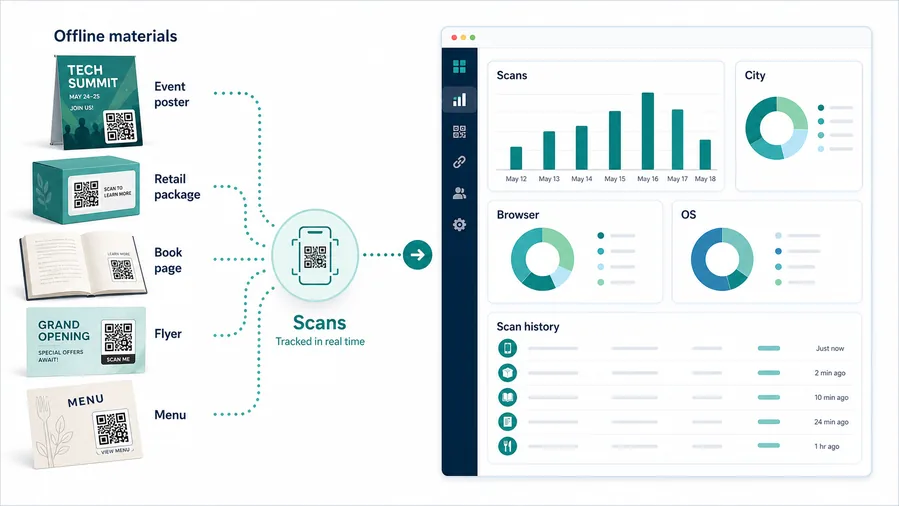
AnalyticsInspection and analytics answer different questions: inspection shows what a code contains, while tracking shows how a managed code was scanned.
A scan total does not explain whether a QR is trustworthy
Analytics can show scan volume, timing, device, and broad location for managed QR codes.
It does not prove that every printed copy is untampered or that a destination is safe.
Inspection gives destination evidence before the scan proceeds
Decode the QR value, review domains and redirects, and compare the result with the printed context before trusting sensitive actions.
Use analytics later to understand managed QR usage, not as a substitute for safety review.
Decoded value
Record the raw URL, text, Wi-Fi, contact, or other QR payload.
Redirect path
Review whether the QR uses a short link, managed redirect, or final destination URL.
Context match
Compare destination type against the printed object and CTA.
Scan analytics
For managed codes, review volume, timing, device, and broad location separately from inspection.
Suspicious public code
Inspect a sticker, sign, bill, or flyer before opening payment or login pages.
Pre-print QA
Decode campaign, menu, product, support, and payment QR codes before approving print.
Incident review
Compare the expected destination with a suspicious code found in the field.
Managed QR reporting
Use scan analytics only after the destination and placement are verified.
Do not confuse analytics with inspection
Inspection helps decide whether to trust or fix a QR destination; analytics helps measure usage after deployment.
Before opening or printing
Use the inspector when a QR code comes from a place you do not fully control
Useful checks include uploaded QR images, screenshots, printed proofs, event signs, payment stickers, flyers, labels, classroom materials, and QR codes received in messages. The goal is simple: decode first, then decide. Look at the visible data, the domain, the redirect chain, and the final destination before asking people to scan or before opening the link yourself.
For business use, the inspector is helpful before a print run. It can catch a wrong URL, a broken redirect, a suspicious short link, or a final host that does not match the printed promise. For personal safety, it can help you avoid opening a code that pretends to be a bank, parking meter, delivery page, or login form but actually leads somewhere else.
QR Code Lab does not control third-party websites or guarantee that a destination will stay safe after inspection. It gives you more visibility into the QR payload and URL path. If the result looks wrong, pause, verify the source, and avoid entering passwords, payment details, or private information.