Product Label QR Code Generator for Packaging & Support
Create product label QR codes for instructions, ingredients, manuals, warranty pages, reviews, support, and authenticity checks. Export print-ready codes for labels and packaging today.
Free QR code generator
Create a QR code online
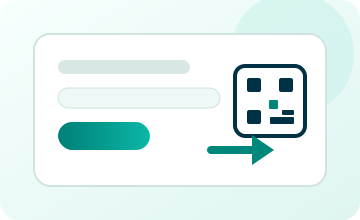
Generate QR codes for websites, email, phone numbers, vCards, Wi-Fi, plain text, forms, PDF files, and campaign links. Customize colors, add a logo or frame, then download a print-ready PNG or SVG.
Choose QR code type
Website QR code, Email QR code, Phone QR code, vCard QR code, Wi-Fi QR code, Text QR code, SMS, WhatsApp, event, and download links.
Add your content
Enter your website URL, contact details, message, phone number, location, or file destination before generating the QR code.
Customize and download
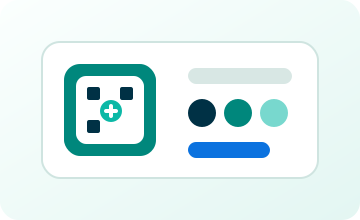
Adjust QR colors, error correction, logo, frame, size, and margin. Generate QR Code, Download PNG, Download SVG, or Save and track scans.
Label to product detail
Use a product label QR code when the package cannot carry the whole product story
A product label QR code can connect a small printed label to instructions, ingredients, manuals, warranty pages, authenticity checks, safety notes, review pages, support pages, refill links, reorder pages, recipes, and product education. It is useful for brands, retailers, makers, food producers, cosmetics teams, and packaging teams that need more context than a label can physically hold.
The QR destination should match the promise printed next to the code. If the label says ingredients, send scanners to ingredients. If it says warranty, send them to warranty. If it says scan for setup, open the setup guide first. Product labels are small, so the wording around the code has to be direct. People should know why scanning helps before they lift the phone.
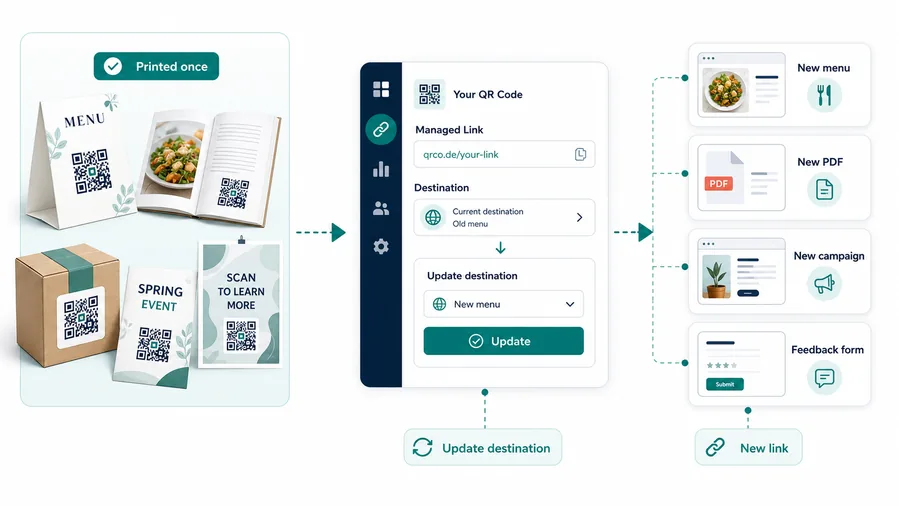
Dynamic QR codes are especially useful on labels because packaging can stay in circulation long after a link, manual, campaign, batch note, or support page changes. QR Code Lab lets you update the destination and review scan activity without changing the printed code. The product information, claims, compliance wording, and customer support experience still remain under your control.
Product label scan moments
Turn each product label into the right post-purchase or pre-purchase action
Product labelA product label QR should answer the question created by the package: what is inside, how to use it, whether it is authentic, what changed, and what the customer should do next.
Help buyers verify what is inside
Open ingredient details, allergens, origin notes, certifications, batch information, compliance pages, or sustainability proof when the label cannot hold enough context.

Move setup and care guidance off the small label
Send buyers to quick-start steps, care instructions, dosage notes, installation help, recipes, safety guidance, or a mobile manual that is easier to read than tiny print.
Make registration and support easy after purchase
Use the label QR to open warranty registration, serial lookup, support forms, spare parts, troubleshooting, returns, and contact paths while the product is still in hand.
Turn the label into a repeat-purchase path
Open refill, reorder, subscription, accessory, recipe, product education, or loyalty destinations when the customer is most likely to need the product again.
Connect labels to current offers without reprinting
Route seasonal packaging, limited editions, regional labels, and retail campaigns to the current offer, giveaway, product story, or customer feedback flow.
The scan should match the product question
Before purchase, the customer may check ingredients, size, origin, proof, compatibility, or instructions. After purchase, they may need setup, warranty, support, reorder, recipes, safety notes, or care guidance.
Dynamic QR keeps printed labels useful after launch
Product pages move, campaigns expire, instructions improve, compliance notes change, and support flows evolve. A dynamic destination lets the printed label stay stable while the experience behind it is updated.
Put the code where the product question happens
Label print handoff
Check product label QR codes before packaging goes to production
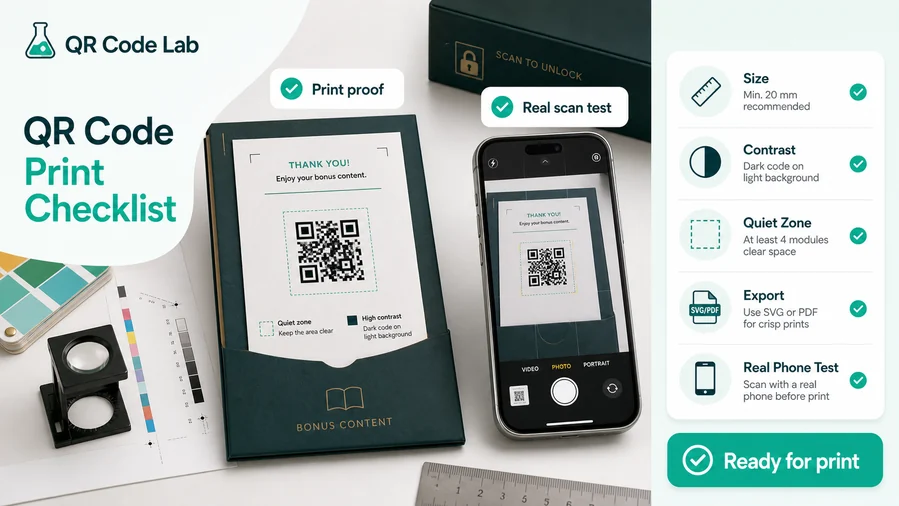
Print readyA label QR has to survive small sizes, curved surfaces, glossy material, folds, handling, lighting, and batch-specific production files while still opening the right product destination.
Match the QR to product, SKU, batch, and destination
Confirm the code belongs to the right product line, SKU, region, language, lot, campaign, or packaging version before the label file is approved.
Use names that match production sheets and analytics labels so nobody has to guess which printed code belongs to which product later.
Test the real label surface before scaling production
Print a sample at final size and scan it on the actual material: matte, glossy, curved, flexible, transparent, metallic, or small label stock can change readability.
Check the mobile destination after the scan: ingredients, warranty, setup, support, reorder, or campaign pages should load quickly and match the product in hand.
Use a product landing page when one label needs several actions
A direct URL is enough when the label has one stable destination. Many products need more: usage guide, warranty, safety notes, authenticity, care, recipe, support, reorder, and feedback.
A mobile product page keeps the printed QR simple while the destination organizes the actions customers actually need after scanning the label.
Food and beverage
Open ingredients, allergens, origin, recipes, nutrition, certifications, and batch-specific notes.
Cosmetics and wellness
Send customers to usage guidance, safety notes, ingredients, routines, authenticity, and reorder paths.
Electronics and tools
Link to setup videos, manuals, warranty registration, serial lookup, troubleshooting, and spare parts.
Retail products
Connect packaging to styling ideas, care instructions, loyalty, reviews, accessories, and support.
Approve the label only after the scan works on the real material
A product label QR should be tied to the right product, readable at final size, and useful on mobile before the package goes into production.
After-print control
Use dynamic QR when product label destinations may change after packaging ships
DynamicProduct labels stay in stores, warehouses, homes, and support workflows long after campaign pages, manuals, ingredients, offers, and support paths are updated.
A fixed product label can keep pointing to yesterday’s page
Static QR is acceptable when the label destination is permanent and the product will not need updated instructions, offers, or support paths.
For packaging, a moved page or outdated file can create support issues long after the label is printed.
Editable routing protects packaging from destination drift
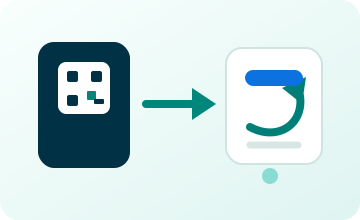
Dynamic QR separates the printed label from the final destination so teams can update product pages, documents, campaigns, and support paths without changing the code.
It also lets teams compare scans by SKU, batch, store, region, campaign, or packaging placement when reporting matters.
Instructions and care
Update setup steps, recipes, dosage notes, care guidance, safety pages, and product education after packaging is printed.
Warranty and support
Move customers to current registration, serial lookup, troubleshooting, returns, spare parts, and help flows.
Promotions and loyalty
Rotate coupons, product drops, loyalty paths, seasonal campaigns, and feedback forms without replacing labels.
Batch and region content
Route different SKUs, languages, regions, and lots to the right product-specific destination.
Use dynamic when a label needs a long useful life
If changing the printed label would be expensive, keep the destination editable and name each code by product context.
Packaging reality
Design the label QR for real scanning conditions, not only for the mockup
Product labels are scanned under awkward conditions: curved bottles, glossy packaging, small boxes, freezer cases, bathroom shelves, retail lighting, and moving hands. Keep enough contrast, preserve the quiet zone, avoid shrinking the code too aggressively, and test on the actual material before committing to a print run. A code that scans on a flat PDF may fail on a real container.
Use the destination to reduce friction for the customer. A label can open a quick-start guide, full ingredients, care instructions, batch details, a warranty page, a refill link, or support. If several actions are useful, a mobile landing page can organize them without crowding the label. Put the most likely need first.
Tracking can compare which products, batches, shelves, or label placements actually get scanned. QR Code Lab can count scans and show scan signals, but the final product claims, regulatory wording, purchase flow, and support experience stay with your product team or linked systems. That separation keeps the label flexible while keeping responsibility clear.