
Product Demo QR Code Generator for Sales, Trial & Booking Links
Create product demo QR codes for demo videos, landing pages, booking forms, brochures, spec sheets, tutorials, trial pages, booth materials, retail displays, and sales follow-up online.
Free QR code generator
Create a QR code online
Generate QR codes for websites, email, phone numbers, vCards, Wi-Fi, plain text, forms, PDF files, and campaign links. Customize colors, add a logo or frame, then download a print-ready PNG or SVG.
Choose QR code type
Website QR code, Email QR code, Phone QR code, vCard QR code, Wi-Fi QR code, Text QR code, SMS, WhatsApp, event, and download links.
Add your content
Enter your website URL, contact details, message, phone number, location, or file destination before generating the QR code.
Customize and download
Adjust QR colors, error correction, logo, frame, size, and margin. Generate QR Code, Download PNG, Download SVG, or Save and track scans.
Demo access
Use a product demo QR code when the scan should show the product in action
A product demo QR code sends scanners to a demo video, product landing page, booking form, trial page, tutorial, brochure, spec sheet, webinar replay, comparison page, sales follow-up resource, or interactive product guide. It is useful for SaaS teams, product marketers, sales teams, manufacturers, ecommerce brands, agencies, and trade show exhibitors who need a physical touchpoint to continue into a richer product story. The scan should answer “show me how this works” without making the buyer search.
QR Code Lab creates the QR code for the destination URL. It does not host the demo, schedule the meeting, collect the lead, manage the trial, or run the sales workflow. The QR code’s job is to remove friction between the printed moment and the demo asset you already maintain. That asset can be a short video, a booking page, a sales deck, a spec sheet, or a page with several next steps.
For trade shows, packaging, retail displays, sales sheets, and direct mail, dynamic QR codes are often the better choice because demo destinations change. You may replace a video, update a trial page, switch from a launch landing page to a booking form, or test which demo path earns more scans.
Product demo moments
Use a product demo QR code when print needs to show the product in action
Demo QRA product demo QR should help people understand value faster: watch the feature, see the setup, compare use cases, view a walkthrough, or hand the sales team a cleaner follow-up path.
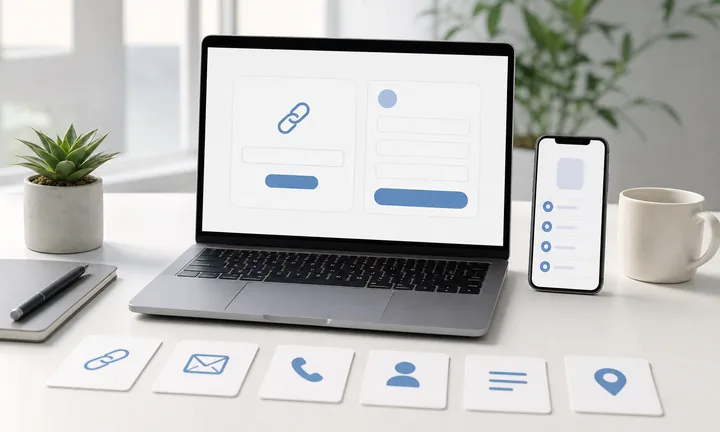
Turn static product material into a working proof point
Use demo QR codes on brochures, product sheets, packaging, event booths, retail displays, sales decks, direct mail, and leave-behind cards when a short demo explains more than printed copy can.
The CTA should promise the demo: watch it work, see setup, view walkthrough, or compare use cases.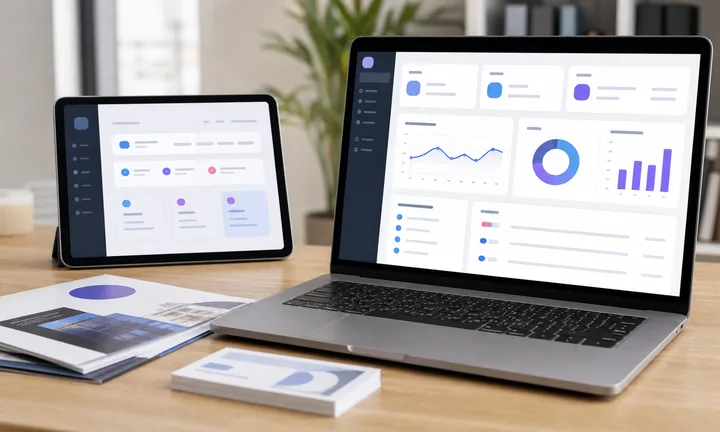
Match the demo to the buyer’s question
A demo scan should answer the question created by the material: how it works, what problem it solves, what changes after setup, how it compares, or what the buyer should do next.
A generic homepage wastes the moment; a focused demo carries the sales conversation.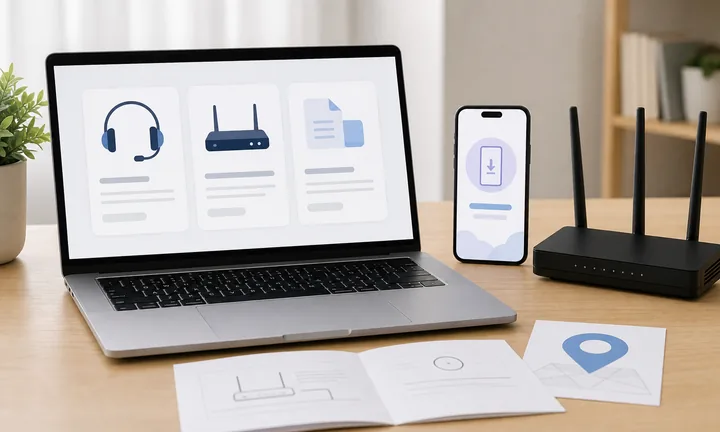
Keep demos current after campaigns and products change
Dynamic QR helps when demo videos, feature pages, pricing notes, landing pages, sales assets, or campaign offers change after the printed material is already in circulation.
Product proof changes faster than printed collateral.A product demo QR should shorten the path from interest to proof
The scanner may be comparing options, standing at a booth, holding a catalog, or reviewing a product sheet after a call. The destination should make the product easier to believe and easier to act on.
Use separate codes for campaigns, events, products, regions, or sales materials when reporting matters.Feature proof
Open a focused video, walkthrough, interactive demo, comparison, or example that answers the buyer’s real question.
Sales context
Keep the promise tied to the printed piece, booth, product sheet, packaging, or sales conversation.
Next action
Offer booking, pricing, contact, trial, quote, download, or product page paths after the demo.
Editable campaign
Use dynamic QR when demos, offers, versions, or landing pages may change after print.
Demo scan UX
Make the product demo scan open proof, context, and a clear next step
Scan UXA demo QR should not dump scanners into a broad site. It should open the right product story for the material they scanned and make the next sales action obvious on mobile.
Use a direct demo when one proof point matters
Video, walkthrough, feature, comparisonA focused demo works when the printed asset promotes one product, feature, workflow, or campaign promise.
The first screen should confirm the product, explain the value, and make the video or walkthrough easy to start without searching.
Use a landing page when buyers need several actions
Demo, pricing, trial, quote, contactA landing page can place the demo beside pricing notes, trial signup, contact form, PDF, case study, product specs, or meeting booking.
This is better when the scan comes from a booth, catalog, sales sheet, or direct mail where different buyers may need different next steps.
Use dynamic routing when demos or campaigns change
New video, feature page, event offer, fallbackProduct demos age when features ship, campaigns end, videos move, or a better landing page becomes available.
Dynamic QR keeps the printed asset connected to the current proof path without reprinting collateral.
Does the first screen match the printed promise?
Confirm the demo destination uses the same product, feature, offer, and audience language as the material beside the QR.
Is the demo usable on a phone?
Check video load, captions, buttons, form length, page speed, and whether the main action is visible without hunting.
Is the sales follow-up obvious?
Give scanners a useful next step after the proof: book, start trial, request quote, download spec, or contact sales.
A demo QR should make the product easier to trust
Choose the destination that proves the claim quickly and gives qualified scanners a natural way to continue.
Demo placement
Place product demo QR codes where people need proof before they continue
PlacementDemo QR placement works when print creates curiosity but cannot show movement, workflow, setup, comparison, or real product behavior by itself.
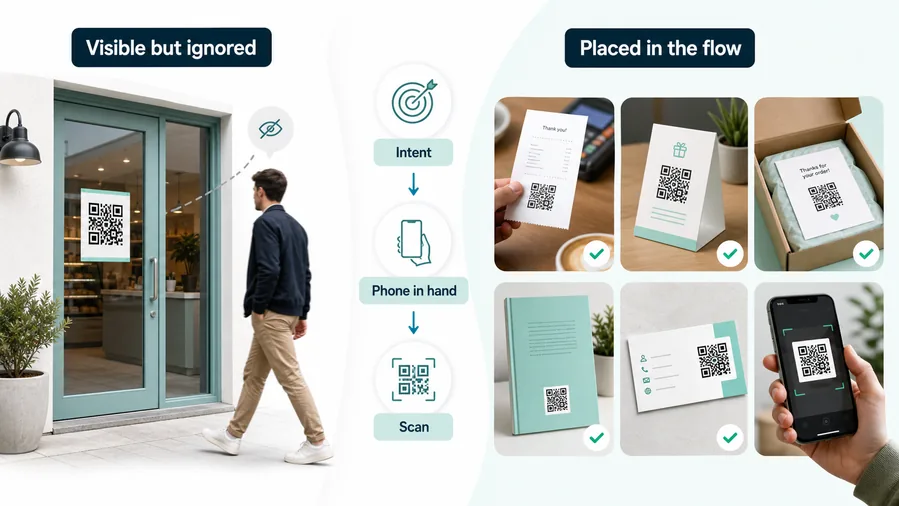
A demo QR is weak when the product question is unclear
A QR code beside a vague product description may get ignored because scanners do not know what the demo will prove.
The code should sit near the feature, claim, comparison, or use case that needs motion or detail.
Put the QR where a demo removes doubt
Use the demo QR near a feature list, product photo, shelf display, trade-show sample, sales claim, setup step, or comparison chart.
The CTA should name the proof: watch setup, see it in action, compare workflows, or view product demo.
What claim needs proof?
Speed, setup, quality, workflow, compatibility, use case, integration, installation, or product outcome.
Where is the buyer in the journey?
Browsing, comparing, evaluating, talking to sales, handling a sample, or reviewing collateral after a meeting.
What should happen after the demo?
Book a call, start trial, request quote, download specs, compare options, contact sales, or save the product.
Will the demo change?
Use dynamic QR when the product video, feature page, offer, or campaign destination may be updated.
Sales one-sheet
Open the exact feature demo or walkthrough behind the sales claim.
Trade-show booth
Let visitors scan a product sample, watch the demo, and book follow-up while interest is fresh.
Retail display
Show product use, setup, styling, comparison, or buyer proof beside the physical item.
Packaging insert
Help buyers understand setup, accessories, care, registration, or advanced features after purchase.
Direct mail
Turn a printed offer into a personalized demo, product page, quote request, or booking path.
Catalog page
Open a deeper demo for products that need motion, configuration, or comparison.
Partner handout
Keep resellers and partners aligned with the current demo and sales message.
Product label
Show quick usage proof, setup help, or safety context when the package is already in hand.
Demo placement should answer the next buying question
Use the QR where a short proof path is more persuasive than more printed copy.
After-print control
Use dynamic QR when product demos, offers, or sales paths may change
DynamicProduct demo links often change after collateral is printed: new videos, updated features, revised pricing, seasonal offers, event pages, and sales follow-up paths.
A fixed demo link can age before the printed asset does
A static QR is fine while the demo video, product URL, feature page, and campaign offer are truly final.
When the demo moves, a feature changes, or the campaign ends, the printed code keeps opening the old destination.
Editable routing keeps product proof current
Dynamic QR lets the same printed product sheet, package, sign, or booth asset open the current demo destination.
It also helps compare interest by event, region, campaign, product line, sales team, or printed material.
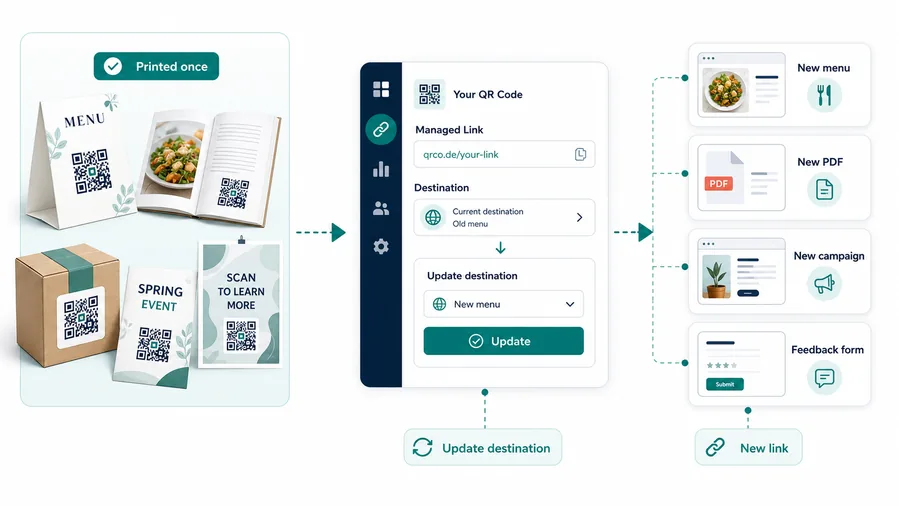
Feature launches
Move printed collateral from an early demo to the current walkthrough, release page, or onboarding path.
Sales campaigns
Rotate offers, booking links, trial pages, and lead forms without replacing printed handouts.
Events and booths
Compare scans from booth signs, badges, flyers, tabletop cards, and partner materials.
Product updates
Keep packaging, inserts, and catalogs connected to the newest video, setup flow, or support page.
Use dynamic when the demo is part of a living sales workflow
If the printed asset may outlive the first demo URL, keep the destination editable and measurable.
Sales context
Match the demo QR to the buyer question in that physical moment
A booth sign might need a short demo video because the visitor is walking past and needs proof fast. A product insert might need setup instructions because the buyer already owns the item. A sales leave-behind might need a booking page because the conversation should continue later. A retail display might need a comparison page. A spec sheet might need a full product walkthrough. The best product demo QR code does not simply say “learn more”; it answers the question the person is likely asking right there.
Write the CTA around that question. “Watch the 90-second demo,” “See setup steps,” “Compare models,” “Book a walkthrough,” or “Open the trial page” is stronger than a generic label. If the demo requires sound, login, account approval, or a desktop view, consider a landing page that explains the next step before the user commits time.
Use separate dynamic QR codes when you have different placements. That lets you compare booth scans, package scans, brochure scans, direct mail scans, and sales sheet scans instead of blending every offline touchpoint into one unclear number. It also helps sales teams see which material actually started interest.