Payment QR Code Scam Checker for Links, Tips & Invoices
Inspect payment QR codes before entering card details. Decode the QR image, preview the URL, trace redirects, and review risk signals for invoices, donations, tips, and checkout links.
Payment risk check
Inspect payment QR codes before entering card or login details
A payment QR code scam is dangerous because the QR pattern itself looks neutral. The risk is the destination. A code on a tip sign, donation card, parking sticker, invoice, checkout prompt, event ticket, public notice, or payment poster can lead to a page that copies a bank, wallet, charity, merchant, or payment processor. The page may look familiar while sending money or credentials to the wrong place.
QR Code Lab can help you inspect the QR before you trust it. You can decode uploaded images, screenshots, pasted images, and mobile camera photos with jsQR. For URL QR codes, the checker can show the decoded content, basic risk signals, and a destination report that helps reveal redirects and the final URL. That gives you a practical way to slow the payment flow down.
QR Code Lab does not guarantee safety, process payments, block phishing pages, remove malware, or replace a dedicated security scanner. It is a first inspection step, not a payment protection service. If the QR leads to card entry, banking login, wallet confirmation, or urgent payment instructions, verify the destination through an official website, app, receipt, or trusted contact before entering sensitive information.
Payment QR safety
Inspect payment QR codes before trusting the checkout page
Scam checkPayment QR scams work because the scan feels like a shortcut to checkout. Before entering card, wallet, banking, or login details, confirm the merchant, domain, amount, payment provider, and reason for the charge.
Fake checkout pages
Scam QR codes can open pages that imitate payment providers, delivery companies, charities, parking operators, restaurants, invoices, or local services.
Check the domain, brand, amount, recipient, HTTPS, and whether the page matches the printed context.
Urgent wording and hidden recipient
Fraud pages often push quick payment, threaten fees, or hide who actually receives the money until the user is already inside the flow.
Do not let urgency replace verification. Search for the official provider or type the known URL when unsure.
Sticker replacement on public print
Public QR codes on signs, menus, meters, posters, donation cards, and counters can be covered by a malicious sticker that points somewhere else.
Inspect public codes for layering, damage, mismatched branding, and missing fallback URLs.Check the QR destination before payment
A payment QR check should reveal the encoded URL and give you time to compare it with the merchant, sign, invoice, or provider you expected.
A QR inspection can show warning signs, but it cannot guarantee that every payment page is legitimate or safe.Raw destination
Preview the URL before opening the payment page.
Merchant match
Compare the page with the business, nonprofit, invoice, lot, event, or provider named in print.
Amount and purpose
Check that the payment reason, amount, currency, and recipient make sense.
Fallback route
Use the official app, typed website, invoice portal, or known support contact when anything feels off.
Publish payment QR codes with visible trust signals
Businesses should make payment QR codes verifiable before the scan by printing the merchant name, expected provider, fallback URL, amount context, and support path.
Payment boundary
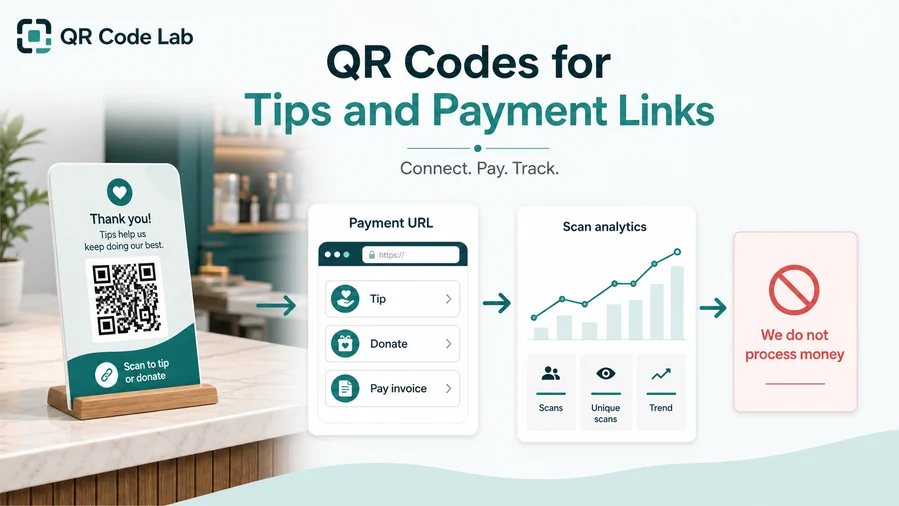
Treat every payment QR scan as a doorway, not proof of payment
PaymentsA QR code can point to a payment page, but the payment provider handles checkout, card entry, wallet approval, receipts, refunds, disputes, and confirmation. A scan alone does not prove a charge is legitimate or complete.
Use the QR only to reach the expected provider
The destination should match the merchant, invoice, donation campaign, parking operator, restaurant, or service provider shown in the physical context.
Verify amount and recipient before paying
Check the charge purpose, merchant name, currency, account, and payment provider before entering card or wallet details.
Keep confirmation from the payment platform
Save the receipt, confirmation number, app record, or bank notification from the official payment provider, not from the QR scan itself.
QR Code Lab does not validate or process payments
QR Code Lab is not a bank, wallet, payment processor, escrow service, merchant of record, or fraud guarantee.
If a payment QR looks suspicious, use the official app, typed URL, known invoice portal, or merchant support contact instead.Verify the destination before money moves
Payment QR codes are useful only when the digital page clearly matches the physical payment context.
Safer scan habit
Slow the payment scan down before entering sensitive details
Scan UXA safer payment QR habit is simple: inspect the physical code, preview the URL, compare the recipient and amount, then pay only through the official provider you expected.
Look for tampering before scanning
Sticker layers, damaged sign, odd branding, no fallback URLPublic payment QR codes deserve extra scrutiny because they may be scanned by people who are hurried or distracted.
Check whether the code looks added later, covers another code, uses mismatched branding, or appears without an official URL or contact path.
Preview the destination before opening payment
Domain, HTTPS, provider, merchant nameA familiar logo on the page is not enough. The domain and provider should make sense for the business, invoice, donation, parking lot, or service.
Be careful with misspellings, strange short links, and pages that rush you straight into card entry.
Confirm the charge matches the real-world context
Amount, recipient, invoice, location, orderBefore paying, compare the amount, recipient, invoice number, table, meter, order, or service with the physical material.
If the details do not line up, leave the QR flow and use the official app, typed website, or known support contact.
Does the QR look physically trustworthy?
Layered stickers, damaged signs, and mismatched branding are warning signs.
Does the URL match the provider?
Check the domain before entering card, wallet, banking, or login details.
Does the payment match the context?
Recipient, amount, invoice, order, lot, or service should make sense before money moves.
A safer payment scan confirms context before checkout
Pause long enough to verify the physical code, digital destination, and payment details together.
Red flags
Treat payment pages from public QR codes with extra care
Look closely when a QR code opens a login, bank, wallet, or card entry screen. Red flags include misspelled domains, brand names with extra words, unrelated short links, several redirects, unusual country domains, urgent countdown language, copied logos, and buttons that do not match what the page claims to do. A fake payment page can make even cancel, back, or continue buttons confusing, so do not rely only on visual design.
For public payment QR codes, compare the destination with the official merchant, parking operator, event organizer, charity, or payment processor. If the sign is temporary, damaged, covered by a sticker, or placed where anyone could tamper with it, be more careful. Use QR Code Lab to decode the QR and preview where it points, then decide whether to continue through an official app or website instead. The safest path is often independent verification, especially before entering card details, account passwords, or one-time codes.
If the page asks for more than the payment needs, stop. A normal small payment should not require your full banking login, recovery code, or unrelated personal information.