
App Download QR Code Generator for iOS, Android & Print
Create app download QR codes for App Store, Google Play, smart links, launch campaigns, packaging, onboarding, and events. Help mobile users install faster from print and displays.
Free QR code generator
Create a QR code online
Generate QR codes for websites, email, phone numbers, vCards, Wi-Fi, plain text, forms, PDF files, and campaign links. Customize colors, add a logo or frame, then download a print-ready PNG or SVG.
Choose QR code type
Website QR code, Email QR code, Phone QR code, vCard QR code, Wi-Fi QR code, Text QR code, SMS, WhatsApp, event, and download links.
Add your content
Enter your website URL, contact details, message, phone number, location, or file destination before generating the QR code.
Customize and download
Adjust QR colors, error correction, logo, frame, size, and margin. Generate QR Code, Download PNG, Download SVG, or Save and track scans.
Mobile app install path
Use an app download QR code when print should become a clear install path
An app download QR code is useful when someone sees a physical touchpoint and should move straight toward installing, opening, or learning about an app. That can happen on product packaging, event booths, onboarding cards, store signage, user manuals, receipts, trade show materials, classroom handouts, support documents, launch flyers, or retail displays. The QR code should not merely say that an app exists; it should connect the scan to a task the person already cares about.
QR Code Lab encodes the destination URL you choose. If you need automatic iOS versus Android routing, link the QR code to a smart app landing page, your own routing URL, or a campaign page that can send users to the right store. The QR code itself does not detect the phone platform unless the destination does that work. That is why the page behind the code matters as much as the code design.
For simple campaigns, the QR can point directly to an App Store page, Google Play listing, beta link, or app download page. For serious print campaigns, a dynamic QR route gives you more control: update the destination later, test different app pages, and measure scan activity from offline placements.
App install moments
Use app download QR codes when the scan should move people to the right install path
App QRAn app download QR should open the right App Store, Google Play page, universal link, onboarding page, beta link, or support path for the device in the scanner’s hand.
Turn print and screens into mobile installs
Use app download QR codes on packaging, posters, checkout signs, product inserts, event slides, onboarding cards, retail displays, and support pages when people are ready to install.
The CTA should say download app, get iOS app, get Android app, or install before setup.
Send scanners to a device-appropriate destination
A useful app QR can open a universal landing page with App Store, Google Play, beta, web fallback, country notes, and setup instructions instead of one store link that fails for half the audience.
Install friction often comes from the wrong store path.
Keep campaign and onboarding links editable
Store URLs, beta links, onboarding pages, referral campaigns, and support pages can change after print. Dynamic QR keeps packaging and campaign materials from aging too quickly.
Useful for products, events, retail, and launches.An app download QR should make installation feel like the next obvious step
The scanner may be holding a product, watching a demo, standing in a store, or starting onboarding. The destination should confirm what app to install, why it is needed, and what to do after installation.
Use clear labels: download the app, install for setup, get iOS app, get Android app, or open app onboarding.Store routing
Open App Store, Google Play, universal link, beta program, or a landing page with both options.
Onboarding context
Explain account setup, product pairing, QR login, permissions, support, and what happens after install.
Campaign attribution
Use separate dynamic codes for packaging, retail, events, ads, inserts, and partner placements when comparison matters.
Fallback paths
Offer web fallback, region notes, unsupported-device guidance, and help when the store link does not work.
QR setup decision
Choose an app QR setup by how many install paths you need
SetupA direct store QR is fine for one final app link. Use a dynamic or landing-page QR when scanners may be on iOS, Android, desktop, beta, unsupported regions, or need onboarding instructions after install.
URL QR code
Use for websites, landing pages, menus, product pages, portfolios, booking pages, and campaign pages.
Best dynamic when links may changePDF / File QR code
Use for menus, manuals, worksheets, bonus materials, brochures, certificates, ZIP archives, and checklists.
Dynamic is safer for printvCard QR code
Use for business cards, badges, counters, portfolios, sales materials, and follow-up contact details.
Static opens native contact saveWi-Fi QR code
Use for cafes, hotels, offices, classrooms, venues, rental spaces, and guest networks.
Usually best as staticForm QR code
Use for feedback, registrations, quote requests, surveys, support requests, applications, and check-in.
Dynamic helps forms evolveWhatsApp / messaging QR
Use when the next step is a conversation: support, sales, booking, delivery questions, or consultation.
Prefilled messages reduce frictionMaps QR code
Use for venues, offices, stores, events, pickup points, property listings, booths, and meeting locations.
Great for physical destinationsSocial QR code
Use for Instagram, TikTok, YouTube, X, LinkedIn, Behance, creator pages, and community profiles.
Best when relationship continuesPayment link QR code
Use for invoices, tips, donations, event payments, deposits, checkout pages, and payment requests.
Make amount and context clearNative action?
Wi-Fi, vCard, email, phone, and SMS often work best when the action is encoded directly, especially if the native phone interface matters.
Editable or measurable?
Use a dynamic QR code when the destination may change, files may be replaced, campaigns need analytics, or printed material must stay useful later.
Several actions?
Use a microlanding page when one scan should offer buttons, files, contact, feedback, booking, social links, or multiple next steps.
Choose the behavior before export
If the audience includes both iOS and Android, consider a mobile landing page or universal link rather than forcing one store URL.
After-print control
Use dynamic QR when app store links or onboarding pages may change
DynamicApp campaigns often outlive the first store URL. Dynamic QR protects product packaging, inserts, posters, launch materials, retail displays, and onboarding cards when links or setup steps change.
One fixed app link can fail for part of the audience
A static App Store link may be wrong for Android users, and a Play link may be wrong for iPhone users. Store URLs, beta links, country availability, and onboarding pages can also change.
Once packaging or posters are printed, a fixed bad link is expensive to repair.
Editable app QR keeps install paths current
Use dynamic QR to move scanners to the current app page, universal link, setup guide, beta signup, or fallback page.
The printed QR stays stable while the app launch and onboarding flow evolve.
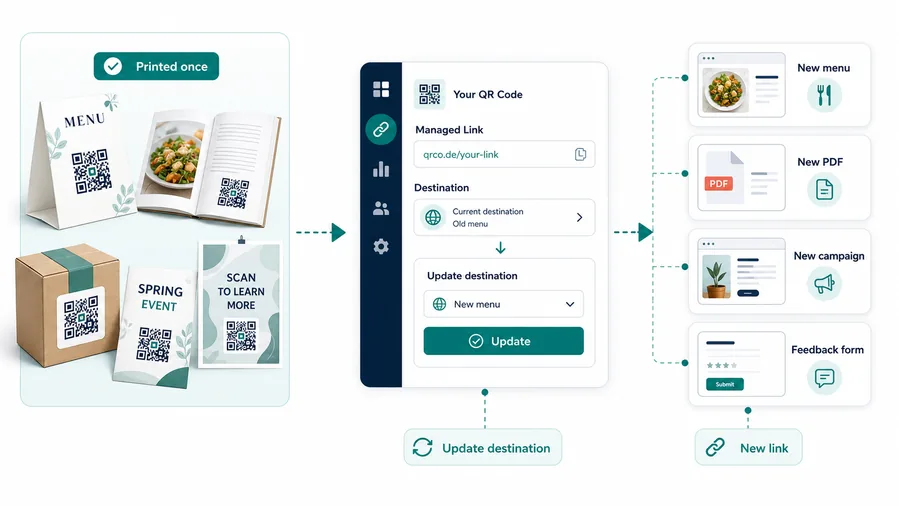
Product packaging
Update app install, device pairing, warranty, setup, and support destinations after products ship.
Retail and events
Move posters, booth signs, and handouts between launch campaigns, store pages, and demo onboarding.
Beta and waitlist
Switch from beta signup to public store links when the app launches.
Region or platform changes
Update country availability, platform guidance, fallback pages, and support notes.
Use dynamic when app acquisition is tied to printed material
If the code will live on packaging, signage, cards, or campaigns, keep the install path editable.
Install scan UX
Make the app download scan explain the install path before the store opens
Scan UXAn app QR should help the scanner understand what app they are installing, why it matters, and what to do if their device or region does not match the primary store link.
Use direct store links for simple single-platform promotion
App Store, Google PlayDirect links work when the print is platform-specific and the store URL is final.
The printed CTA should make the platform clear so Android and iOS users do not scan the wrong code.
Use a landing page for mixed-device audiences
iOS, Android, web fallback, betaA small app landing page can show App Store, Google Play, web fallback, beta notes, region notes, and setup instructions.
This is often better for packaging, events, retail, and public signs where the device is unknown.
Use onboarding context when install is only step one
Pair device, create account, scan product, setup guideIf the app is needed for a product, membership, ticket, or service, explain the next setup step before or after the store handoff.
Keep support visible for unsupported devices, store errors, permissions, or login issues.
Does the page name the app clearly?
The first screen should show the app name, publisher, platform, and reason to install.
Are iOS and Android users handled?
Use platform-specific print, universal links, or a landing page when both audiences may scan.
Is there a fallback?
Offer web, support, region, beta, or manual setup guidance when store links do not work.
The app QR should reduce install friction, not add another choice maze
Use the simplest route that gets the scanner to the right app and the next setup step.
Install intent
Make the QR code explain why the app is worth opening right now
A QR code that only says “download our app” often feels like extra work. The stronger version connects the scan to a concrete benefit: track this order, unlock setup help, join the event app, open loyalty rewards, manage the device, claim an offer, start onboarding, scan product history, or get support faster. The scanner needs to understand why the app matters in that moment, not after reading a long pitch.
Think about where the code appears. On packaging, the app might control setup, warranty, recipes, refills, or device pairing. At an event, it might open schedules, tickets, maps, networking, or live updates. In a store, it might connect to coupons, loyalty, product comparison, or self-service checkout. Each placement deserves a CTA that matches the user’s situation, because the same QR destination can feel helpful in one place and annoying in another.
App store analytics, ad attribution, and QR scan analytics are not the same thing. QR Code Lab can help measure scans and manage the printed QR destination; the app store or your attribution stack handles installs and downstream app events. Keep those measurement layers clear when judging campaign performance.