
Calendar Event QR Code Generator for Invites, RSVPs & Reminders
Create calendar event QR codes with title, date, time, location, and notes. Help guests save meetings, classes, open houses, workshops, and local events in one scan from print fast.
Free QR code generator
Create a QR code online
Generate QR codes for websites, email, phone numbers, vCards, Wi-Fi, plain text, forms, PDF files, and campaign links. Customize colors, add a logo or frame, then download a print-ready PNG or SVG.
Choose QR code type
Website QR code, Email QR code, Phone QR code, vCard QR code, Wi-Fi QR code, Text QR code, SMS, WhatsApp, event, and download links.
Add your content
Enter your website URL, contact details, message, phone number, location, or file destination before generating the QR code.
Customize and download
Adjust QR colors, error correction, logo, frame, size, and margin. Generate QR Code, Download PNG, Download SVG, or Save and track scans.
Add-to-calendar action
Use a calendar QR code when the scan should save a date, not explain the whole event
A calendar event QR code helps someone add an event to their calendar with details such as title, date, time, location, description, meeting link, or notes. It is useful for appointments, classes, workshops, webinars, consultations, open houses, weddings, school events, reminders, office hours, community meetings, launch sessions, and printed invitations where missing the time would be the real problem. The scan should remove the small but common step of manually copying details into a calendar.
This is narrower than a general event QR code. A general event QR might send people to registration, tickets, RSVP, schedules, maps, speaker pages, livestreams, or landing pages. A calendar QR is about saving the date and details so the event stays visible in the scanner’s own calendar. It works best when the person already understands the event and simply needs the time, place, and reminder saved correctly.
Keep the event data clean and test it on real devices. Time zones, date formats, all-day settings, location wording, meeting links, and repeated events can create confusion if they are not checked before printing. If the event details are uncertain, a dynamic event page may be safer.
Calendar signup moments
Use a calendar event QR code when the scan should save the date immediately
Calendar QRA calendar event QR should turn a poster, invitation, flyer, ticket, classroom notice, or event handout into a clean add-to-calendar action with the right time, location, and context.

Let people save the event while interest is fresh
Use calendar QR codes on invitations, venue posters, registration desks, school notices, church bulletins, conference materials, retail events, and community flyers.
The promise should be clear: scan to add this event to your calendar.
Include the details people need later
The event title, date, time zone, venue, online meeting link, reminder, description, and organizer notes should be accurate before the QR is printed.
A saved calendar item becomes the reminder people trust.
Use editable destinations when event details may change
Dynamic QR helps when the venue, time, registration page, streaming link, agenda, parking details, or cancellation notice may need updates after flyers are distributed.
Events change; printed invitations do not.A calendar QR should reduce missed attendance
The scanner is usually interested now, but the event happens later. The QR code should capture that intent before the date, venue, or link is forgotten.
Use plain event details for fixed events and a managed page when registration, agenda, reminders, or updates matter.Save the date
Open a calendar event, ICS file, or add-to-calendar page from print.
Confirm logistics
Show venue, room, time zone, online link, parking, agenda, and organizer notes.
Support updates
Use dynamic QR when event details may change after posters, tickets, or invitations are printed.
Measure interest
Use separate codes for posters, invitations, booths, classrooms, or locations when scan comparison matters.
Calendar setup decision
Choose a calendar QR setup by how stable the event details are
Event setupA simple calendar file is fine for final event details. Use a dynamic destination when registration, venue, agenda, online links, or updates may change after the code is printed.
URL QR code
Use for websites, landing pages, menus, product pages, portfolios, booking pages, and campaign pages.
Best dynamic when links may changePDF / File QR code
Use for menus, manuals, worksheets, bonus materials, brochures, certificates, ZIP archives, and checklists.
Dynamic is safer for printvCard QR code
Use for business cards, badges, counters, portfolios, sales materials, and follow-up contact details.
Static opens native contact saveWi-Fi QR code
Use for cafes, hotels, offices, classrooms, venues, rental spaces, and guest networks.
Usually best as staticForm QR code
Use for feedback, registrations, quote requests, surveys, support requests, applications, and check-in.
Dynamic helps forms evolveWhatsApp / messaging QR
Use when the next step is a conversation: support, sales, booking, delivery questions, or consultation.
Prefilled messages reduce frictionMaps QR code
Use for venues, offices, stores, events, pickup points, property listings, booths, and meeting locations.
Great for physical destinationsSocial QR code
Use for Instagram, TikTok, YouTube, X, LinkedIn, Behance, creator pages, and community profiles.
Best when relationship continuesPayment link QR code
Use for invoices, tips, donations, event payments, deposits, checkout pages, and payment requests.
Make amount and context clearNative action?
Wi-Fi, vCard, email, phone, and SMS often work best when the action is encoded directly, especially if the native phone interface matters.
Editable or measurable?
Use a dynamic QR code when the destination may change, files may be replaced, campaigns need analytics, or printed material must stay useful later.
Several actions?
Use a microlanding page when one scan should offer buttons, files, contact, feedback, booking, social links, or multiple next steps.
Calendar accuracy matters more than decoration
People may rely on the saved event days or weeks later, so confirm time zone, location, meeting link, organizer, and reminder text before publishing.
Calendar scan UX
Make the calendar scan save the event without creating confusion later
Scan UXThe scan should make the event name, time, location, and next step obvious before people trust the calendar item they are about to save.
Use direct calendar data for final schedules
ICS, calendar event, save the dateA direct calendar QR works when the event details are confirmed and the scanner simply needs to save them.
Test the calendar behavior on common phones and calendar apps before printing invitations, tickets, or posters.
Use an event page when context matters
Registration, agenda, venue, speaker, livestreamA short event page can explain who the event is for, what happens next, and whether registration is still required.
This is useful when the QR appears before the person has all the details they need to decide.
Use dynamic routing for changing logistics
Venue, room, time, link, cancellationEvents often change after flyers, programs, and tickets are printed.
A managed destination lets the printed QR stay useful while the current event details remain editable.
Is the time zone correct?
Check date, start time, end time, time zone, and reminder behavior on real calendar apps.
Will the scanner know where to go?
Include venue, room, map, online link, access notes, or parking details when attendance depends on them.
Does the saved title make sense later?
Use a title and description that are understandable when the person sees the event in their calendar days later.
The saved calendar item is the real destination
Make it accurate, recognizable, and useful after the original poster or invitation is gone.
Event placement
Place calendar QR codes where people are already deciding to attend
PlacementCalendar QR placement works best when someone has just seen the event value and can save the date before moving on.
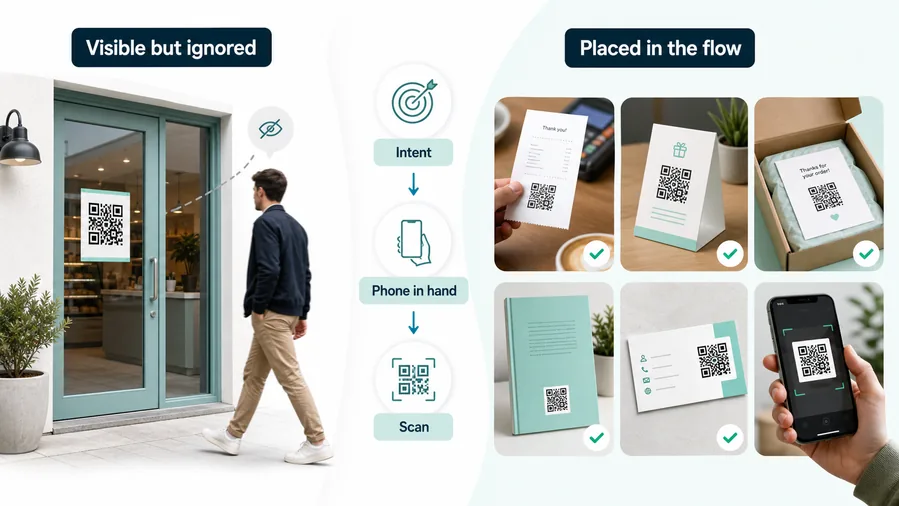
A visible calendar QR can still be too early
A code on a busy poster corner may be visible, but people may not yet understand why the event belongs in their calendar.
The scan prompt should sit close to the event name, date, and reason to attend.
Put the code near the attendance decision
Use the QR where the person has enough context to commit: invitation details, event description, agenda, ticket page, booth conversation, or classroom notice.
The CTA should say what happens after the scan: add to calendar, save the date, register, or get reminders.
What did they just learn?
They saw the event name, date, value, speaker, offer, class, show, meeting, or deadline.
What should happen next?
Save the date, register, open agenda, view venue details, join online, or share with someone else.
Is the phone naturally available?
Invitations, desk cards, ticket counters, handouts, booths, and classroom notices usually work better than fast-moving doorway traffic.
Is the value obvious in two seconds?
Use specific CTA copy such as add this workshop, save the concert date, or get the meeting link.
Invitation or flyer
Place the QR near the date and event promise so saving the calendar feels natural.
Poster or lobby sign
Use a large code with a short CTA when people have time to stop and read.
Ticket or confirmation
Let attendees save time, venue, room, access instructions, and reminder details.
Event program
Link session times, agenda updates, speaker pages, or room changes.
Classroom notice
Help students and parents save deadlines, meetings, performances, and school events.
Retail counter
Promote launch events, tastings, classes, demos, or appointments while interest is fresh.
Conference booth
Let visitors save demos, talks, meetups, or follow-up sessions after a conversation.
Community board
Use clear context for workshops, public meetings, fundraisers, and local events.
Place calendar QR codes at the moment of commitment
The best placement captures intent while the event is understood and before the date is forgotten.
Date clarity
Calendar QR works best when the event details are stable and specific
Use calendar QR codes on invitations, reminder cards, classroom posters, appointment slips, workshop handouts, event flyers, open house signs, printed programs, save-the-date cards, conference room notices, and reception desk materials when the scanner already understands the event and simply needs to save it. If they still need to register, buy a ticket, pick a session, answer RSVP questions, or read long instructions, link to the event page instead and let that page offer the calendar action.
The text around the code should be plain: “Add to calendar,” “Save this workshop,” “Save the open house time,” or “Scan for the appointment reminder.” Avoid making the QR code carry too many jobs. A calendar QR should not also be the main registration path, feedback form, map, ticket wallet, and speaker resource unless the destination is a landing page built for those choices.
Static calendar data is direct and convenient, but it cannot be edited after printing. If the date, location, meeting link, or schedule might change, a dynamic QR code that opens an event landing page may be safer than encoding the calendar details directly. That keeps the printed invitation useful even when real plans move.