Tourist Map QR Code - City Maps, Routes & Local Tips
Create tourist map QR codes linking city maps, attraction lists, walking routes, hotel guides, event pages, tickets, and local tips. Use them on brochures, hotel cards, signs, and visitor guides.
Free QR code generator
Create a QR code online
Generate QR codes for websites, email, phone numbers, vCards, Wi-Fi, plain text, forms, PDF files, and campaign links. Customize colors, add a logo or frame, then download a print-ready PNG or SVG.
Choose QR code type
Website QR code, Email QR code, Phone QR code, vCard QR code, Wi-Fi QR code, Text QR code, SMS, WhatsApp, event, and download links.
Add your content
Enter your website URL, contact details, message, phone number, location, or file destination before generating the QR code.
Customize and download
Adjust QR colors, error correction, logo, frame, size, and margin. Generate QR Code, Download PNG, Download SVG, or Save and track scans.
Visitor navigation path
Connect printed tourist maps to live routes, tickets, tips, and local updates
A tourist map QR code is useful when visitors need more than a printed map can hold. It can open city maps, attraction lists, walking routes, hotel guides, event pages, ticket links, restaurant tips, audio guides, transit notes, emergency contacts, and local updates. The scan helps travelers move from a paper guide to a live mobile resource.
Tourist QR codes work best when they support the place where the visitor is standing. A hotel map can open nearby routes. A museum card can open an audio guide. A walking tour sign can open the next stop. A city flyer can open ticket links or event schedules. QR Code Lab helps create dynamic QR destinations and scan analytics for visitor materials.
QR Code Lab creates URL QR codes and tracks scans. It does not provide maps, sell tickets, manage attractions, update city data, or operate travel services. Your map page, tourism website, ticket provider, guide platform, or hotel resource page handles the visitor content. The QR code makes that content easier to reach from the exact printed map or sign.
Events, conferences, and weddings
Turn a tourist map QR code into the next travel action
Attendee flowA tourist map QR should help visitors move from a printed guide, lobby card, kiosk, sign, or brochure to the exact map, route, stop, offer, or help page they need nearby.

Open a focused map route
Send visitors to walking routes, attraction pins, venue entrances, parking, pickup points, transit stops, or a curated neighborhood map instead of a broad city homepage.

Explain what is nearby
Use the first screen for hours, distance, estimated walking time, accessibility notes, restroom or Wi-Fi context, and whether the place needs tickets or reservations.

Support multilingual visitors
Give travelers a clear landing page with language cues, local names, address formatting, emergency notes, and simple directions that work on a phone.

Connect printed guides to live updates
Dynamic QR helps when routes, closures, shuttle stops, exhibits, seasonal hours, or partner recommendations change after maps and brochures are printed.

Promote visitor-friendly offers
Route hotel cards, tour flyers, museum racks, and welcome packets to coupons, attraction bundles, booking pages, audio guides, or local partner pages.
Visitors need confidence before they start walking
The page should confirm the destination, route, distance, local context, and next step without forcing the scanner to decode a generic map link.
Tourism teams need printed maps that survive real-world changes
Use dynamic destinations for hotel cards, brochures, kiosks, museum maps, event maps, and tour handouts that may need updated routes or partner links.
Match the tourist QR to the travel moment
Tourist placement
Place tourist map QR codes where visitors are already deciding where to go
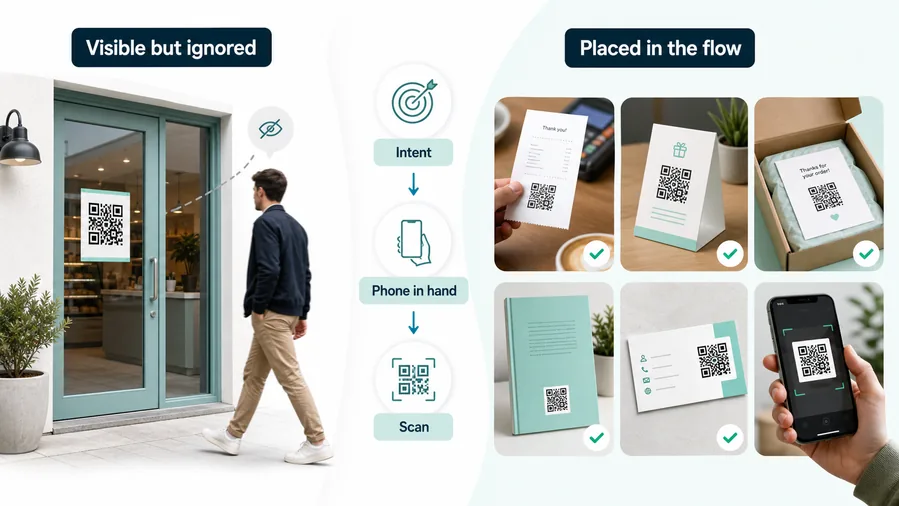
PlacementTourist QR placement should connect a physical travel moment to a useful map action: directions, nearby places, tour route, shuttle stop, venue entrance, ticketing, or local help.
A generic map link makes visitors guess what matters
A visible QR code is not enough when the traveler does not know whether it opens directions, a route, an attraction page, a coupon, or a tour stop.
The printed prompt should explain the destination before the phone comes out.
Put the QR beside the next local decision
Use hotel cards for nearby routes, brochures for attraction pages, kiosks for current-location maps, and tour handouts for stop-by-stop context.
The landing page should continue the exact promise printed near the code.
Where is the visitor standing?
Hotel lobby, museum entrance, tour stop, station, restaurant desk, information kiosk, parking area, or street sign.
What do they need next?
Walking directions, route overview, opening hours, ticketing, nearby places, transit, restroom, safety, or support.
Will the route change?
Use dynamic QR for seasonal hours, closures, event routes, shuttle stops, maps, and partner recommendations.
Is the value clear in two seconds?
Print scan for walking route, open tour map, get directions, view nearby attractions, or find pickup point.
Hotel lobby card
Open nearby attractions, walking routes, transport, dining, coupons, and front-desk help.
Printed city map
Use for live pins, current route notes, closures, audio guide links, and mobile directions.
Museum or attraction sign
Send visitors to entrances, tickets, exhibit maps, accessibility notes, and visitor support.
Tour handout
Open route stops, meeting points, guide notes, schedule changes, and emergency contact.
Brochure rack
Route to booking pages, current hours, offers, maps, and language-specific visitor pages.
Parking or pickup sign
Show pickup zones, transit options, walking paths, ride-share notes, and landmark references.
Restaurant or shop counter
Offer nearby walking route, partner coupon, local guide, review, or return-visit action.
Event venue map
Use for entrances, stages, restrooms, food areas, accessibility routes, and lost-and-found.
Tourist map QR codes should remove uncertainty at the location
The best scan helps visitors understand where they are, what is nearby, and what to do next without a long search.
After-print control
Use dynamic tourist map QR codes when routes, hours, or partners can change
DynamicPrinted tourist materials often last longer than seasonal hours, event routes, shuttle stops, closures, and partner offers. Dynamic QR keeps the printed guide useful after launch.
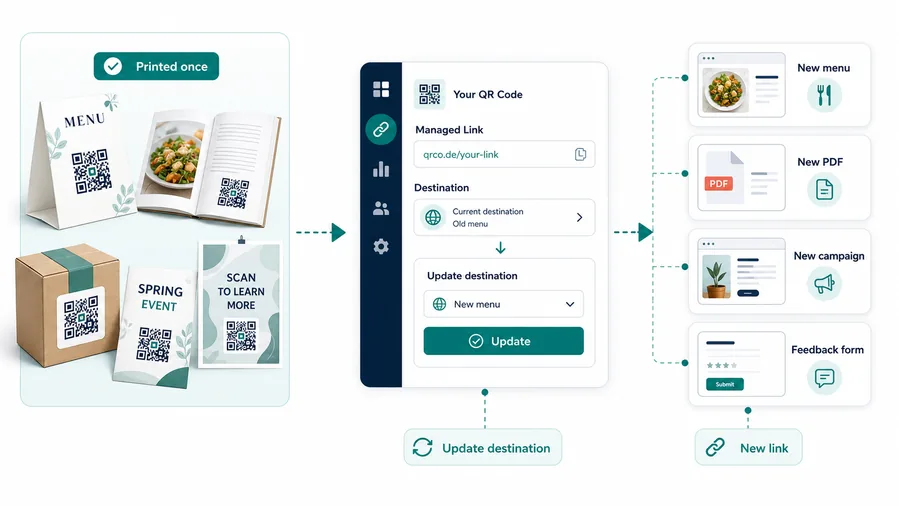
Printed tourist maps age quickly
A static QR can work for a permanent location, but it becomes risky when routes, hours, tickets, exhibits, transit, or partner pages change.
Visitors may scan from a hotel desk, street sign, or brochure months after printing.
Editable destinations protect the visitor experience
Use dynamic QR when a printed map needs current directions, closure notes, language pages, event changes, or rotating recommendations.
The visitor keeps scanning the same code while the destination stays current.
Seasonal hours
Update attraction hours, restaurant hours, tour schedules, and holiday closures.
Route changes
Move walking routes, shuttle stops, pickup points, entrances, and detours after print.
Partner offers
Refresh coupons, booking pages, bundles, and local recommendations.
Visitor support
Update help contacts, safety notes, accessibility routes, and emergency information.
Use dynamic when the printed map points to a living destination
If the QR helps a visitor navigate the real world, keep the destination editable enough to stay accurate.
Scan reporting
Use tourist map scan data to compare placements and visitor interest
AnalyticsTracking is useful when hotels, brochures, kiosks, signs, tour maps, or partner cards need separate readouts for scans and timing.
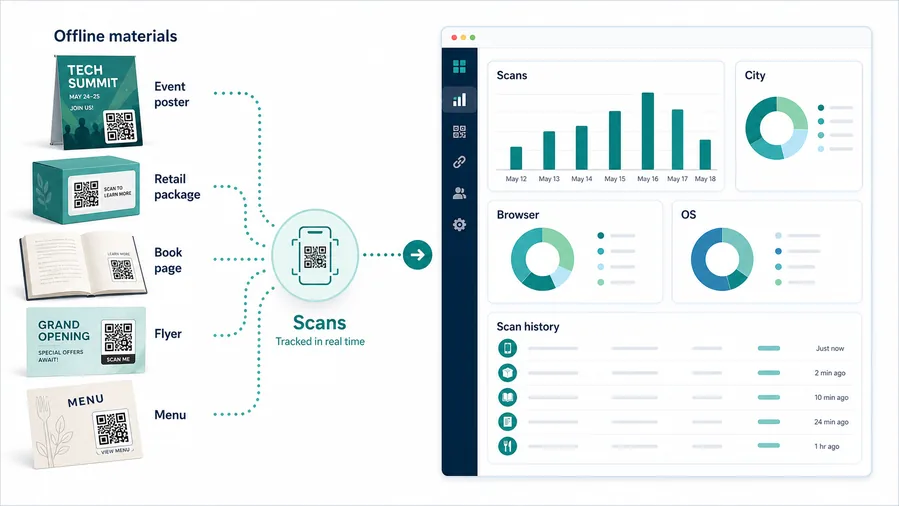
A shared map QR hides where interest came from
A single QR can show total scans, but it cannot explain whether a hotel card, brochure rack, kiosk, tour stop, or street sign created the visit.
That makes it harder to improve print placement or partner distribution.
Separate map codes turn placements into signals
Use one code per hotel, route, brochure, kiosk, event, or partner placement when comparison matters.
Scan data does not prove bookings, but it helps show which printed travel prompts earn attention.
Scan volume
See which tourist maps, cards, signs, or route prompts earned scans during the selected period.
Time and device
Compare morning, evening, weekend, event-day, and mobile patterns across tourist placements.
Broad location
Use approximate location signals to spot unexpected regions or stale distributed materials.
Route interest
Compare walking routes, attraction pins, hotel cards, coupons, audio guides, and booking pages.
Hotel distribution
Compare lobby cards, welcome packets, room cards, and concierge desks.
Brochure performance
See which racks, partners, and printed guide versions still get attention.
Tour stop cleanup
Find closed stops, moved pickup points, and old routes that still receive scans.
Partner reporting
Give tourism partners scan context without claiming exact bookings or revenue.
Name tourist codes by place and printed source
Use names such as hotel-lobby-map, pier-kiosk-route, museum-brochure, or tour-stop-3 so reports stay readable.
Wayfinding and discovery flow
Place tourist map QR codes where visitors pause and choose a direction
Useful placements include printed maps, hotel lobby cards, visitor center brochures, trail signs, museum labels, tour flyers, ticket desks, shuttle signs, and event boards. CTAs should say open map, start walking route, see nearby places, buy tickets, hear audio guide, view today’s events, or get local tips. The code should support a clear travel decision.
Dynamic QR codes are practical because opening hours, events, routes, ticket pages, and local recommendations change. You can update the destination without reprinting maps or brochures. Scan analytics can compare hotels, visitor centers, tour stops, and attractions, showing which locations visitors use most.
Keep the destination lightweight and useful outdoors. Travelers may scan with weak signal, bright sun, or limited time. Put the map, route, or ticket action first. QR Code Lab manages the QR link and scan data, while your tourism or ticket platform manages the actual visitor information. If the guide is multilingual, let visitors choose language immediately instead of hiding that option. That one choice can make the map useful to far more people.
Scan trust
Make tourist map QR codes feel official before visitors follow directions
TrustTourist QR codes can send people through unfamiliar streets, ticket pages, transport links, or partner offers. The destination should clearly belong to the venue, hotel, tour, or local guide.

Wrong or outdated directions
Old maps, moved entrances, closed routes, and expired shuttle stops can send visitors to the wrong place.
Watch for similar-looking domains, long URLs, login or verify keywords, and pages asking for credentials after an unexpected scan.
Unclear partner or ticket handoff
Visitors should recognize when they are opening booking, ticketing, transport, or partner pages outside the main site.
A trustworthy QR should not make the final destination mysterious, especially on posters, labels, menus, parking signs, or event materials.
Tampered public signs
QR codes on public signs, kiosks, and brochure racks should be checked because unofficial stickers can redirect travelers.
Before paying, check the domain, HTTPS, amount, recipient, and whether the destination matches the place or brand that printed the QR.Scan the printed proof like the customer will
Confirm that the destination shows the right brand, HTTPS page, action, payment context, map context, or lead path before people rely on the QR code.
Public QR codes need more trust signals because anyone can scan them and some placements can be tampered with.Brand and location match
Confirm the page names the same hotel, attraction, tour, map, or venue shown on the print.
HTTPS and destination clarity
Check that map, ticket, booking, or partner links are secure and understandable.
Route and hours accuracy
Scan printed proofs after route, hours, entrance, and event updates.
Support path
Keep phone, front desk, tour operator, accessibility, or emergency help easy to find.
Publish QR codes people can verify
The printed CTA, page title, business identity, and first action should all describe the same destination.