QR Code with Behance Logo for Portfolios, Projects & Resumes
Create QR codes with a Behance logo for portfolios, project pages, creative resumes, print promos, business cards, and event displays. Keep the logo clear on cards, posters, packaging, and promos.
Free QR code generator
Create a QR code online
Generate QR codes for websites, email, phone numbers, vCards, Wi-Fi, plain text, forms, PDF files, and campaign links. Customize colors, add a logo or frame, then download a print-ready PNG or SVG.
Choose QR code type
Website QR code, Email QR code, Phone QR code, vCard QR code, Wi-Fi QR code, Text QR code, SMS, WhatsApp, event, and download links.
Add your content
Enter your website URL, contact details, message, phone number, location, or file destination before generating the QR code.
Customize and download
Adjust QR colors, error correction, logo, frame, size, and margin. Generate QR Code, Download PNG, Download SVG, or Save and track scans.
Creative portfolio path
Use a Behance logo QR code when printed creative work should open a real portfolio page
A QR code with the Behance logo is a branded URL QR code that points to your real Behance profile, project, collection, or portfolio page. It is not a separate Behance QR engine or a Behance API integration. The Behance mark simply helps people understand the destination before they scan, which is useful on creative materials where trust and visual context matter.
This is helpful for designers, illustrators, photographers, agencies, creative students, portfolio reviewers, and event exhibitors. A business card can open a portfolio. A resume can open selected projects. A portfolio board can open the full case study. A poster, package insert, or booth sign can lead reviewers to a Behance project without making them type a long URL.
QR Code Lab creates URL QR codes and branded QR designs. Behance hosts the portfolio and controls the profile, project visibility, comments, and account behavior. QR Code Lab does not publish to Behance, manage Behance content, or control whether a project is public or private.
Choose the destination carefully. A profile is good for broad review, while a single project is better when the printed piece already shows that project and the scanner wants the full case study.
Behance logo QR moments
Use a Behance logo QR code when the scan should open the right portfolio
Behance QRA Behance logo QR should do more than decorate the code. It should make the destination recognizable and connect printed materials, profiles, events, packaging, or campaigns to a clear portfolio review.
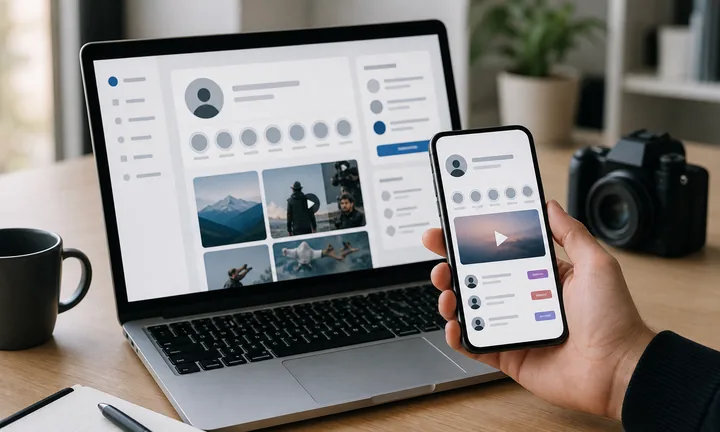
Make the Behance destination recognizable before the scan
Use the Behance logo when the printed code should clearly lead to a Behance profile, project collection, case study, creative portfolio, or campaign page. The logo reduces doubt, but the CTA still needs to say what people get after scanning.
Brand recognition helps only when the linked portfolio matches the printed promise.
Match the scan to the social moment
Creative resumes, gallery cards, pitch decks, client leave-behinds, posters, portfolio books, and event materials all create different expectations. The QR code should route people to the page, profile, group, invite, post, portfolio, or campaign that continues that exact moment.
A social logo is a cue; the destination still has to be specific.
Keep public social materials manageable after print
Use dynamic QR when Behance links, campaign pages, invite paths, profile priorities, or follow-up destinations may change after cards, signs, labels, posters, or handouts are already distributed.
Printed social QR codes often live longer than the first campaign.A Behance logo QR should make the social handoff feel intentional
The scanner should understand whether the code opens a Behance profile, project collection, case study, creative portfolio, or campaign page. Use the logo for recognition, then use the surrounding copy and mobile destination to confirm the next action.
Use separate dynamic codes when different materials, placements, campaigns, or audiences need their own destination or reporting.Recognizable brand cue
Show the Behance logo when people should trust that the scan leads to the expected platform destination.
Specific destination
Send scanners to the exact portfolio, not a generic homepage or unrelated social link.
Printed CTA
Write the action beside the QR code so people know whether to view, join, follow, message, review, register, or explore.
Editable control
Use dynamic QR when the destination, campaign, invite, or fallback path may change later.
Portfolio branding
Design the Behance logo QR so portfolio intent is clear before the scan
Portfolio QRA Behance logo QR should look polished enough for creative work while keeping the code readable on resumes, leave-behinds, gallery cards, pitch decks, posters, and portfolio sheets.
Use the logo as a portfolio cue, not as decoration

Plain
A plain QR code may scan, but on a creative resume, poster, or leave-behind it can feel disconnected from the portfolio story.

Behance cue
A Behance logo, clean frame, and clear CTA help reviewers understand that the scan opens live work, case studies, or a project collection.
Keep portfolio styling scan-safe

Risk
Heavy visual styling, low contrast, busy backgrounds, and oversized logos can compete with the QR pattern and slow the scan.

Proofed
Use brand color and layout polish around the QR code while preserving finder corners, quiet zone, contrast, and final printed size.
Customize corners and modules

Standard pattern
A colored framed code already looks better, but it can still look like every other QR code.
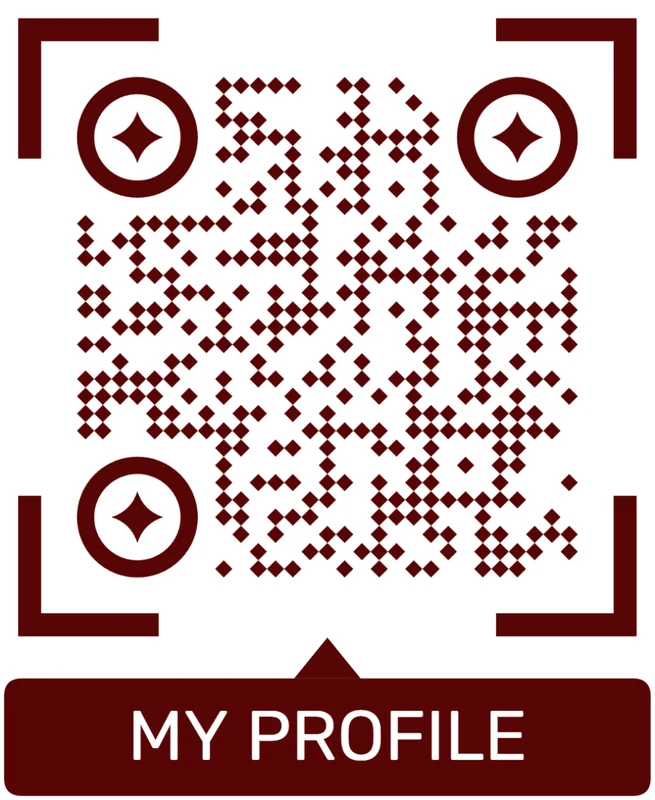
Custom eyes and module shape
Rounded modules, styled finder corners, and cleaner patterns can make the code feel premium. Keep the three corner markers clear.
Add a logo carefully
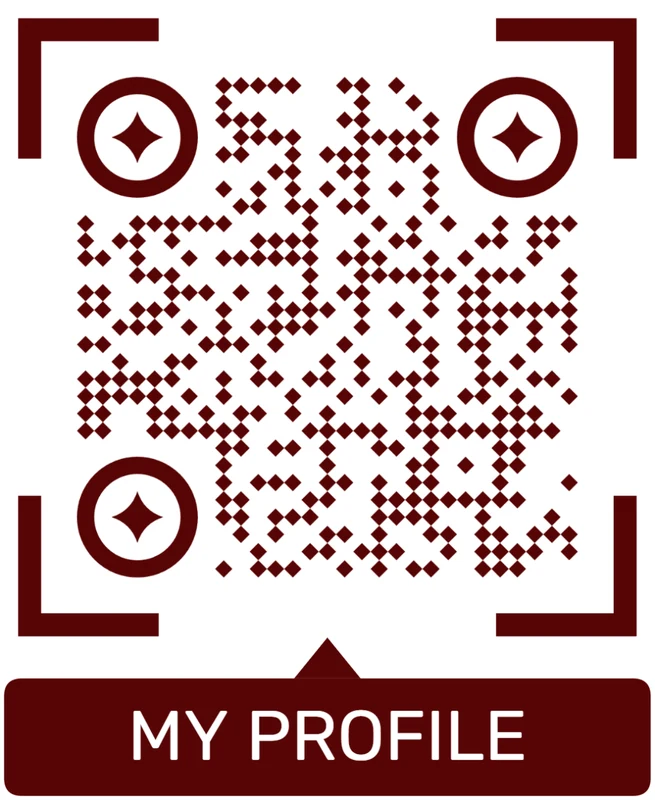
Styled QR code
A styled code can look polished, but people may still not know what brand, profile, file, or campaign it represents.
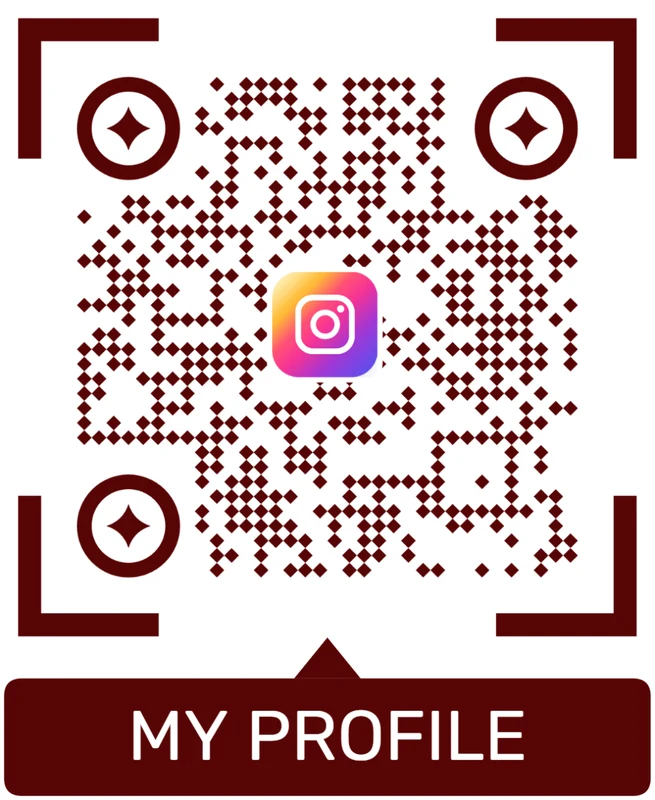
Logo QR code
A centered logo helps signal the destination. Keep it small, use a clean background behind it, and test the exported code.
The design should support the creative handoff
A Behance logo QR is successful when it feels intentional to reviewers and still scans quickly in the real portfolio context.
Behance placement
Place Behance logo QR codes where the social action already makes sense
PlacementA Behance logo QR works best when people already have a reason to open the portfolio: after seeing proof, meeting the creator or team, handling a product, attending an event, or reading a campaign message.
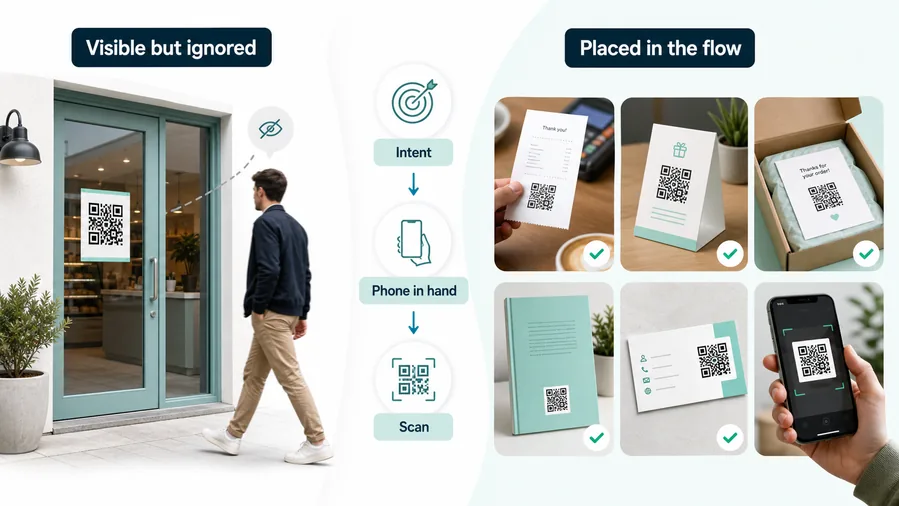
A logo QR without context can be ignored
A Behance logo makes the platform recognizable, but it does not explain why someone should scan or what destination will open.
The surrounding copy should connect the QR to a concrete benefit, not just ask for a scan.
Put the code where the next social action is natural
Place the code after someone has seen a work sample, received a creative card, reviewed a pitch deck, visited a booth, or handled a printed portfolio piece.
The stronger the real-world moment, the less the QR code has to fight for attention.
What created interest?
A portfolio sample, event, product, poster, conversation, community pitch, offer, proof point, or creator moment.
What should happen next?
View, follow, join, message, register, save, share, comment, review, or explore more work.
Is the platform destination enough?
Use a direct link for one obvious action and a landing page when context, fallback, or multiple actions matter.
Does reporting matter by placement?
Use separate dynamic codes for cards, posters, packaging, booths, signs, campaigns, and partner materials.
Business card
Open the Behance destination after a conversation while the person still remembers why they asked for it.
Portfolio or media kit
Connect printed proof to live examples, profile details, project pages, community, or contact options.
Event sign or booth
Route attendees to the relevant page, group, invite, profile, post, or follow-up action.
Poster or flyer
Use a short CTA that says what the scanner will view, join, follow, claim, or learn.
Packaging or insert
Link buyers to community, support, product updates, creator content, proof, or a campaign page.
Sticker or label
Make the scan useful from the object or surface where the sticker is applied.
Presentation slide
Give the audience a fast way to open the social destination without typing a handle.
Local counter or desk
Use the code for follow-up, community, reviews, updates, support, or social proof while people are paused.
Place Behance logo QR codes where the destination feels earned
The scan should continue a real-world interest moment, not force people to decode why a Behance logo appeared on the page.
Portfolio and print flow
Place Behance QR codes where reviewers need the complete case study
Useful placements include business cards, resumes, portfolio boards, student show displays, agency leave-behinds, packaging, posters, exhibition labels, conference materials, printed proposals, hiring handouts, and creative pitch decks. CTAs should say view portfolio, open Behance project, see full case study, scan for creative work, or view selected projects.
The code should appear close to the work it explains. On a poster, it can open the full project story. On a resume, it can open a curated portfolio. On packaging, it can show the design process. On an exhibition label, it can add motion, process shots, or related projects without crowding the printed layout.
Dynamic QR codes help when you want to switch from a general profile to a specific project, campaign page, hiring portfolio, or updated case study after printing. Scan analytics can show whether resumes, event boards, business cards, or packaging actually drive portfolio visits. QR Code Lab measures scans and manages the QR destination; Behance remains responsible for portfolio hosting and account access.
Before final export, test the logo QR from a real phone and keep the Behance mark small enough that the code still has clean corners, contrast, and quiet space.