QR Code for Museums - Exhibits, Audio Guides & Maps
Create museum QR codes for exhibits, audio guides, maps, tickets, donations, education resources, events, accessibility notes, feedback, visitor information, and gallery labels.
Free QR code generator
Create a QR code online
Generate QR codes for websites, email, phone numbers, vCards, Wi-Fi, plain text, forms, PDF files, and campaign links. Customize colors, add a logo or frame, then download a print-ready PNG or SVG.
Choose QR code type
Website QR code, Email QR code, Phone QR code, vCard QR code, Wi-Fi QR code, Text QR code, SMS, WhatsApp, event, and download links.
Add your content
Enter your website URL, contact details, message, phone number, location, or file destination before generating the QR code.
Customize and download
Adjust QR colors, error correction, logo, frame, size, and margin. Generate QR Code, Download PNG, Download SVG, or Save and track scans.
Exhibit interpretation
Use museum QR codes when a label should open deeper context without crowding the wall
Museum QR codes can open exhibit pages, audio guides, multilingual object notes, maps, ticketing, donation pages, education resources, event pages, membership links, feedback forms, accessibility information, family activities, or temporary exhibition content. They are useful for museums, galleries, science centers, historic sites, cultural venues, and visitor attractions.
A museum QR code should respect the visitor’s attention. Some visitors want a short object note, while others want audio, translation, provenance, accessibility details, a children’s activity, or a related video. The QR destination should make that next layer easy to choose on a phone without making the physical label too crowded.
QR Code Lab creates QR codes for your URLs and can help measure scan activity. It does not host museum collections, sell tickets, process donations, manage memberships, or store visitor records unless your own destination handles those actions. The QR code is the bridge from the gallery moment to the digital material your team controls.
Use direct labels like listen to audio guide, read object story, open map, donate, or view family activity. Visitors should know what kind of experience opens before they scan.
Museum visitor moments
Connect exhibits and museum print to the exact visitor resource
Visitor guideMuseum QR codes should enrich the object, room, tour, school visit, or event without forcing visitors to search: audio, captions, maps, translations, curator notes, tickets, donations, or learning materials.

Open object stories beside the exhibit
Use QR codes on labels or cases to show provenance, materials, artist context, restoration notes, video, audio, or a deeper interpretation.

Support audio and multilingual guides
Let visitors choose audio, transcript, captions, language, accessibility notes, or family-friendly versions from the object or room they are viewing.

Help school groups stay on the right resource
Connect worksheets, scavenger hunts, teacher guides, and activity sheets to the matching gallery, object, or lesson.

Reduce front-desk questions with visitor info
Use lobby or map QR codes for hours, tickets, amenities, accessibility, parking, events, membership, and visitor policies.
Connect events to schedules and maps
Use event signage to open talks, workshops, floor plans, speaker pages, reminders, and feedback.

Invite support without interrupting the visit
Place donation, membership, volunteer, and newsletter QR codes where the value has already been experienced.

Keep temporary exhibitions current
Use dynamic QR when exhibit pages, audio guides, captions, translations, or event details change during a show.

Measure broad placement interest carefully
Use separate codes for galleries, signs, events, handouts, and exhibits when the museum needs rough scan comparison.
Visitors should land on the resource that belongs to the object or place
The scan should confirm the exhibit, room, program, or visitor task immediately, then offer the next helpful action without turning the museum visit into a website search.
Museum teams can update interpretation without replacing every sign
Dynamic QR helps curators, educators, visitor services, and event teams keep guides, maps, captions, translations, and program pages current after print is installed.
Put the QR beside the museum moment
Museum placement
Place museum QR codes where they deepen the visit instead of distracting from it
PlacementMuseum QR placement should respect viewing flow, crowding, lighting, accessibility, and the visitor’s attention around objects, rooms, maps, programs, and events.
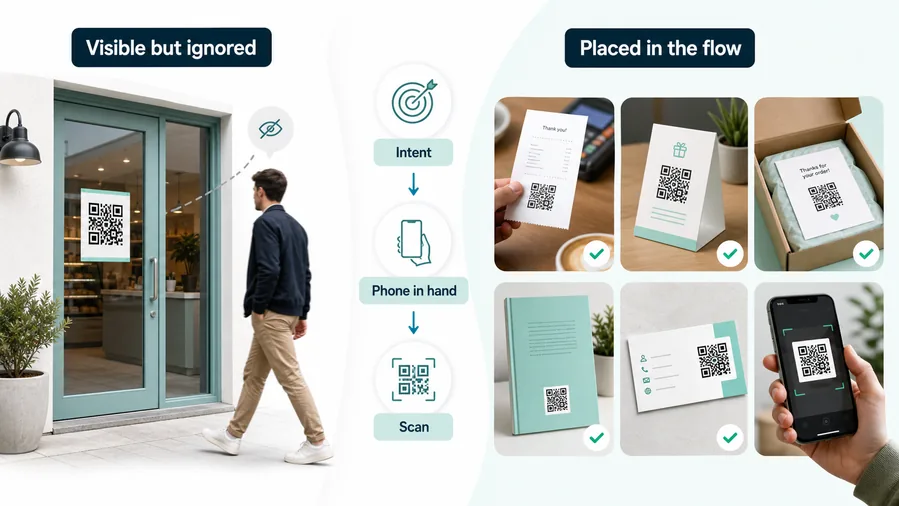
A QR can pull attention away from the object
A code that is too prominent, vague, or unrelated can compete with the exhibit instead of supporting it.
Visitors should know whether the scan opens audio, translation, object story, map, ticket, donation, or activity.
Put the QR where the visitor has a clear question
Use object labels for object context, gallery entrances for orientation, handouts for learning tasks, and lobby signs for practical visitor information.
The QR should feel like a useful layer, not a barrier to the physical experience.
What is the visitor doing?
Looking at an object, entering a gallery, following a tour, attending an event, reading a brochure, or helping a school group.
What would improve that moment?
Audio, captions, translation, map, object story, activity, accessibility note, tickets, donation, or membership.
Can visitors scan comfortably?
Consider lighting, distance, crowd flow, label height, phone availability, accessibility, and whether people can pause.
Will interpretation change?
Use dynamic QR for temporary exhibitions, audio guides, translations, event schedules, and visitor-service updates.
Object label
Open audio, transcript, translation, provenance, conservation notes, images, or related works.
Gallery entrance
Introduce the room, map highlights, accessibility route, family guide, or exhibition theme.
Brochure or map
Link printed navigation to current hours, amenities, routes, events, and membership pages.
School worksheet
Open activity instructions, teacher notes, media, follow-up resources, or accessible alternatives.
Event sign
Send visitors to schedule, speaker bios, workshop files, feedback, reminders, and maps.
Donation area
Connect the ask to membership, giving impact, volunteer paths, newsletter, or campaign story.
Accessibility sign
Open captions, audio description, plain-language guide, sensory notes, or assistance contact.
Museum shop
Link products to artist stories, catalogs, exhibition pages, care notes, or online ordering.
Museum QR placement should support interpretation and flow
Use QR codes where they answer a visitor question without weakening the physical experience.
After-print control
Use dynamic QR when museum guides, exhibits, and visitor information change
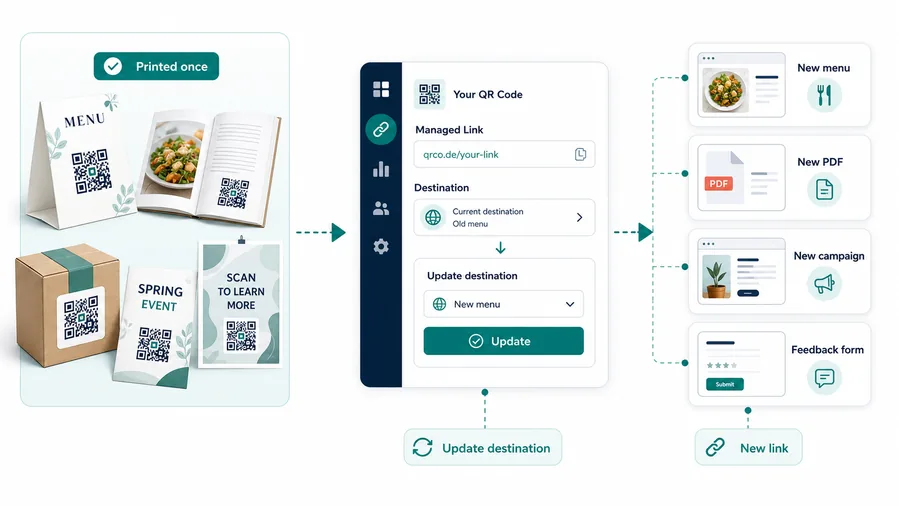
DynamicMuseum signs, labels, brochures, and handouts can stay in place while audio guides, event details, translations, maps, and program pages change behind the scenes.
A fixed exhibit link can age during the run
Static QR is fine for permanent resources, but exhibit pages, audio, captions, events, maps, and visitor policies often change.
A moved page or outdated guide can confuse visitors after labels and brochures are already printed.
Editable routing keeps interpretation current
Dynamic QR lets the same label, sign, map, or handout open the current guide, audio, translation, event page, or visitor resource.
It also helps compare broad interest by gallery, exhibit, object, program, event, or printed material.
Temporary exhibitions
Update object pages, audio guides, curator notes, translations, event schedules, and related programs.
Visitor services
Keep maps, hours, amenities, accessibility notes, parking, ticketing, and policies current.
Education programs
Refresh worksheets, teacher resources, tour activities, family guides, and classroom follow-up materials.
Donations and membership
Move support campaigns, membership offers, volunteer pages, and impact stories without replacing print.
Use dynamic when museum print points to living interpretation
If a guide or program may change during the life of the printed material, keep the destination editable.
Visitor experience
Place exhibit QR codes where scanning will not interrupt the room
Use museum QR codes on exhibit cards, wall labels, brochures, maps, ticket counters, gallery guides, temporary exhibition signage, classroom materials, accessibility notices, family trail sheets, membership desks, and donor displays. Keep the code visible but not dominant over the object, label, or visitor flow.
Think about pace and space. A QR code beside a crowded painting label should open a quick note or audio guide, not a heavy desktop page. A gallery map can open directions or accessible routes. A kids’ trail can open an activity. A temporary exhibit sign can open multilingual context. The QR should deepen the visit without making people block the path while they scan.
Dynamic QR codes help when exhibition pages, event links, object notes, languages, accessibility details, or visitor information changes. Scan analytics can show which exhibits, galleries, or printed guides attract deeper engagement. QR Code Lab measures the scan and manages routing; your museum systems handle tickets, donations, memberships, and collection content.
For accessibility, test the destination with real phones, readable text sizes, captions for media, and enough contrast for visitors in dim gallery lighting.